



ICC Prosecutor Seeks Authority To Probe Phl War On Drugs, Cites Reasonable Basis For Possible Crimes Against Humanity
Saying there is reasonable basis to believe that crimes against humanity have been committed in the Philippines, International Criminal Court prosecutor Fatou Bensouda has requested authority to investigate the deadly war on drugs.
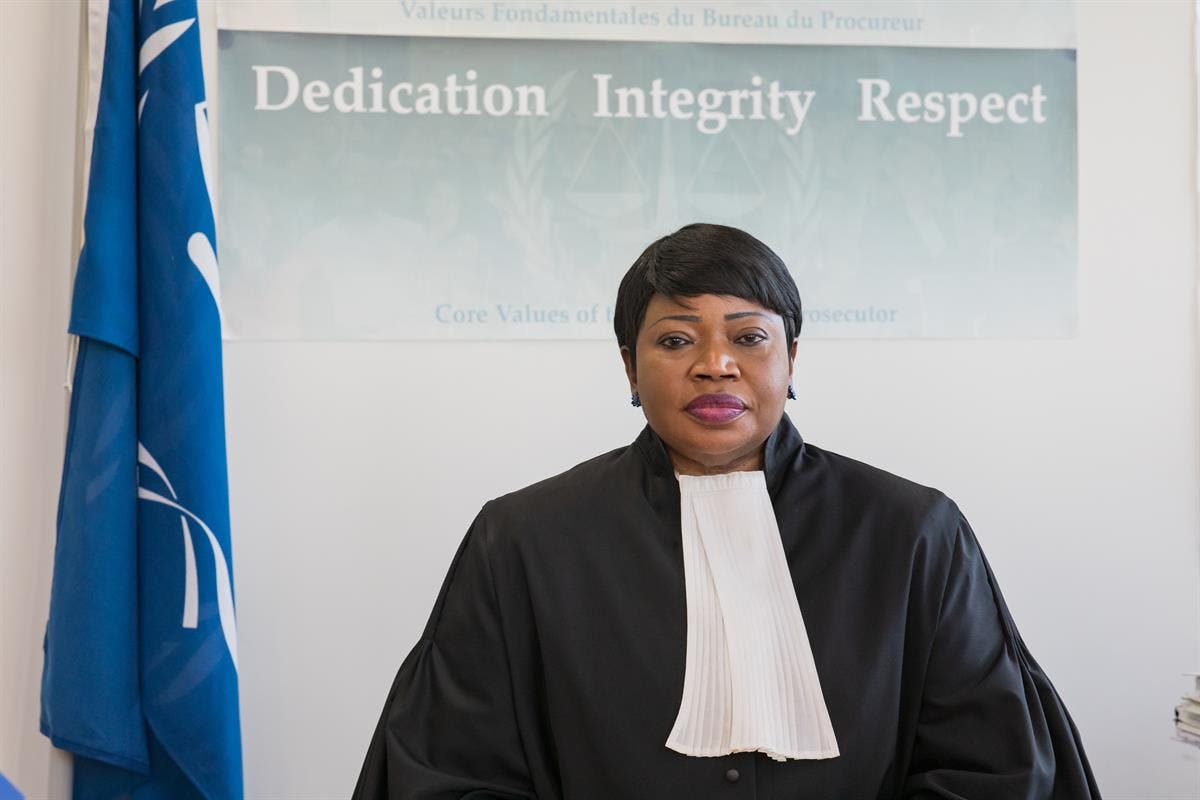
There is reasonable basis to believe that crimes against humanity of murder have been committed in the Philippines in relation to the Duterte administration’s deadly war against illegal drugs, International Criminal Court (ICC) prosecutor Fatou Bensouda said Monday, June 14.
A day before the end of her term as ICC prosecutor, Bensouda announced that her office has concluded the preliminary examination into the situation in the Philippines and has requested for judicial authorization to proceed with an investigation.
“The prosecution submits that there is a reasonable basis to believe that the crime against humanity of murder was committed from at least 1 July 2016 to 16 March 2019 in the context of the Philippine government’s ‘war on drugs’ campaign,” read the 25-page public redacted version of the request submitted by Bensouda to the ICC Pre-Trial Chamber 1.
“Information obtained by the prosecution suggests that state actors, primarily members of the Philippine security forces, killed thousands of suspected drug users and other civilians during official law enforcement operations,” it stated.
In her request, the original version of which was filed in May 24, Bensouda also cited crimes committed by so-called vigilantes, noting information suggesting that some of them “were in fact police officers, while others were private citizens recruited, coordinated, and paid by police to kill civilians.”
Bensouda said the total number of civilians killed in connection with the war on drugs appears to be between 12,000 and 30,000, citing reports from the government, media and human rights organizations.
“These extrajudicial killings, perpetrated across the Philippines, appear to have been committed pursuant to an official State policy of the Philippine government. Police and other government officials planned, ordered and sometimes directly perpetrated extrajudicial killings,” the ICC prosecutor said.
“They paid police officers and vigilantes bounties for extrajudicial killings. State officials at the highest levels of government also spoke publicly and repeatedly in support of extrajudicial killings, and created a culture of impunity for those who committed them,” she added.
Intentional killings
In her request for authority to conduct an investigation, Bensouda cited numerous incidents that indicate planning and intentional killing of victims.
“In many incidents, it appears that the killings neither occurred in ‘shootouts’ nor were otherwise justified, but instead resembled summary executions,” read the ICC report, citing witness stating that victims were unarmed and did not resist arrest or violently confront the police.
“Some victims were last seen alive in police custody, and yet police reports indicated that the killings occurred during a buy-bust or similar operation, with no mention of any arrest. One survivor described being held at a police station before the police drove him to a dark alley, shot him in the chest, and placed a gun next to him,” it said.
Bensouda also noted that victims often sustained wounds inconsistent with mere defensive action by the police, citing multiple gunshot wounds sustained by many victims.
It also cited sources suggesting “that police planted evidence at crimes scenes, produced false or misleading incident reports, and took other measures in an effort to conceal the manner in which the killings occurred and to support claims of self-defense.”
The request cited the previous report of United Nations Office of the High Commissioner for Human Rights (UN OHCHR), which last year found widespread and serious human rights violations in the Philippines in relation to the war on drugs.
Read More: UN Report Cites Serious Human Rights Violations In Phl
Links to law enforcement
In the case of the so-called vigilante killings, the ICC prosecutor noted incidents that appear to have links to Philippine law enforcement.
“In a few cases, witnesses described masked perpetrators speaking to police after the incident. Some self-proclaimed killers claimed that after killing a target, they called the police, who then claimed responsibility for the killings as a result of a gunfight during an official police operation,” Bensouda said.
“Further, some killings attributed to unknown assailants appear to have been committed directly by members of law enforcement in plain clothes who took measures to make the killings appear as having been perpetrated by private actors,” she added.
According to Bensouda, the available information provides a reasonable basis to believe that the attack was carried out systematically and on a large scale and frequent basis, saying it targeted and victimized a significant number of civilians in regions throughout the Philippines.
The killings, she said, were directed against a civilian population carried out in connection with a state policy and a formal drug campaign.
“Philippine National Police representatives have publicly and privately stated that they were following government policy in killing suspected drug personalities… Public statements by other Philippine officials leave little doubt that ‘neutralization’ not only encompassed killing, but that killing was encouraged,” she pointed out.
Citing instances of victims being beaten or family members being forced to witness the killings, Bensouda also requested that any authorized investigation also include crimes against humanity of torture or other inhumane acts.
Read More: Human Rights Watch: Killings, Red-Tagging Intensified In Phl In 2020
Probe Davao killings, too
Citing “strikingly” similar crimes allegedly committed in Davao starting 1988, the ICC prosecutor also requested that events between 2011 and 2016 in the city and the entire region be included in the requested investigation.
She cited multiple occasions wherein President Duterte, when he was mayor of Davao City, publicly supported and encouraged the killing of petty criminals and drug dealers.
“Throughout his tenure as Mayor, a central focus of his efforts was fighting crime and drug use, earning him the nicknames ‘The Punisher’ and ‘Duterte Harry’ for the violent manner in which he sought to combat crime,” Bensouda said.
She cited the existence of the so-called Davao Death Squad, described as “a vigilante group comprising both civilian and police members linked to the local administration, allegedly carried out at least 1,000 killings.”
“Those killings share a number of common features with killings during the later national war on drugs campaign, including the victim profile, advance warning to the victim, perpetrator profile, the means used, and the locations of incidents,” she noted.
Among the similarities between the alleged crimes committed in Davao and during the war on drugs include an asserted rationale for extrajudicial killings of fighting crime and drug use, Duterte’s public encouragement and consisted modus operandi and other shared features, among others.
“Indeed, some sources have described the war on drugs as ‘rolling out on a national scale the model which Duterte ‘honed in Davao. These similarities demonstrate that the 2011-2016 events are sufficiently linked to the 2016-2019 events and should be included in the investigation,” the report added.
Jurisdiction
In 2018, the Duterte administration initiated the withdrawal from the Rome Statute – the treaty that established the ICC – after Bensouda announced that her office has started a preliminary examination on the situation in the Philippines.
It later claimed that the ICC no longer has jurisdiction over the Philippines.
But Bensouda stressed that the international court has jurisdiction over crimes that allegedly occurred in the country during the period that it is a State Party to the Rome Statute – in the case of the Philippines, from November 2011 to March 2019.
In her statement on Monday night (Manila time), June 14, the ICC prosecutor noted “complex operational challenges” that their office will face if an investigation is authorized.
“We have also been taking a number of measures to collect and preserve evidence, in anticipation of a possible investigation,” she said.
With Bensouda’s term ending on Tuesday, June 15, the investigation will be conducted by her successor Karim Khan if authorized by the ICC Pre-Trial chamber.
“In this context, it is clear that how the office, under his leadership, will set priorities concerning this investigation will need to take into account the operational challenges arising from the continuing pandemic, the severe limitations on the ICC's available resources, and the office's current heavy work commitments,” she said.
"Indeed, these considerations have been a key component of the discussions I have had with my successor, respecting the transition and handover of the office's workload,” she added.
Read More: Damage Control? Phl Seeks ‘Chance’ To Look Into Drug War Deaths On Its Own


