



‘People Must Not Lie Or Conceal Information About COVID-19’
One of the doctors who died of coronavirus disease 2019 – Israel Bactol – had a patient who lied about travel history, to the dismay of his loved ones and the medical community.
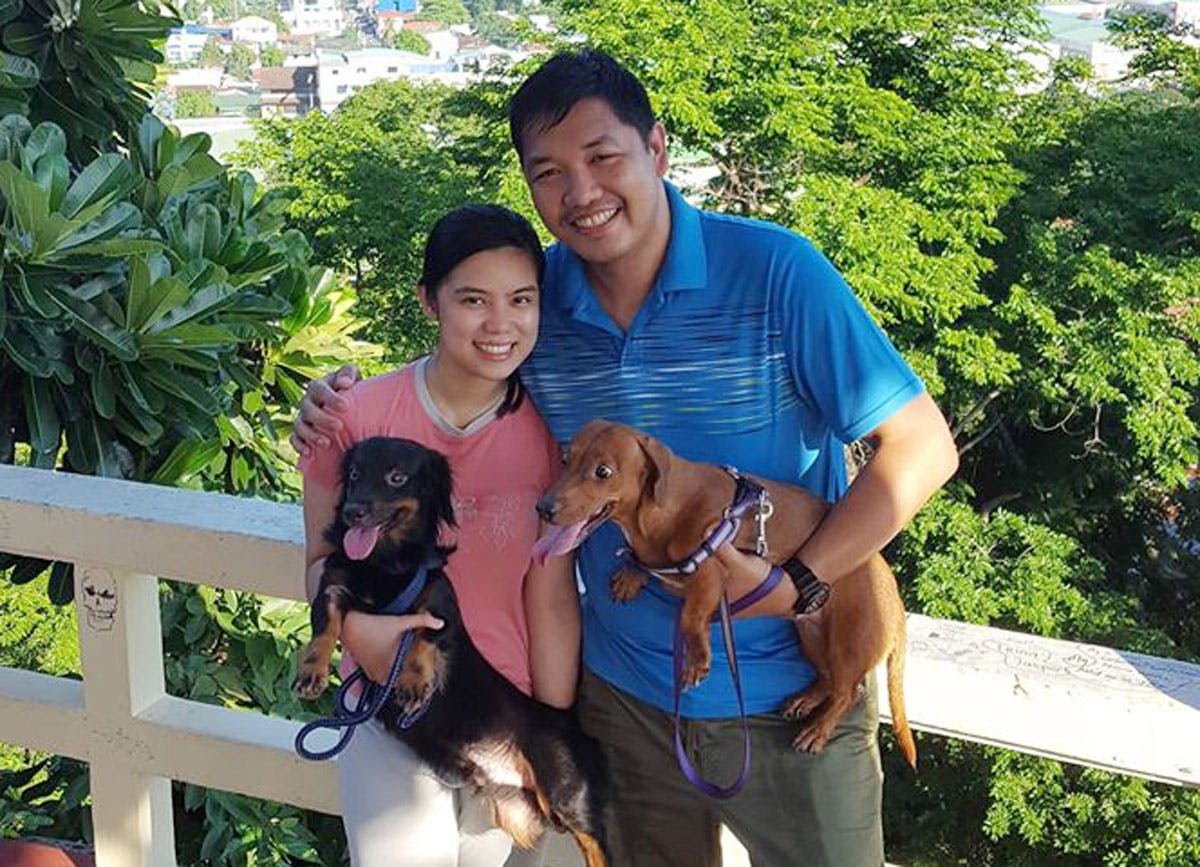
Tributes are pouring in for health workers and other frontliners battling the coronavirus disease 2019 or COVID-19 pandemic, but more than these, they are urging the public to stay at home and listen to authorities so that their sacrifices would not be in vain.
Dr. Lerma Iglesia, an internist and girlfriend of Dr. Israel Bactol, the 34-year-old cardiologist who died of the disease, raised another point – and that is for people to be honest about information on their condition.
Bactol was a professional doctor who was always sympathetic to his patients, Iglesia said, which was why she was dismayed that a patient of Bactol lied about travel history. When the patient tested positive for COVID-19, Bactol ended up getting infected, too.
A friend of Bactol, Ytchie Del Rosario, now a nurse in Riyadh, also noted that the young doctor’s death highlighted the need for patients to be truthful about their travel history while frontliners are battling the virus.
Read more: From ordinary folks to doctors, people dying in isolation to avoid COVID-19 contagion
Medical doctor with COVID-19 prays for recovery while another one dies; cases now 552
Four doctors die; some hospitals may temporarily close as COVID-19 cases rise to 462
Bactol’s brother Elijah also bewailed the lack of transparency on the part of the patient and the family. The patient supposedly entered the emergency room with cough and fever and lied several times, along with the members of the family, when asked about travel history.
“You enter the emergency room with 10 to 15 patients and 8 to 10 health workers inside. You were admitted at a floor with 20 patients and 4 to 5 nurses per shift,” Elijah wrote.
When the symptoms worsened two days later, the patient decided to talk about travel history, Elijah said, exposing other patients and the medical workers.
“ALL OF THIS BECAUSE YOU LIED. Proper history is important for doctors and nurses. So please STOP THE LIES AND COOPERATE,” Elijah pointed out.
In a phone interview with The Philippine STAR, Iglesia described Israel as a selfless doctor and a caring, humble partner who was willing to risk his life to fulfill his duty in the medical profession.
“Napakabuting tao. Hindi makikitaan ng kayabangan. Laging handang magsakripisyo,” Iglesia said.
Bactol, a doctor to the barrios whose parents were teachers in Nueva Ecija, was a resident at the Philippine Heart Center before succumbing to the virus on March 21.
Iglesia met Bactol while they were doing residency at the Premiere Medical Center in Cabanatuan City.
They saw each other for the last time on March 10, when he felt unwell over dinner. On March 12, as Bactol had breathing difficulties, he was admitted to the Philippine Heart Center.
“Huli kaming nagkita March 10. Nag-dinner kami, medyo masama na rin pakiramdam niya. Noong March 12, na-admit na po siya sa Heart Center. Nahirapan na siyang huminga,” Iglesia recounted.
She recalled her last conversation with Bactol, in a video chat while he was already hospitalized. Seeing her crying, he gave her a thumbs-up, saying he was still OK even if he needed oxygen to breathe. He was subsequently intubated and died days later.
“Kinakamusta ko po siya. Naka-oxygen na po siya. Sabi niya sa akin, ‘Bakit ka umiiyak?’ Sabi ko syempre, na-admit ka. Tapos nag-thumbs up po siya na OK pa siya. ’Yun na po huling nakausap ko siya,” Iglesia said.
Iglesia lamented that they waited for six days after Bactol was admitted before they got the results of his tests for COVID-19. It was around that week that several politicians were reported to have had their test results expedited.
She admitted resenting reports of VIP testing for certain personalities: “Siyempre hindi maiwasan na magalit. Bakit ganoon ’yung sitwasyon, na nagkaroon ng VIP testing imbes na ’yung mas nangangailangan ’yung gawan ng test. Dahil po sa inequality, dahil po sa VIP testing, nauna pa po ’yung iba.”
Iglesia is calling on people to be vigilant against the disease and be responsible for their actions so as not to put the lives of others in danger.
This, she says, is the least the public can do for the country’s health workers and other frontliners who are risking their lives amid the pandemic. She stresses that doctors are sworn to save lives and will not shirk their duties even if it puts their own lives at risk.
“Bilang doctor, nanumpa po kami na ibigay lahat nang makakaya namin para pagsilbihan ’yung mga tao, kahit nanganganib ang aming buhay. Handa pa rin po kaming ibigay ’yung serbisyo namin para sa bayan natin. Kahit na po at risk po ang buhay namin, kasi kung hindi kami mag-step up, sino pa po ang gagawa?” Iglesia remarked.
She urged the public to show appreciation to all frontline workers including soldiers and those working in pharmacies and grocery stores, and to make sure those who succumb to COVID do not die in vain.
“We should be responsible for our actions, kasi hindi biro na magkasakit. We should appreciate everyone – lahat ng frontliners, doctors, nurses, allied health workers, mga sundalo, mga nagta-trabaho sa groceries, pharmacies – we should always do our part para hindi masayang lahat po ang mga buhay ng mga lumaban,” she stressed.

Face sanctions
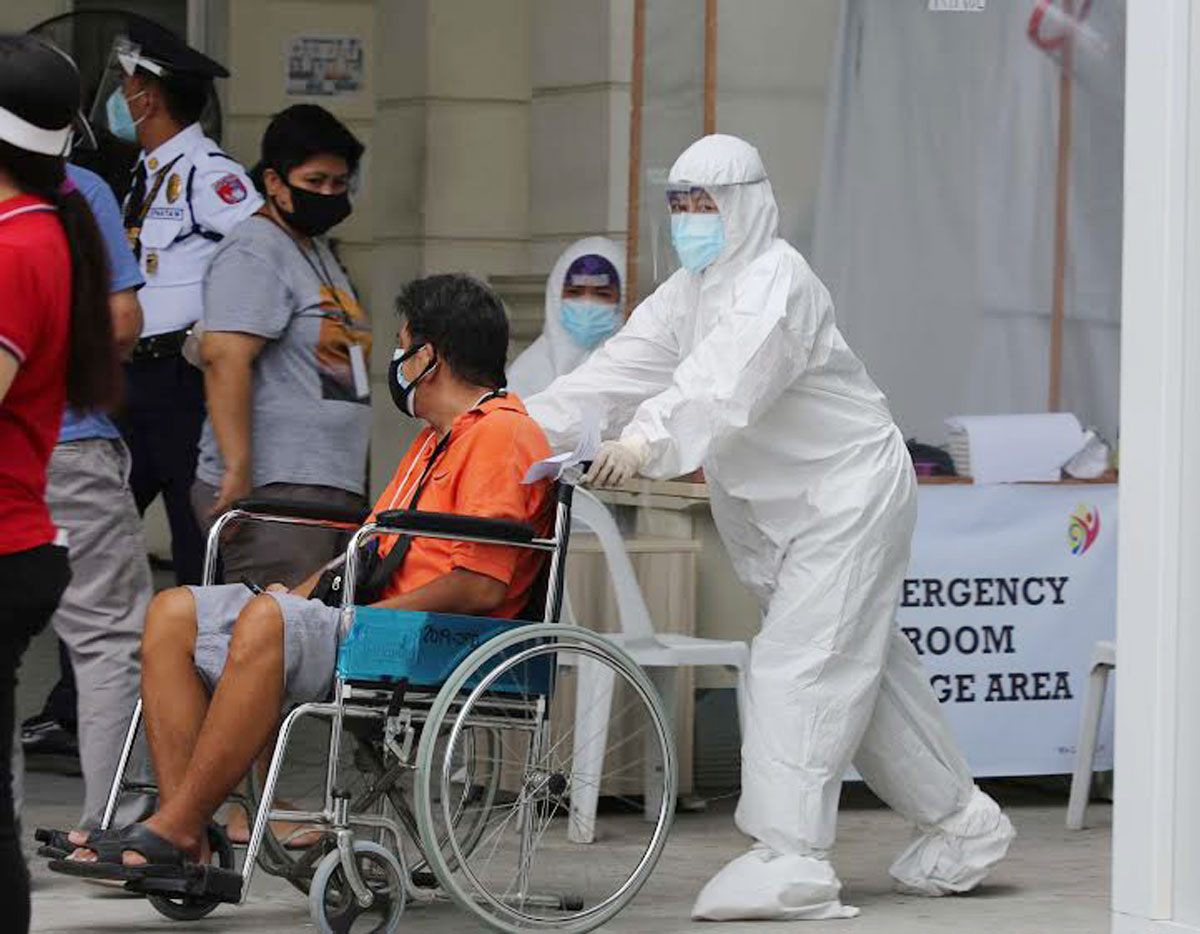
On Monday, April 13, the government warned that patients infected with or believed to have contracted COVID-19 who refuse to provide truthful information on their condition to health authorities would face sanctions.
Cabinet Secretary Karlo Nograles, also spokesman for the Inter-Agency Task Force for the Management of Emerging Infectious Diseases (IATF), said Republic Act No. 11332 or the Mandatory Reporting of Notifiable Diseases and Health Events of Public Health Concern Act enumerates penalties for patients who do not provide accurate information about their condition.
“Kung hindi po mag-reveal or mag-share ng information iyong mga pasyente ay mapapahamak po siya. Iyan po iyong nakasulat sa batas (If the patient does not share information, he would be in trouble. That’s what the law states). Because this is really a public health concern, we are in a state of calamity, so patients cannot lie and engage in misinformation,” Nograles said in a press briefing. “That law served as the basis of President Duterte’s declaration of a public health emergency. Violators of the Act will face charges.”
The law prohibits the unauthorized disclosure of private and confidential information pertaining to a patient’s medical condition or treatment; tampering of records or intentionally providing misinformation; non-operation of the disease surveillance and response systems; non-cooperation of persons and entities that should report or respond to notifiable diseases or health events of public concern; and non-cooperation of the person or entities identified as having the notifiable disease, or affected by the health event of public concern. However, the disclosure of confidential information will not be considered a violation if it was made to comply with a legal order issued by a court.
Violators face a fine ranging from P20,000 to P50,000 or imprisonment of one to six months, or both, depending on the decision of the court. The Professional Regulation Commission was also authorized to suspend or revoke the license to practice of any medical professional who violates the law. The Civil Service Commission may also suspend or revoke the civil service eligibility of violators who work for the government.
If the offense is committed by a public or private health facility, institution, agency, corporation, school, or other juridical entity, the chief executive officer, president, general manager, or such other officer in charge shall be held liable. The business permit and license to operate of the facility, institution, agency, corporation, school or legal entity will also be canceled.
Full disclosure
On Sunday, April 12, the IATF announced that it is now requiring the disclosure of personal information of patients afflicted with COVID-19 to strengthen contact tracing efforts. The Office of Civil Defense has been tasked to lead the contact tracing.
Nograles clarified that the information to be provided by patients will be used to help authorities craft policies and will not be for public consumption.
“We are not telling the patient to disclose to the public; we are telling the patient to disclose to DOH (Department of Health) all accurate and honest information. DOH will be the repository and safekeeper of information,” Nograles explained.
“But DOH, in the context of contact tracing, may ask LGUs (local government units) and law enforcement agencies to help in contact tracing. And to do that, DOH must necessarily share the information with these enforcers, but all mindful of the provisions under the Data Privacy Act,” he said.
According to Nograles, there is a need to harmonize the provisions of the Mandatory Reporting of Notifiable Diseases and Health Events of Public Health Concern Act and the Data Privacy Act to ensure that the rights of patients are protected.
“There is data sharing among the DOH, law enforcers, the LGUs. But everything has to be compliant with the data privacy law. So even if there is sharing of information, all public authorities, all public officials should be mindful of the provisions of data privacy,” he said.
“We need to share the data with those who are supposed to conduct contact tracing for us to be able to identify who are the possible PUIs (persons under investigation), probable, suspected COVID-19 cases. We also need to protect against the stigma. So it’s a delicate balancing act,” he added.
Nograles said the IATF would meet to craft guidelines on data-sharing and contact tracing.
“The DOH will be coming up with guidelines and hopefully, we will finalize the guidelines... in our IATF meeting today (Monday) and the next IATF (meeting),” he said.
Nograles reiterated that the government has not ordered hospitals to hide COVID-19 cases and fatalities.
“It’s not government policy to conceal. We are asking patients to reveal all possible information. It’s in (RA) 11332... diseases. Anybody who does not cooperate, anybody who conceals (information) will be dealt the full force of the law,” Nograles said.
“In fact, we want more openness, candor, honesty and truthfulness here because the more truthful people are, including patients, the more we can react properly.”
The mandatory public disclosure of personal information of patients with COVID-19 is contained in IAFT Resolution No. 22, which was approved last Wednesday. The policy reversed an earlier IATF policy that required hospitals and other health facilities to secure the consent of COVID-19 patients before revealing their identities.
The IATF has also allowed personnel of the Philippine Statistics Authority to gather data and conduct surveys related to COVID-19 despite the implementation of the Luzon-wide enhanced community quarantine. The activities exempted from the quarantine restriction include those related to the registration and implementation of the national identification system.
“Such exemption shall be without prejudice to the requirement of strict social distancing measures in all its operations and data-gathering activities,” Nograles said.
Last week, Senate President Vicente Sotto III called for the implementation of the national ID system, saying it would help streamline the list of beneficiaries of the government aid program that seeks to assist sectors sidelined by the lockdown.