Rodrigo Duterte Found Fit To Stand ICC Trial
The experts also observed that Duterte’s health even improved since its previous report, attributing it to “the high standard of medical and nursing care, including diagnostic rigor and pharmacological rationalization.”
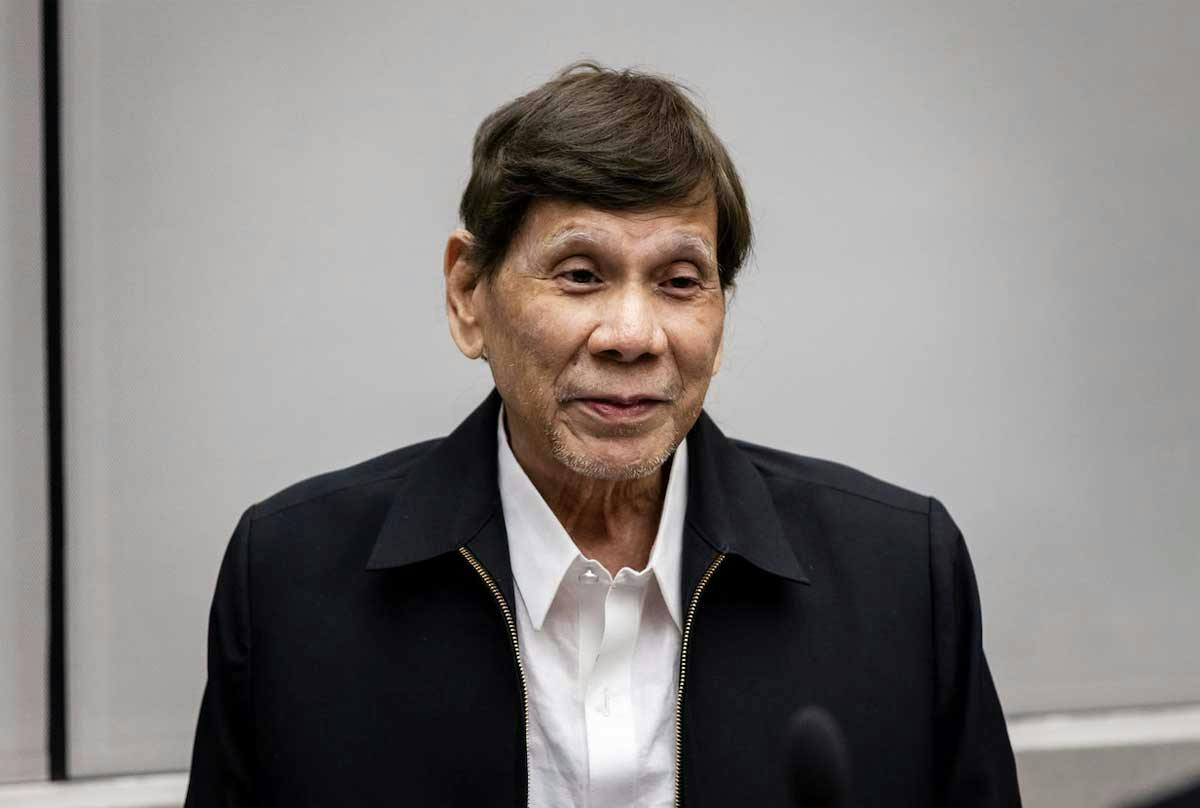
Former president Rodrigo Duterte is fit to stand trial for crimes against humanity before the International Criminal Court (ICC), judges ruled on Thursday, Oct. 8, clearing a major hurdle ahead of the trial proceedings scheduled to start on Nov. 30.
“The Chamber is satisfied that the expert panel’s reports are sufficiently conclusive to make a determination on the accused’s ability to participate in the trial proceedings and to effectively exercise his procedural and fair trial rights,” the 17-page redacted decision read.
“[It] is satisfied that the Accused is able to effectively exercise his fair trial rights in the proceedings and is therefore fit to stand trial,” it added.
The decision was signed by Presiding Judge Joanna Korner and Judges Keebong Paek and Nicolas Guillou, who compose the ICC’s Trial Chamber III.
They also rejected the defense’s request for additional medical examination and the conduct of an oral hearing on Duterte’s fitness to stand trial.
The finding was based on the reports of the three-member panel formed to assess the medical condition of the former president.
According to the decision, the experts found “no new evidence” that would alter their previous opinion submitted ahead of the pre-trial proceedings earlier this year.
They also observed that Duterte’s health even improved since its previous report, attributing it to “the high standard of medical and nursing care, including diagnostic rigor and pharmacological rationalization.”
Although there were some evidence of “pre-clinical” disease, the experts said the “any reduced mental capacity present is not such as to render Mr. Duterte unable to fulfill the necessary capacities.”
The experts found Duterte has the capacity to understand the charges, the purpose and consequences of the proceedings and the evidence presented during the trial.
They said Duterte is also capable of following the course of the proceedings, including the nature and implications of entering a plea, as well as instruct his counsel in the preparation and conduct of his defense.
The trial judges also noted the panel’s recommended measures in light of Duterte’s advanced age and condition.
These include using over-ear headphones or hearing aids during hearings; provision of care and support in relation to food, rest and exercise; taking hourly breaks; starting hearings no earlier than 11 a.m. and having a member of nursing staff available to assist with medication.
“The Chamber notes the observations from the Registry that starting hearings at 11:00 would affect the witnesses who testify through audio-video link from the Philippines, due to the significant time difference,” the ruling read.
“In light of these considerations, and taking into account the discussions held during the Third Status Conference, the Chamber accepts the Registry’s proposal that ‘the sitting hours should be assessed on a case-by-case basis and, whenever possible, adjusted to take into account the individual circumstances, needs, and specific challenges of each witness’, and finds it appropriate to adopt a flexible approach going forward,” it added.
The judges also directed the medical officer of the ICC to continuously monitor Duterte’s health and immediately report any changes in his medical condition.
“Should there be any changes in the Accused’s medical condition, (whether or not within the six months period after the notification of the present decision), the parties are invited to file a sufficiently substantiated request for reassessment,” they added.