


Pinoys Asked To Cooperate In Containing COVID-19 Spread As 4 New Cases Reported
A state of public health emergency and Code Red Sub-Level 1 have been declared in the country following the local transmission of COVID-19. Authorities are calling on people to educate themselves and help deal with the outbreak.
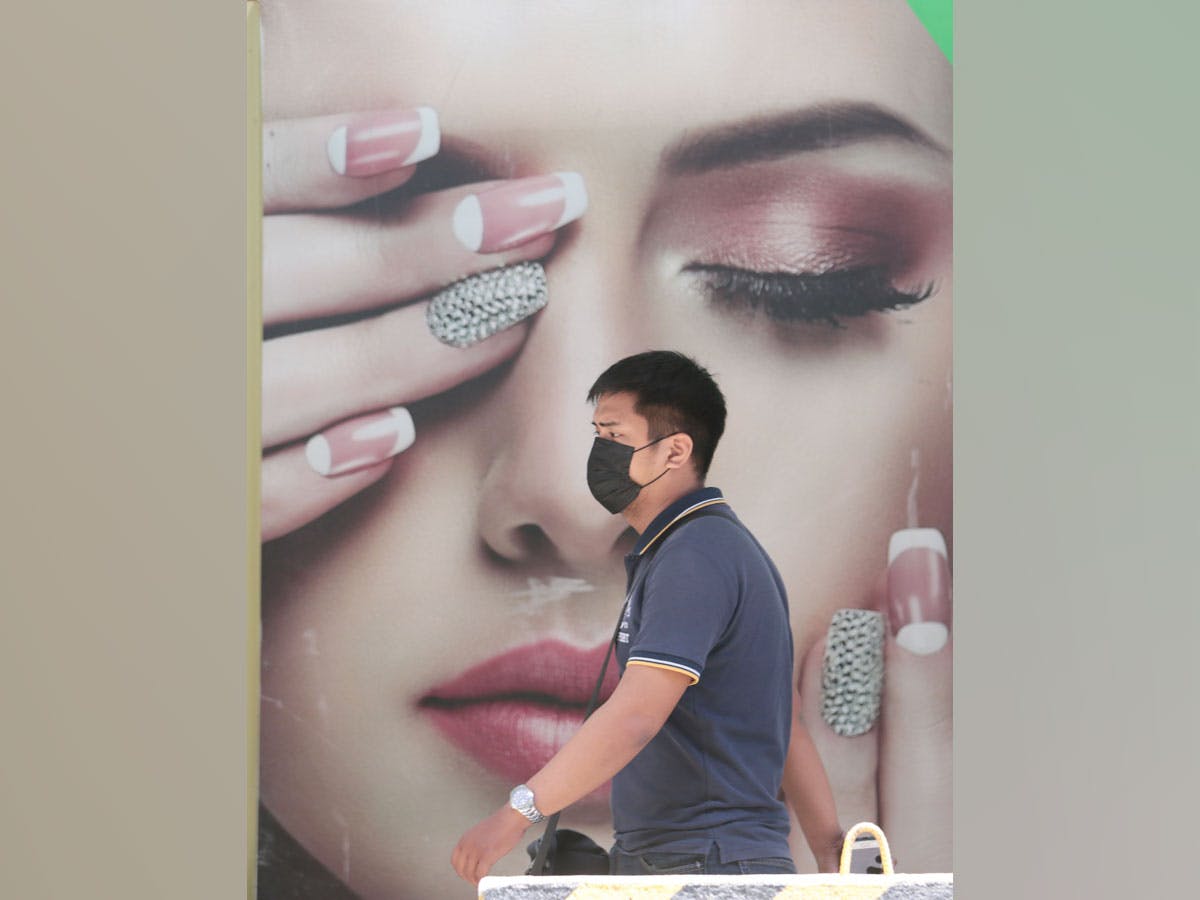
Following the confirmation of three new cases of the coronavirus disease 2019 in the Philippines last week, President Duterte declared a state of public health emergency and the Department of Health (DOH) raised the alert level for COVID-19 to “Code Red Sub-Level 1.”
Last night, the DOH reported four new confirmed cases of COVID-19, bringing the total number of confirmed cases in the country to 10.
The alert level was raised on Saturday. This came with the DOH’s recommendation for Duterte to declare the state of public health emergency.
Health Secretary Francisco Duque III clarified that the raised alert was a “preemptive call to ensure that national and local governments and public and private health care providers can prepare for possible increase in suspected and confirmed cases.”
What triggered the raised alert?
Just one confirmed case of “local transmission” – or the spread of the disease among people who did not have any recent history of overseas travel – was enough to trigger the Code Red Sub-Level 1.
The local transmission involved the fifth COVID-19 case, a 62-year-old man with hypertension and diabetes mellitus, who did not leave the country recently. The sixth case, a 59-year-old woman with cough, is his wife.
The fifth case regularly visited a Muslim prayer room in Barangay Greenhills, San Juan City, which had to be closed down for disinfection.
The fourth case was a 48-year-old Filipino man who had been to Japan. He returned to the Philippines on Feb. 25 and manifested chills and fever starting March 3.
According to DOH Assistant Secretary Maria Rosario Vergeire, the fourth case – an employee of Deloitte Philippines in Taguig City – was already in stable condition but still being monitored at a referral hospital.
The four children of the couple – or the fifth and sixth cases from Cainta, Rizal – have been placed under home quarantine and tested for possible infection, Vergeire said. “We are just awaiting the laboratory tests,” she added.
Vergeire said the husband was transferred to another referral hospital the other night because he needed to undergo a procedure. His wife is still in the same hospital and in stable condition.
As regards the new cases, samples from all the new confirmed cases were tested on Saturday, March 7, and all results were released yesterday, March 8.
DOH is currently investigating all the cases and gathering patients’ information from respective hospitals. DOH is also coordinating with concerned local government units and the Centers for Health Development for localized response and implementation of infection prevention and control measures.
The seventh case is a 38-year-old Taiwanese male. The patient has a history of contact with a Taiwanese foreign national who visited the Philippines and tested positive for COVID-19 in Taiwan. The patient has no history of travel outside of the country and his symptoms started last March 3. He is currently admitted to a private hospital.
The eight case is a 32-year-old Filipino male with history of travel to Japan within the past 14 days. Onset of symptoms began on March 5 and the patient is currently admitted to a private hospital.
The ninthcase is an 86-year-old American male with pre-existing hypertension and history of travel to the United States and South Korea. Symptoms began on March 1and the patient is currently admitted to a private hospital.
The 10th case is a 57-year-old Filipino male with no history of travel outside of the country. He was reported to have had contact with a confirmed COVID-19 case. However, the DOH is currently investigating details of his exposure. The patient is currently admitted to a private hospital.
Currently, the Epidemiology Bureau is gathering more information and validating available data on the reported cases. DOH will release all pertinent information to the public once it is available.
“The DOH is committed to accurate and timely reporting of verified information on the COVID-19 health situation. We have been preparing for the possibility of localized transmission in the country. Now that there are confirmed cases of localized transmission, DOH and the inter-agency task force are now implementing pre-planned measures to respond to the situation,” Duque said. “Upon confirmation of new cases, we immediately deployed additional surveillance teams and commenced contact tracing,” he added.
The first three cases involved Chinese nationals, one of whom died.
There were also three persons confirmed to have COVID-19 after traveling to the Philippines, the DOH said on Friday. They include a 38-year-old Taiwanese man who visited the Philippines from Feb. 28 to March 3.
The second is a 44-year-old Japanese man who was in the Philippines from Feb. 21 to 28 and who had also been to Cambodia, Vietnam, Thailand and Japan.
The third is a woman living in Sydney, Australia who attended a wedding in Manila on Feb. 13 and visited Pangasinan.
What is the government’s response?
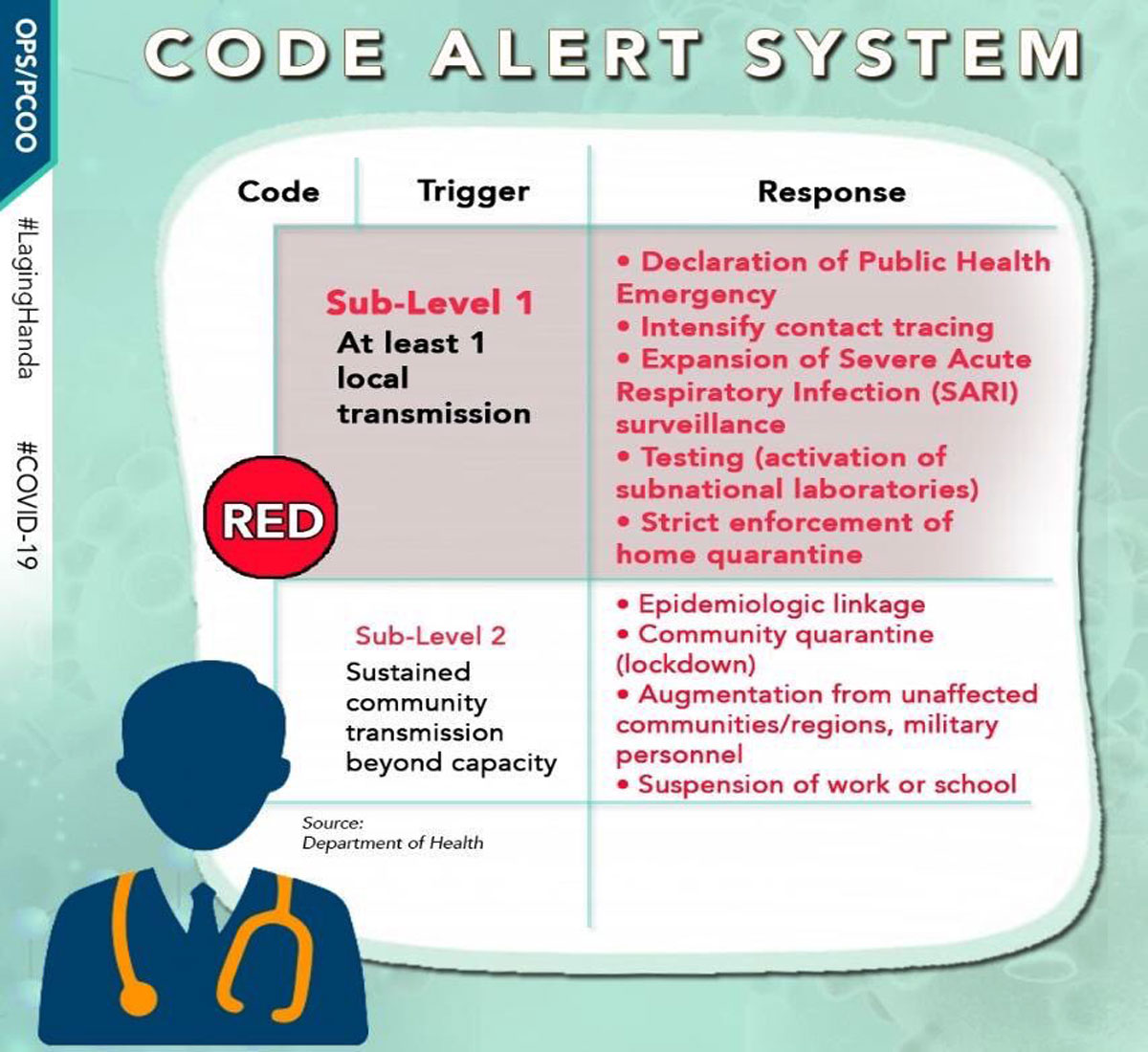
Aside from recommending the declaration of a public health emergency, the DOH, under Code Red Sub-Level 1, began intensifying contact tracing and strictly enforcing the home quarantine of the “close contacts” of confirmed cases.
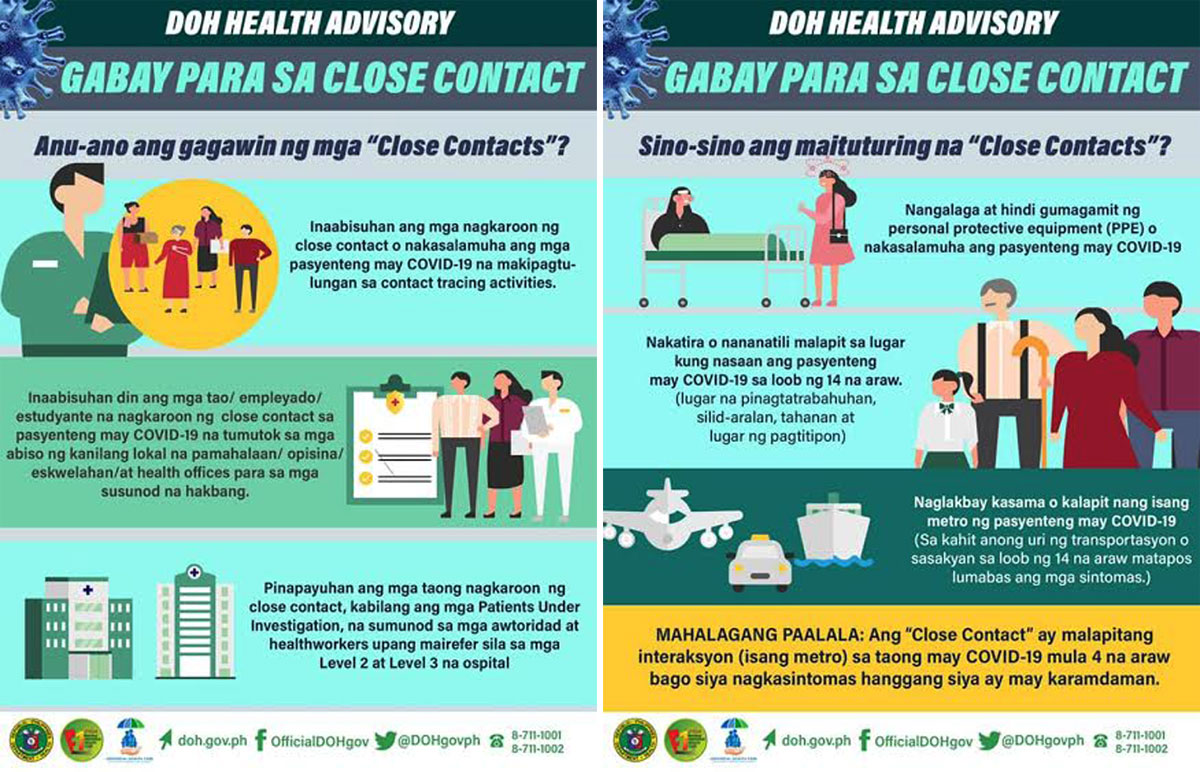
People considered in “close contact” with infected persons are those who cared for the patient without using personal protective equipment, those who lived with or stayed near the place where the patient had been for 14 days (including schools and workplaces), and those who have traveled with or gone within one meter of the patient.
“We will be prioritizing testing of those symptomatic individuals found to have had close contact with the confirmed cases. We urge those who may have interacted with the confirmed cases within the past 14 days to immediately call the DOH Hotline (02)8-651-7800 loc 1149-1150 for appropriate referral to a health facility,” Duque said.
Besides this, severe acute respiratory infection surveillance would be expanded, while laboratories outside the Research Institute for Tropical Medicine are being activated to increase the government’s capacity to diagnose cases.
These laboratories include the San Lazaro Hospital and Lung Center of the Philippines in Manila, Baguio General Hospital and Medical Center in Northern Luzon, Vicente Sotto Memorial Medical Center in the Visayas, and Southern Philippines Medical Center in Mindanao. There are also ongoing efforts to equip the University of the Philippines- National Institutes of Health with the same capacity.
“This declaration is a signal to all concerned agencies, local government units and health care providers to be ready to implement planned response measures,” Duque noted.
What happens under a “state of public health emergency”?
Duque said the DOH recommended that Duterte declare a state of public health emergency in order to “facilitate mobilization of resources, ease processes including procurement of critical logistics and supplies, and intensify reporting.”
Section 7 of Republic Act No. 11332, or the Mandatory Reporting of Notifiable Diseases and Health Events of Public Health Concern Act, simply states: “The President of the Republic of the Philippines shall declare a State of Public Health Emergency and mobilize governmental and nongovernmental agencies to respond to the threat.”
Presidential spokesman Salvador Panelo said Duterte would issue the executive order on the state of public health emergency today.
What are the other alert levels?
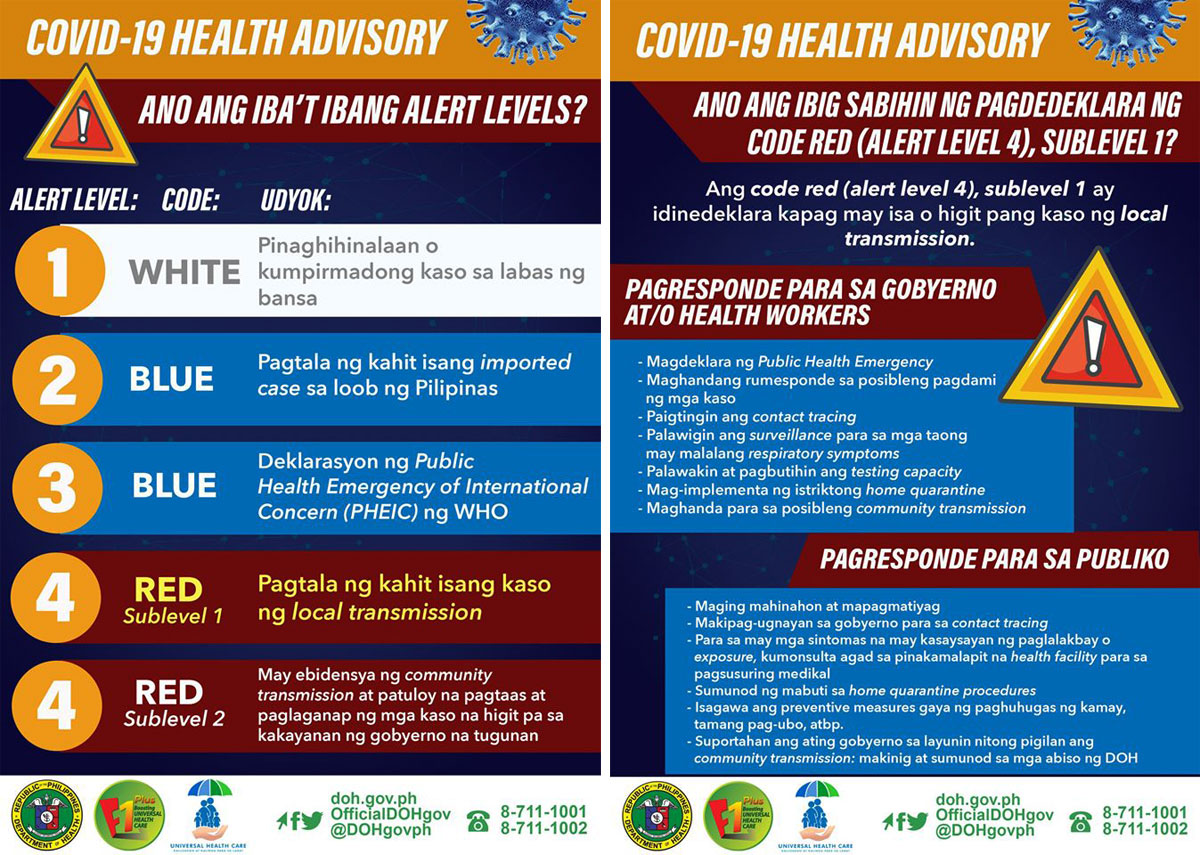
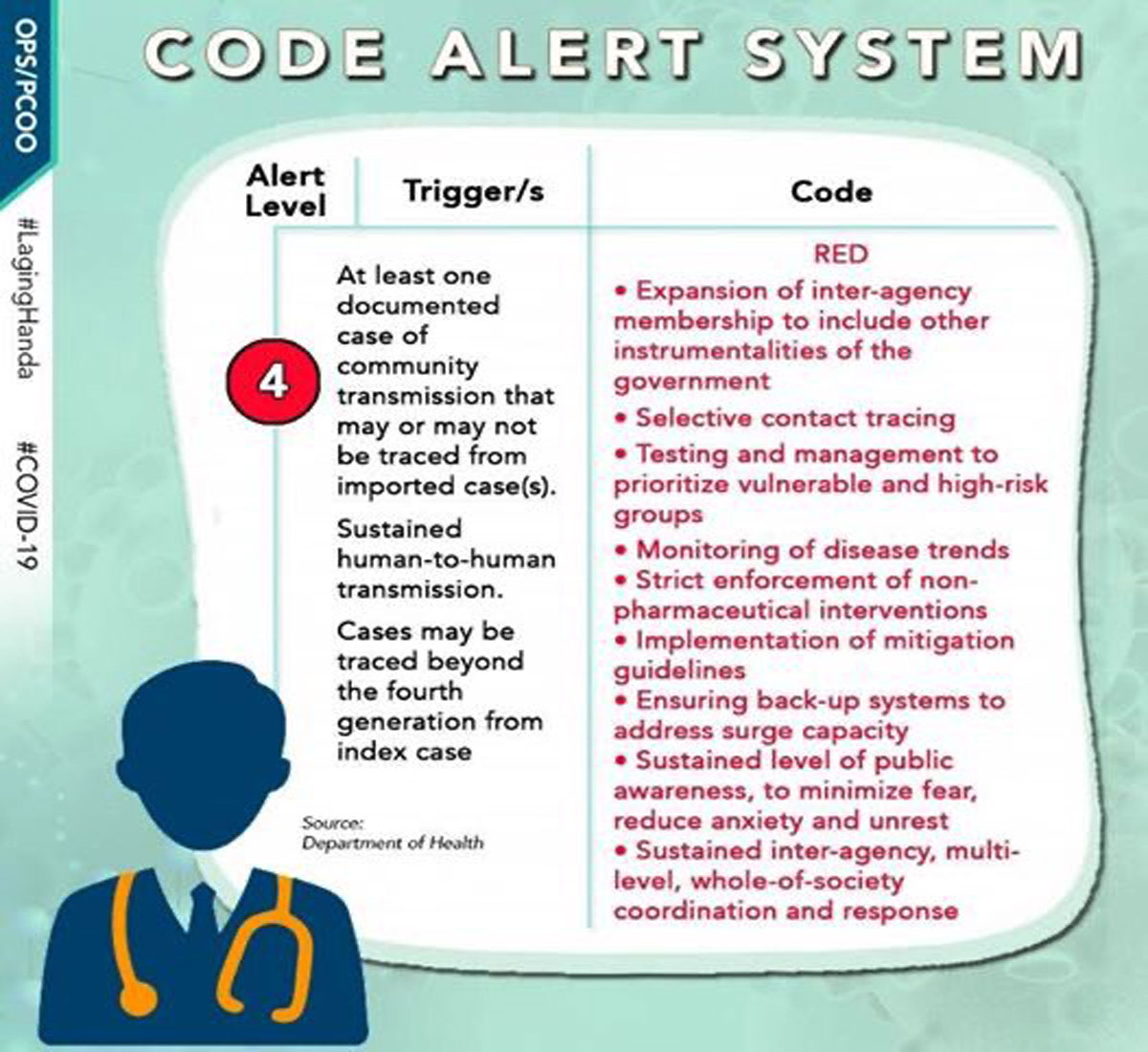
Code Red Sub-Level 1 is the first tier of the highest alert level in the four-level system.
The highest tier is Code Red Sub-Level 2, which means there is evidence of community transmission and continued increase in the spread of cases exceeding the government’s capabilities.
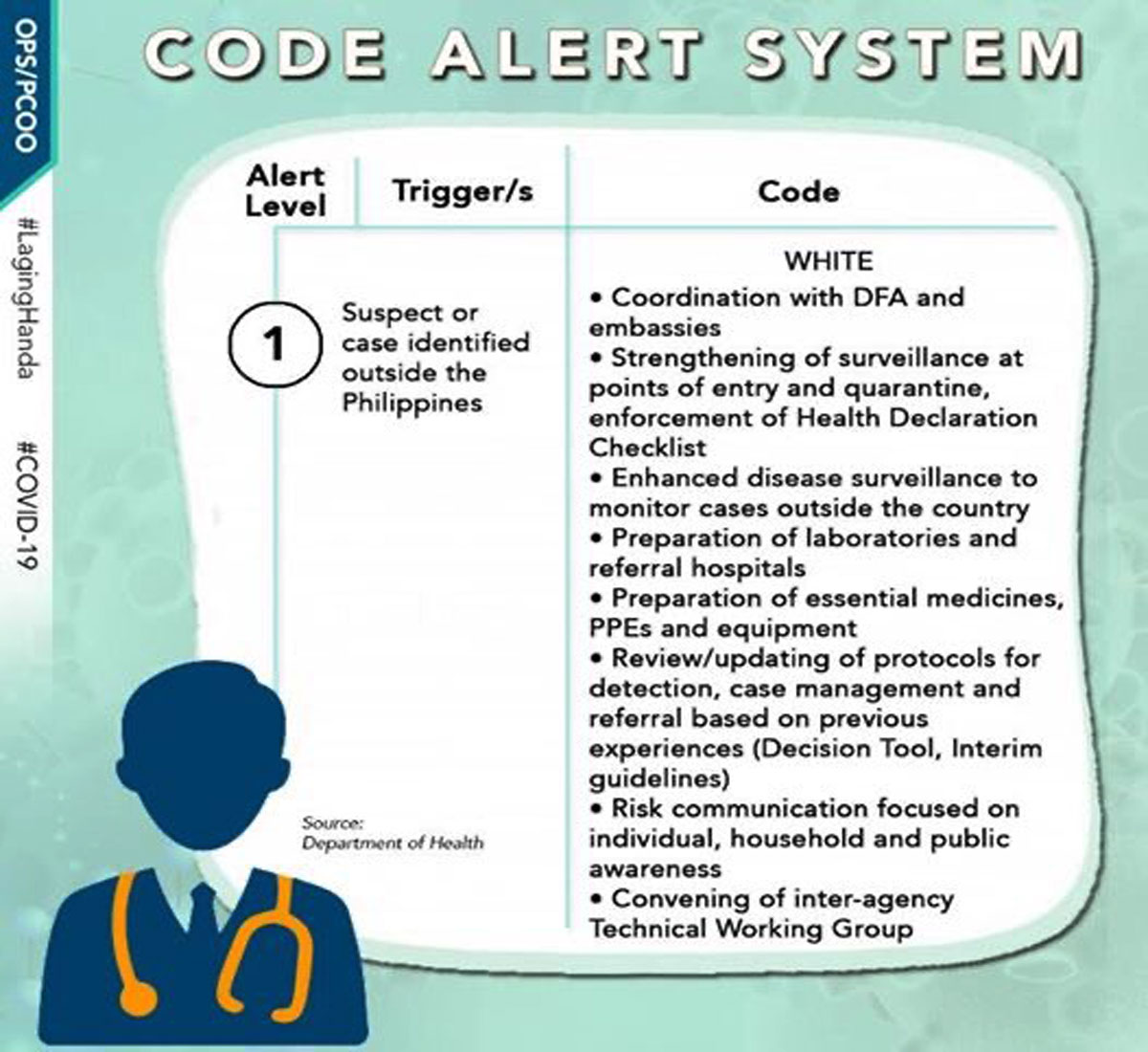
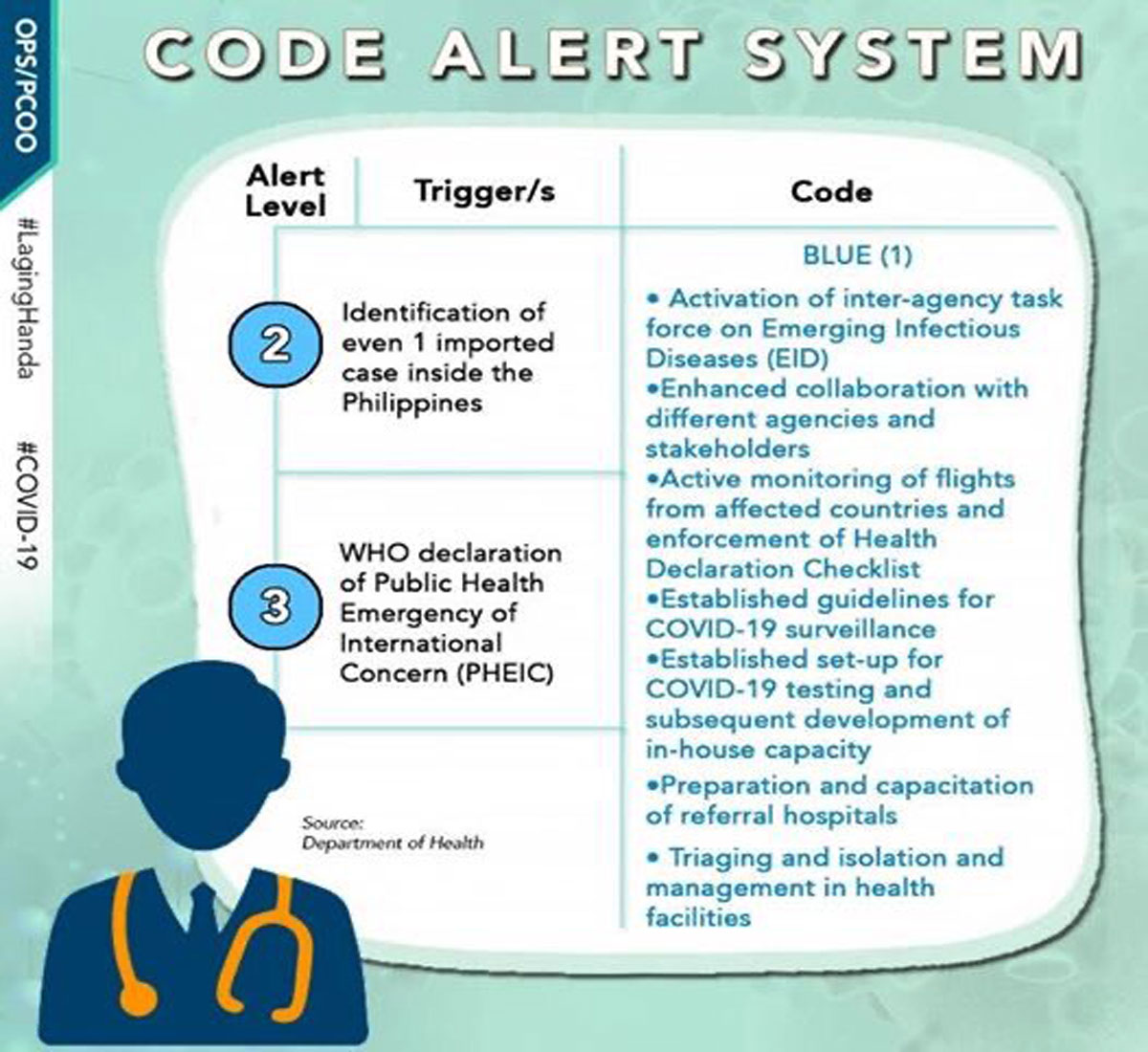
Lower than the current level are Code White, which means there is a suspected or confirmed case within the country; Code Blue, which means there is a recorded imported case; and a second Code Blue, which follows the World Health Organization (WHO)’s declaration of a public health emergency of international concern.
What should people do?
The DOH continues to remind people to observe basic hygiene, proper hand washing, and coughing and sneezing etiquette.
People in “close contact” with the infected persons should cooperate with contact-tracing activities and abide by the referral of authorities with Level 2 and Level 3 hospitals, the DOH pointed out. It added that people who have gone to places in which an infected person lives or works “do not have to immediately seek medical attention or be tested for COVID-19.” Instead, it recommended “self-monitoring” to watch out for symptoms that should prompt them to seek medical attention.
DOH is urging all individuals who will be contacted by the surveillance teams to fully cooperate in investigation and contact tracing activities.
“All individuals presenting with fever and/or respiratory symptoms with history of travel and exposure are also urged to get in touch with DOH and call the designated hotline at (02)8-651-7800 loc 1149-1150 for appropriate management and referral,” Duque noted.
“I call on the public to continue to be vigilant and practice personal preventive measures...In the meantime, let us refrain from visiting public places and/or attending mass gatherings. DOH is exhausting all its efforts to contain the spread COVID-19. I am calling for your cooperation in this trying time, only through concerted effort at the community level will we be able to succeed against the threat of the disease,” Duque said.
In advisories in the Philippines and in other countries, public vigilance and cooperation are underscored to contain the spread of COVID-19.


In the United States, for instance, the Centers for Disease Control and Prevention is seeking the active involvement of people in dealing with the epidemic. It said the guidance may help prevent the virus from spreading among people in their homes and in other residential communities.
The WHO also highlights the need for people to educate themselves about COVID-19, suggesting 10 things that could be done to prevent infection.
“Make sure your information comes from reliable sources; avoid traveling if you have a fever or cough,” the WHO advises people.
“Cough or sneeze into your sleeve. If using a tissue, dispose of the tissue immediately into a closed rubbish bin, and then clean your hands; take extra precautions to avoid crowded areas if you are over 60 years old, or if you have an underlying condition,” it says.
“If you feel unwell, stay at home and call your doctor or local health professional;
if you are sick, stay at home, and eat and sleep separately from your family, use different utensils and cutlery to eat; if you develop shortness of breath, call your doctor and seek care immediately,” the WHO said.
It adds: “It’s normal and understandable to feel anxious, especially if you live in a country that has been affected. Find out what you can do in your community. Discuss how to stay safe in your workplace, school or place of worship.”
Meanwhile, Communications Secretary Martin Andanar appealed for “calm” and assured the public that “the government is on top of the situation.”
The Trade Union Congress of the Philippines (TUCP) said both the employers and workers must be open to telecommuting and other alternative work arrangement in a bid to minimize workers’ exposure to the virus.
TUCP president Raymond Mendoza said employers and workers must cooperate to keep businesses afloat without reducing wages and damaging the rights and welfare of workers.
Mendoza warned that placing the country under a state of public health emergency could heavily impact on agri-food export businesses and the manufacturing sector.
"After our quick assessment with our local unions nationwide… we are anticipating significant job losses among workers working in the export of agri-food and its by-products… those in the manufacturing industry with traditional markets in Asia, Europe and North America will try to avoid, reduce or put more stringent bio-security measures to screen our products to ensure that these are virus-free,” Mendoza pointed out.
COVID-19 cases worldwide have surpassed 100,000 as the potentially deadly virus spread to five more countries, the WHO reported.
But as the cases of COVID-19 exceeded the 100,000 mark, the WHO reminded all countries that the spread of the virus can be significantly slowed or even reversed through the implementation of robust containment and control activities.
The WHO said Sunday that the number of confirmed COVID-19 cases had reached 101,927, of which 3,735 were new. China accounted for 80,813 of the cases, including 3,073 deaths. Outside China, a total of 21,110 confirmed cases were recorded, including 413 deaths.
The WHO said a total of 93 territories, including the five new countries – Colombia, the Vatican, Peru, Serbia and Togo – are now affected by the epidemic. - With Sheila Crisostomo