



Up To P6.50 Per Liter Hike In Oil Prices Looms Next Week
The projected increase could still move higher or lower with one trading day remaining, but a rollback is highly unlikely.
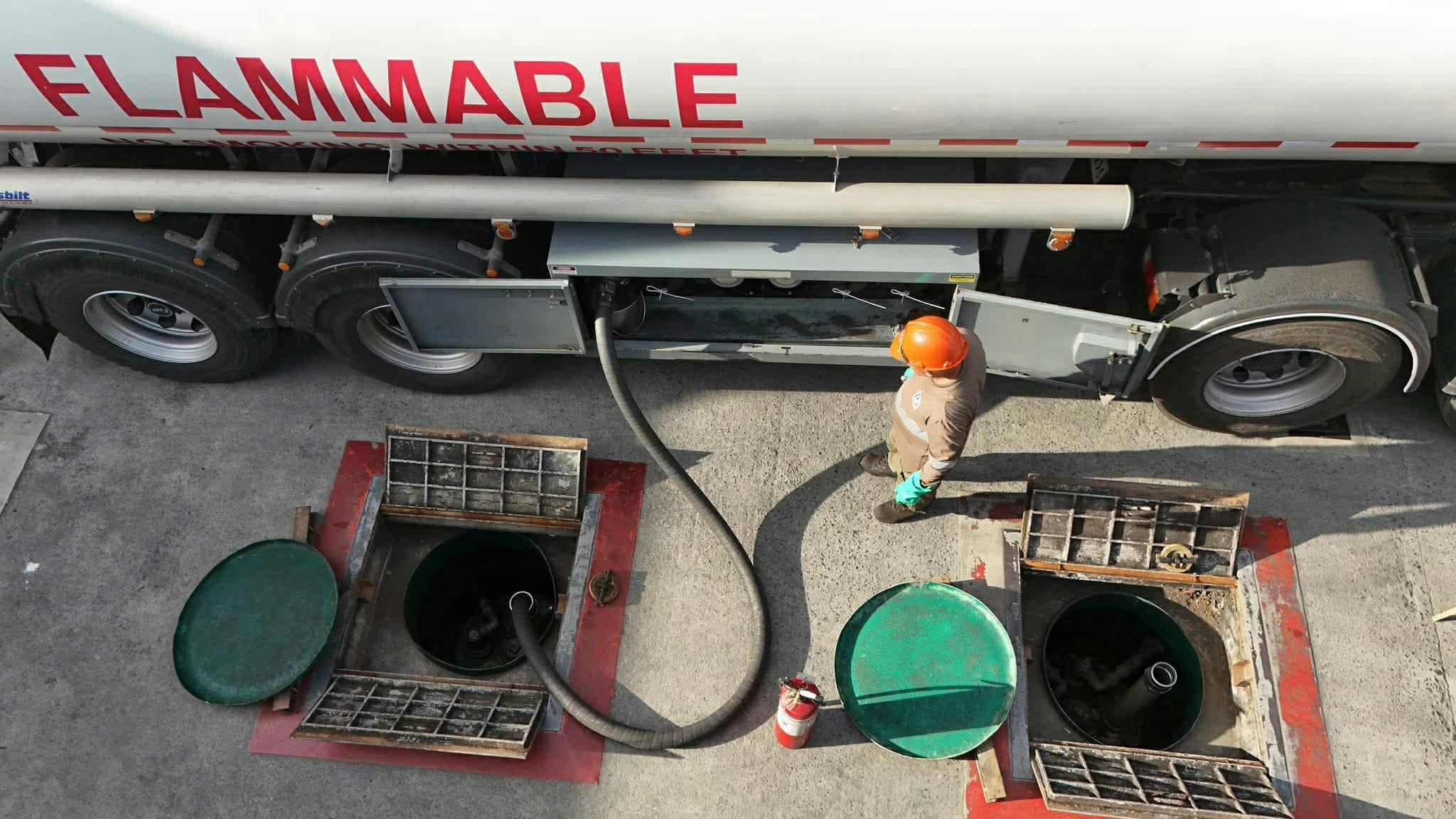
Motorists face another hefty adjustment next week, with pump prices expected to surge by more than P6 per liter as concerns over oil supply disruptions intensify.
Jetti Petroleum president Leo Bellas projected a price increase of P6 to P6.50 per liter for diesel and P5.50 to P6 per liter for gasoline on July 28.
The forecast is based on the four-day average movement of the foreign exchange rate and the Mean of Platts Singapore, a key benchmark for refined petroleum products across Asia-Pacific markets.
The projected increase could still move higher or lower with one trading day remaining, but a rollback is highly unlikely.
Bellas attributed the sharp rise in world oil prices to concerns over supply disruptions following the closure of the Strait of Hormuz, a key shipping route that typically carries around 20 percent of global oil and gas supplies.
The risks have widened beyond the Persian Gulf, with heightened security threats in the Bab el-Mandeb Strait, adding to fears of further disruptions along major trade routes. While not as critical as the Strait of Hormuz, the Bab el-Mandeb remains a vital maritime chokepoint linking the Red Sea, the Gulf of Aden and the Indian Ocean.
“Refinery disruptions and further constraints on Middle Eastern and Russian supply are keeping middle distillate supplies tight and prices elevated,” Bellas said.
Prepared
As motorists brace for another round of increases, economic managers said they are prepared to consider additional relief measures if global crude prices remain elevated.
Finance Secretary Frederick Go said the Development Budget Coordination Committee may recommend another suspension of excise taxes on kerosene and liquefied petroleum gas (LPG) if Dubai crude averages above $80 per barrel for 30 consecutive days, as provided under the law.
“If the price of Dubai Crude exceeds $80 for a period of 30 days, then, if you ask me, it’s very likely we will recommend a similar suspension on LPG and kerosene,” he told reporters.
The Marcos administration earlier lifted its temporary excise tax suspension on select fuel products after the average Dubai crude oil price fell to $79.45 per barrel from June 1 to 30.
Go said the suspension would likely remain limited to kerosene and LPG, explaining that economic managers had earlier determined that suspending excise taxes on diesel and gasoline would not likely provide meaningful relief because any reduction in retail pump prices would be marginal and largely offset by prevailing market dynamics.
The Department of Energy (DOE), meanwhile, has also rolled out measures aimed at easing the impact of higher fuel prices on consumers and public utility vehicle (PUV) drivers.
Energy Secretary Sharon Garin renewed her call for Congress to revisit the decades-old Oil Deregulation Law, which fully liberalized the country’s oil industry.
“Considering that under the law, all these companies and the system are designed to be privately market-driven. But if Congress changes it, then there will be a new direction for them,” Garin said in a chance interview.
The DOE reinstated stricter fuel pricing rules this week, capping price increases and setting minimum rollback requirements.
Under the new limits, diesel prices could rise by no more than P10.68 per liter, while increases for kerosene and gasoline were capped at P11.77 and P3.65 per liter, respectively.
With the sharp increases, Garin urged oil companies to spread out the adjustments to help ease the impact on motorists.
Discount not feasible
Meanwhile, DOE-Oil Industry Management Bureau chief Rino Abad said it would not be feasible to enlist all gas stations in the government’s P10-per-liter fuel discount program for PUVs.
“The focus should be on the routes where jeepneys pass since not all roads are allowed routes,” Abad told True FM on Friday, July 24.
“It’s illogical that a gas station not being passed by buses, PUJs and UV Express will be forced to join the program. There’s no sense,” he stressed.
PUV drivers can continue to buy fuel at a P10-per-liter discount, with the subsidy capped at 150 liters per week, allowing savings of up to P1,500.
The Land Transportation Franchising and Regulatory Board has expressed preference for increasing the amount and expanding the coverage of the fuel subsidy rather than implementing a fare hike, although the latter is now being studied to take into account its impact on inflation.
Slammed
The looming fuel price increase also drew renewed criticism from transport group Manibela following the conclusion of its three-day transport strike.
Manibela president Mar Valbuena slammed the DOE for not heeding the call of transport groups to lower fuel prices.
“The government fails to implement policies during a crisis, especially in addressing issues on public services,” Valbuena told The Philippine STAR.
Valbuena called on oil companies to explain why oil prices keep rising amid market trading movements, reiterating the group’s call to lower pump prices to P50 per liter.
The transport leader urged the government to take necessary action in addressing the oil crisis.
“It is up to the government on how they will respond… It is their call on what they plan to take action to solve these problems,” he said, adding that they are planning to hold another series of transport strikes next week. – With additional reports from EJ Macababbad, Aubrey Rose Inosante and Josiah Antonio


