



LIST: Issues Surrounding Cha-cha Amid COVID-19 Pandemic; House Panel’s Con-Ass Declaration Slammed
From wrong timing to being unconstitutional, here are the issues surrounding new efforts to change the Charter as the House committee on constitutional amendments this week started deliberations on the matter once again.

Several issues hound the renewed push of lawmakers to amend the Constitution, supposedly only to grant Congress the power to loosen up its economic restrictions through ordinary laws.
Aside from the question of whether opening up the economy to greater foreign control will indeed help the country through Charter change (Cha-cha), there is also the issue of whether the votes of the 306-member House of Representatives and the 24-member Senate should be counted jointly or as separate bodies.
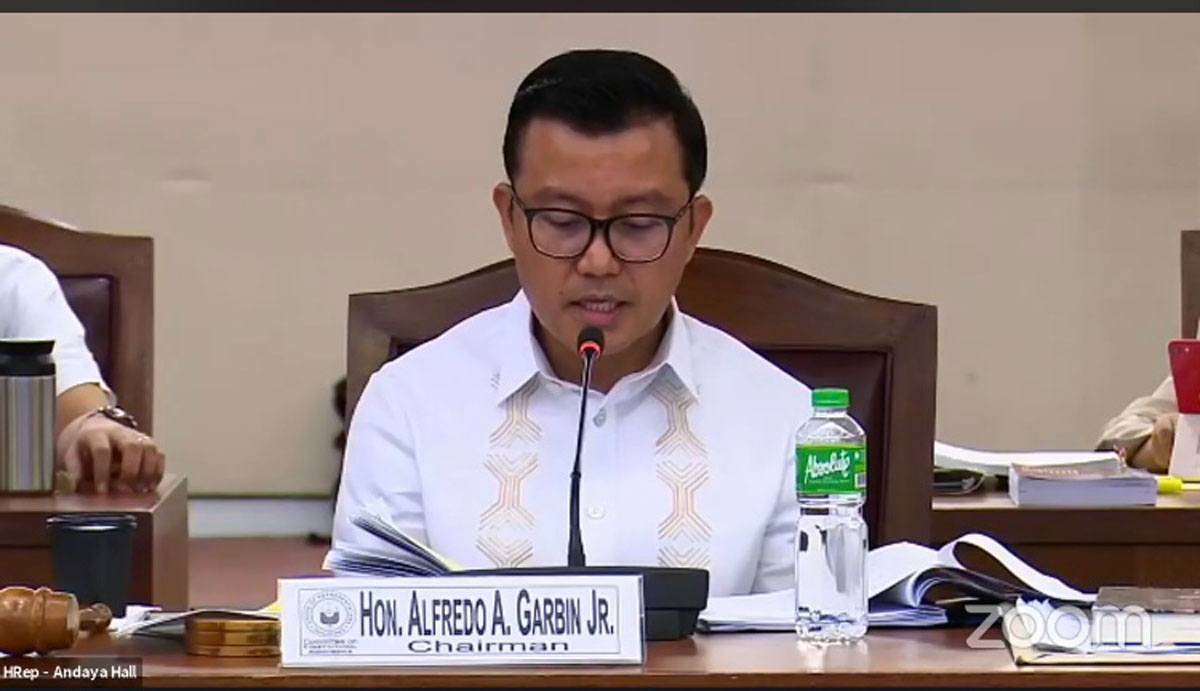
Senators were incensed by the declaration of Ako Bicol party-list Rep. Alfredo Garbin Jr., chairman of the House committee on constitutional amendments, that the constituent assembly (con-ass) was already convened even with only some members of the House participating in their hearing on Wednesday, Jan. 13.
Is economic Cha-cha needed?
House Speaker Lord Allan Jay Velasco’s Jan. 10 statement regarding a possible 2022 plebiscite – coinciding with the national elections – only made reference to the resolution he authored, Resolution of Both Houses No. 2.
The resolution, filed on July 18, 2019 (at the beginning of the 18th Congress), proposed the insertion of the phrase “unless otherwise provided by law” in several economic clauses. This will give Congress the power to pass laws to loosen up the following restrictions against foreign control and private ownership:
- Exploration, development and utilization of natural resources, currently limited to Filipino citizens and corporations that are at least 60 percent Filipino-owned under Section 2, Article 12;
- Lease of alienable lands of public domain by private corporations or associations, currently limited to 25 years in duration and 1,000 hectares in area under Section 3, Article 12;
- Non-hereditary transfer of private lands, currently limited to those qualified to acquire or hold lands of public domain under Section 7, Article 12 (commonly understood to mean corporations with more than 40 percent foreign ownership cannot own private lands);
- Holding of a franchise or authorization for the operation of a public utility and governance of such enterprises, currently limited to Filipino citizens and corporations that are at least 60-percent Filipino-owned under Section 11, Article 12;
- Ownership and administration of educational institutions not established by religious groups, currently limited to Filipino citizens and corporations that are at least 60 percent Filipino-owned under Section 4(2), Article 14;
- Ownership and management of mass media, currently required to be 100 percent Filipino-owned under Section 11(1), Article 16; and
- Ownership and management of the advertising industry, currently limited to Filipino citizens and corporations that are at least 70 percent Filipino-owned under Section 11(2), Article 16.
The Marinduque representative argued that the measure “will provide much-needed economic relief to our countrymen, especially during these unprecedented times,” alongside other recent laws such as the P4.506 trillion budget for 2021 and the extension of the availability of funds for the 2020 budget and the Bayanihan to Recover as One Act.
“Foreign investment plays a crucial role in the Philippine economy by supporting domestic jobs and the creation of physical and knowledge capital across a range of industries. The need to attract foreign capital is critical to support our economy’s recovery from COVID-19,” Velasco said.
For its hearing last Wednesday, the House constitutional amendments committee mostly invited economists who agree with the ideology of greater foreign participation and freer markets — prompting University of the Philippines economist JC Punongbayan to note in a Twitter post: “Hala, halos puro neoliberal (Oh no, almost all of them are neoliberals).
Neoliberalism refers to market-oriented policies that usually include the elimination of price controls, the deregulation of capital markets, the lowering of trade barriers and the reduction of state influence in the economy.
UP School of Economics professor emeritus Gerardo Sicat, who writes a column for the business section of The Philippine STAR, said the Constitution’s restrictions against foreign control are “the original sin of our development policy, which made it difficult for the Philippines to progress in terms of foreign direct investments” or FDIs.
“We have to lay the foundation for making the Constitution more progressive in attracting FDIs. We have to undertake these reforms. I’m sure you have heard of miracle economies in the world for four, five decades. All those countries have moved forward,” Sicat said.
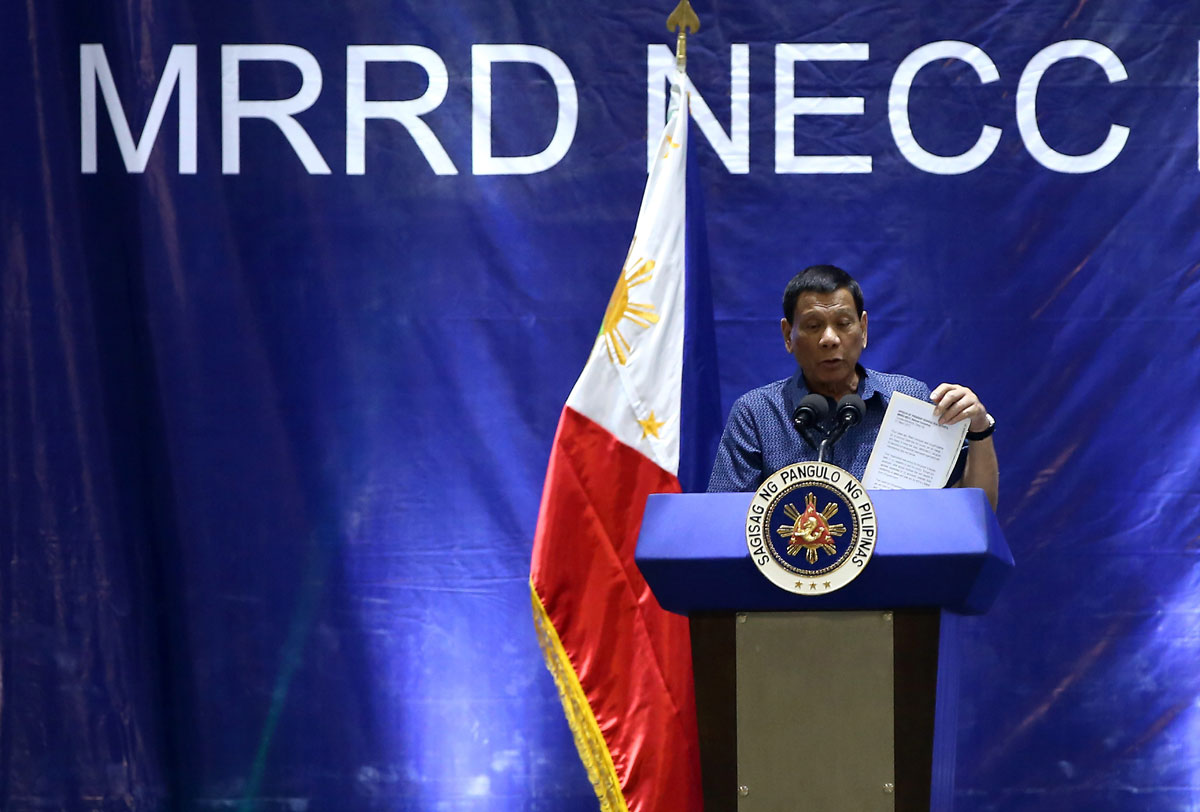
Fellow professor Ernesto Pernia, who was President Duterte’s first socioeconomic planning secretary until his resignation last April because of the then tight pandemic policy, said it was now the “right time” to pursue Cha-cha, contrary to the criticism of Vice President Leni Robredo that this would only serve as a distraction from the fight against COVID-19.
“This is the right time because as you can see, our economy is recovering slowly. This will not only speed up our economic growth but will also improve our quality of economic growth. We have so many lags in our procedure,” Pernia said.
He added that the economy of Vietnam grew the most in 202 supposedly because its “economy is 100 percent open.”
Another UP economics professor Raul Fabella went so far as to say “we can simply delete Article 12” — the 22-section portion that governs national economy and patrimony and has to be followed by law.
“Who can make the land flower best? The land should be maximized,” Fabella said.
House Deputy Minority Leader Stella Quimbo, who also taught in the UP School of Economics, said “domestic capital is really not sufficient.”
“We have to create jobs that were lost due to the pandemic. We need to relax our rules. Yes, I agree that now is the not the time to do it. Kasi dapat kahapon pa (It should have been done yesterday). This is a necessary step. We owe this to our countrymen,” the Marikina congresswoman said.
Ibon Foundation executive director Rosario Guzman, one of the resource persons, said Cha-cha “is no vaccine for recovery and development.”
Instead of blaming the Constitution for favoring Filipinos in the control of the economy, Guzman said the protections should be used to extract gain from limited foreign investment.
“We are of the view that responsible government intervention and regulation is needed to create meaningful linkages and long-term benefits for the economy,” she noted.
If lawmakers really wanted to address the fallout of the COVID-19 pandemic, Guzman said a meaningful fiscal stimulus – which would put money in the hands of struggling people and businesses so they can consume again – would have a more immediate effect.
Guzman explained that if the economic Cha-cha were targeted for ratification in next year’s elections, it would not be of much help anyway. “This is much too late and the economic damage from not having a real stimulus package today only means bigger problems for the economy in the years to come,” she said.
Senate President Vicente Sotto III said Cha-cha would likely succeed only if the lawmakers proposed to amend the economic provisions. Like Velasco’s resolution, he was amenable to insert the phrase “unless otherwise provided by law.”
“That will give Congress now, a free hand to interpret the issue about media, the issue about ownership, the issue about trade liberalization…there’s no danger to those thinking that the President or other people have a different agenda,” Sotto said.
Party-list system
President Duterte wanted the current attempt to change the Constitution to include the party-list system or remove it altogether from the Charter.
Section 5(2), Article 6 of the Constitution allocates 20 percent of the House’s total seats to representatives of “a party-list system of registered national, regional, and sectoral parties or organizations.”
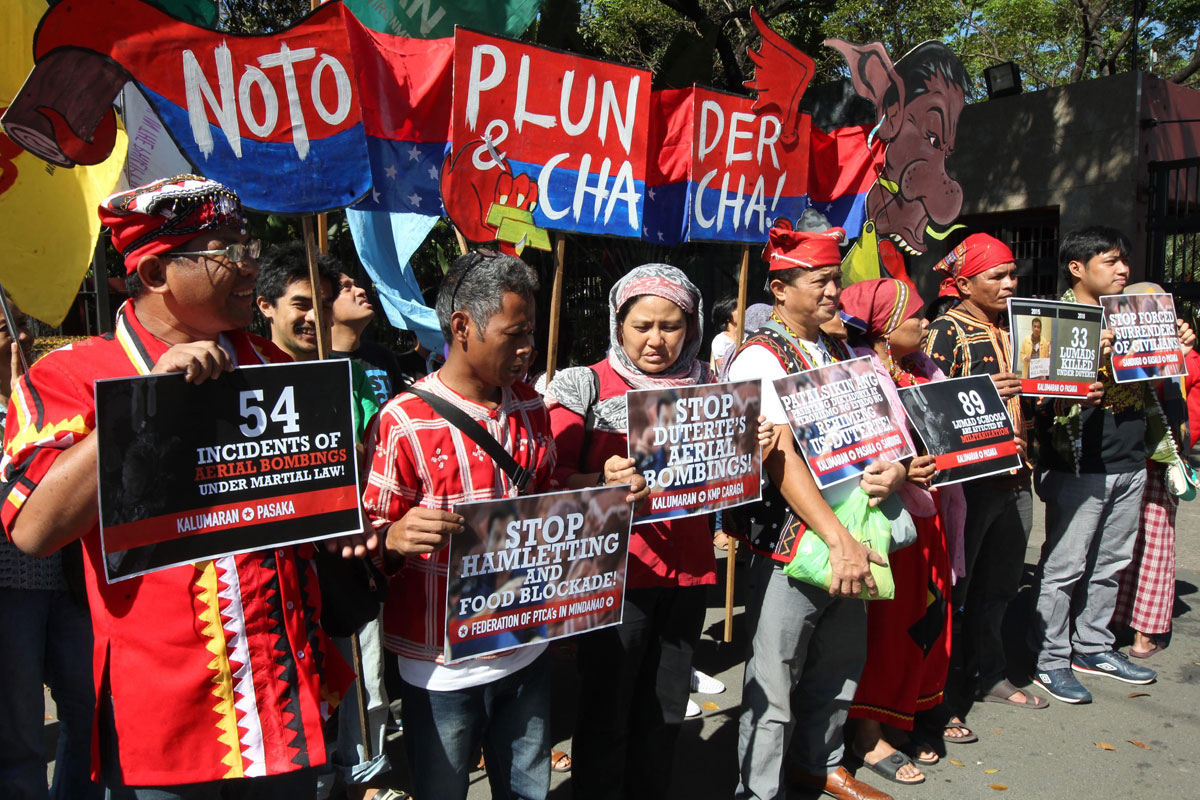
Earlier, Sotto claimed that in a meeting with an unspecified number of congressmen, five senators and “about three or four from the high levels” of the Armed Forces of the Philippines, Duterte said the “best way” to solve his problem with the Communist Party of the Philippines and the New People’s Army was to “remove the party-list system or change it in the Constitution so we can call for a constituent assembly and amend that.”
But now, Sotto seemed cool to the idea of amending the Constitution for that goal. Instead, he said he would file a bill on Monday, Jan. 18, to propose amendments to Republic Act No. 7941 or the Party-list Act to explicitly exclude from elections those seeking to overthrow the government.
Is a committee hearing the con-ass?
However, lawmakers may be hard-pressed to get economic Cha-Cha off the ground if they could not even agree on the proper procedure.
The dispute arises from the wording of Section 1, Article 17 of the Constitution, stating that amendment or revision of the Constitution may be proposed by “the Congress, upon a vote of three-fourths of all its Members.”
Velasco’s resolution required a vote of three-fourths of the members of the House and the Senate “voting separately,” something that could have assured senators that they would not be drowned out by the sheer number of representatives.
During the constitutional amendments committee hearing on Wednesday, Garbin raised eyebrows when he declared: “Yes, we are sitting as a constituent assembly exercising our constituent power.”
This was in response to Sagip party-list Rep. Rodante Marcoleta’s direct question of whether the House committee itself constituted the con-ass called for in the Constitution.
“When we dealt with or proposed amendment to the Constitution, we are sitting as a constituent assembly. Hindi tayo kailangang magbagong-anyo na kung saan, iba ‘yung suot natin or magsama-sama tayo (We do not need to change our form or come together),” he said.
“Every time we dealt with a proposing amendments to the Constitution or revising the Constitution, we are sitting as a constituent assembly, we are exercising our constituent power apart from our legislative power,” he added.
Committee vice chairman Iloilo 3rd District Rep. Lorenz Defensor agreed with Garbin’s declaration, but he clarified that he believed that the Senate could also convene the constituent assembly separately.
He likened the process to ordinary legislation, for which the House and the Senate would separately deliberate and approve their respective versions of a measure and then either come together in a bicameral conference to reconcile the differences or have one of them ratify the version passed by the other.
“We can proceed separately or vote separately... We can sit down together with the Senate to reconcile whatever provisions we have approved,” Defensor, who has two pending resolutions that contain proposed amendments, said.
Joint voting with Senate?
But if the lawmakers were no longer acting in their capacity as members of Congress but as members of the con-ass, Albay 1st District Rep. Edcel Lagman said it would mean the representatives and the senators should vote jointly as one body.
“If members of the con-ass are not sitting as legislators but as constituent members of the assembly, then the voting should not be separate but it should be joint… because senators and representatives are not there acting as legislators but as members of a constituent assembly,” Lagman said.
Marcoleta raised the practical concern that if the House let the Senate count votes separately, there may not be enough votes there in favor of amending the Constitution.
“Maybe you should have sounded off your counterparts in the Senate na makukuha talaga nila ‘yung three-fourths (that they will really get the three-fourths),” he said. “Eh bakit pa tayo nagtatangka ng pagbabago dito kung wala pala silang made-deliver doon?... Mas maganda 'yung joint voting na lang 'yung i-advocate natin (Why would we bother with this amendment attempt if they have no votes to deliver there? It is better to just advocate joint voting).”
Senior Deputy Majority Leader Jesus Crispin Remulla wanted the Supreme Court (SC) to resolve the conflict, saying the matter was “a prejudicial question for us to resolve before we can even begin our work because this will be a waste of time if this question is not answered properly by the judiciary.”
Senators, other House representatives disagree
In a Twitter post, Bayan Muna party-list Rep Carlos Zarate expressed his disagreement, saying a House committee cannot declare on its own initiative that it is now a con-ass.
“Amendment via legislation route of House is not the constituent assembly contemplated by the 1987 Constitution. A House Committee cannot just declare motu proprio that it is now being constituted as a Constituent Assembly,” he said.
Sotto pointed out that Congress would resume plenary sessions this Monday, and questioned the apparent rush of Garbin in declaring that a con-ass was already convened through just his committee.
“Ano ba pinagmamadali nila, eh puwede nila gawin sa Monday ‘yan in plenary? Maipilit na lang. Can’t they wait?” Sotto said. (Why are they rushing this when they can do it on Monday in the plenary? They're just forcing it. Can’t they wait?)
“If we want to tinker with the Constitution, we had better make sure our rules and procedures are sharpened,” he told reporters. “Whatever it is, they have to do it in plenary. Otherwise, that is not the Congress proper.”
Sen. Panfilo Lacson quipped: “Last time we heard, the Congress of the Philippines is composed of the Senate and the House of Representatives. Let’s forgive them for they do not know what they’re doing.”
Senate Majority Leader Juan Miguel Zubiri said the con-ass could only be called through a resolution adopted by both the House and the Senate in their respective plenary sessions.
“With all due respect to my good friend Congressman Garbin, Congress is in recess so I’m not sure how there was plenary action on their resolution to form a constituent assembly. Our rules only allow committee hearings to take place during the break,” Zubiri added.
Senate Minority Leader Franklin Drilon also argued the members of Garbin’s committee were still acting in such capacity and cannot yet propose amendments to the Constitution.
“The congressmen and senators were elected as members of Congress and as legislators to enact ordinary laws, not as members of a constituent assembly to propose amendments to the Constitution,” Drilon said in a statement.
Echoing Zubiri, Drilon pointed out that without a resolution adopted by both the House and the Senate, Garbin’s committee “cannot assume the functions and the powers of a constituent assembly.”
He cannot help but be suspicious of what was happening. “I suspect that Congressman Garbin is laying the basis to claim that the House alone, even without any senator participating, can propose amendments to the Constitution. Such claim is totally baseless, but a dangerous precedent,” he said.
University of the Philippines College of Law professor Theodore Te, in a Twitter post, found Garbin’s declaration telling regarding whether Congress should be trusted to amend the Constitution.
“The House committee on constitutional amendments chair can’t distinguish between a constituent assembly and a committee hearing – that says all that needs to be said about not trusting charter change to this cohort,” Te said.
Previous attempts to change the Constitution have ended in a stalemate because of the dispute on the proper procedure of convening a con-ass.
The alternative options provided by the Constitution are to call for a constitutional convention with delegates coming from outside Congress, or for at least 12 percent of registered voters nationwide (with three percent in each district) to directly propose the change through people’s initiative.
Wrong timing, term extension, no-el
Robredo, who holds an economics degree from the University of the Philippines, said the latest of multiple Cha-cha attempts under Duterte would only keep distracting the country from attending directly to the ongoing crisis.
Presidential spokesman Harry Roque said Duterte is leaving it up to Congress to decide on Cha-cha even if broached the idea in relation to the party-list system. Sotto said the President did not mention anything about term extension of current elected officials. Velasco has also allayed fears that there will be no elections (no-el), saying these will push through in 2022 and no political amendments will be done.
She blamed the lack of focus on immediate pressing concerns for the worsening of the economic problems, contradicting Velasco’s argument that it would be a solution.
“Parang hindi pa ba tayo natututo (It’s like, have we learned nothing)?” Robredo said in her weekly radio program “BISErbisyong LENI” on Sunday, Jan. 10. “Have we not learned to focus our energies and our attention to the things that will not make things harder for our countrymen? Why don’t we focus on the things that need our focus now?” she added in Filipino.
Robredo compared Cha-cha to other priorities that preoccupied the government even though it has not prevented the worst effects of the pandemic and the recession: the enactment of the Anti-Terrorism Act and the stoppage of the free-to-air operations of ABS-CBN Corporation.
“This is the reason why many Filipinos are having a hard time now. This is the reason why our unemployment rate is so high. This is the reason why so many businesses have shut down,” she said.
Super majority split, ousted speakers against
Lagman and Davao del Norte Rep. Pantaleon Alvarez, who was ousted as speaker in 2019, questioned the proposal of Velasco.
They both assailed the proposed inclusion of the phrase “unless otherwise provided by law” in Articles 12, 16 and 16 of the Charter.
Lagman argued that it is an "infirm or pseudo proposal" and "a mongrelized process because it effectively authorizes the Congress to make amendments by legislation in violation of the limited amendatory procedure prescribed in Article 17 of the 1987 Constitution."
Lagman said the measure is not necessary, citing the lack of clamor from prospective foreign investors.
He cited various studies, including those conducted by United Nations Conference on Trade and Development (UNCTAD), the Organization for Economic Cooperation and Development (OECD) and the World Bank, that the main factors determining entry of foreign direct investments are "ease of doing business, adequacy and quality of infrastructure, predictability of government policies, government stability, cost of power, Internet speed, incidence of corruption, transparency in public procurement, and labor skills and wages."
Alvarez also found RBH 2 problematic, even branding it as a "dangerous proposition."
"As a lawyer, the phrase 'unless otherwise provided by law' is the most dangerous of them all. That means you are leaving to Congress any law that you want to enforce," he argued during the episode of “The Chiefs” on One News / TV 5 on Tuesday night, Jan. 12.
Alvarez said the move only give false hopes to the people, believing that the process is long and tedious. "We cannot rush this because remember we are not passing an ordinary bill, we are amending the Constitution. There are requirements in amending the Constitution, including information drive so the people would know and understand. That would take a very long process and discussion," Alvarez said.
Former speaker and Taguig Rep. Alan Peter Cayetano earlier also opposed the move, saying it should be pursued after the coronavirus pandemic instead. Cayetano and Alvarez believe the timing of Cha-cha is wrong.
Cayetano was replaced by Velasco in October 2020 but he still belongs to the super majority, which is split on the proposal to amend the Constitution.
Cayetano said Cha-cha should not be pursued while the nation is still recovering from the pandemic.
“Right now, anything that does not help our people deal with the pandemic should be set aside. You may argue that it will just focus on economic provisions so our economy will improve, but there will be debate and divisiveness on other proposals on political provisions. And this will distract us from focusing on vaccination,” he explained in an ambush interview on Jan. 9.
“I think the most important thing for the country now is the vaccination. Anything that has not (brought) us any closer should be set aside so the focus will be on vaccination. We all know that there are provisions in the Constitution that really should be amended. But at the same time we know that it’s a divisive issue,” Cayetano said.
What are the proposals?
The talk of amending the Constitution came up again after it was recently reported that Sen. Ronald dela Rosa and Sen. Francis Tolentino filed their own Resolution of Both Houses (RBH) No. 2 last Dec. 7.
Dela Rosa and Tolentino’s resolution only called for the House and the Senate to constitute a con-ass “for the purpose of adopting amendments, limited to the provisions on democratic representation and the economic provisions of the Constitution.”
The resolution did not contain any specific proposed amendments, unlike the one authored by Velasco.
Other similar proposals were already filed in 2019 but did not gain much traction. Sen. Sherwin Gatchalian’s RBH No. 1, filed July 11, 2019, sought to insert the phrase “unless otherwise provided by law” only in the sectors of public utilities, educational institutions, mass media and advertising.
In the House, aside from Velasco’s, different versions were filed by Deputy House Speaker Rufus Rodriguez (House Concurrent Resolution No. 1) and Reps. Aurelio Gonzales (RBH No. 1 and House Joint Resolution No. 4), Manuel Cabochan III (HJR No. 3), Teodorico Haresco, Jr. (RBH No. 3), Defensor (RBH No. 4 and RBH No. 6) and Joey Salceda (RBH No. 5).
Only Gonzales’s RBH No. 1 outlined a proposed federal system of government, a key election platform of Duterte when he ran for president in 2016. It proposed that the country be divided into nine federated regions plus the special entities of Bangsamoro and the Federated Cordillera Region.
Gonzales’s HJR No. 4 and Salceda’s RBH No. 5 propose to extend the term of House members and local officials to five years from the current three years, and limit them to two consecutive terms instead of the current three terms.
Salceda’s RBH No. 5 also seeks provisions promoting the development of political parties, regulating campaign finances, prohibiting political dynasties, mandating a just share for local government units in all national taxes, and requiring the president and the vice president to be elected in tandem.
Defensor’s RBH No. 6 seeks to hand over to the SC the power to elect new members in the SC and the lower courts from a list of nominees by the president.
Aside from the efforts in Congress, the Department of the Interior and Local Government (DILG), the House committee on constitutional amendments and a group called Constitutional Reform Movement also launched a campaign in January 2020.
The DILG this week turned over to Congress documents supposedly containing over 555,000 signatures of Filipinos who support constitutional reform.


