



Issuance Of Bigger, Double Plates For Millions Of Motorcycles To Be Delayed – LTO
Land Transportation Office chief Edgar Galvante assures the public that as long as the national government is unable to start producing and issuing the new license plates, there will be no apprehension of motorcycle riders.
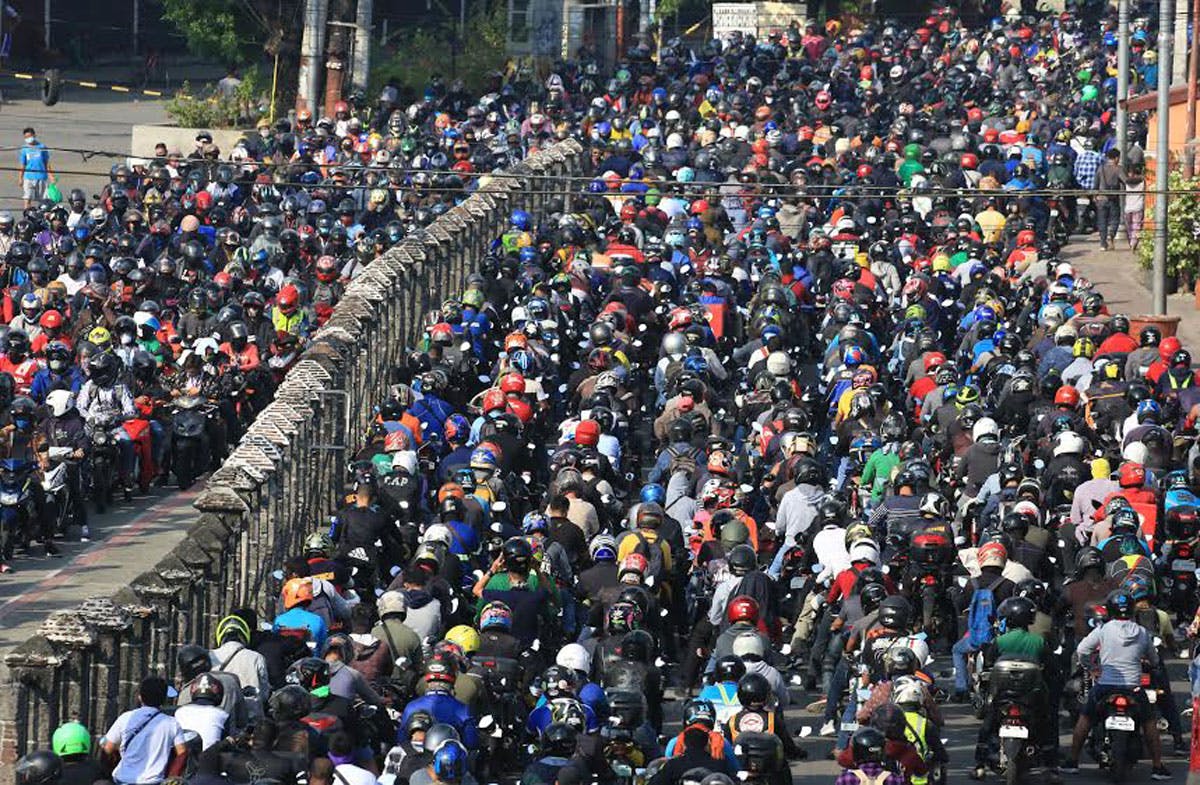
The ongoing coronavirus disease 2019 pandemic may delay the issuance of bigger and double license plates for motorcycles, as required under Republic Act No. 11235 or the Motorcycle Crime Prevention Act.
On May 11, the Land Transportation Office (LTO) issued the revised implementing rules and regulations or IRR for RA 11235 that was signed by President Duterte on March 8, 2019.
Current conditions, however, make the government unsure as to when the law can be fully implemented. LTO chief Edgar Galvante could not provide a definite timeline for the implementation, citing COVID-19 concerns as well as manufacturing issues.
He assured the public that as long as the national government is unable to start producing and issuing the new license plates, there will be no apprehension of motorcycle riders.
“Basta sa walang plaka, hindi niya kasalanan dahil walang mabigay ang LTO dahil mina-manufacture pa. Kaya ang kailangan ay rehistro niyan,” Galvante said in a phone interview.
Wrong timing?
The LTO and some government officials have locked horns over the delay in the IRR. When it was finally issued, the LTO was also criticized for the timing as the country and the rest of the world are focused on fighting the COVID-19 pandemic.
Former senator JV Ejercito, for instance, questioned the timing of the issuance of the IRR, saying motorcycle riders have been essential in keeping the economy going.
With the suspension of public transportation services in line with the community quarantines being implemented to stop COVID-19 transmission, motorcycles have also become an alternative for people who still need to report for work despite the restrictions.
Galvante hit back at his detractors, saying they should check the law instead of assailing the LTO.
“Mawalang galang lang, hindi ako ang gumawa ng batas. Hindi ako ang pwedeng magbago ng batas. Basahin sa batas at tingnan ang implementation,” Galvante said.
Critics say that the government is mandating the complete overhaul of motorcycle license plates when it has failed to address previous backlogs. This has given rise to the joke that the Philippines is becoming a republic without license plates – “republika ng walang plaka.”
There are at least 7.2 million registered motorcycles in the LTO database, all of which will need to be issued new license plates under RA 11235.
But with new specifications for the motorcycles’ license plates, LTO’s struggle to keep up may worsen. The backlog runs in the millions, apart from the tens of thousands of new registrations for motorcycles each year.
An LTO-run license plate manufacturing plant was established by the government in 2017. But with a capacity for producing only 8,000 plates per day, it would take months or even years to fully deliver the new ones.
It is also still unclear whether the newly mandated decal plates are easier to produce than metal ones. If not, it could compound production and logistical problems for the LTO.
Motorcycles have become the preferred getaway vehicle in drive-by shootings and other armed attacks. The Motorcycle Crime Prevention Act was enacted as a deterrent to the use of motorcycles in criminal activities, by mandating bigger plates that should be readable from a distance of up to 15 meters. The law also imposes stiff fines for violators.
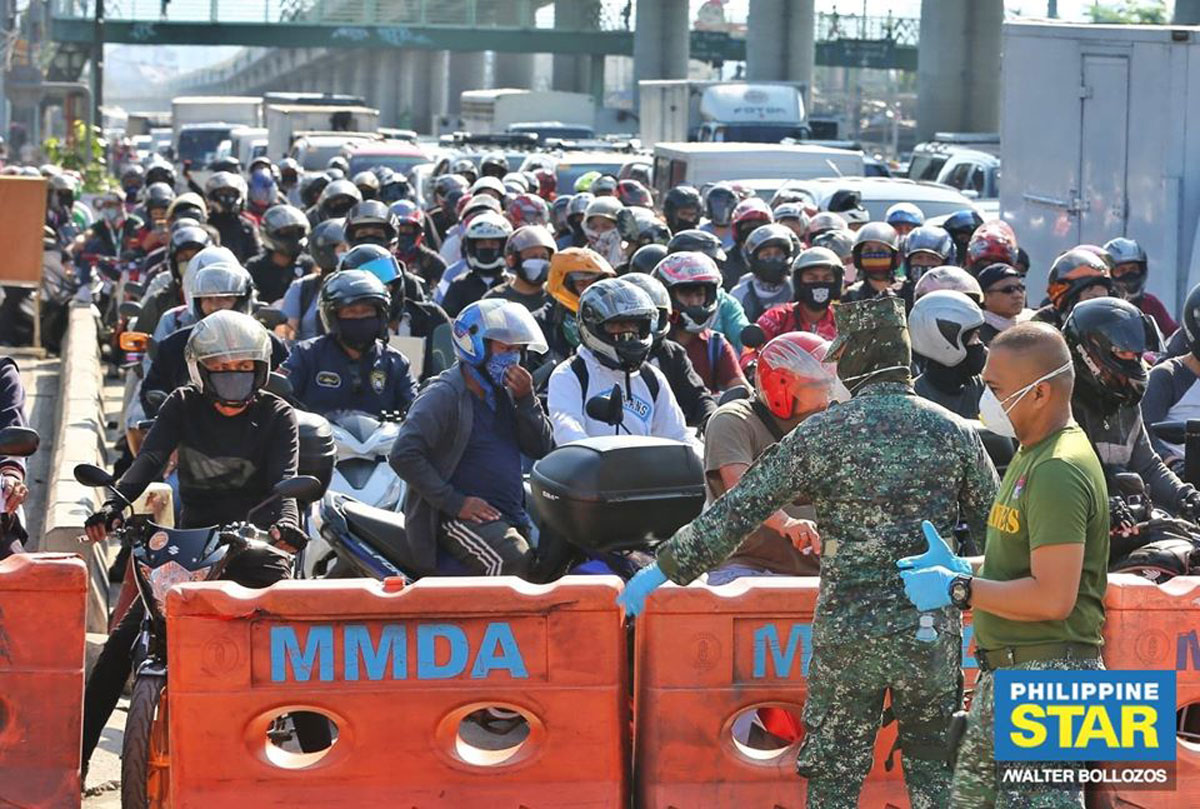
Sen. Richard Gordon, in a privilege speech earlier this month, urged the LTO to release the IRR, adding that more Filipinos have been killed by motorcycle-riding assailants than the COVID-19 virus this year.
But even Duterte had expressed apprehension over some provisions of the new law, especially the requirement of having plates for both the front and rear of the vehicle.
This was addressed in the revised IRR signed by Galvante on May 11, which required only decal plates instead of metal plates for the front of motorcycles. The metal plate shall be installed at the rear of the motorcycle.
The IRR also mandates “bigger, readable and color-coded” number plates for all motorcycles as well as lights for the rear plate.
The law imposes penalties of as much as P100,000 for violators, including riders who will be caught driving without a readable license plate.
This is not the first time that the LTO has faced problems over license plates.
In 2015, the Commission on Audit (COA) issued a notice of disallowance that stopped the procurement approved in 2014 of 700,000 car and motorcycle license plates.
In 2018, COA lifted its notice of disallowance as the Supreme Court affirmed the legality of the P3.8-billion contract for the motorcycle vehicle license plate standardization program.
While the Duterte administration took steps to ease the backlog, the effects of the COA ruling are still felt today.
The LTO has yet to release updated figures on the backlogs. Previous estimates pegged the backlog at 5.8 million plates for motor vehicles and 2.5 million for motorcycle plates.
The Duterte administration has invested in a P978-million license plate manufacturing contract awarded to Trojan Computer Forms Manufacturing Corporation and JH. Tonnjes E.A.S.T. GmbH Joint Venture in 2018.
Galvante said that with the new contract, the LTO has been able to substantially reduce the license plate backlog from the previous administration.


