



Stronger Programs For HPV Vaccination, Cervical Cancer Screening Pushed
Data showed that cervical cancer remains the second most common cancer among Filipinas, with approximately 8,549 new cases and 4,380 deaths annually.
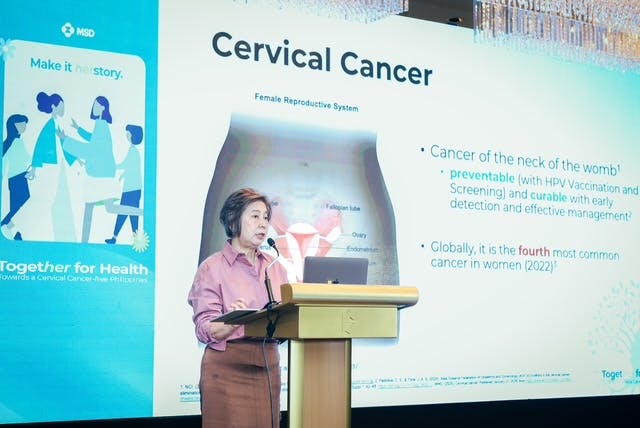
With 12 Filipinas dying from cervical cancer every day, medical experts are calling for stronger efforts to strengthen human papillomavirus (HPV) vaccination and other cervical cancer prevention programs in the country.
“Cervical cancer is preventable, yet more than half of Filipinas diagnosed with it still die from the disease,” Dr. Concepcion Rayel, president of the Philippine Obstetrical and Gynecological Society (POGS), said in a recent forum on cervical cancer awareness.
“We have the technical expertise and manpower. We have screening tools. We have subspecialists trained for treatment. But most importantly, we need leadership to establish a clear roadmap, so we move in the same direction,” she added.
The forum, titled Together for Health: Towards a Cervical Cancer-free Philippines, was held last May in time for the annual observation of the Cervical Cancer Awareness Month in the country.
It gathered health leaders, medical experts, advocates, and policymakers to discuss ways to strengthen efforts to combat this disease.
Data showed that cervical cancer remains the second most common cancer among Filipinas, with approximately 8,549 new cases and 4,380 deaths annually.
During forum, speakers emphasized that HPV vaccination remains the most effective first line of defense against cervical cancer.
“Because we know the cause, we now have the tools to fight it, vaccines that can prevent HPV infection, screening tests that can detect it early, and treatments that can stop its progression to cancer,” said Christia Padolina, program director for Cervical Cancer Elimination at the Asia Oceania Federation of Obstetrics and Gynecology (AOFOG).
“Countries with greater resources are now using the nonavalent HPV vaccine… The Philippines currently uses the quadrivalent vaccine, which remains effective. However, it is important for us to continue evaluating future directions,” she added.
Dr. Ana Victoria Dy-Echo, chair of the POGS Committee on Women’s Cancers, stressed how HPV vaccination remains the optimal strategy for primary prevention.
“In fact, cervical cancer is the only cancer that can be prevented across all three levels,” she said, referring to vaccination, screening and early treatment.
Beyond HPV vaccination, medical experts also stressed the importance of improving cervical cancer screening rates in the country, which is currently at very low levels.
“We must move toward broader adoption of HPV DNA testing… What matters most is making screening widely available because testing allows early detection, appropriate management and preventive care,” said Padolina.
“Successful programs usually begin with a strong national framework and commitment… The Philippines already has many of the essential ingredients – from policy support and trained specialists to vaccines, screening tools and treatment capability. The challenge now is implementation: making sure these reach women consistently, equitably and at the right time,” she added.


