



‘Bantay Impeachment’ Launched To Monitor VP Trial
Bantay Impeachment outlined a nationwide campaign anchored on grassroots education and engagement, impeachment monitoring and strategic communications, and citizen mobilization.
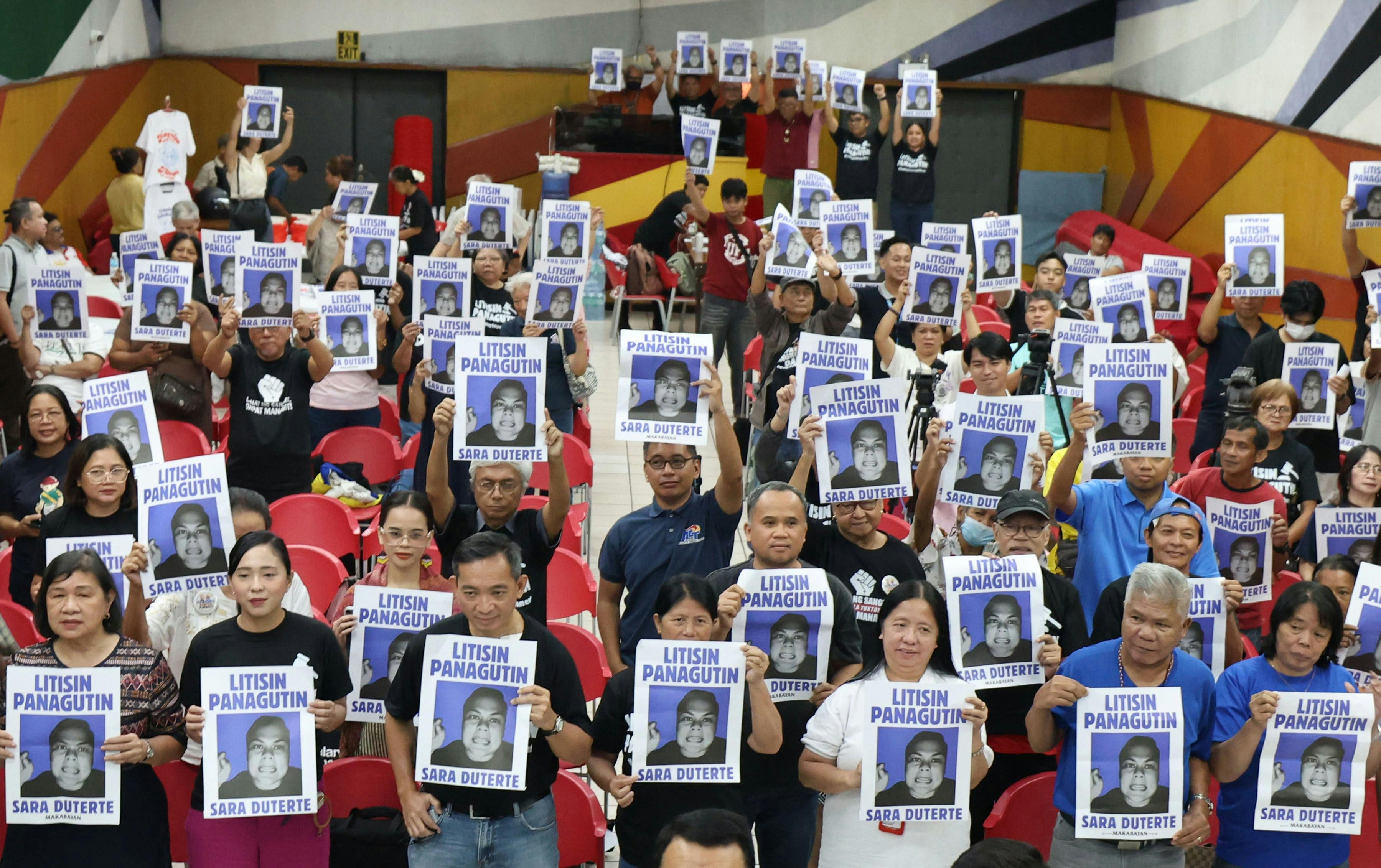
A coalition of 120 civic groups, academics and religious organizations on Saturday, June 14, launched the “Bantay Impeachment” initiative to promote public vigilance during the upcoming impeachment trial of Vice President Sara Duterte.
The initiative aims to educate the public about the impeachment process, relate legal and constitutional issues to the hardships of Filipinos, mount a pressure campaign on senator-judges to ensure fairness and transparency throughout the trial and counter online disinformation.
In a joint statement, Tama Na, Kilusang Bayan Kontra Kurakot convenor and Makabayan coalition member France Castro urged the public to closely monitor the proceedings, stressing that impeachment is not merely a political contest but a constitutional mechanism designed to uphold public accountability.
“When public funds are misused and public trust is betrayed, it is ordinary citizens who suffer the consequences through inadequate social services, poor governance and deepening corruption,” their statement read.
Bantay Impeachment outlined a nationwide campaign anchored on grassroots education and engagement, impeachment monitoring and strategic communications, and citizen mobilization.
The groups said they would hold community forums, campus discussions, daily trial explainers and fact-checking initiatives, while mobilizing supporters for rallies on July 6, the opening day of the impeachment trial.
“Bantay Impeachment seeks to bridge the gap between the legal proceedings inside the impeachment court and the everyday struggles of ordinary Filipinos,” organizers said.
Aside from Castro, House prosecutors Rep. Joel Chua and Rep. Terry Ridon, along with prosecution panel spokesperson Rep. Renee Co, attended the launch and expressed support for the initiative.
During the event, Ridon said the prosecution’s plan to present new evidence involving Duterte’s properties not declared in any of her statements of assets, liabilities and net worth (SALNs) from 2007 to 2024 remains legally sound.
“Nothing prevents the prosecution panel from laying down new evidence up until pre-trial proceedings. By next week, these will be disclosed with particularity in our pre-trial brief,” he said, adding that new evidence may also be introduced after the pre-trial, provided it is relevant and material.
‘One article may be enough’
As the prosecution prepares for the Senate trial, Chua said the House panel may not need to present all four articles of impeachment if a single article is already strong enough to secure a conviction.
Ahead of the filing of the prosecution’s pre-trial brief, Chua said the course of the trial would depend on how the evidence is received.
“Depending on our assessment, if after one, two, or three articles we believe our evidence is already strong, we may no longer need to present all four articles,” he said.
Chua stressed that conviction on all four articles is not required and that the prosecution may seek a vote once it believes sufficient evidence has been presented.
“If we believe that the evidence under the first article alone is already strong enough and that conviction can be secured based on that, we may no longer continue with the remaining articles and allow the senators to vote on that article,” he explained.
Chua also maintained that the Senate has no constitutional authority to dismiss the impeachment complaint against Duterte and that its duty is to proceed with the trial once the articles of impeachment have been transmitted.
“The only reason or the only way for this case to be dismissed is if the Senate has already rendered a decision and the Vice President is either acquitted or convicted,” Chua said.
Estrada’s role questioned
Chua also raised questions about the participation of Sen. Jinggoy Estrada in the impeachment proceedings following his arrest on non-bailable plunder charges.
In his personal opinion, Chua said Estrada “temporarily cannot function,” placing his role in the trial in limbo.
“How can he assess whether the witness that will be called by both the prosecution and the defense is telling a lie or telling the truth?” Chua, who represents Manila’s third district, asked.
“How can he observe the manner or conduct of the witness, the way he or she will answer all the questions that will be asked of him?” he added.
Co echoed concerns over the senator’s participation, saying the public expects “quality participation” from senator-judges, especially through physical presence during the proceedings.
Estrada, however, said it is “premature” to rule out his participation in the trial noting that his suspension remains under judicial review. “The issue is far from settled,” he said.
Estrada is participating in his second impeachment trial. He voted to convict former chief justice Renato Corona in 2012 and had already taken his oath as senator-judge in Duterte’s impeachment trial before the Sandiganbayan ordered his arrest on June 1. – With an additional report from EJ Macababbad and Daphne Galvez


