



IN NUMBERS: Legacies Of Noynoy Aquino
According to two of his former officials, the most important legacies of former president Benigno “Noynoy” Aquino III were those that alleviated poverty and generated jobs for the people through a combination of policy, governance and political will.

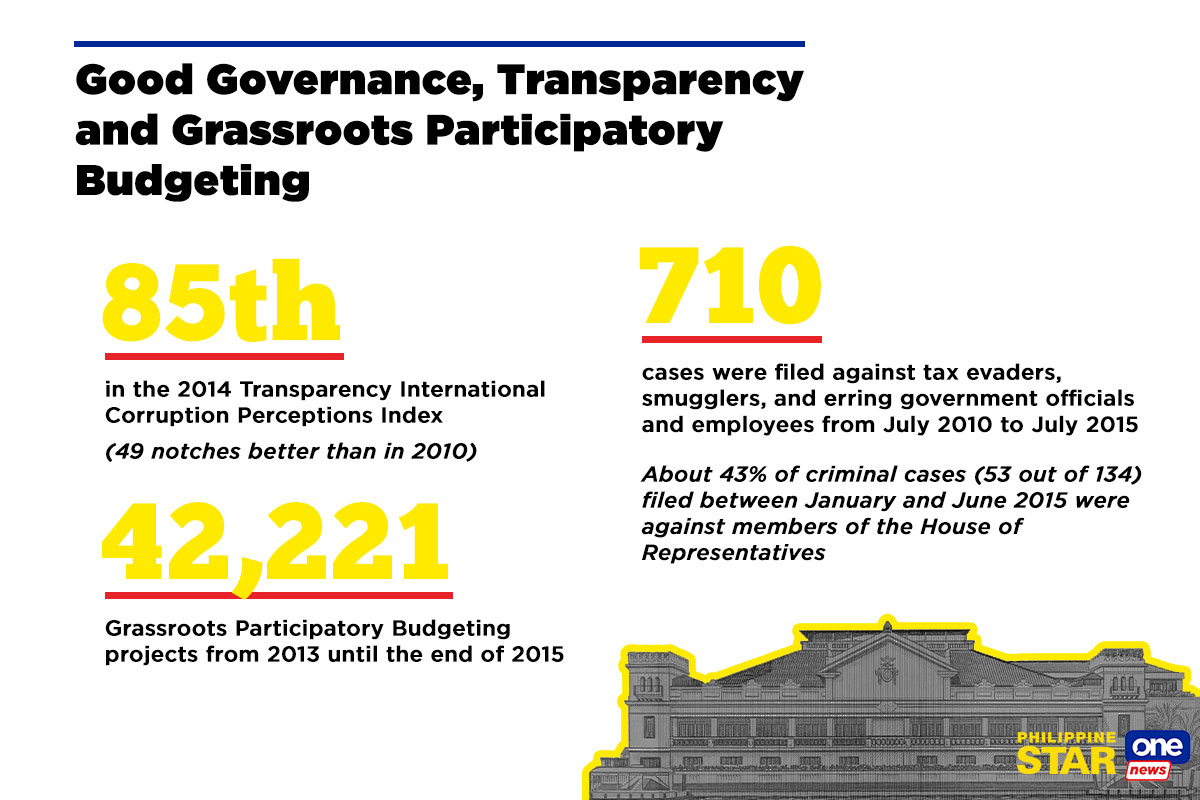
Good governance, transparency and grassroots participatory budgeting
During the Aquino administration, Open Data Philippines was launched on Jan. 16, 2014 as part of its efforts to curb corruption in the government.
The Open Data Philippines is a website that aims to institutionalize good governance by making government data available to the public.
Under Aquino’s term, the Philippines ranked 85th in the 2014 Transparency International Corruption Perceptions Index. This is 49 notches better than in 2010.
Imparting transparency and responsiveness in the budget process, the Aquino administration initiated the grassroots participatory budgeting projects, a reform agenda that involves ordinary Filipinos in planning the national budget.
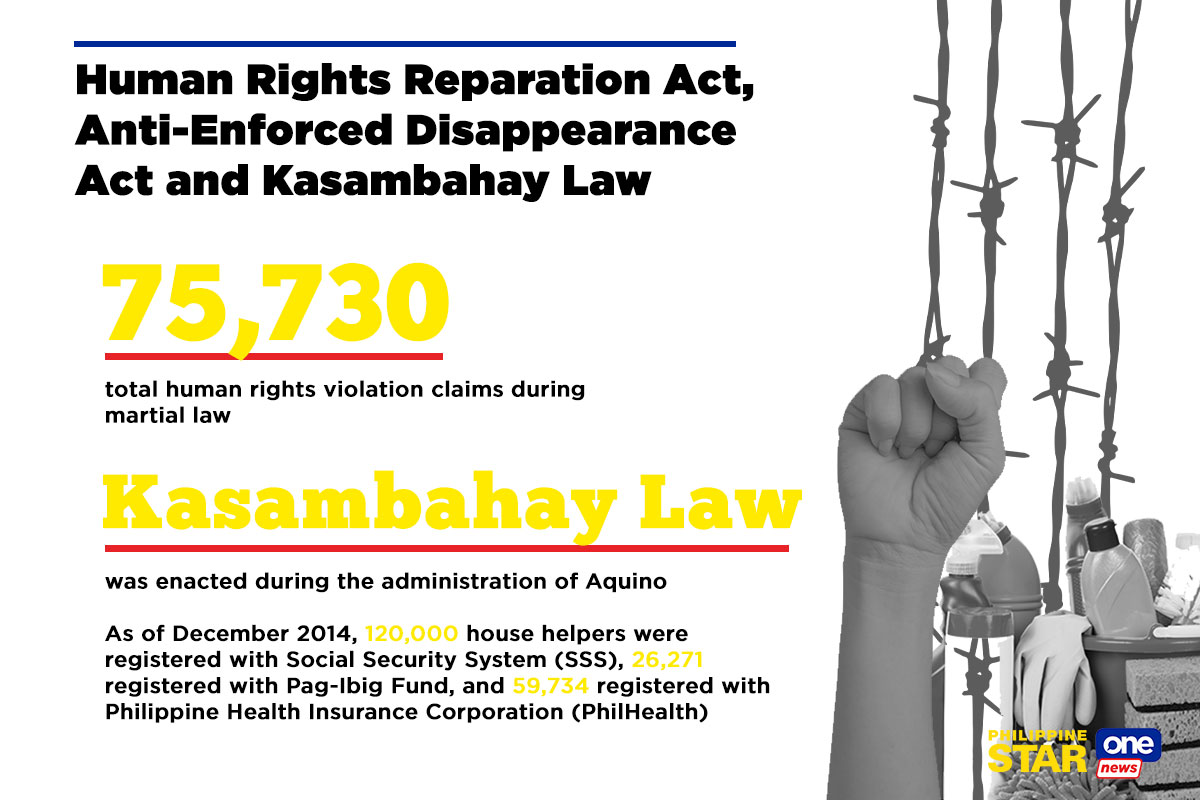
Human Rights Reparation Act, Anti-Enforced Disappearance Act and Kasambahay Law
Some of the landmark laws signed by Aquino were the Human Rights Reparation Act and the Anti-Enforced Disappearance Act which aimed to protect the victims of martial law.
Under Aquino’s watch, the Human Rights Victims Claims Board received a total of 75,730 human rights violation claims from martial law victims.
Meanwhile, the Anti-Enforced or Involuntary Disappearance Act of 2012 is the first law of its kind in Asia as it sees enforced disappearance “as a special or separate offense” from kidnapping, serious illegal detention, and/or murder.
Kasambahay Law, which recognizes the rights and benefits due to household staff, was also enacted during the administration of Aquino.
As of December 2014, 120,000 house helpers were registered with Social Security System (SSS), 26,271 registered with Pag-Ibig Fund, and 59,734 registered with Philippine Health Insurance Corporation (PhilHealth).
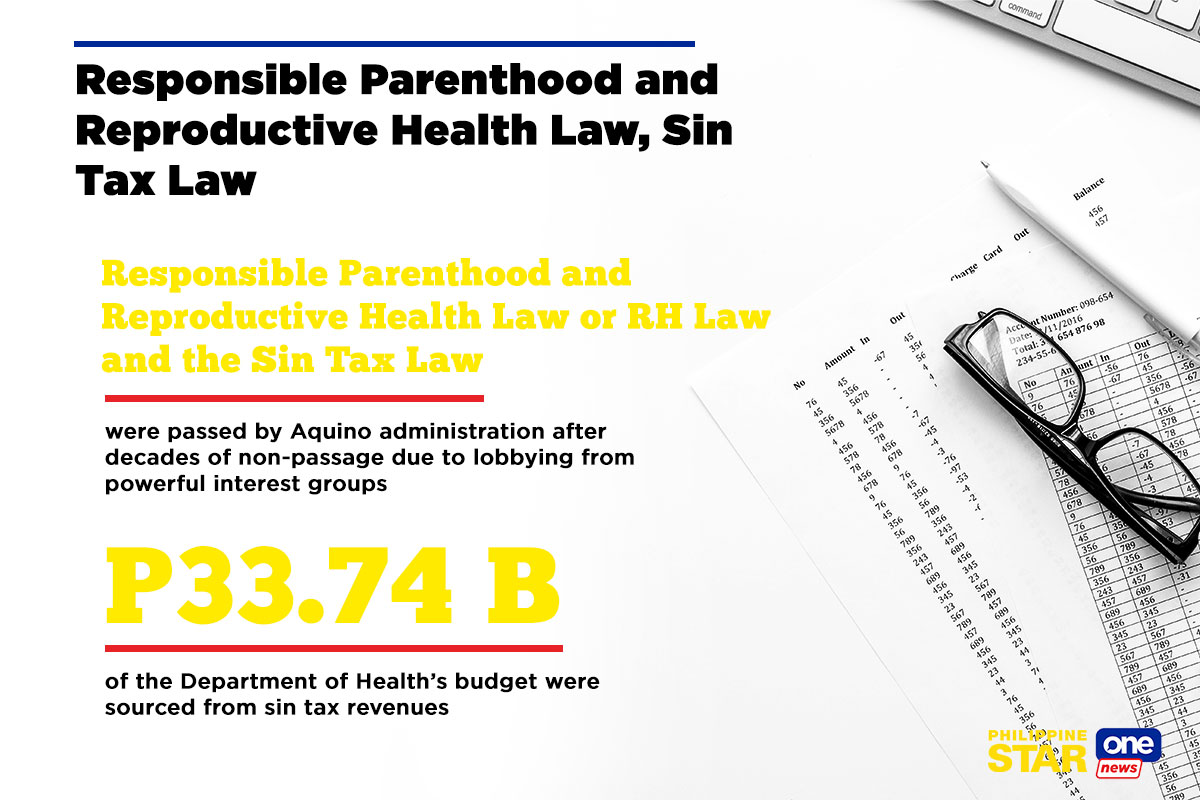
Responsible Parenthood and Reproductive Health Law, Sin Tax Law
The Aquino administration also passed the Responsible Parenthood and Reproductive Health Law or RH Law and the Sin Tax Law after decades of non-passage due to lobbying from powerful interest groups.
The RH Law mandates the government to adequately address the needs of Filipinos on responsible parenthood and reproductive health. It aims to empower the Filipino people, especially women and youth, through informed choice and age- and development- appropriate education.
While Sin Tax Law enables the government to substantially fund its most important healthcare programs thus jumpstarting the nation’s journey toward universal healthcare.
In the budget of the Department of Health (DOH) in 2015, a total of P33.74 billion or 38% of the were sourced from sin tax revenues.
Revised PhilHealth Law, GSIS, SSS
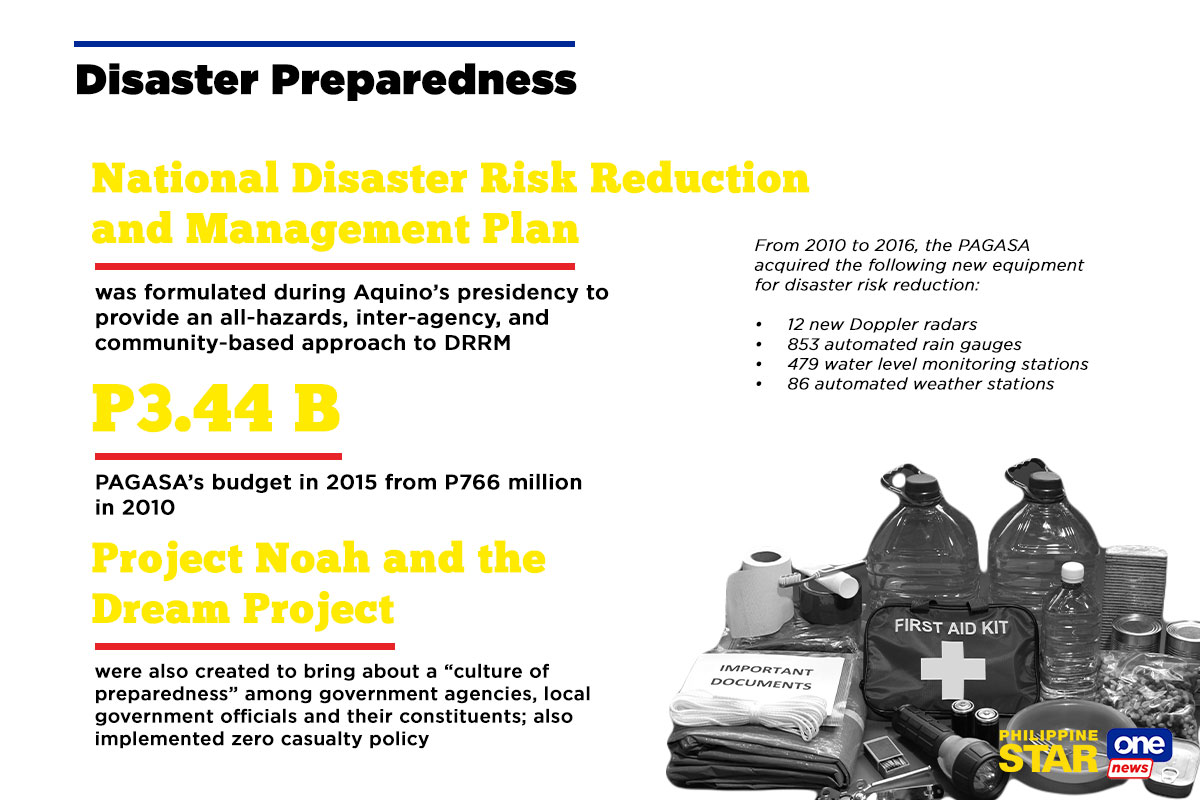
During Aquino’s term, a total of 93 million Filipinos were covered by PhilHealth. In 2010, only 47.07 million had PhilHealth insurance.
PhilHealth had received the biggest share of subsidies from the national government in 2015 amounting to P34.87 billion, which represents almost 44% of government subsidies for government-owned and controlled corporations (GOCCs).
In 2015, PhilHealth paid P97 billion worth of benefits, compared to P34 billion in 2011 before the passage of the Sin Tax Law. Its reserve funds amounted to P128 billion from about P112 billion in 2012.
Government Service Insurance System (GSIS), PhilHealth, and SSS received the full passing rate from the 2015 Anti-Red Tape Report Card Survey during the Aquino government. GSIS and PhilHealth topped the said survey.
In 2014, the actuarial life of GSIS was extended until 2049 (35 years) while in 2011, the actuarial life of SSS was extended until 2042 (31 years).
Infrastructure, tourism, and economy
In terms of the country’s infrastructure projects, a total of 12 Public-Private Partnerships (PPP) projects had been awarded through the National Economic Development Authority. Since 1992, there were only six projects in the past three administrations.
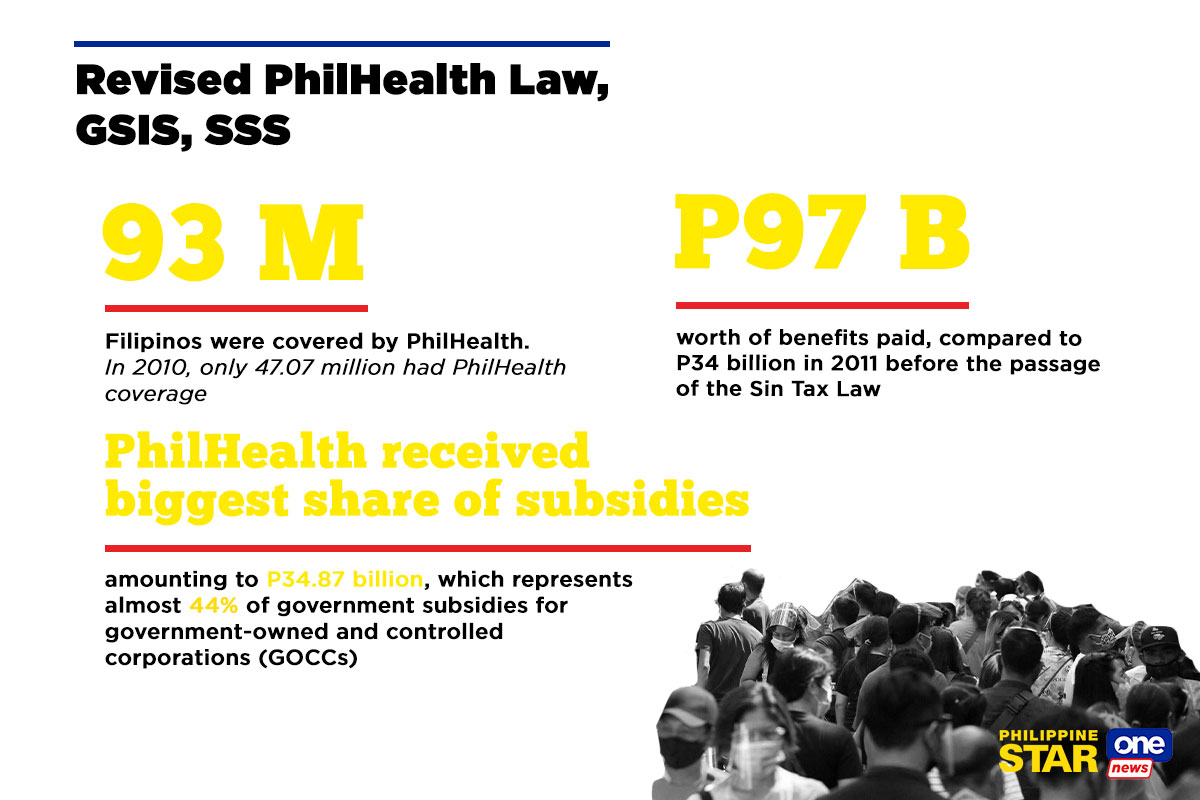
The Philippine infrastructure budget had increased from P165 billion in 2010 to P759.58 billion in 2016.
A total of P48.55 billion was saved from increased competition and used for additional roads, bridges, and flood control projects.
The Philippines ranked 87th in the World Economic Forum’s Global Competitiveness Report on the Quality of Roads. This is 27 notches higher than that in 2010.
Through the Department of Tourism’s “It’s More Fun in the Philippines” campaign, a total of 5,360,382 tourists visited the Philippines in 2015 from 3,017,099 tourist arrivals in 2009.
A total of 4.99 million individuals were directly employed in tourism-related activities in 2015.
The government invested a total of P60.4873 billion from 2011 to 2015 for tourism infrastructure projects, which is 338% or P46.69 billion higher than those from 2006 to 2010.
The Aquino’s administration economic policies were analyzed and commended by experts.
The Philippines also received the following investment rating upgrades:
- BBB- Positive (2016) – Fitch
- Baa2 Stable (2016) – Moody’s
- BBB Stable (2016) – S&P
From 2010 to 2015, the Philippine economy achieved a 6.2% average annual growth in the gross domestic product (GDP), the highest since the 1970s.
In 2016, the Philippine inflation rate was pegged at 0.9% from 3.7% in 2010.
Agrarian reform and land registration
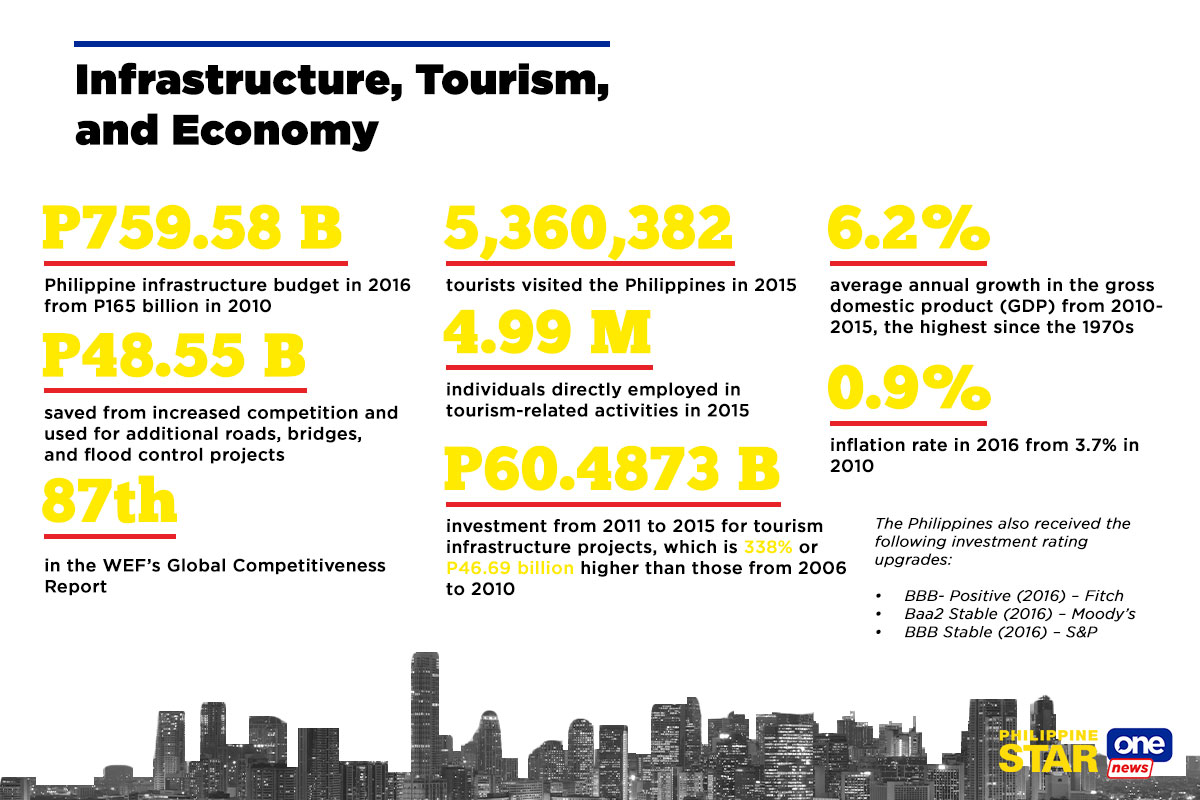
Under the Aquino administration, 506,512 hectares had been successfully awarded to 305,484 agrarian reform beneficiaries under compulsory distribution.
The Department of Agriculture (DA) had constructed a total of Agri-Pinoy Trading Centers (APTCs), which eliminates the need for middlemen. These APTCs were accessible to 7,000 farmers.
The Department of Public Works and Highways (DPWH) had constructed 1,985.81 kilometers of concrete, climate-resilient farm-to-market roads in 3,252 barangays, benefiting 630,000 farmers.
The Department of Agrarian Reform (DAR) had distributed all the 4,100 hectares of CARPable lands to 6,081 Agrarian Reform beneficiaries of Hacienda Luisita, as mandated by the Supreme Court.
About 496,776 land titles and 3,083,477 deeds were issued and registered by the Land Registration Authority (LRA) from January to September 2015.
The computerized titling project of the LRA has allowed Filipinos to retrieve their land titles without the need to travel from distant provinces. Moreover, it has brought about an efficient backup system in case unforeseen catastrophes such as fires or floods destroy actual copies of land titles.
The speedy transaction of land registration documents has also brought about the faster distribution of land to agrarian reform beneficiaries and has been a catalyst for a boom in the real estate industry.
Disaster preparedness
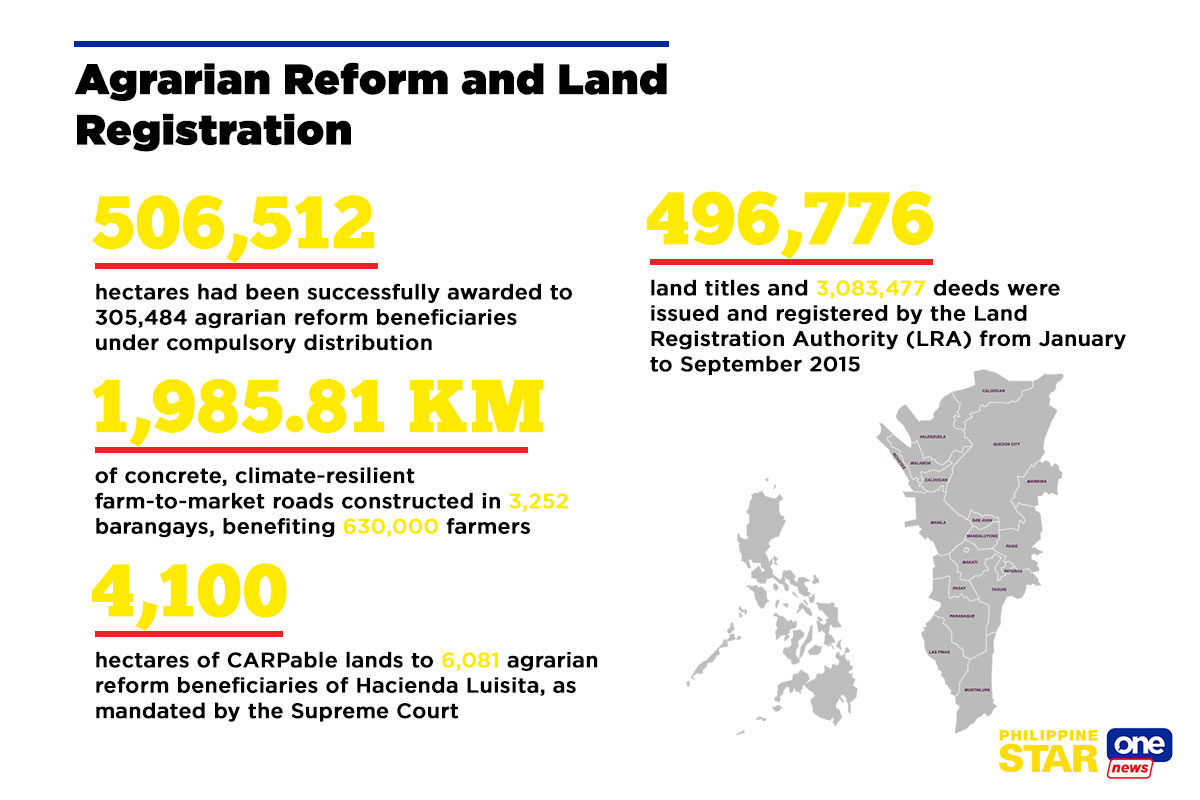
The National Disaster Risk Reduction and Management (DRRM) Plan was formulated during Aquino’s presidency to provide an all-hazards, inter-agency, and community-based approach to DRRM.
In 2014, pre-disaster risk assessment was also institutionalized. The improvement in the government’s preparedness and response to disasters resulted in “zero casualty” recorded during the devastation of the Typhoon Chedeng and Tropical Storm Egay.
From 2010 to 2016, the Philippine Atmospheric, Geophysical, and Astronomical Services Administration (PAGASA) acquired new equipment for disaster risk reduction.
During the Aquino presidency, PAGASA’s budget had increased from P766 million in 2010 to P3.44 billion in 2015.
Aside from the modernization of the weather agency, the Project Noah and the Dream Project were also created to bring about “a culture of preparedness” among government agencies as well as among the local government officials and their constituents.
Housing and 4Ps
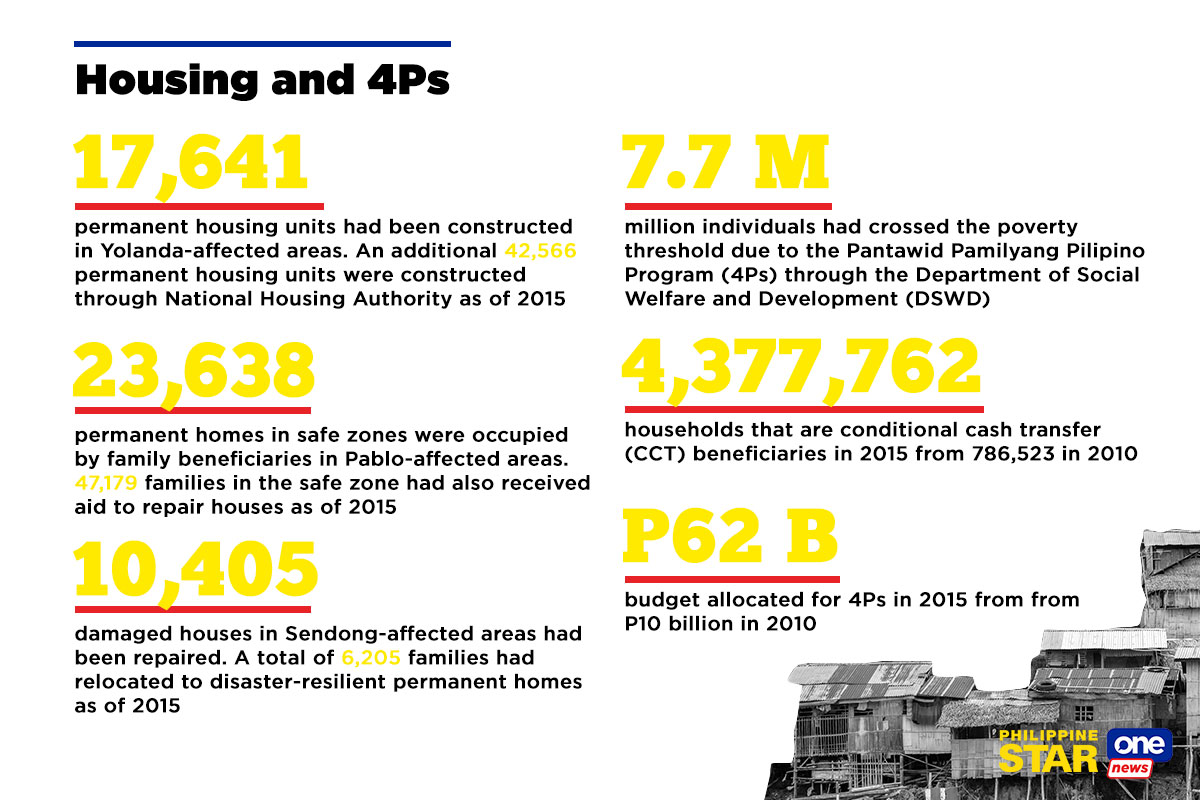
As of 2015, a total of 17,641 permanent housing units had been constructed in Yolanda-affected areas. An additional 42,566 permanent housing units were constructed through National Housing Authority.
As of 2015, 23,638 permanent homes in safe zones were occupied by family beneficiaries in Pablo-affected areas. 47,179 families in the safe zone had also received aid to repair houses.
As of 2015, 10,405 damaged houses in areas affected by Tropical Sendong had been repaired. A total of 6,205 families had relocated to disaster-resilient permanent homes.
Entering 2016, more than 7.7 million individuals had crossed the poverty threshold due to the Pantawid Pamilyang Pilipino Program (4Ps) through the Department of Social Welfare and Development (DSWD).
From 786,523 household beneficiaries in 2010, the number of conditional cash transfer (CCT) beneficiaries increased to 4,377,762 households by the end of 2015.
The CCT program aims to retain children in school, keep children healthy, and invest in the future of children.
The budget allocated for 4Ps increased from P10 billion in 2010 to P62 billion in 2015. With the increase in budget in 2016, 4.6 million households were now covered by 4Ps.
Education, TESDA
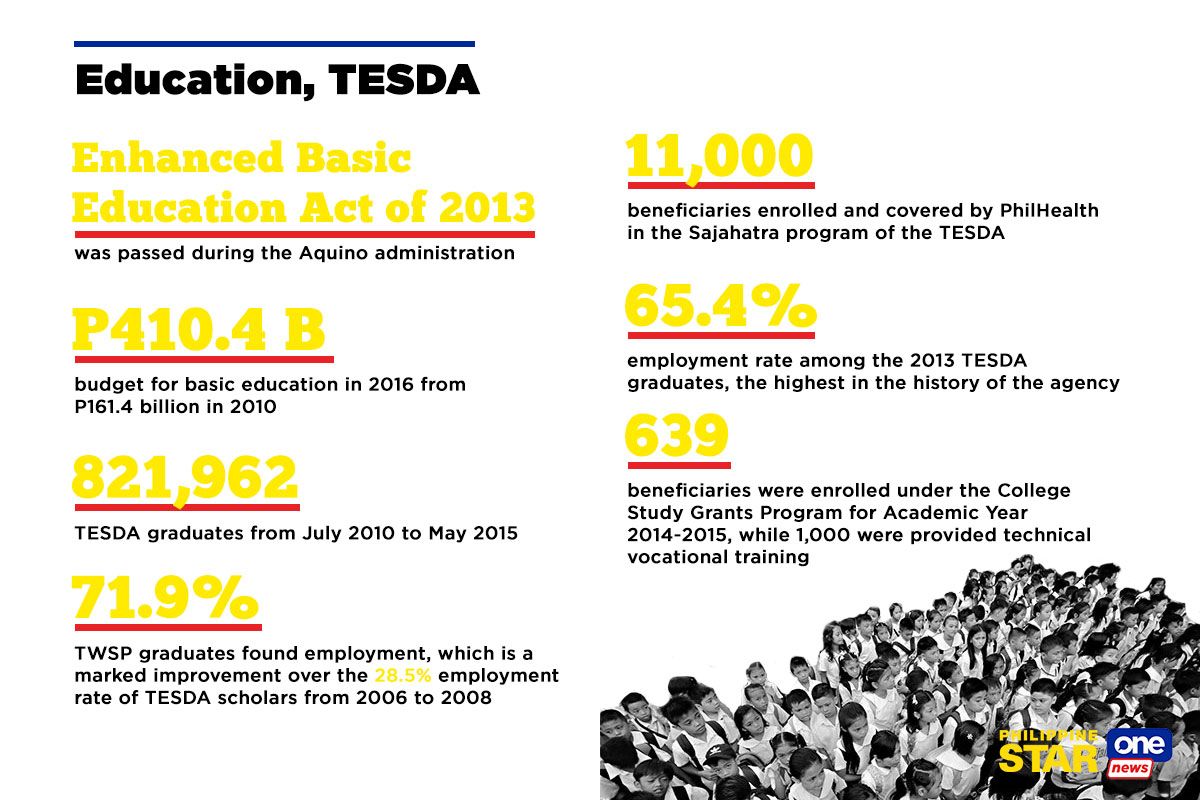
Although there have been recommendations for education reform as early as the 1920s, the Enhanced Basic Education Act of 2013 was only passed during the Aquino administration.
This legislation seeks to produce graduates who are qualified and globally competitive as the number of years in basic education is now at par with global standards.
A highlight of this educational reform was the introduction of a senior high school program that gives Filipino students two additional years of education so that they may master the knowledge and skills necessary for them to become productive citizens.
The budget for basic education had increased from P161.4 billion in 2010 to P410.4 billion in 2016.
Meanwhile, the Technical Education and Skills Development Authority (TESDA)’s Training for Work Scholarship Program (TWSP) benefited 821,962 graduates from July 2010 to May 2015.
Technical-vocational education program seeks to address the challenge of job-skills mismatch which causes unemployment and underemployment in the country.
In 2013, about 71.9% of TWSP graduates found employment, which is a marked improvement over the 28.5% employment rate of TESDA scholars from 2006 to 2008.
Around 11,000 beneficiaries were enrolled and covered by PhilHealth in the Sajahatra program of the TESDA.
Under the Aquino administration, there was a 65.4% employment rate among the 2013 TESDA graduates, the highest in the history of the agency.
About 639 beneficiaries were enrolled under the College Study Grants Program for Academic Year 2014 to 2015, while 1,000 were provided technical vocational training.
In recognition of TESDA’s efficiency in delivering its services, it was awarded nationwide ISO 9001:2008 certification in February 2015.
Peace agreement
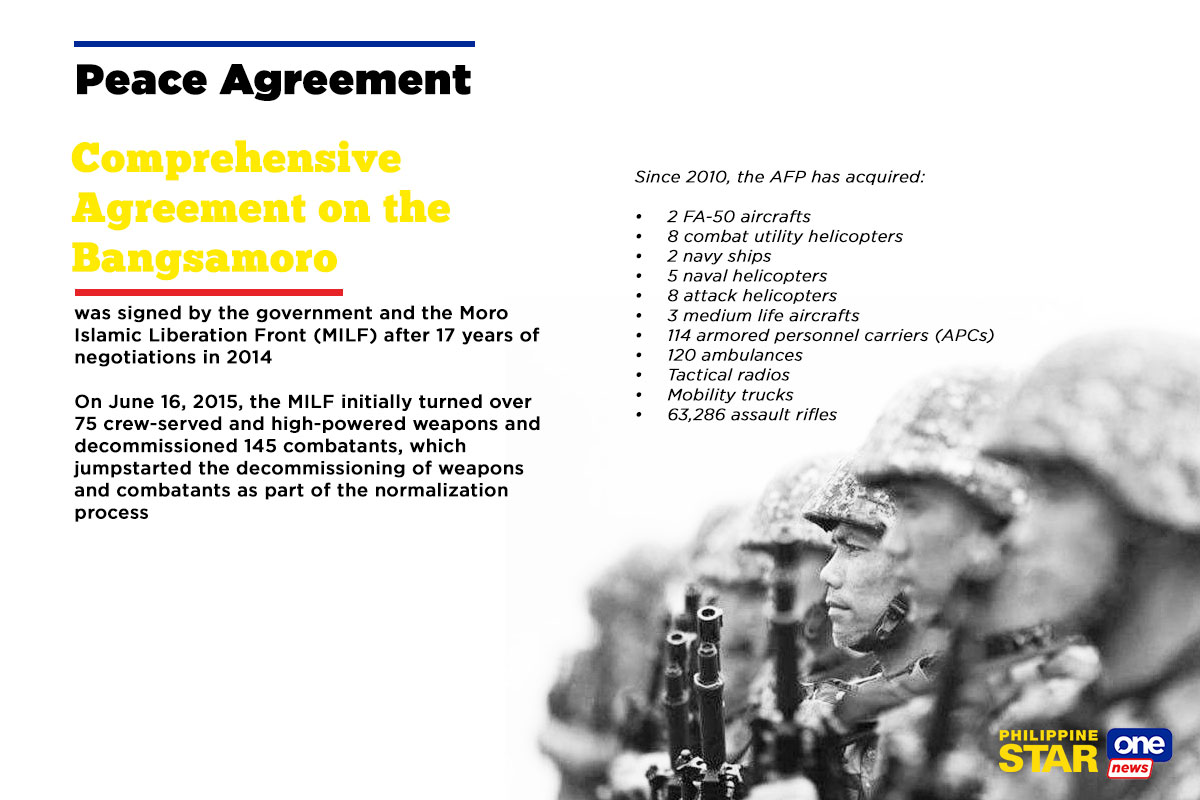
After 17 years of negotiations, the government and the Moro Islamic Liberation Front (MILF) signed the Comprehensive Agreement on the Bangsamoro (CAB) on March 27, 2014.
On June 16, 2015, the MILF initially turned over 75 crew-served and high-powered weapons and decommissioned 145 combatants, which jumpstarted the decommissioning of weapons and combatants as part of the normalization process.
Since 2010, the Armed Forces of the Philippines (AFP) has acquired aircrafts, helicopters, ships, armored personnel carriers, ambulances, tactical radios and assault rifles.
These figures were
based on the book and compilation of documentaries titled “The Aquino Legacy:
The Filipino Is Worth Fighting For” produced by lawyer Paquito Ochoa, who
served as Aquino’s executive secretary.
Ochoa said in the foreword dated May 12, 2016 that if Aquino’s mother, former president Corazon Aquino, was revered for restoring the country’s democracy in 1986, then the son would be remembered for enabling this same democracy to create opportunities for the people by proving that “it is possible for government to shun corruption and to be the lead advocate for social justice and inclusive growth.”
Ochoa pointed out that Aquino was mindful of the mandate he received from the people and he would always remind them that “change has only just begun.”
Both Ochoa and former Presidential Communications Development and Strategic Planning Office secretary Ricky Carandang said local and foreign investors recognized the reforms, making it possible for the country’s inflation rate, poverty level and unemployment level to record lows.
Ochoa noted that savings were used to fund programs like the CCT and PhilHealth coverage of more Filipinos without new taxes, except for the sin tax measure.
Carandang explained in an article on Medium after Aquino died last month, the country’s poverty incidence was 26.3% when the former president assumed office. When he left office in 2016, that poverty index was down to 21.6%.
“In the real world, that translates to millions of families lifted out of extreme poverty and ready to dream of a better future. It wasn’t a single action or policy that did it but the combination of policy, governance, and political will,” Carandang said.
Policies aimed at protecting and uplifting the poor, like the massive expansion of the CCT program, the expansion of PhilHealth coverage, the passage of RH Law, and improving the quality and expanding access to public education were essential for a country’s long-term success.
“All those things that never make it to the headlines (except when they became politically controversial)…It’s this kind of growth that paved the way for the economic and social miracles of China, Korea, and Singapore,” he emphasized.
“But it’s not just about material comfort. Poverty is dehumanizing and degrading and freeing people from that is the most important thing any developing country leader can do. Because when your everyday life isn’t an existential struggle anymore, you can begin to aspire to be better for yourself and your children and your community,” Carandang said, adding: “Because when people can reclaim their dignity, it’s easier for them to be compassionate, civil, and tolerant…When he stepped down from office in 2016, he acknowledged that the work was far from over and that others had to finish the job. But he gave it his all and left it all on the field. It’s now up to us to carry on.”


