



Gov’t Statisticians To Proceed With 2020 Census In September Despite COVID-19 Risks
More than 100,000 survey personnel will observe distancing and wear face masks and face shields as they continue with data collection amid the COVID-19 pandemic, says the Office of the National Statistician.
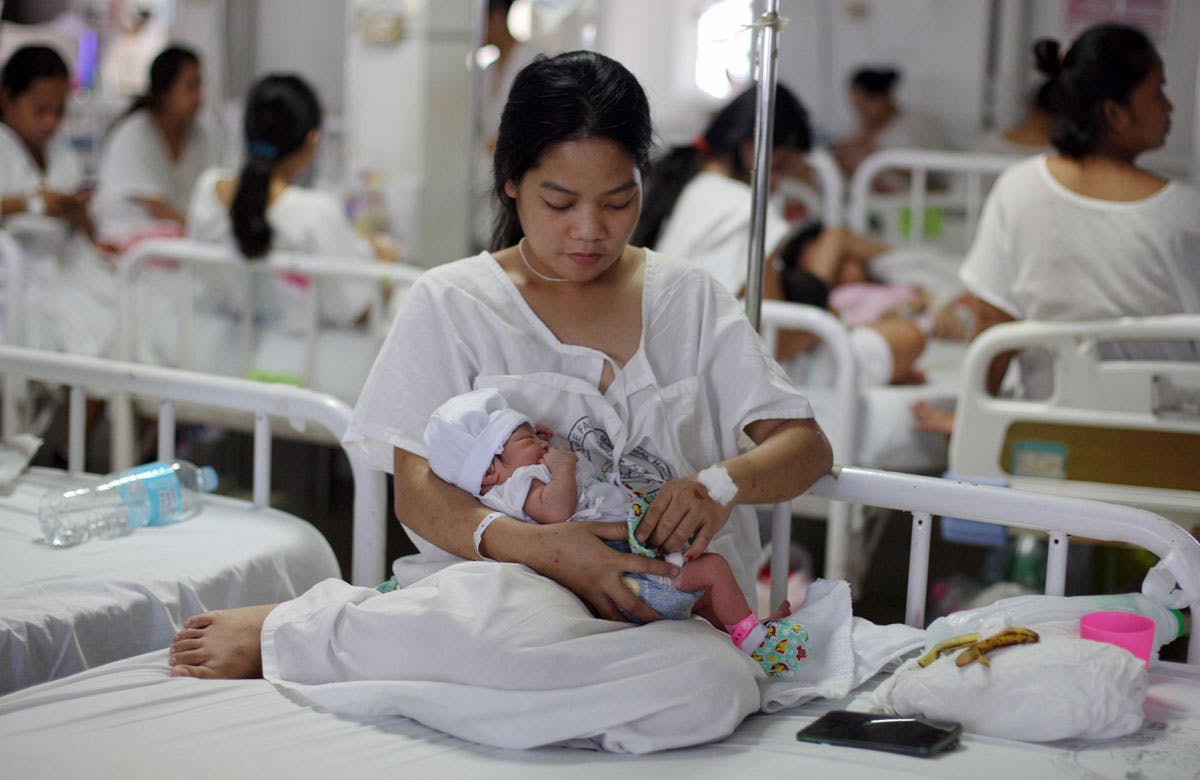
The government is set to proceed with the conduct of the 2020 Census of Population and Housing throughout September despite unique challenges that the Philippine Statistics Authority (PSA) faces due to the high risks posed by COVID-19 in certain areas.
Households will be given the option to answer the questionnaire online or over the phone. Face-to-face interviews will remain the preferred mode of data collection to make things faster.
National Statistician Claire Dennis Mapa said the 113,364 data enumerators or survey personnel who will go house-to-house will wear face masks and face shields, observe physical distancing and stay at the gate.
In a virtual press briefing on Thursday, Aug. 27, Mapa said the PSA aims to complete the census within September and complete the report on the country’s population by April or May 2021.
However, Mapa admitted the timetable may “slide” a bit as enumerators have to postpone the gathering of data in certain areas with high risk of COVID-19 infection until local government officials deem conditions to have improved.
“But we want to finish this and report to our President (Duterte) how many Filipinos we have as of May 1, 2020,” he said.
Mapa specifically identified Metro Manila and the Ilocos region as areas where lockdowns may be imposed over certain barangay hotspots, adding that the census may go more smoothly in the Visayas and Mindanao.
“Babalikan namin sila ’pag nag-OK na ’yung mga local officials. ’Di kami pumupunta sa areas na high-risk hanggang wala kaming clearance ng barangay officials (We will return to them when local officials say it’s OK. We do not go to high-risk areas while there is no clearance from barangay officials),” he said.
According to Mapa, the PSA cannot afford to subject its personnel to COVID-19 testing because the disease was not taken into account when the census was allocated a P3.8-billion budget. But Mapa said some local government units (LGUs) have offered to shoulder the cost to ensure that the enumerators are healthy.
If an enumerator tests positive, Mapa says there are protocols in place with the Census Coordinating Boards at the local government level. The LGUs will initiate contact tracing to see which households could have been exposed.
But he said the census could not itself be used to aid the government’s usual contact tracing efforts. This is because the gathered data will be kept confidential and summarized in an aggregated form as mandated by Section 26 of Republic Act No. 10625, or the Philippine Statistical Act of 2013.
“Only aggregated information will be released... Walang data o tabulation ang makakapagbigay ng identity ng sinumang indibiduwal o household (There is no data or tabulation that can give away the identity of any individual or household),” Mapa stressed.
While the census will start on Sept. 1 in most of the country, Mapa said it will be deferred by a week to Sept. 8 in Masbate and some areas in the Bangsamoro Autonomous Region in Muslim Mindanao – not because of a high risk of COVID-19 infection, but because of the recent 6.6-magnitude earthquake and the twin suicide bombings in Jolo, Sulu.
How data will be gathered
Enumerators will do data gathering in areas where they reside, so they will be known by residents and local officials. Such personnel will also be familiar with far-flung areas, ensuring that all persons in the country will be interviewed for the census.
Face-to-face interviews take 15 to 30 minutes. Various questions will be asked regarding the age, gender and civil status of all members of the household, their occupation (especially overseas employment), and the characteristics of the house, from materials to the availability of water and electricity. Demographic data such as fertility will also be gathered.
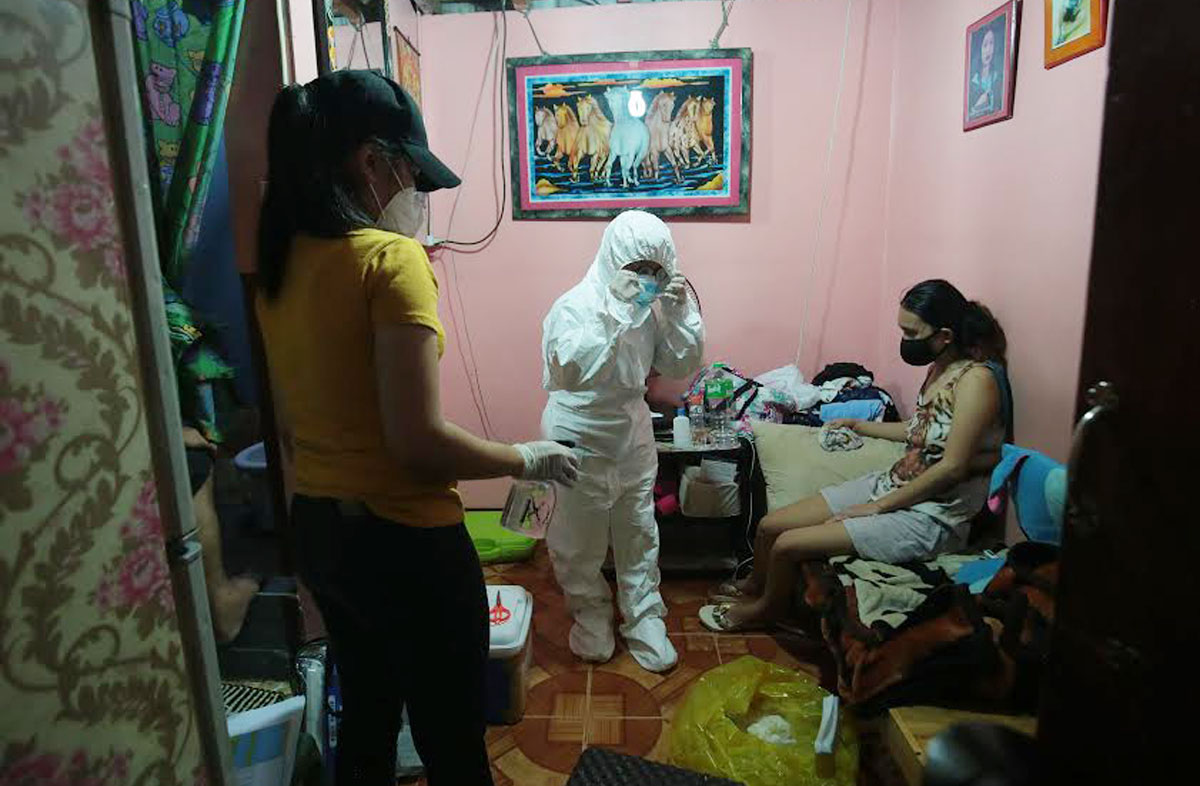
If the household representative is not comfortable with a face-to-face interview, the data enumerator will ask for the contact number for a scheduled phone interview. The household will also be given the eight-page, 53-item questionnaire that can be answered over the phone, or a code that can be used for a “computer-assisted” self-administrated questionnaire.
Households may not need to submit attachments to support their answers in the census questionnaire, with Mapa saying that “ang assumption dito ay (the assumption here is) you are truthful, the household is truthful.” Should data enumerators question some items, they will conduct verification over the phone or via email.
Mapa said the PSA was not new to “alternative means of collecting data.” The Labor Force Survey for April 2020 – which revealed that the unemployment rate rose to 17.7 percent – was conducted online while the enhanced community quarantine was in effect in Luzon.
The reference date that will be used for the questionnaires is still May 1, 2020, or exactly 10 years after the 2010 Census of Population and Housing that yielded a population count of 92,337,852 as of May 1, 2010.
Note that the 2015 Census of Population officially recorded a population of 100,981,437 as of Aug. 1, 2015. The “estimated” population as of July 1, 2020 was around 108.8 million, with 54.9 million males outnumbering 53.9 million females.
People cannot refuse to take part in the census, Mapa stressed. Under Section 27 of RA 10625, violations, such as failure to give truthful and complete answers to statistical inquiries, are punishable by one year in prison and a P100,000 fine.
Why the census is important
Mapa highlighted the role of such data in guiding state programs, especially those that target issues related to education, health, security and poverty at the local government level.
He pointed out that the gathering of data related to occupation, overseas employment and other socioeconomic factors meant “magkakaroon tayo ng idea ng impact ng COVID pandemic on households (we will have an idea about the impact of the COVID pandemic on households).”
“Hindi makakaila kung gaano kahalaga ang Census of Population and Housing sa ating bansa sa pagsasaayon at maayos na pagpapatupad ng programang pang-taumbayan, lalo na sa panahon ng pandemya (It cannot be denied how important the Census of Population and Housing is to our country in setting priorities and properly implementing programs for the people, especially in the time of the pandemic),” Mapa said.
“Alam natin na ang census na ito ay nangyayari lamang tuwing isang dekada, kaya naman ang inyong walang sawang pakikiisa ay higit na mas kailangan sa panahong ito (We know that the census only happens every decade, which is why your tireless cooperation is all the more needed at this time),” he added.
The 2020 census was originally scheduled to begin last May 4. On April 1, Mapa announced that the census had to be “delayed until after Duterte finally lifts the enhanced community quarantine” due to COVID-19.
Mapa said the postponement was meant to “help protect the health and safety of the public, PSA employees, census workers including those from the Department of Education, and other partners/stakeholders.”
This also forced the PSA to abandon its plan of tasking public school teachers to conduct the census – because of preparations for the much-delayed opening of classes on Oct. 5 – and go on a hiring spree. The enumerators will be overseen by 22,762 supervisors and 4,747 census area supervisors.
The importance of data collection was also highlighted by Vice President Leni Robredo during the National Statistics Month in October last year. She praised the government’s statisticians and noted the significance of data in the crafting of laws and strategies that would help the country grow.
Robredo cited data as the backbone and lifeblood of policy-making and decision-making of government. She said surveys and algorithms were not just about figures but “real lives.”


