



Duterte Now Wants Students To Graduate: Limited Face-To-Face Classes Allowed Starting January But Not Mandatory
The Department of Education emphasizes that the conduct of limited face-to-face classes will only be allowed under strict regulation starting January 2021 and distance learning will still be implemented when classes resume on Aug. 24.
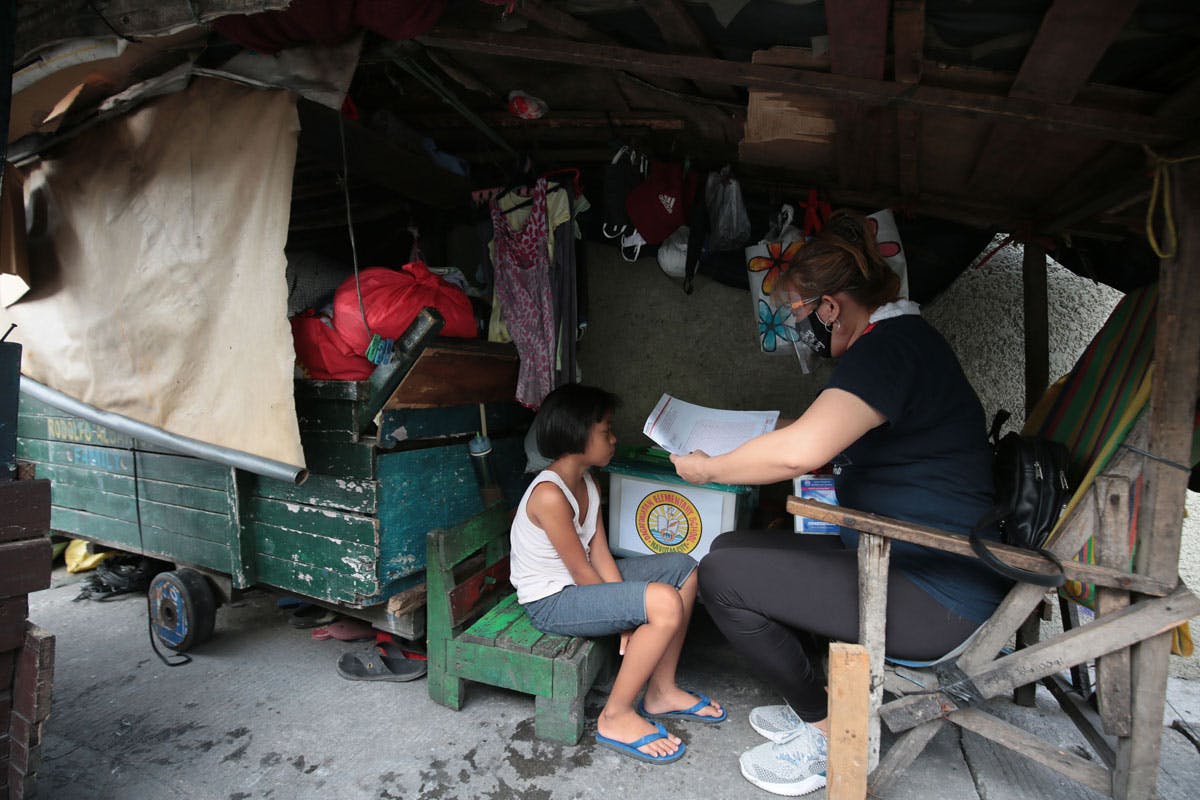
In a late night address on May 25, President Duterte said he was not in favor of reopening schools until a vaccine for the coronavirus disease 2019 (COVID-19) is developed.
“I will not allow the opening of classes na magdikit-dikit ’yang mga bata na ’yan (where children would go near each other). Bahala na hindi na makatapos (We would leave it to fate if they don’t graduate). For this generation, wala nang matapos na doktor, pati engineer (no doctor or engineer will graduate),” the President said.
“Wala nang aral. Laro na lang (No more studying. Just play). Unless I am sure that they are really safe, it’s useless to be talking about opening of classes. That’s what I meant. Para sa akin, bakuna muna. ’Pag nandiyan na ang bakuna, OK na (For me, there should be a vaccine first. Once there’s a vaccine, it’s OK),” he added.
Presidential spokesman Harry Roque clarified that Duterte was referring to face-to-face classes that could not be held while the country remained under community quarantine.
Duterte subsequently changed his stand and approved distance and blended learning while the world awaits a cure or vaccine for COVID-19.
On Monday night, July 20, the President approved the conduct of limited face-to-face classes in low-risk areas starting January 2021. But schools should meet conditions set by the government, including strict observance of physical distancing and hygiene measures.
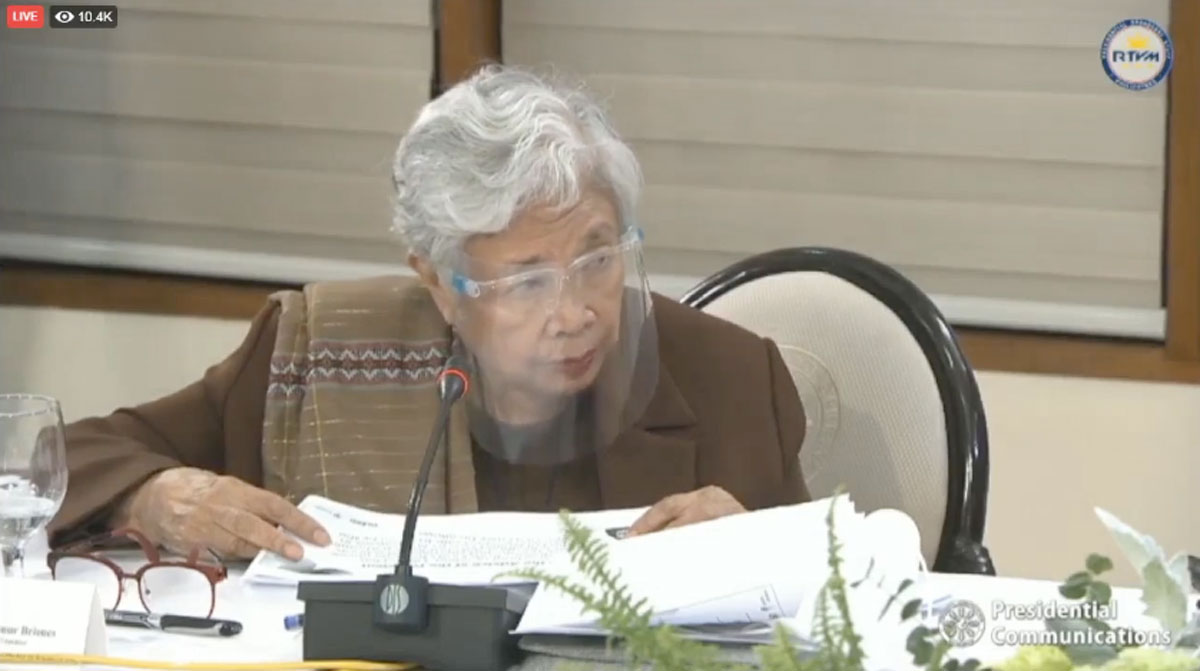
Department of Education (DepEd) Secretary Leonor Briones presented the proposal on limited face-to-face learning during a meeting of the Inter-Agency Task Force (IATF) for the Management of Emerging Infectious Diseases.
“I’m with you on this,” Duterte told Briones during the meeting that was recorded and aired on Tuesday morning, July 21. “Education is the future of the children. They have to finish a course so they can live.”
Requirements set
DepEd vowed to strictly regulate the physical reopening of schools to ensure the safety of the students, teachers and other school personnel.
It said schools in low-risk areas are not automatically allowed to physically reopen in the third quarter as they still have to comply with requirements set by different government agencies.
In addition to being in a location assessed as low risk by the IATF, schools must also have facilities that meet the requirements of physical distancing as prescribed by the DepEd.
Schools must also meet the minimum health standards set by the Department of Health, while host local government units (LGUs) must be ready to support financially as well as in other ways the requirements for limited face-to-face learning.
Briones, during the meeting with the President, said that DepEd received requests from various stakeholders to allow limited face-to-face classes in areas deemed to be low risk.
In her presentation, Briones cited the advantages of allowing limited face-to-face classes. These include the familiarity of teachers and learners with the traditional learning modality, lower administrative costs, reduction of inequality gaps posed by distance learning, and the positive impact of physical social interaction on the learning process.
Disadvantages, meanwhile, include increased health risks to learners, teachers and personnel, and additional administrative costs for complying with health standards.
Briones said limited face-to-face learning could be pursued if there are ways to mitigate or reduce the disadvantages.
She recommended allowing face-to-face classes only in low-risk areas, or those at least under modified general community quarantine (MGCQ) or in the transition phase between GCQ and the new normal.
“For moderate and high severity gradings, schools are required to remain closed. For low-risk severity grading, closure of schools is ‘can do,’ or optional,” read the proposed terms and conditions released by DepEd.
“Thus, face-to-face classes will only be allowed in areas classified as low risk (or at least in MGCQ areas). But such classification alone will not suffice. Other conditions must be met for it to be allowed,” it added.
Briones said face-to-face classes would be held only once or twice a week and “limited to the most important things that a child should learn.”
“We will be assessing the schools. (Coronavirus national policy chief implementer) Secretary (Carlito) Galvez (Jr.) advises us to make physical inspections of the facilities of the schools,” Briones said.
She said De La Salle and a school in Siquijor in the Visayas have been holding face-to-face classes since last month.
Read more: Enrollment Plunges By 7 Million; Some Schools To Close; Limited Face-To-Face Classes Proposed
Distance learning to proceed
According to DepEd, limited face-to-face classes will be allowed starting January 2021, with the exception of private schools that have already started such classes.
Classes will begin in public schools on Aug. 24, while private schools were allowed to reopen as early as June.
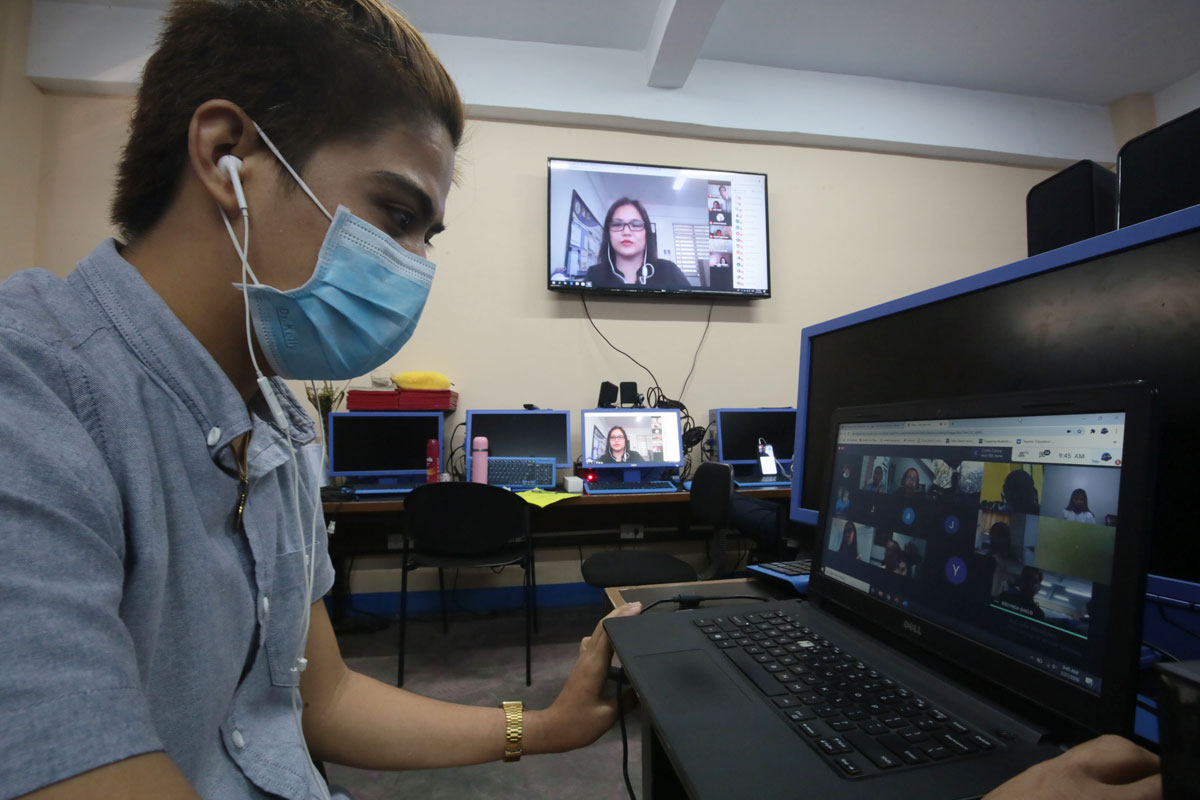
Limiting the conduct of face-to-face classes in the third quarter will allow the school system to settle first into the various distance learning modalities, according to DepEd.
At present, DepEd said it is preoccupied with all the preparations for distance learning. “Deferring the allowance of limited face-to-face to January next year will enable DepEd to focus on the broader and more urgent need for readiness for distance learning,” it said.
As soon as the department has settled into the operational requirements of distance learning, it can then allocate the requisite time to prepare for limited face-to-face classes.
“Such preparations include ensuring the health standards are in place, and pilot simulations and dry runs are conducted similar to what the department is doing now with respect to distance learning,” DepEd stressed.
Considering the possible impact on public health at the community level, DepEd said the decision to allow limited face-to-face classes would be its joint responsibility together with the LGUs and local health authorities.
Stringent health measures will also be implemented, including a policy of no mask, no entry in school premises; handwashing and hand hygiene; regular disinfection of school premises, and checking for temperature and respiratory symptoms.
Class sizes will also be reduced to a maximum of 20 students, with physical arrangement of seats conforming to required distances.
Limited face-to-face classes will be complemented with distance learning to allow intermittent attendance of students.
There will be no mass gatherings, with the flow of learners and personnel at entrances and exits controlled. Visible instructions, signage and markings will also be installed.
DepEd said schools should have a management system for contact tracing, testing, isolation and treatment in case of confirmed cases.
“Before any face-to-face classes will be implemented in January next year, there will be pilot testing and inspection to be done jointly with the National Task Force Against COVID-19,” DepEd said. “This will ensure that the required health standards and protocols are working, and possible glitches are addressed.”
Read More: Online Enrollment In June, Distance Learning By Aug. 24 To Proceed, But Is Everyone Prepared?
Reconsider decision
Various groups and personalities have urged the national government to reconsider the decision.
Sen. Sherwin Gatchalian said face-to-face classes must be suspended to protect students, learners, parents and teachers from the possibility of COVID infection.
He said allowing face-to-face classes “will once again enhance the movement of people that might result in infections within our schools.”
“We have seen a sudden spike of COVID-19 cases in provinces that never had cases from the beginning because of locally stranded individuals who were allowed to go home,” he noted.

The League of Provinces of the Philippines appealed to Duterte to reconsider his decision to allow face-to-face classes. The LPP also wants the Aug. 24 opening of classes to be reset to a later date.
LPP president and Marinduque Gov. Presiberto Velasco Jr. said that while face-to-face interaction is the best learning system for students, forcing it while the COVID-19 threat persists would put students at risk.
Velasco noted that COVID-19 cases are increasing in other parts of the country, adding that it is difficult to impose health and safety protocols such as observing physical distancing measures especially among grade school students.
He urged Duterte to instead defer the opening of classes scheduled on Aug. 24, citing the newly approved Republic Act No. 11480 that allows the President to move the opening of classes beyond August in cases of public emergencies.
Velasco said it is better to start classes in October, saying the government will have a clearer picture on the status of the COVID-19 outbreak in the country.
“Natatakot kami baka magkasakit naman itong mga kabataan, pati ’yung mga naghahatid na mga magulang,” he said.
The Teachers’ Dignity Coalition (TDC) said the decision to allow limited face-to-face classes shows the lack of a clear plan on how the next school year will be implemented.
“Sa aming palagay ay napakadelikado pa ng (face-to-face) classes sa mga lugar na mababa o kahit pa walang kaso ng COVID-19. Nakita na natin ito sa mga nakaraang polisiya na kung biglang magluluwag ay mae-expose sa pagkalat ng virus ang mga mamamayan, gaya ng naging resulta ng balik-probinsiya program,” TDC chairman Benjo Basas said.
“Ang mas dapat sanang tutukan ng DepEd at ng pamahalaan ay kung paano gagawing maayos ang mga pamamaraan para sa distance learning modality gaya ng online, radio/TV broadcast o maging ang modular approach. Lahat ng mga ito ay hindi pa rin handa hanggang sa kasalukuyan. Samantala, isang buwan na lang at magbubukas na ang klase,” he added.
Instead of focusing on the “risky” return of students to schools, the Alliance of Concerned Teachers (ACT) said the government should come up with comprehensive health measures to ensure the safety of students and teachers.
“We’re only about a month away from class opening, and we’re still yet to see a substantial budget and sufficient measures to ensure the safe return to schools of either or both education workers and learners,” ACT secretary general Raymond Basilio lamented.
“The agency still refuses to properly hold health screening, outrightly denies mass testing, fails to lay down plans to hire school nurses and address facility issues, maintains the lack of sick leave benefit for teachers, and forgoes any institutional accountability and support for its constituents who may be infected towards and during class resumption,” he added.
DepEd has repeatedly assured the public that it is one with the President in ensuring the health and safety of students, teachers and other personnel.
Not mandatory
Briones clarified that parents may choose not to allow their children to join face-to-face sessions if they think it would be risky to do so.
“Our thrust right now is blended learning. If parents do not want face-to-face, they can do it online. If there is a problem with connectivity, we have television and radio. If the parents and children are living in far-flung areas, we can have what we call IBM or ‘it’s better manual.’ We can use our reading materials and deliver them to the children,” she said.
Briones pointed out that the assistance of LGUs and parents is crucial in ensuring that children will continue their education despite constraints caused by the pandemic. She said schools are ready to comply with the directives of the IATF in case there is a surge in infections in low-risk areas.
“If there is a surge, we have an established protocol... you immediately do what should be done. If the IATF says shut down, then shut down. If they say these precautions should be observed, they would be followed,” the education chief said.
Briones noted that only a few children have been infected with COVID-19. She said children constituted only 0.87 percent of the more than 1,800 COVID-19 deaths in the country.
“COVID really has very little effect on children. Perhaps it’s a blessing to the children that they are not heavily affected by this COVID pandemic,” Briones said.
DepEd firm on Aug. 24 school opening
The DepEd is sticking to its plan to start classes on Aug. 24 even if Duterte has signed a law allowing him to change the date of the school opening during a state of emergency or state of calamity.
Briones said the implementing rules and regulations of the new law have not been crafted.
“The current law that states that we cannot go beyond August for basic education is still there,” she said. “By Aug. 24, I’m confident we are ready. We are at the stage where we are conducting simulations... Everything has been scheduled and is geared toward Aug. 24.”
Some groups have urged DepEd to postpone the opening of classes, saying some areas have limited internet connectivity and are not ready for blended learning.
Briones noted that other Southeast Asian countries like Singapore, Thailand and Vietnam have started classes despite the pandemic.
“Even if we have COVID... even if we have natural disasters... we have to continue the education of our children. If our children miss out say six months or one year, they would be left behind by others who belong to their age group not just in the country but also in neighboring countries,” she explained.
“We may be the last to start classes, but we observed all precautionary measures,” Briones said. “We will adopt all means to continue the education of our children, our grandchildren and ensure that our wards, our learners are really safe.” – With Emmanuel Tupas


