DOLE Preparing To Contest P85 Wage Hike TRO
Labor Secretary Francis Tolentino assured workers that those who have already received their wage adjustments would not be required to return the additional amount.
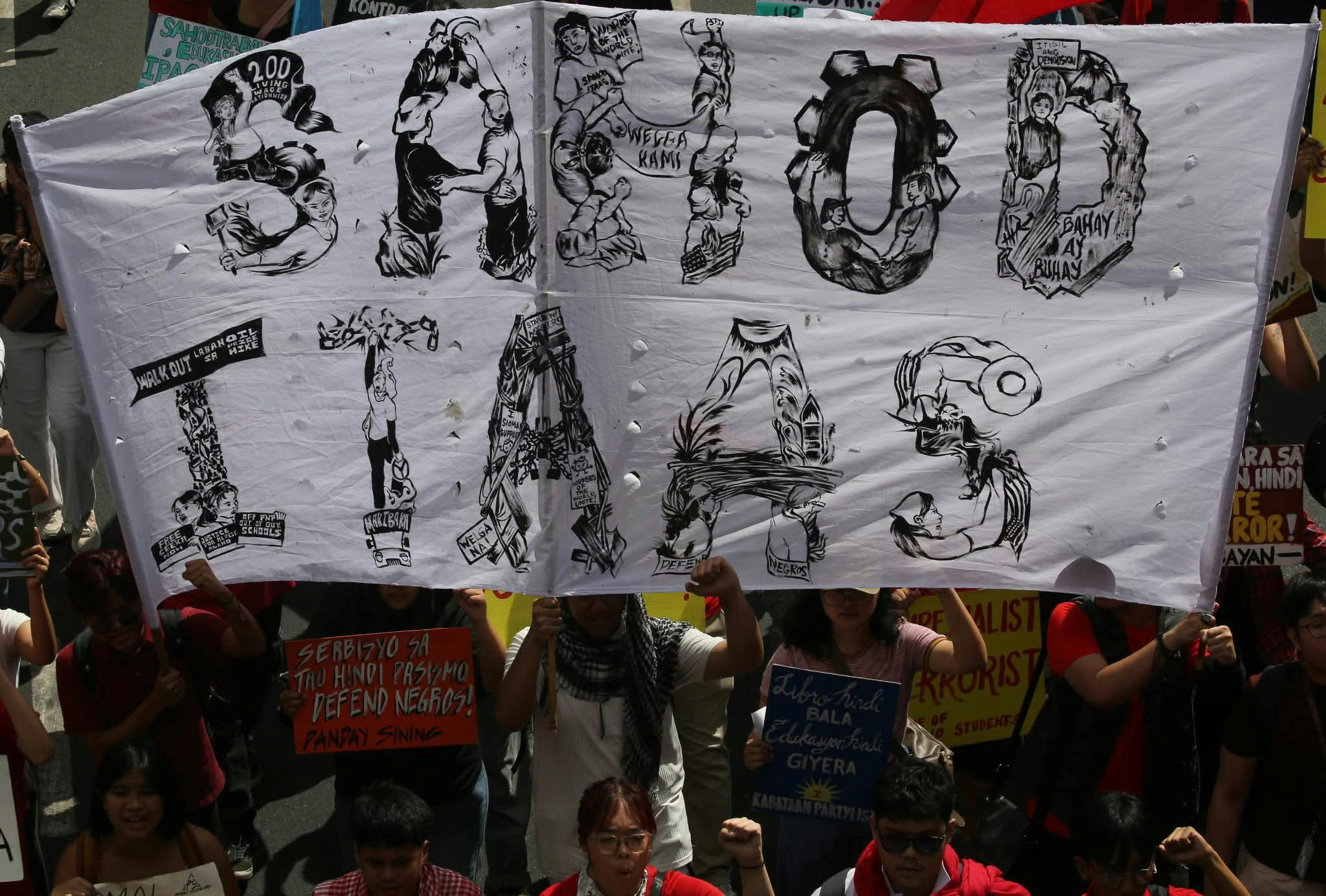
The Department of Labor and Employment (DOLE) will challenge the temporary restraining order (TRO) issued against the implementation of the P85 minimum wage increase in Metro Manila, Labor Secretary Francis Tolentino said on Friday, July 31.
The Pasig City Regional Trial Court (RTC) Branch 152 on July 30 issued the TRO on the implementation of the wage order.
The order was issued in response to a petition filed by Readycon Trading and Construction Corp. and R-II Builders Inc., which questioned the wage order and sought to halt its implementation through a petition for declaratory relief with a prayer for preliminary injunction and TRO.
The wage order, issued by the Regional Tripartite Wages and Productivity Board (RTWPB) in the National Capital Region (NCR), provides for the increase to be implemented in two tranches: P60 effective July 25 and another P25 effective Jan. 20, 2027.
Business groups said they had opposed the unusually large wage hike during the tripartite meeting, warning of layoffs especially among micro and small enterprises, but it was ignored by Tolentino.
Malacañang press officer Claire Castro stressed the need to strike a balance between increasing workers’ pay and supporting businesses.
“According to Labor Secretary Francis Tolentino, we will abide by the court’s order, but the fight does not end there. The government will continue to defend what it deems appropriate for our workers,” Castro said.
“But the government will also listen to the concerns of employers. It will be better to take a balanced approach to this issue to avoid deeper problems, ensuring a win-win solution for both parties – employees and employers,” she said.
In granting the TRO, the court said the petitioners were able to establish the requirements for the issuance of the order, citing possible financial impacts on businesses and the need to suspend the wage increase while legal issues surrounding the order are being resolved.
The court noted that the petitioners argued the wage hike could affect their operations, including labor costs, bidding capacity, workforce decisions and other business obligations.
The TRO will remain in effect until Aug. 13, or 20 days from the issuance of the status quo ante order by the RTC executive judge on July 24, pending further proceedings on the petition for a writ of preliminary injunction.
The court set a hearing on the injunction request on Aug. 3.
Following the court action, Tolentino said DOLE, through the National Wages and Productivity Commission (NWPC) and the RTWPB-NCR, is coordinating with the Office of the Solicitor General (OSG), which will represent the agencies in court proceedings.
Tolentino also assured workers that those who have already received their wage adjustments would not be required to return the additional amount.
“Workers already have vested rights over the amount they received. They should not be required to return it because, at the time the increase was prepared and received, there was no order from the National Wages and Productivity Commission suspending its implementation,” he said.
He added that employers cannot demand the return of wage differentials or deduct the amount from workers’ future payroll.
Sarah Buena Mirasol, DOLE-NCR Regional Director and RTWPB-NCR chairperson, said the agency is working with the OSG to defend the validity of NCR Wage Order 27 and show that it underwent the required process.
“We are cooperating and coordinating with the Office of the Solicitor General to argue that the latest wage order is valid and that we followed the required procedures,” Mirasol said.
She said the wage board consulted representatives from labor, employers and government before issuing the wage order.
Kamanggagawa party-list Rep. Elijah San Fernando slammed the TRO, saying it violated the Labor Code.
“After they announced their highly touted P85 wage hike for NCR, it was suddenly revoked due to a temporary restraining order issued by the Pasig RTC. It was already a pittance – and payable in two installments, at that – yet now even that meager increase, which could have at least offered some help to workers, has been suspended,” San Fernando said in a statement.
Citing Article 126 of the Labor Code, San Fernando said the issuance of a TRO, preliminary or permanent injunction by any court, tribunal or other entity, against any proceeding before the commission or the regional boards, is not allowed.
He also said Article 126 provides that any appeal about wage orders must go through the NWPC of DOLE.
“That means the Pasig RTC has no jurisdiction on talks about wage increases. This is clearly encroachment by the judiciary on the quasi-legislative function of DOLE,” San Fernando said.
Higher tax exemption
Meanwhile, Sen. Francis Pangilinan has filed a bill seeking to raise the annual income tax exemption threshold to P350,000, saying the measure would allow millions of Filipino workers to take home more of their earnings amid the rising cost of living.
Pangilinan filed Senate Bill 2344 on July 28 to amend Section 24 of the National Internal Revenue Code of 1997, by increasing the tax-exempt income threshold from the current P250,000 to P350,000.
The proposal comes days after President Marcos, in his State of the Nation Address, called on Congress to increase personal income tax exemptions as part of efforts to ease the financial burden on Filipino families.
If enacted, the bill would exempt the first P350,000 of annual taxable income from personal income tax. The exemption would also apply to self-employed individuals and professionals who opt for the eight percent gross receipts tax regime.
Pangilinan said the proposal aims to help workers cope with inflation, which has steadily eroded household purchasing power while salaries have failed to keep pace.
The bill also seeks to adjust the income thresholds for higher tax brackets, raising them to P500,000 for the 15 percent rate, P1 million for 20 percent, P2.5 million for 25 percent and P8 million for 30 percent. – With additional reports from Daphne Galvez, Mark Ernest Villeza and Helen Flores