



What It’s Like To Be A Flight Attendant During A Pandemic
“’Drastic’ is an understatement.”
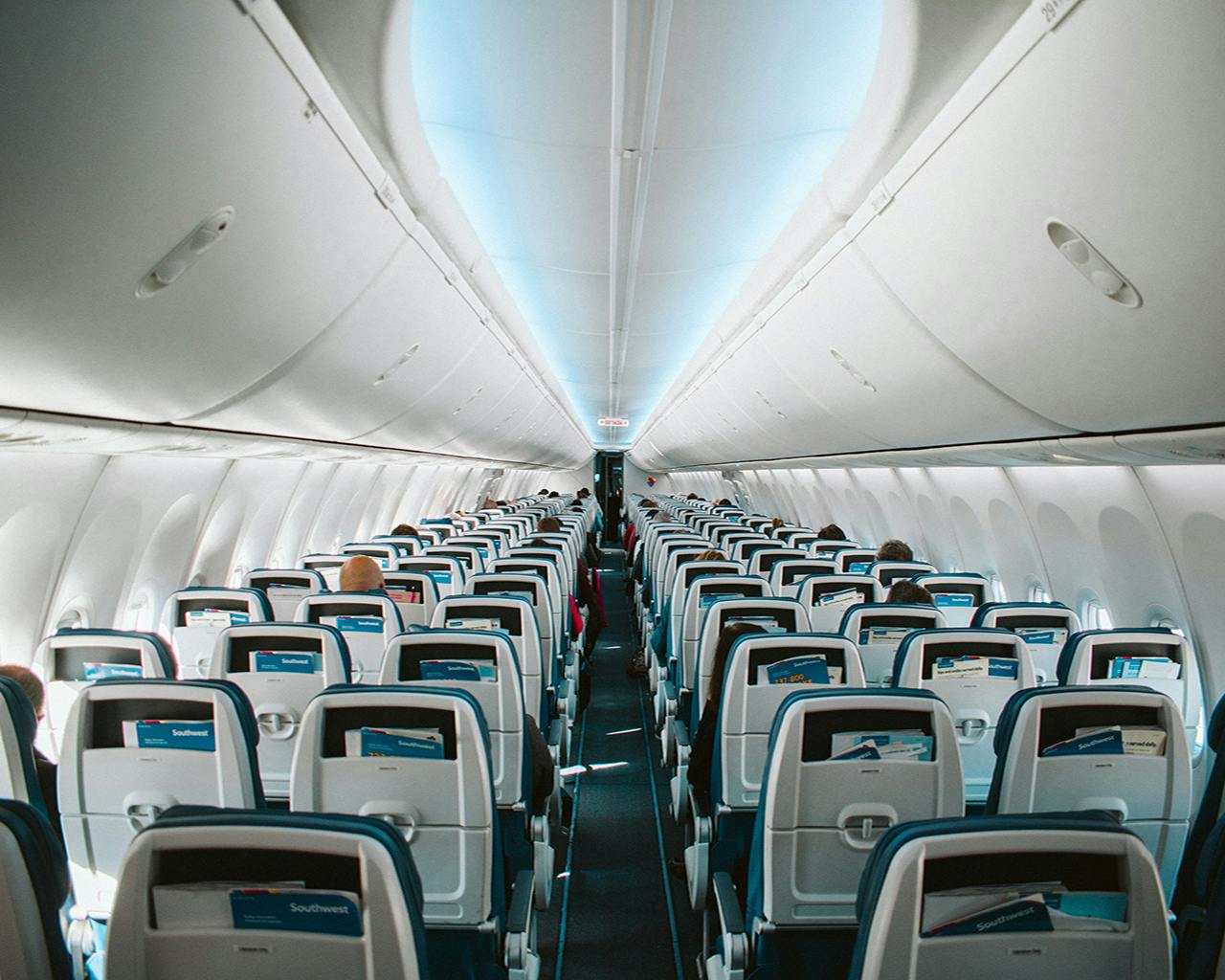
The aviation industry is among the sectors most affected by the COVID-19 pandemic. According to an analysis by S&P Global, there have been more than 350,000 job cuts among airline companies around the world as of September 2020. In the Philippines, flight attendants and airport staff are scrambling to keep their jobs, as layoffs continue in the industry due to the losses incurred from the pandemic.
Samantha, a flight attendant since 2019, says that her flying experience immensely changed since the lockdown. “Before the pandemic, I had weekly flights with layovers. I got to stay in hotels and explore destinations with my co-workers. During my flights, I got to interact with people from all over the world,” the 22-year-old shares. “When [the] quarantine started, I wasn’t able to fly for 4 months. Now that flights are slowly increasing, in a month I get to fly [only] twice, or three times if I’m lucky.”
Unlike before, Samantha does not get the chance anymore to explore her favorite destinations or even interact with passengers, because aside from limited passenger flights, her company has shifted commercial flights to cargo flights that transport commodities across the country. “Sometimes, [there are no passengers] -- just cargo boxes.”
Clipped wings
Not everyone had the same fate as Samantha. Jan, a former flight attendant at a local airline, lost her dream job two months into the quarantine.
“I was devastated, definitely. I worked so hard to become a flight attendant. Nag-training ako, nag-aral nang mabuti para sa exams, tapos ang bilis lang nawala,” the 25-year-old shares.
“There was nothing I can do because it was out of my control, this is a global issue eh. My other co-workers who were laid off were also asked to file a forced leave of absence. Pero ako, I separated from the airline for good.”
Weeks after being laid off, Jan struggled to put food on the table. She is the breadwinner of her family, and they are greatly dependent on her salary. “I spent months looking for another job, but the whole economy was suffering. Companies were laying off employees instead of hiring, and that’s when I thought na wala ako mapapala dito.”
Jan established an online business selling family trays of ulam and baked goods. She put matters into her own hands and decided to be her own boss. “I will not be cliché and say that being laid off was ‘a blessing in disguise.’ Nothing about the situation was easy, but I had no choice. I need to keep my family alive.”
The grave effects
“Aviation has been on survival mode and has been adjusting so much in order to cope with the pandemic. However, it also plays a role in rising from it as well,” says Samantha.
Airlines have conducted repatriation flights to rescue stranded Filipinos from different parts of the world, and cargo flights delivering COVID-19 test kits to our country were also carried out. The aviation industry might be suffering losses from the pandemic, but it is one of the key factors to help the Philippines bounce back. Samantha hopes that after this difficult time, the industry she loves will become stronger than ever.
Safety protocols
Even though there are limited passenger flights available, safety protocols are still implemented inside the aircraft and at the airport. According to Samantha, “Our aircraft fleet now undergoes thorough cabin disinfection after every flight. Once we board the aircraft, we are required to wear our PPE before we interact with others.”
For the passengers, flight attendants must conduct temperature screenings and implement mandatory wearing of face masks. Proper markings are also placed inside the aircraft to ensure that social distancing measures are observed.
Philippine Airlines also provides health guidelines for those who are planning to travel:
- Wear a face mask and face shield at all times.
Passengers without these facial coverings will be denied boarding. For most flights, surgical, ear-loop, or DIY face masks are accepted. Singapore, Xiamen, Macau and Honolulu flights require surgical masks to be worn at all times. However, flights to or from Auckland will only allow medical grade masks, such as surgical masks or N95 respirators.
- Bring your own pen and hand sanitizer or alcohol.
Hand sanitizers with a maximum content of 70% alcohol, and packed in 100mL bottles (up to 10 pieces are allowed) can be included in your carry-on baggage.
- Download the Traze app.
The Philippine Department of Transportation requires all passengers to download the Traze application, as this is needed to generate and scan their QR code when entering in, boarding from, or upon arriving in all Philippine airports.
When asked to describe the effects of COVID-19 on the industry, Samantha answers: “’Drastic’ is an understatement.” Thousands of her co-workers were laid off during the pandemic, and the sight of empty airports and aircraft aisles is something she finds difficult to get used to.
However, like Samantha and Jan, those in the aviation industry remain hopeful that this crisis will be over in time. The same thought of hope is constantly on their minds: “We will fly again.”


