



Taxi Group Seeks P20 Hike In Flagdown Rate
Rep. Bong Suntay, president of the Philippine National Taxi Operators Association, said they have made an appeal to the Land Transportation Franchising and Regulatory Board to increase the P40 minimum fare for taxis.
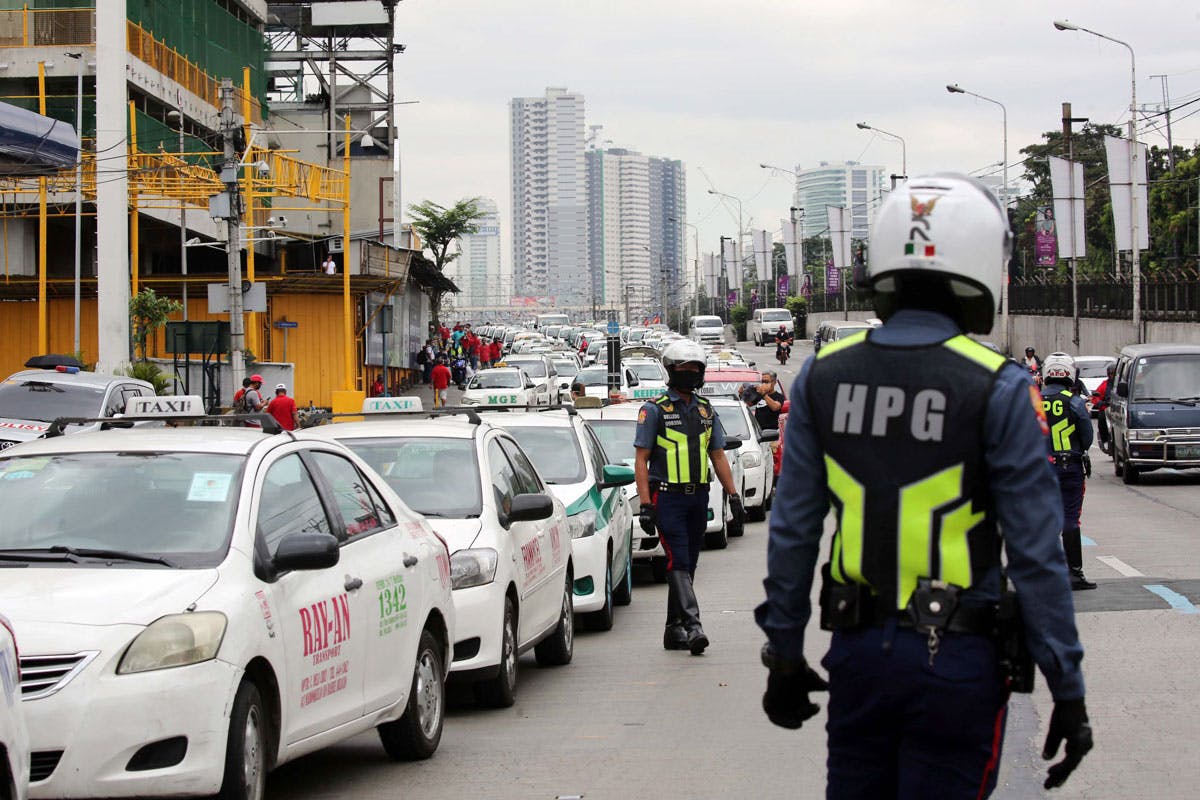
Amid the continuous increase in oil prices, taxi drivers and operators now want a P20 increase in their flagdown rate.
Rep. Bong Suntay, president of the Philippine National Taxi Operators Association, said they have made an appeal to the Land Transportation Franchising and Regulatory Board (LTFRB) to increase the minimum fare for taxis, whose current flagdown is P40.
“There’s an appeal coming from the taxi operators group for the flagdown rate to increase by P20. Sadly, there has been no response from the LTFRB. Various transport groups, from jeepneys to TNVs, have filed for fare increases. Up to this day, nothing has been resolved by the LTFRB,” Suntay said in an interview on CNN Philippines on Wednesday, June 15.
Suntay said that the current fares were decided when fuel prices were as low as P40 to P45 per liter. Many drivers and operators have taken a hit as gas prices have doubled, now P82 to P85 per liter.
“The increase in the price of fuel has negatively impacted the income of both operators and drivers… A lot of drivers now have chosen not to drive units because most of them are complaining,” he said.
“Sadly, that’s the only thing that PUV drivers and operators can do. We can’t do fare hikes or changes unless approved by the LTFRB. We have to wait for the decision for the LTFRB,” he added.
Suntay clarified that their requested hike in the flagdown rate will not need a recalibration of taxi meters.
“We wanted a change in the flagdown rate so if the prices of fuel go down, it would be easier to give it back without the need of calibrating the meters of the taxis,” he said.
Meanwhile, the LTFRB said a total of 232,586 beneficiaries have been credited with the P6,500 fuel subsidy as of June 14.
By June 17, only 31,992 beneficiaries will be credited.
The LTFRB said it is looking to start the second tranche of the fuel subsidy by early July.
DOTr instruction
As pump prices went up again significantly last Tuesday, June 14, the Department of Transportation (DOTr) has instructed the LTFRB to immediately evaluate the pending fare hike petitions.
“We have existing mechanisms and formula to effectively assess the merit of such petitions. Rest assured that the LTFRB will act on these requests as soon as possible,” Transportation Undersecretary for road transport and infrastructure Mark Steven Pastor told The Philippine STAR.
Last week, the LTFRB approved the provisional one-peso fare hike petitioned by groups representing jeepney drivers.
Meanwhile, Pastor also addressed concerns raised by some transport groups who claimed that the government’s “Libreng Sakay” program for public utility vehicles is killing the routes of public utility jeepneys.
Mar Valbuena, chairman of the transport coalition Manibela, earlier said jeepney drivers who have not been included in the government’s service contracting (SC) program have to contend with competition on the road as commuters prefer the free rides since the rollout of the Libreng Sakay program.
Pastor said the DOTr and LTFRB’s Libreng Sakay program is just a subset of SC program, commonly known as the gross cost SC, in which all expenses, including income, is paid by the government and hence, no fare is collected.
“High passenger volume routes are prioritized in this scheme and all eligible transport operators are enjoined to participate in this program,” he said.
On the other hand, Pastor said the DOTr and LTFRB also have the net cost SC in which fare collection is allowed, while operational and maintenance expenses are partially subsidized by the government.
“These alleged complainants may participate in both net or gross SC, whichever scheme is applicable to them based on eligibility requirements,” he said.
‘Encourage cycling’
Senator-elect Joseph Victor Ejercito urged the national government to improve the country’s cycling infrastructure as increasing gas prices are expected to encourage more workers to use bicycles and scooters as alternative modes of transportation.
Ejercito said the national government should keep cyclists and scooter riders safe while improving mass transportation in the country.
“Though we admire resilience and innovation, the government should look into improving road conditions for alternative means of transportation. Until such time that the government has finished its goal to provide mass transportation that is people-centered and accommodating to every walk of life, there will always be room for alternative forms of travel,” he said.?
Ejercito, an active cyclist and advocate of active transportation, said the Land Transportation Office (LTO) should spearhead the promotion of bicycles and scooters and ensure that active transportation is prioritized in the national government’s flagship infrastructure program.
Meanwhile, Assistant Minority Leader and ACT Teachers party-list Rep. France Castro is set to file bills aimed at mitigating the effects of the oil crisis.
In a statement, Castro urged the incoming 19th Congress to urgently pass these legislative measures to ease the burden of successive hefty oil price hikes on the Filipino people.
“We in Makabayan have five proposals that can immediately relieve the people from skyrocketing prices of fuel. The least that the government can do is urgently act on these measures and prioritize these bills,” she said.
These proposals are the repeal of the VAT and excise taxes imposed on fuel; unbundle oil prices to show transparency in oil and petroleum products; repeal the Oil Deregulation Law and enact a new policy framework to ensure that oil prices are within reasonable costs and regulated.
Others are to buy back Petron to provide the public with a state-owned alternative to acquire oil and petroleum products and the establishment of a National Petroleum Exchange Corporation to serve as the central import and distribution hub of oil and petroleum products. – With Sheila Crisostomo, Richmond Mercurio, Paolo Romero