Shincheonji Church: Instilling Faith One Graduate At A Time
The religious organization seeks to share Bible teachings and promote dialogue with other religions to foster understanding of God’s word for peace and unity.
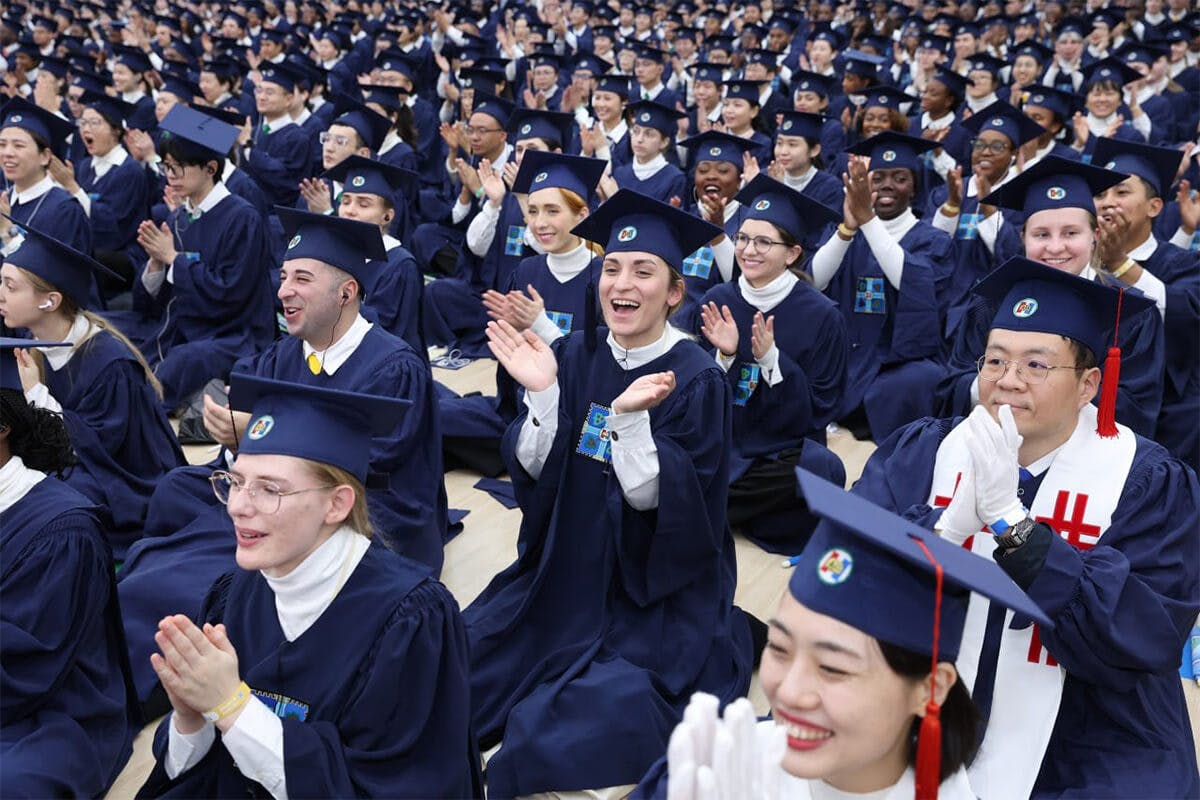
GAPYEONG, South Korea – The Shincheonji Church of Jesus, one of South Korea’s famous religious organizations, has been working to introduce its activities to the public to instill faith and promote peace among people.
It seeks to debunk claims it is a doomsday cult, saying the number of their members and pastors continues to increase over the last four years, a proof that it’s not a heretic movement, contrary to what its critics allege.
Graduates from Shincheonji Church apply teachings in various ways, such as volunteering in different initiatives that support vulnerable groups and strengthen communities. They are called Shincheonji Volunteers.
In the past, they have partnered with the Philippine Red Cross for blood donation drives and they collaborate with local communities, barangays and civic organizations. Right now, the Church is pursuing different partnerships with all kinds of groups for these kinds of activities. The Shincheonji Volunteers offer service wherever it is needed. They believe that faith should be demonstrated, not only spoken.
Shincheonji Church leader Chairman Lee Man-hee, 94, also founded Heavenly Culture, World Peace, Restoration of Light, an organization promoting unity, in 2013.
Through HWPL, Lee initiated the Declaration of Peace and Cessation of War to establish an enforceable law that can be adopted by every state. To pursue this goal, the DPCW was proclaimed on March 14, 2016 by the HWPL International Law Peace Committee made up of experts.
The DPCW was drafted with the intention of promoting the respect of fundamental human rights and international law, and of further involving states in the active protection of those rights.
When asked if he ever came to the Philippines and spread the teachings of the Shincheonji Church, Lee said he specifically came to war-torn Mindanao, where he talked to some of the warring groups to mediate and promote peace.
“In the Philippines, just like in our country, there was a conflict among the same people – they had been fighting each other for 40 years. I gathered the groups together, inviting people from each side. Then, with the two sides sitting at the table, I spoke to them and said, “Why are you fighting against your own people? Why are you killing one another? What is the purpose of your conflict? That is what I said to them as we sat together for a conversation,” Lee said.
“I asked them to say how they would react from now on, would they keep fighting? They promised never to cause division again and would unite and follow the path that Shincheonji is taking. They all said they would work together in unity with Shincheonji. They even made a promise that from now on, they would become one with us,” he added.
Not a cult
In a recent interview during two of the church’s most important events this November, Lee countered accusations that the religious sect is a cult.
“Although, outsiders call Shincheonji a cult, criticize it or misunderstand it, the church continues to grow rapidly around the world, and produces numerous graduates, what do you think is the reason behind this remarkable growth?” Lee told Filipino journalists during the organization’s three-day International Pastor’s seminar and graduation ceremony held here.
Lee said they are being persecuted in the same way that Jesus was persecuted in Jerusalem.
“They also called Jesus a heretic, yet he conquered the world with his truth. Do you understand? It’s the same for us. Many people around the world call us heretics, but today, there are few countries where Shincheonji does not exist. We have continued to lead and grow throughout the world,” Lee noted.
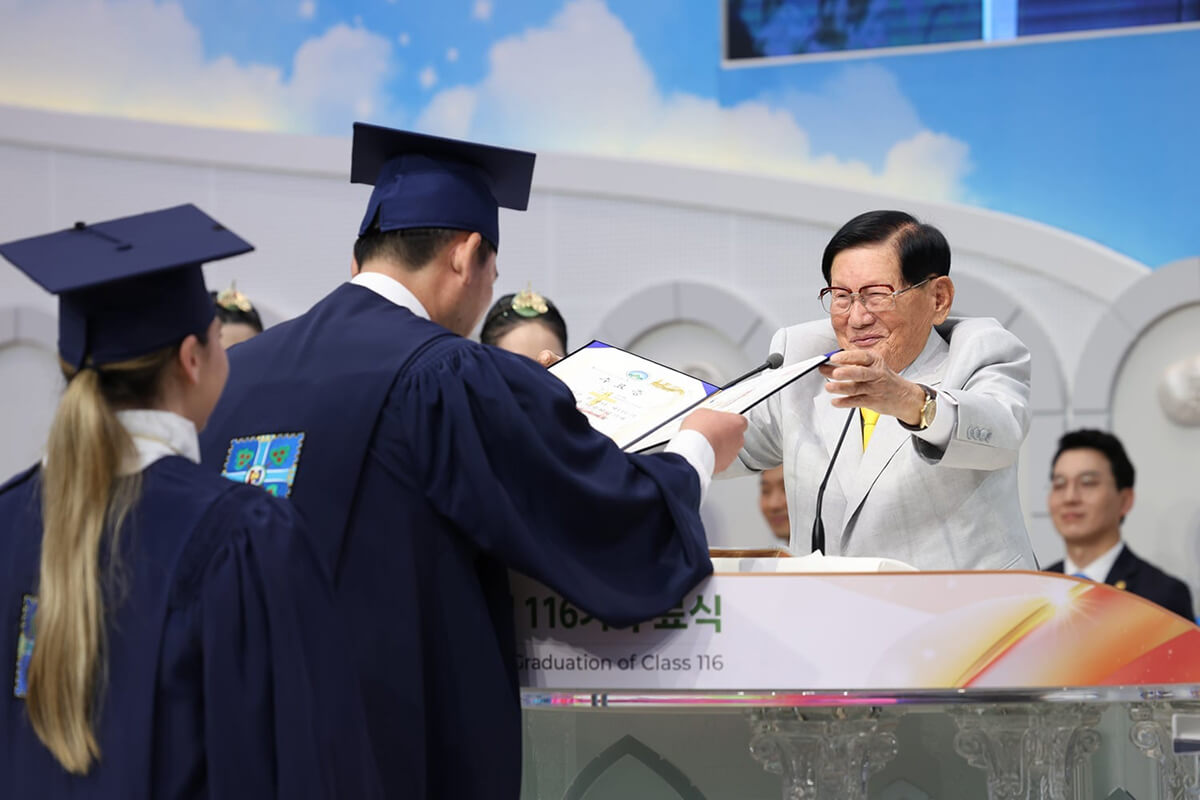
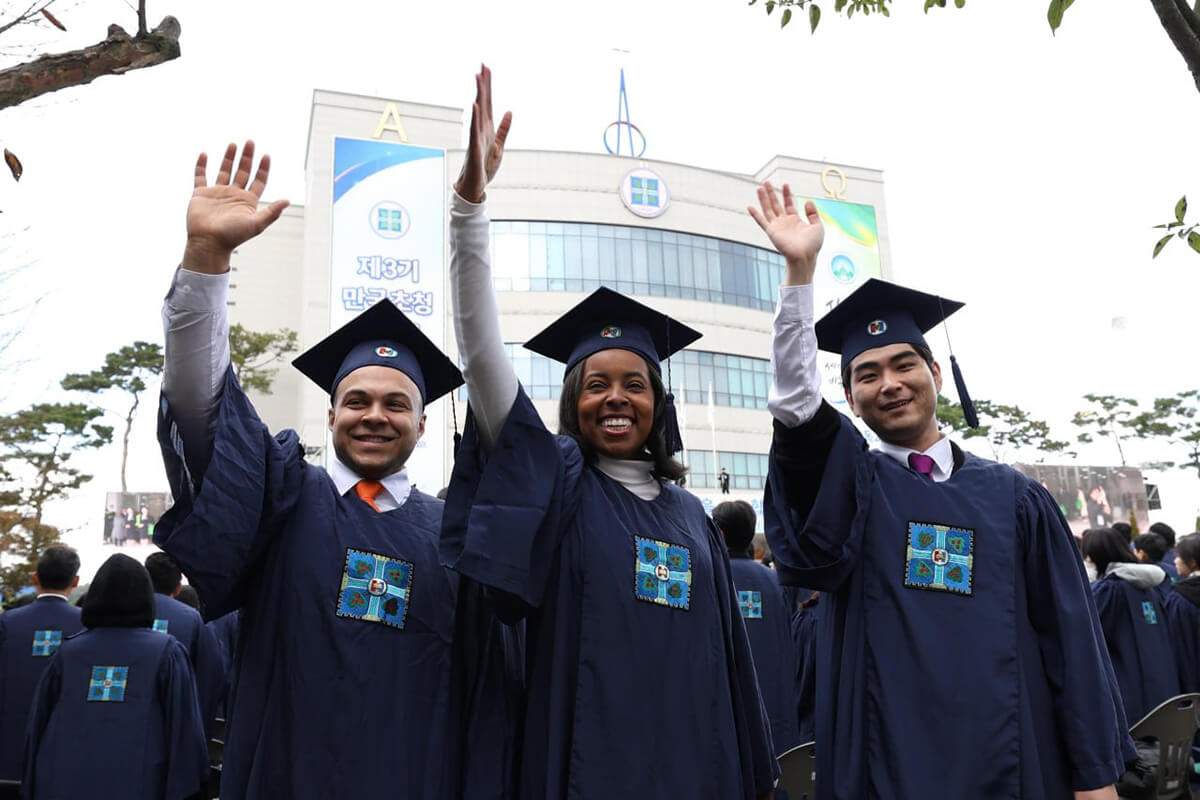
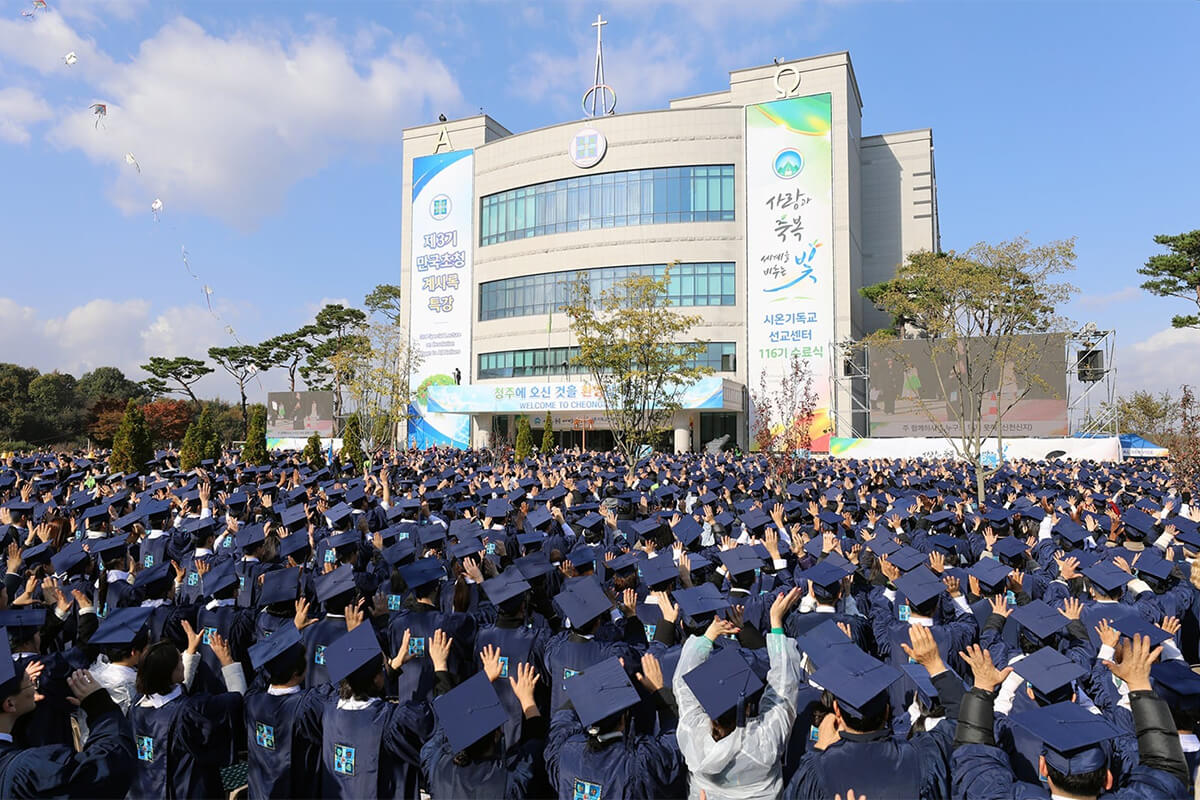
Last Nov. 2, the Shincheonji Church held the Zion Christian Mission Center’s Graduation of Class 116 at its Cheongju branch, where a total of 59,192 students officially graduated, proof that the church continues to grow in every part of the world, Lee stressed.
The chairman said a notable highlight of this graduating class is the increasing number of pastors among the graduates. Out of the 116th class, 2,248 are pastors, and over the past four years, the total number of pastors who have completed the program has surpassed 13,500.
Book of Revelation
A former pastor – Oh Sun-kyung – delivered a testimony about the life-changing effect of understanding the Book of Revelation.
“At the Zion Christian Mission Center, I finally understood the Book of Revelation, which neither my seminary nor my church could explain. Even after reading the Bible more than 30 times, I couldn’t find the answers – but through this word, my life was completely transformed,” Oh said.
“I often think how wonderful it would have been if I had known these teachings when I was still a pastor. I will now pray for and share this word with the believers who still do not understand Revelation. Beyond denominational barriers, we must learn and share the truth without addition or omission,” Oh said.
Tan Young-jin, the head director of Zion Christian Mission Center, agreed with Oh, saying Shincheonji Church could never be a cult despite intense persecution and slander since it had successfully produced tens of thousands of graduates through four consecutive 100,000-person graduation ceremonies.
“Such growth is only possible because God is with us. Through this curriculum, the graduates have become believers with a deep and accurate understanding of the realities of the Bible – something even pastors have not learned. A true revival of faith centered on the Word is taking place,” Tan said.
Zion Christian Mission Center is a free Bible education institute that provides a systematic curriculum covering the entire Bible, from Genesis to Revelation. Its teachings focus on the prophecies and their fulfillment, which are considered the core of the Christian scriptures, guiding students to understand God’s purpose and the overall flow of the Bible.
“To graduate, students must complete the elementary, intermediate, and advanced courses and achieve a score of 90 or higher on the comprehensive final exam,” Tan said.
The graduation ceremony, held under the theme “Love and Blessing, Light to the World,” included the following program: opening and national ceremony, congratulatory remarks, message from the chairman, prayer of blessing, certificate and award presentations, testimonial speeches and celebration performances.
Lee pointed out that the Book of Revelation is the most difficult book but once you study at Zion Christian Mission Center and hear the testimonies, you’ll see that it is not hard.
“The Book of Revelation is the most difficult book in the Bible. Only the one who has seen all the fulfilled realities can testify about it,” Lee said.
“Despite the fact that this term was conducted entirely offline for the first time since the pandemic, the number of graduates has reached 60,000 (for Batch 116). This demonstrates the growing thirst for truth among believers that transcends denominational boundaries,” Lee said.
Shincheonji, which means “new heaven and new earth” is a religious movement established in South Korea in 1984 by Lee. Critics and mainstream churches consider the religious sect a cult, but its members and defenders disagree.
During the interview, Lee recounted the beginnings of Shincheonji Church and how he founded the organization. He was a farmer from the countryside and was never evangelized nor had a life of faith. Things changed for him and his religious fate when he survived the Korean war in the 50’s.
“After being discharged from the army and returning to farming, I thought about it deeply and realized this: the reason I was able to live was because Heaven needed me- Heaven helped me and that’s why I survived,” Lee said.
“No one evangelized me or led me to faith so when I decided to believe, I knew my faith had to be based entirely on the Bible. So I engraved it in my heart and said to myself, “I will become a walking Bible.”
“I made it a goal to understand everything in the Scriptures, leaving nothing unknown – engraving the Word into my very being. So much so that when I cut my hand and saw my blood, I would think.” Even my blood is the Bible.”
Lee stressed the importance of the Book of Revelation and that nothing should be added or taken away from this book.
“Everything written from Revelation Chapter 1 to 22 must be fulfilled exactly as it is. In Revelation 22, it says nothing must be added or taken away from this Word- those who do so will be cursed. So I made up my mind to engrave all of these words in my heart and to live my faith exactly according to them. That’s why I engraved the words of the New Testament throughout my entire being – that is how I have lived out my faith.”
Special lecture
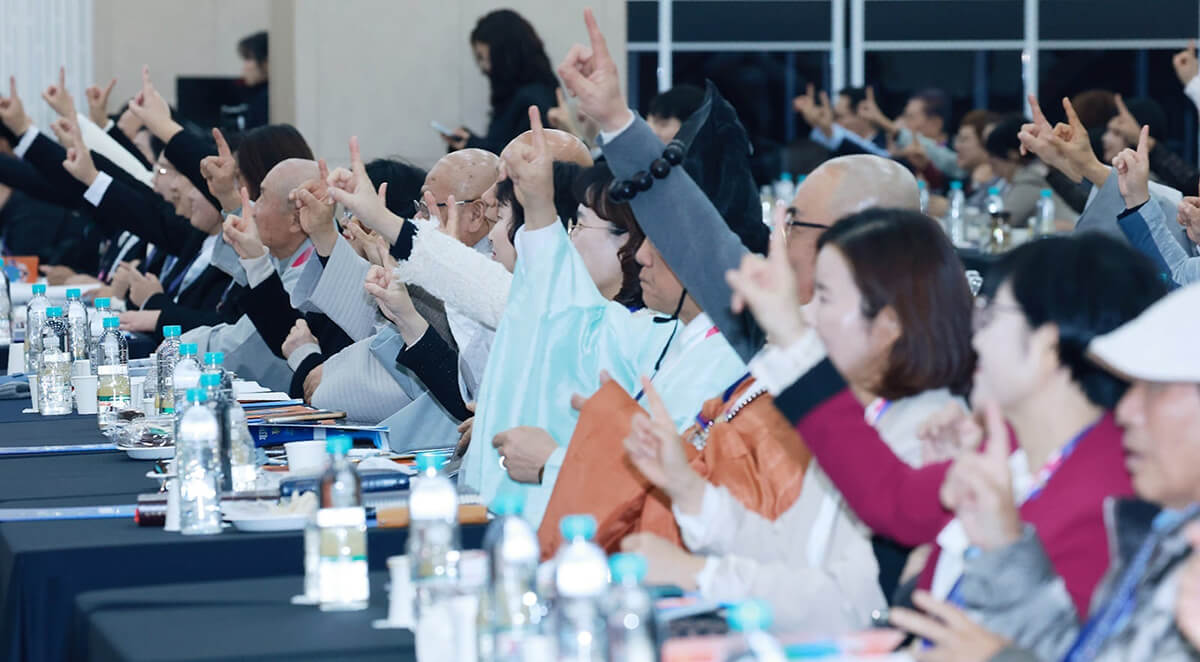
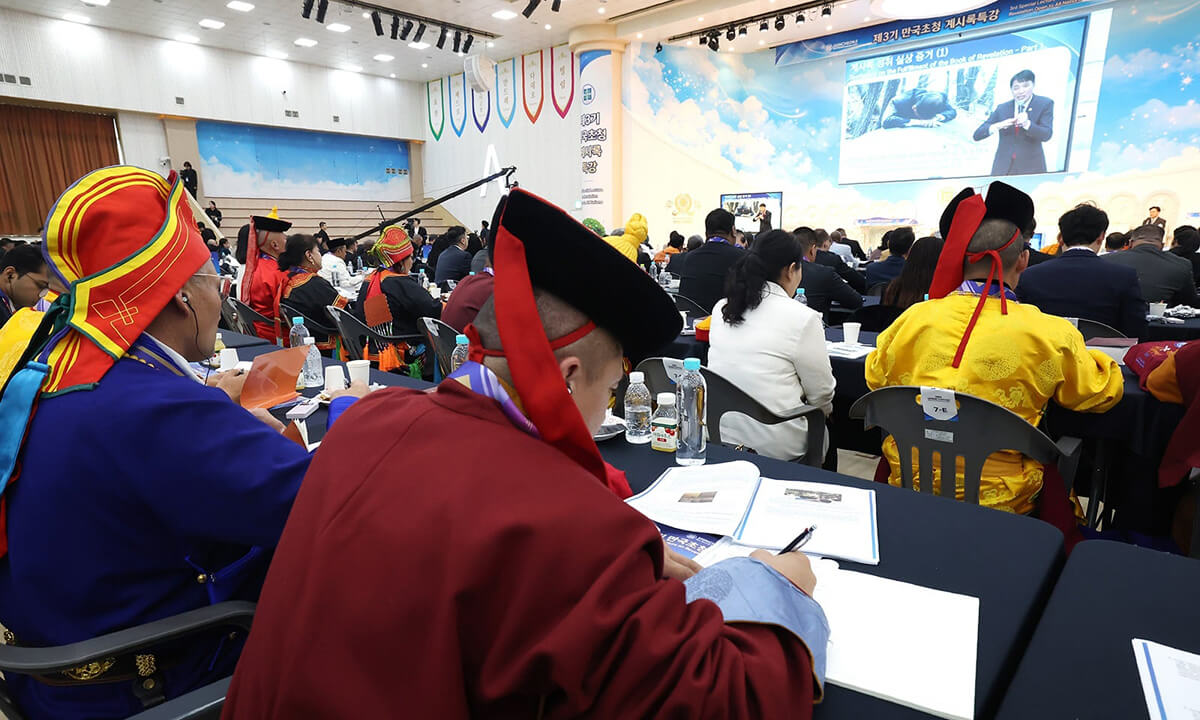
Meanwhile, some 500 religious leaders from Christianity, Buddhism, and Hinduism also attended the global peace training center billed “The 3rd Special Lecture on Revelation Open to all Nations” in Goseong, Korea on Nov. 1. It’s an exchange and peace program that aims to promote harmony and understanding through Revelation lectures and discussions – enriched with experiential programs such as “The Time Travel in the Bible.”
“The very fact that religious leaders from around the world have gathered together here holds great significance. Ultimately, everyone has come with one sincere wish – to find the one true truth.”
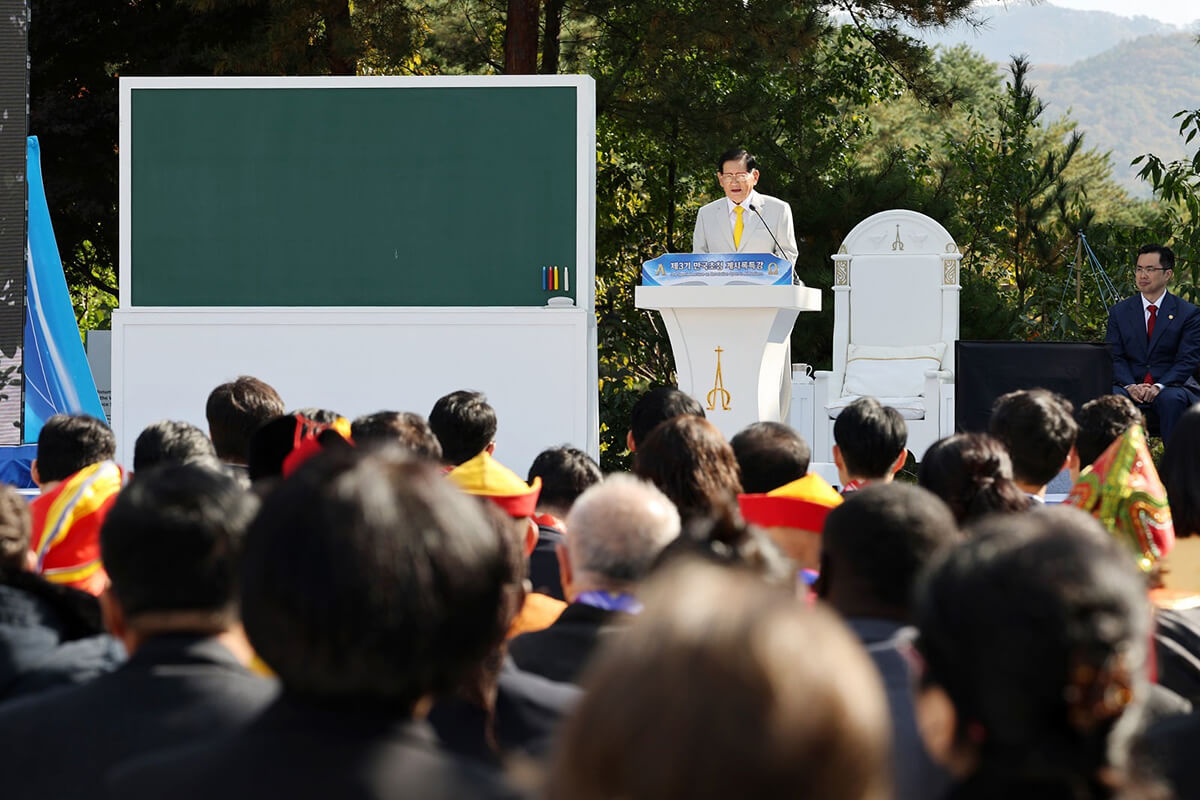
The “Special Lecture on Revelation Open to All Nations” is an international exchange program that seeks interreligious dialogue and peace centered on the prophecies and fulfillment recorded in the New Testament Book of Revelation. Originating in Korea, the seminar has drawn increasing global attention, with participation doubling in size each term. The event was hosted by the Shincheonji Church of Jesus, the Temple of the Tabernacle of the Testimony under the theme “The Path of Understanding Led by the Scriptures, the Path of Peace Walked Together by All Religions.”
It provided a venue for religious leaders from different faiths to unite under a shared purpose. In February 2024, the first seminar was held with over 80 leaders from 10 religious orders in 28 countries, including Korea. The second seminar, held last year, saw participation from 270 leaders across 57 countries, who completed the program.
“Following the second seminar, many of these leaders expressed deep reflections on their faith and pledged to work together to further establish the event as an international platform for religious cooperation,” Tan said.
This year’s seminar was held on a record-breaking scale, with more than 1,000 participants, including 521 religious leaders from 61 countries, solidifying its reputation as a “global platform for interreligious harmony.”
Lee remarked, “Through the scriptures, let us come to understand the fundamental meaning of religion, learn from one another, and become one.” His message resonated deeply with the participants.
Over the four-day program, the religious leaders studied and discussed the true meaning and realities of Revelation, the core and conclusion of the Christian scriptures, seeking together the answer to world peace. Through these discussions, participants aimed to gain insight into how God’s will is being fulfilled across the world and to broaden mutual understanding between faiths.
In addition to lectures on the fulfillment of Revelation, a variety of religious and cultural programs were organized, including: Experiential Bible programs, Revelation knowledge contests and awards, Revelation-themed animation screenings, exhibits of Revelation-inspired art and sculptures, honorary Bible Teacher appointments.
There were also interfaith activities such as: An interreligious prayer meeting on the theme of “Peace,” presentations of peace initiatives by religious leaders, regional roundtable discussions to develop models of religious peace.
A representative of Shincheonji Church said, “This seminar demonstrates that the Bible is not merely the scripture of one religion, but a text that contains the universal truth necessary to achieve peace for all humanity. We expect it to serve as a meaningful opportunity for all faiths to rediscover religion’s original mission—promoting peace and harmony through understanding of the scriptures.”