



Scrap Over P100 Billion Worth Of Contracts With State-Owned Chinese Firms Behind SCS Island-Building, Gov’t Asked
Sen. Risa Hontiveros said the cancellation of these government contracts with the Chinese firms has become more pressing following reports that China had launched ballistic missiles into the South China Sea.
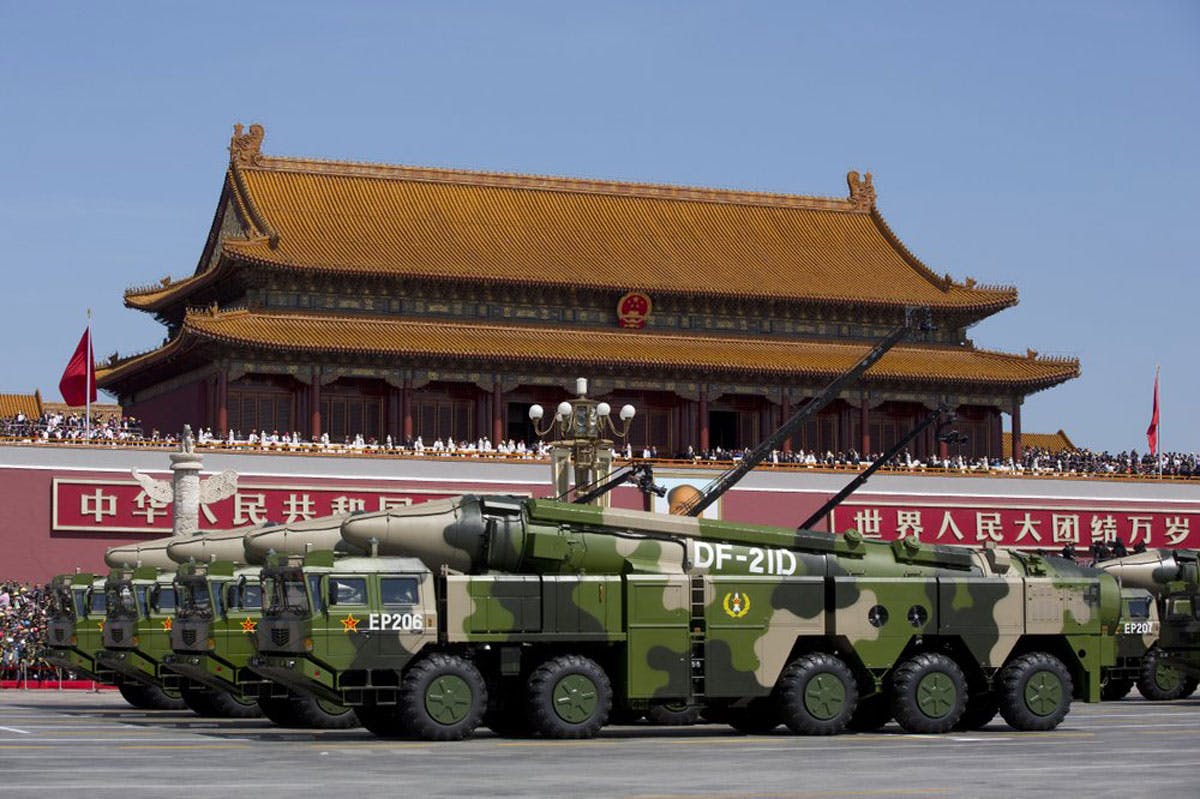
State-owned Chinese companies, which are reportedly involved in the construction of China’s artificial islands and military installations in the South China Sea, have over P100 billion worth of public infrastructure contracts in the Philippines that the government must immediately scrap, Sen. Risa Hontiveros said on Sunday, Aug. 30.
The senator noted the cancellation of these government contracts with the Chinese firms has become more pressing following reports that China had launched ballistic missiles into the South China Sea that she warned could threaten stability in the region.
“It is disturbing that the government has engaged with Chinese companies involved in the destruction of our territories. Tayo na nga ang ninanakawan ng teritoryo, tapos magiging kasabwat din pala ang gobyerno sa pagnanakaw na ito (Our territory is being stolen from us, and the government is also going to connive in this robbery)?” Hontiveros stressed in a statement.
According to Hontiveros, the list of companies that contributed to dredging and construction of military islands in the South China Sea – as released by the United States’ Department of Commerce – included China Communications Construction Co., Ltd. (CCCC), a company whose subsidiaries have entered into several projects with the Philippine government.
The Trump administration announced on Wednesday, Aug. 26, that it is imposing sanctions on Chinese officials responsible for Beijing’s military build-up in the South China Sea.
The move was the latest salvo in the US pressure campaign against China that has picked up steam ahead of November’s presidential election over a variety of contentious issues.
The State Department announced it had hit an unspecified number of Chinese officials and business executives responsible for the militarization of disputed South China Sea areas with travel bans. Immediate family members of those targeted may also be barred from travel to the US, the department said.
At the same time, the Commerce Department said it had added 24 state-owned Chinese enterprises, including CCCC subsidiaries, to its commercial blacklist for their roles in constructing artificial islands through dredging operations and other activities that cause major environmental damage and infringe on other nations’ claims.
“Based on the information available to us, the government currently has five memorandum of understanding (MOU) with this Chinese company,” Hontiveros said, referring to CCCC. “Meron sa Manila, Davao, Cebu at Clark. Hindi pwedeng magpatuloy ang mga proyektong ito (There are projects in Manila, Davao, Cebu and Clark. These projects must not continue). If we continue with these deals, it may be equivalent to giving up our territories,” she said.
Hontiveros pointed out that CCCC subsidiaries have MOUs for the Davao Coastline and Port Development Project, Manila Harbor Center Reclamation Project, Cebu International and Bulk Terminal Project as well as railway projects in Clark.
She disclosed that another Chinese firm, China Harbor Engineering Co. (CHEC), also won a bid to build an access road to New Clark City.
The Davao Coastline and Port Development Project reportedly costs P40 billion. However, Davao City Mayor Sara Duterte-Carpio reportedly backed out of the project as early as 2017.
Manila Harbour Centre Reclamation Project’s estimated cost is P7.4 billion, and is reportedly one of six reclamation projects in Manila Bay. A report from Nikkei Asian Review last year said CHEC had bagged a $1-billion contract in another private reclamation project also in Manila Bay.
In February this year, President Duterte said he would not allow the private sector to pursue reclamation projects in Manila Bay as it would be environmentally disastrous for the National Capital Region.
Cebu International and Bulk Terminal Project reportedly costs P16.4 billion, but it is not clear if the plan actually progressed beyond the MOU as local port authorities have been pushing for a similar venture financed by the South Korean government.
“These predatory Chinese companies must be stopped. Let us not give up our sovereignty for infrastructure that can be led by many other companies that do not actively engage in encroaching on our territories,” Hontiveros said.
On Friday, Aug. 28, senators expressed support for the move of Foreign Affairs Secretary Teodoro Locsin Jr. to press for the termination of government infrastructure contracts with Chinese firms involved in the reclamation of artificial islands in the South China Sea.
Locsin said in a television interview that he "would strongly recommend we terminate that relationship with” the Chinese firms blacklisted by the US.
“If they were in any way involved in the reclamation, then it becomes consistent on our part to terminate any contract with them. Of course, since the contract was already entered into, they could sue us back,” Locsin added. “I’m very careful about validating anything China does by inaction.”
Sen. Panfilo Lacson, who chairs the Senate committee on national defense and security, praised Locsin for the remark, saying, “it’s long in coming by way of a statement, coming as it does from our top foreign policy implementer.”
“China’s recent display of arrogance in the WPS by accusing us of infringing on China’s sovereignty and security by sending our military aircraft into air space adjacent to Panatag Shoal or Bajo de Masinloc, even urging the Philippine side to immediately stop illegal provocations, tops it all,” Lacson said in a text message, referring to areas in the West Philippine Sea.
Sen. Francis Tolentino, who is vice chairman of the Senate committee on foreign relations, also backed Locsin’s move to protect the country’s interest, and not just because of the US government’s decision to blacklist and slap sanctions against the 24 state-owned Chinese firms.
“As long as the decision of the DFA (Department of Foreign Affairs) is in line with the President’s independent foreign policy pivot, I truly support the same. It is about time we truly assert our sovereign claims in the West Philippine Sea even through diplomatic means,” Tolentino said in a text message. “The proposal of the DFA should be grounded not because of the recent US pronouncement but because it is in accord with our highest national interests.”
The DFA should also note that the latest US pronouncement does not yet include a possible listing of the 24 Chinese firms under the US Treasury Department’s Office of Foreign Assets Control, “which has more devastating financial effects,” Tolentino pointed out.
“While we should thank our ally the United States for supporting us,” Tolentino suggested that the DFA should at the same time closely monitor the ongoing standoff between Greece and Turkey in the Aegean Sea involving the United Nations Convention on the Law of the Sea and exclusive economic zone issues.