



PCG To Deploy Biggest Vessel To WPS
The BRP Teresa Magbanua, a multi-role response vessel from Japan will soon be seen patrolling the waters frequented by foreign vessels in the West Philipppine Sea, according to Philippine Coast Guard spokesman Commodore Armand Balilo.
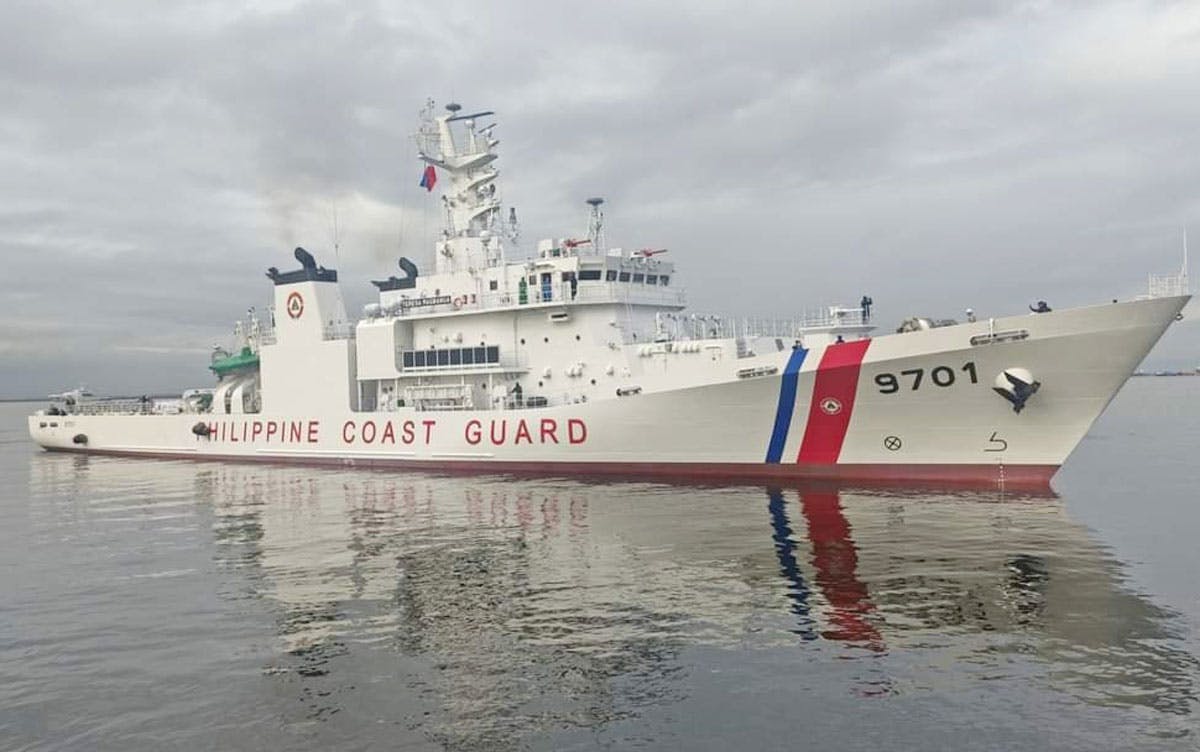
The Philippine Coast Guard (PCG)’s newest and biggest ship, the 97-meter BRP Teresa Magbanua, will be deployed to conduct maritime patrols in the West Philippine Sea (WPS), Benham Rise and the southern part of Mindanao.
The multi-role response vessel (MRRV) from Japan will soon be seen patrolling the waters frequented by foreign vessels, according to PCG spokesman Commodore Armand Balilo.
“It’s a big ship. It will be visible. We won’t look pitiful if compared with Chinese ships. Our vessels would look more credible,” Balilo said in English and Filipino on Sunday, Feb. 27.
“The West Philippine Sea would always be part of the mission of the BRP Teresa Magbanua,” he added.
With its size, Balilo stressed their vessel could also withstand harsh weather conditions that at times prevail over the WPS.
“With this vessel, it can be deployed for a longer number of days, from 15 to 20 days, compared to our other smaller ships that could only stay at sea for three to five days,” Balilo said.
BRP Teresa Magbanua has a maximum speed of not less than 24 knots, an endurance of not less than 4,000 nautical miles and is capable of conducting sustained maritime patrols in the country’s maritime jurisdictions.
The vessel will also be called to perform other maritime missions against sea piracy, poachers and conduct marine environmental protection in the country.
It also has advanced radar communication, has its own helipad and rigid-hulled inflatable boats.
One of the ship’s first missions will be to transport relief goods to Araceli municipality in Palawan, which, up to this time, is still in need of aid after being badly damaged by Typhoon Odette in December last year, according to Balilo.
“There are some donated relief goods. The instruction of PCG officer-in-charge Vice Admiral Eduardo Fabricante was to load these relief goods, including galvanized iron sheets and food, in the vessel that would be heading to Palawan or the WPS to conduct patrol,” he said.
Fabricante expressed his gratitude to President Duterte for his continuous support to the maritime agency.
The BRP Teresa Magbanua, which arrived in the country last Feb. 26, was constructed under the Japanese-assisted project funded by an official development assistance from the Japan International Cooperation Agency.
The PCG invited the President and relatives of the late Teresa Magbanua, who is considered as the “Visayan Joan of Arc,” to grace the commissioning of the ship on March 8. Afterwards, its crew will undergo training.
When the vessel was purchased from Japan, the firearms were not included.
Balilo said the vessel would be armed in time since this was not included in their program, the procurement of suitable firearms to be installed in the ship.
The second 97-meter MRRV is expected to arrive in the country either in March or April.
The US 7th Fleet leadership recently visited Philippine military leaders to strengthen the relationship with key Philippine leadership.
Members of the Subic Bay Port and leadership of Philippine Fleet, US Embassy and Clark Air Base were also visited.
During the visit on Feb. 21 to 24, the US 7th Fleet leadership engaged in staff talks, base tours, and discussion about pertinent issues that will be brought to the US-Philippines Mutual Defense Board/Security Engagement Board.
The trip included staff talks with Vice Admiral Karl Thomas, commander, US 7th Fleet, Subic Bay Port leadership, a tour of Subic Bay Port facilities and the Commander, Task Force 72 hangar and a wreath-laying ceremony in honor of the World War II liberation of the Philippines.
Thomas met with US embassy Chargé de Affairs ad interim Heather Variava, Armed Forces of the Philippines chief of staff Gen. Andres Centino, Philippine Navy flag officer-in-command Vice Admiral Adeluis Bordado and Philippine Navy fleet commander Rear Adm. Nichols Driz.
“Having open lines of communication with our partners and allies in the Indo-Pacific is vital to our lasting commitments and strong presence in the region,” Thomas said.
“Holding maritime discussions face-to-face with Philippine leadership is important to our alliance and navies, and I look forward to continued engagements in the future,” he added.
Precedent
The Ukraine invasion might become a precedent for powerful nations to invade small ones.
It is imperative for the country to join the other nations in calling for a stop to the Russian invasion of Ukraine, as the Philippines might fall in the same trap with China’s continued encroachment of the WPS.
Former representative Ronnie Ong, who resigned from Ang Probinsiyano party-list in November last year to join their newly formed Ako’y Pilipino organization, noted that Manila is “similarly situated” with Ukraine because of its territorial dispute with military giant Beijing.
“This is an eye-opener for us,” Ong said, lamenting how the North Atlantic Treaty Organization (NATO) and the United Nations have been handling the situation, which only makes it clearer that the Philippines has “no other option but to pursue continuous negotiations to defuse tensions in the disputed areas.”
“What happened in Ukraine demonstrates and only shows us that we really cannot rely on other nations, even through alliances, to help us. We have to defend ourselves in such situations, for the sole purpose of keeping the peace,” he added.
The failure of the UN and powerful security alliances like NATO to stop the Russian invasion is a “grim and worrying reminder that small and defenseless nations like the Philippines can be easily invaded by other powerful nations,” according to Ong. – With Pia Lee-Brago, Delon Porcalla


