Journalists Back ABS-CBN Colleagues; Academe, Lawyers, Other Groups Also Throw Support
“The struggle to protect free press is struggle to protect all other freedoms, that’s according to Supreme Court itself.”

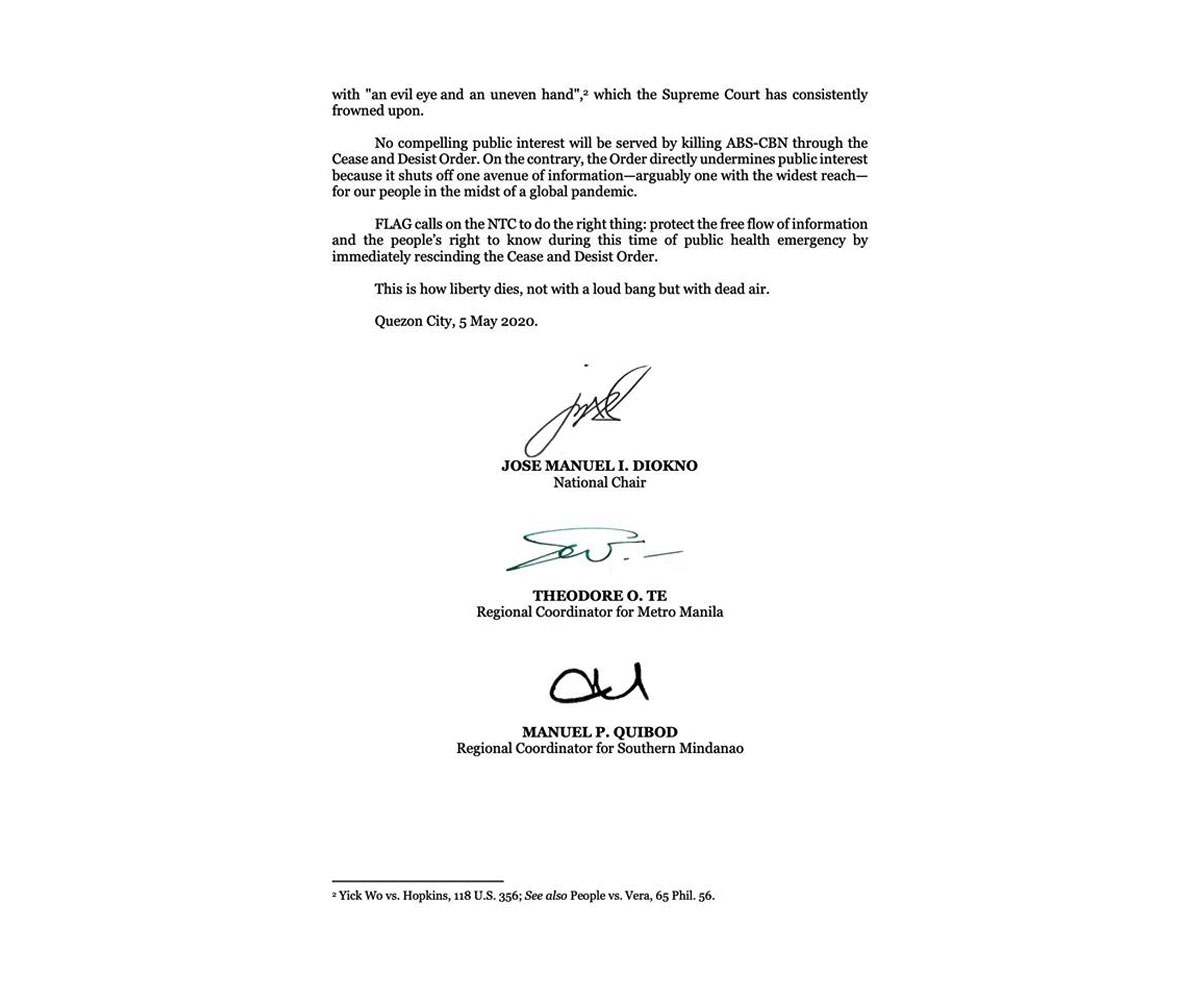
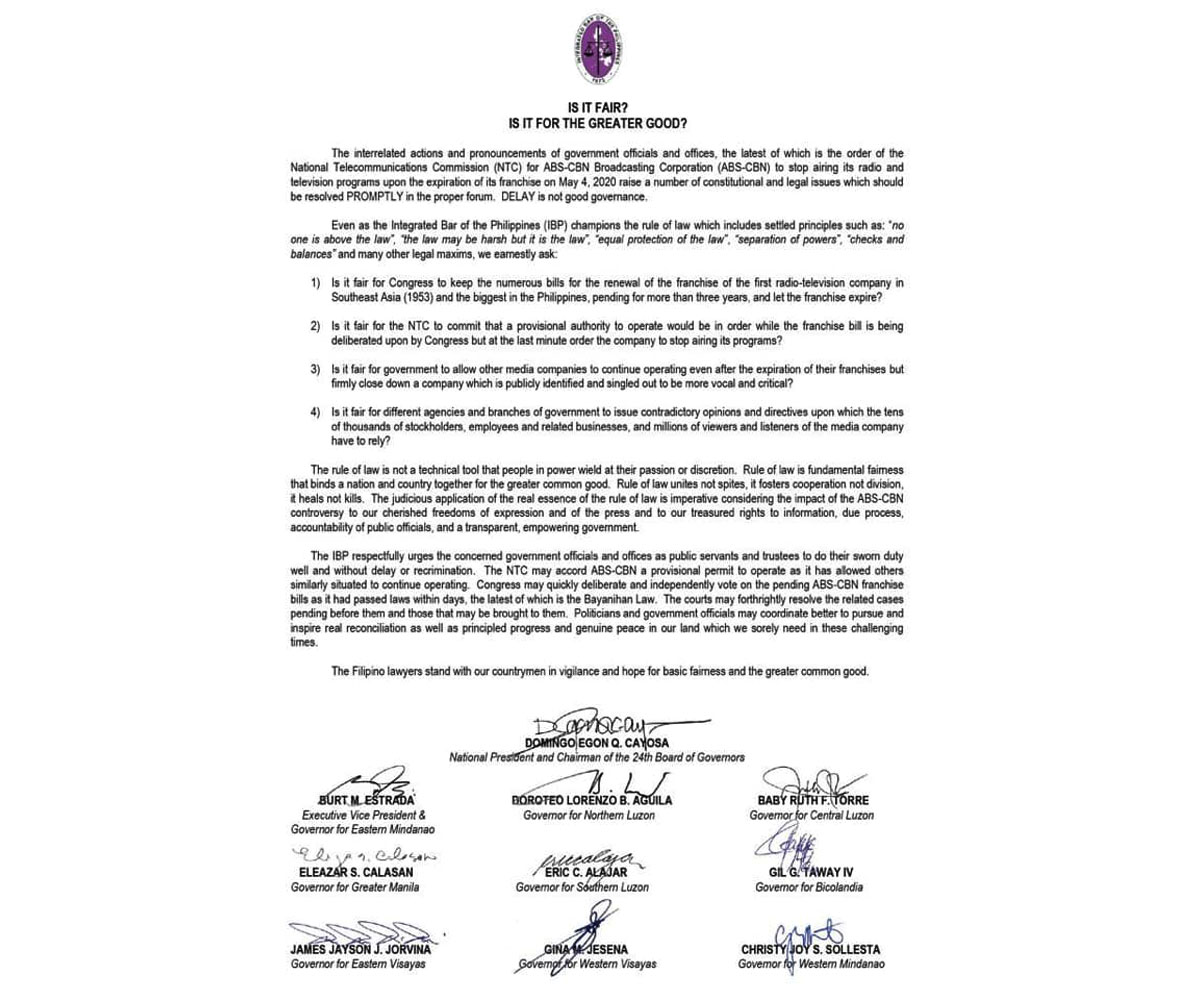
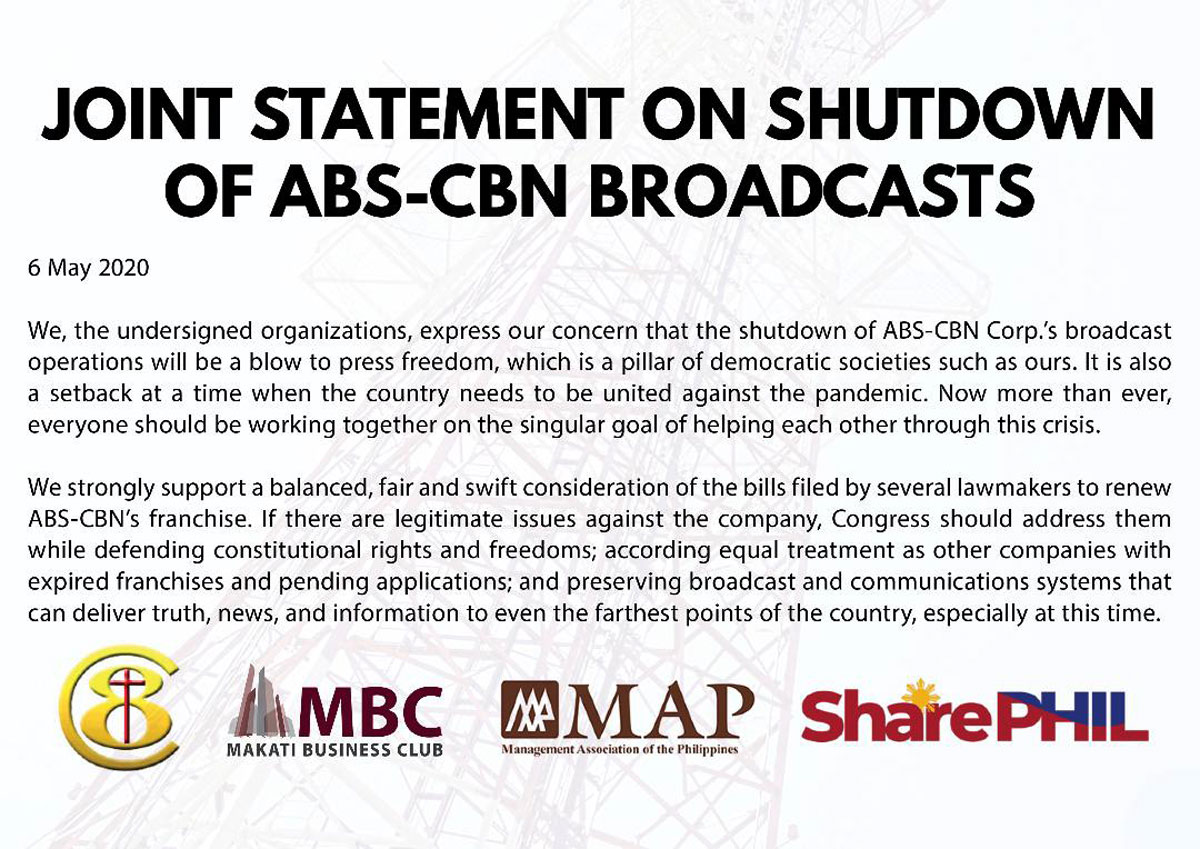
Many journalists, in their individual capacities or as members of organizations, have closed ranks in support of their peers working for ABS-CBN Corp. along with academic institutions, lawyers’ groups and others who value press freedom and democracy in the country.
ABS-CBN, which the National Telecommunications Commission shut down on May 5 following the expiration of its congressional franchise, asked the Supreme Court on Thursday, May 7, for a temporary restraining order to stop the implementation of the cease and desist order issued by the NTC.
NTC Deputy Commissioner Edgardo Cabarios said the order could not be rescinded because it followed Section 1 of Republic Act No. 3846, which states: “No person, firm, company, association or corporation shall construct, install, establish, or operate a radio station within the Philippine Islands without having first obtained a franchise” from the Philippine legislature.
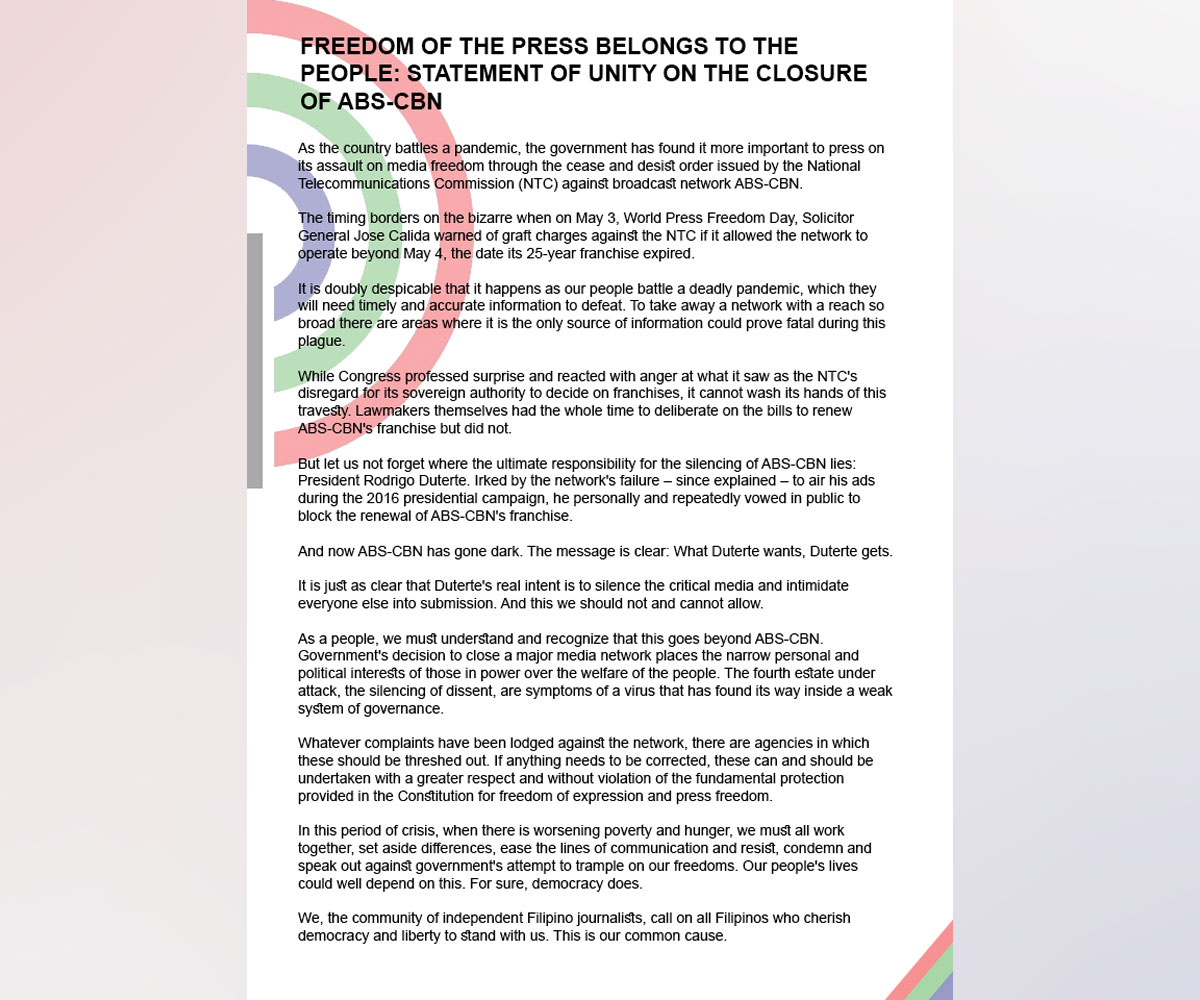
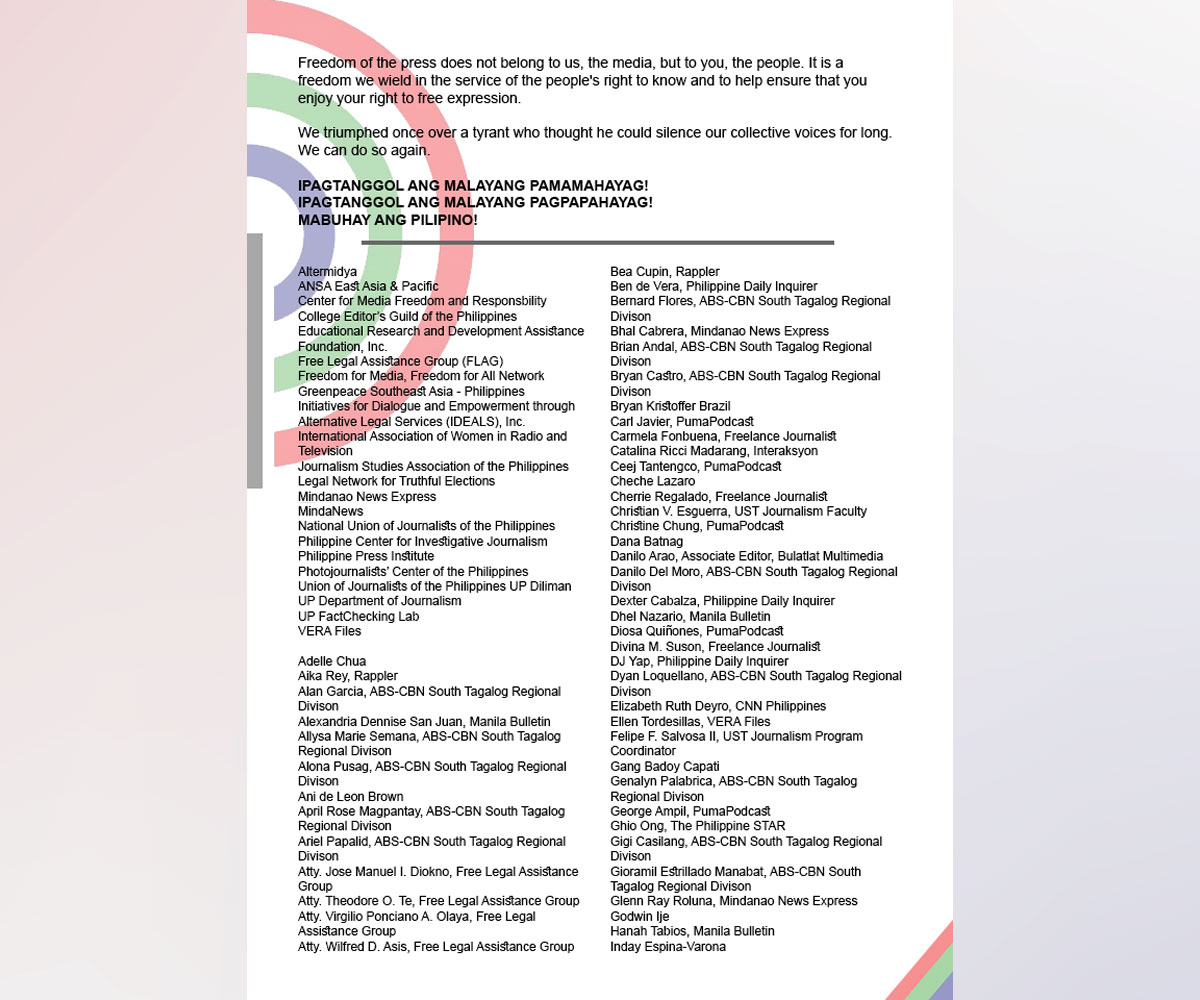
More than 20 organizations and more than a hundred individuals signed a statement spearheaded by the Philippine Center for Investigative Journalism in support of ABS-CBN.
The statement stressed: “Freedom of the press does not belong to us, the media, but to you, the people. It is a freedom we wield in the service of the people’s right to know and to help ensure that you enjoy your right to free expression.”
It said complaints against ABS-CBN should be corrected or threshed out in the proper proceedings that should be done “with a greater respect and without violation of the fundamental protection provided in the Constitution for freedom of expression and press freedom.”
It characterized as “doubly despicable” the NTC’s order that took down a network that is the only source of information in certain areas. It also heaped blame on Congress for not acting on ABS-CBN’s application for the renewal of its franchise, and on President Duterte for his “ultimate responsibility for the silencing of ABS-CBN” based on personal grievances.
“As a people, we must understand and recognize that this goes beyond ABS-CBN. Government’s decision to close a major media network places the narrow personal and political interests of those in power over the welfare of the people. The fourth estate under attack, the silencing of dissent, are symptoms of a virus that has found its way inside a weak system of governance,” read the statement.
National Union of Journalists of the Philippines chairman Nonoy Espina noted: “Journalists – or most of us anyway – come together when freedom of the press is attacked. Wouldn’t it be better if all media owners did the same?”
Luis Teodoro, former dean of the University of the Philippines College of Mass Communication and national chairperson of Altermidya, underscored that “a threat against one is a threat against all.”
“Once ABS-CBN is shut down on the say-so of a president who despises criticism and truth-telling, every other media organization can be similarly silenced by denying or withdrawing its franchise, or through some other nefarious means,” Teodoro said.
Editorials against ABS-CBN’s closure
The Philippine STAR was among the major media outfits that spoke out against “shutting down media organizations that fall into disfavor with those in power.”
In its Thursday editorial titled “Bad habit,” The STAR noted that the closure of the network that put thousands of employees and talents out of work coincided with the murder of radio reporter Rex Cornelio Pepino in Dumaguete City on the same night.
The STAR said the remedy to prevent ABS-CBN’s problem was “to de-politicize the issuance of broadcast franchises by taking the power out of the hands of Congress.”
Meanwhile, the Philippine Daily Inquirer called the NTC’s move “the great silencing” and recalled the horror of the first time ABS-CBN was forced to shut down when dictator Ferdinand Marcos declared martial law in September 1972 and seized the network on the ground of “subversive activities.”
PDI linked the closure of ABS-CBN to President Duterte’s accusations of “biased” reporting and of “estafa” for allegedly failing to return the payment for an unaired election campaign advertisement in 2016. Duterte blatantly told ABS-CBN to “just sell” the network.
“The broadcast giant was playing a critical role not just in disseminating information about COVID-19, but also in keeping citizens engaged and entertained as they endure a harsh, often incoherently run lockdown,” PDI said.
“An important voice has been silenced. It may have been done in accordance with the technicalities of law, but the assault on press freedom is clear and the chill of repression unmistakable – a foreboding of worse things to come,” it added.
Online news site Rappler called the NTC’s cease and desist order “an act of betrayal against the public that ABS-CBN serves,” since it had committed to Congress that it would issue a provisional authority pending the renewal of its franchise – something it had been doing in other cases before Solicitor General Jose Calida threatened that it could face graft charges.
“We stand with ABS-CBN and all journalists who continue to shine the light and expose wrongdoing despite state-sponsored efforts to silence them,” Rappler said. “The enemies of press freedom should never doubt this: Today more than ever, Filipino journalists are committed to hold the line.”
Rappler was the first news outfit to face an existential threat from regulators under the Duterte administration.
The Securities and Exchange Commission revoked Rappler’s certificate of incorporation on the ground that its Philippine depositary receipts – a financial instrument allowing foreigners to invest without voting rights or shares of stock – violated the Constitution’s total prohibition on foreign ownership of mass media. The Court of Appeals sustained the SEC’s findings of foreign control but ordered it to reassess Rappler’s compliance with the law after Omidyar Network donated the PDRs to the Filipino managers.

Individual journalists close ranks
The talents and employees of GMA 7 and other networks have spoken out in their individual capacities like their colleagues in the other forms of media. Such media workers used the hashtag #DefendPressFreedom.
Atom Araullo, who previously worked for ABS-CBN, posted: “Sorrow today, courage and defiance tomorrow.” In his online show Stand for Truth, he said the issue of press freedom could not be divorced from the legalities, especially as Duterte had not made his disdain of ABS-CBN a secret and even bragged about its impending closure. Mariz Umali said she was “praying” for the “entire ABS-CBN family.”
The Talents Association of GMA Network bemoaned the fate of 11,000 regular and contractual workers of ABS-CBN. “It must be noted that the same Congress that did not attend to ABS-CBN’s franchise renewal is the same institution that promised better working conditions for media practitioners,” said the group representing talents in a bitter regularization case against GMA.
TAG added: “Every news that is not reported, every network that is not allowed to air, adds to the risk of more Filipinos dying from coronavirus because of the lack of information.”
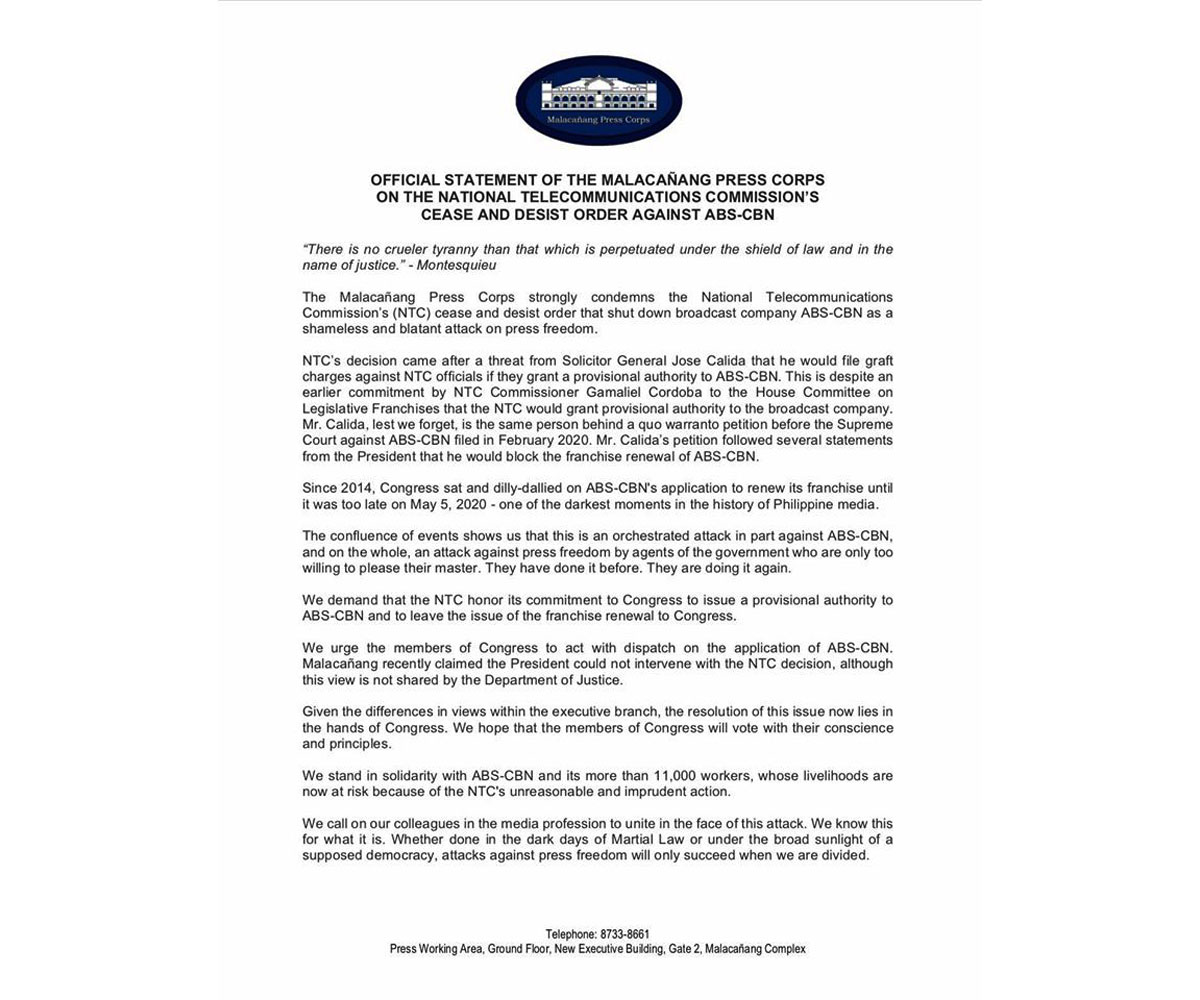
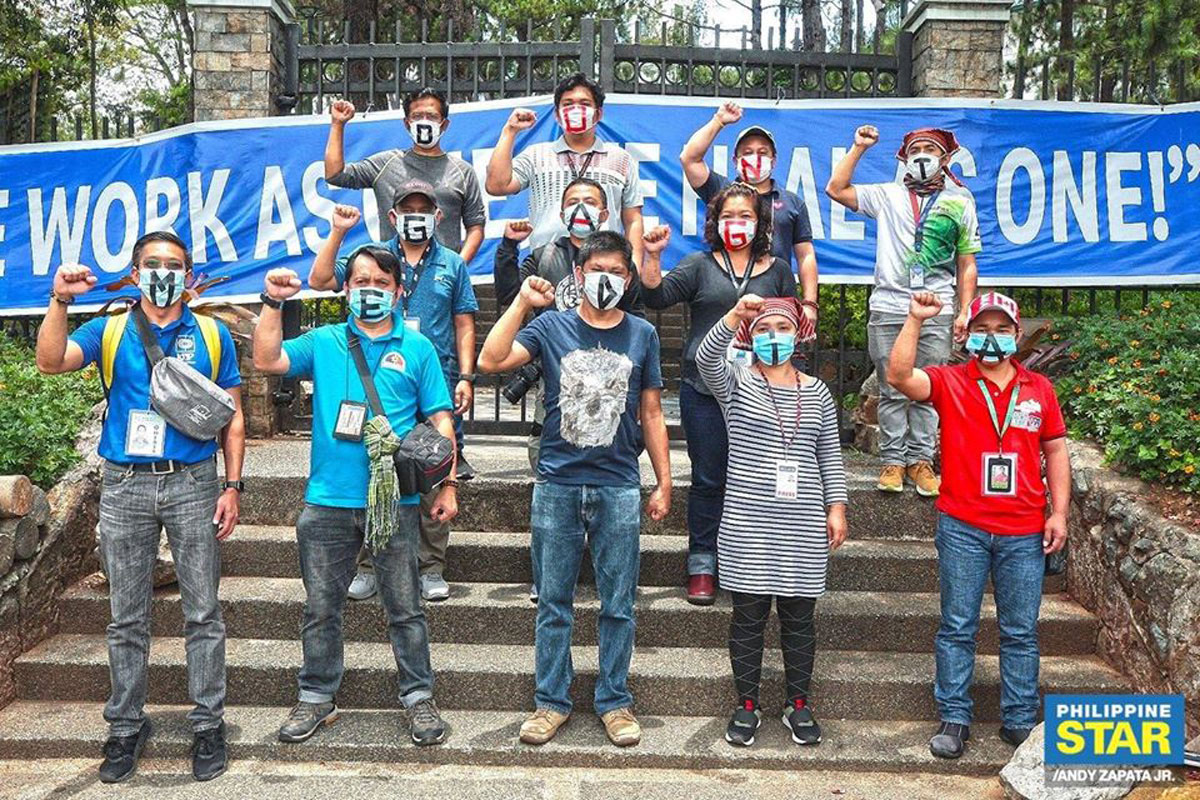
The press corps covering Malacañang, the Department of Justice, and the Department of National Defense also spoke out against the NTC’s order.
The Malacañang Press Corps described it as “a shameless and blatant attack on press freedom.” It demanded that NTC honor its commitment to issue a provisional authority and that Congress “act with dispatch” on the renewal of the franchise. The MPC noted that the differences in the opinion of the Department of Justice on the one hand and the Office of the Solicitor General and the NTC on the other meant that “the resolution of this issue now lies in the hands of Congress.”
“We call on our colleagues in the media profession to unite in the face of this attack. We know this for what it is. Whether done in the dark days of martial law or under the broad sunlight of a supposed democracy, attacks against press freedom will only succeed when we are divided,” the MPC said.
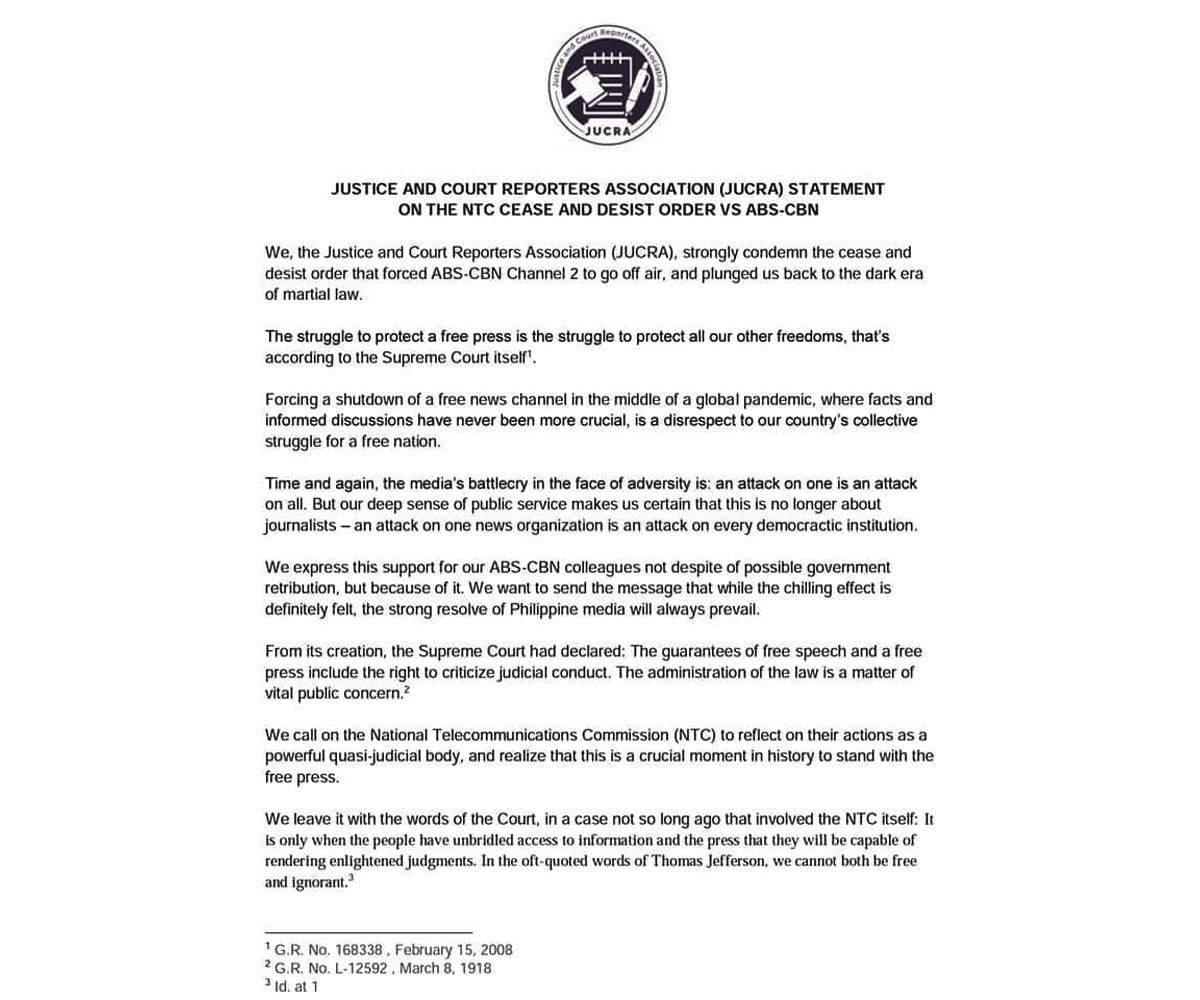
The Defense Press Corps said the shutdown of ABS-CBN “serves only a dictatorship seeking to silence truth.” The Justice and Court Reporters Association or JUCRA also stated: “Time and again, media’s battle cry in the face of adversity is: attack on one is attack on all. But our deep sense of public service makes us certain that this is no longer about journalists – attack on one news organization is attack on every democratic institution.”
“The struggle to protect free press is struggle to protect all other freedoms, that’s according to Supreme Court itself. Forcing a shutdown of a free news channel in the middle of a global pandemic...is a disrespect to our country’s collective struggle for a free nation,” JUCRA stressed.
Media organizations behind ABS-CBN
The Kapisanan ng mga Brodkaster ng Pilipinas, for its part, said “the decision is unfair not only to the network and the thousands who depend on the network for their livelihood but, even more important, to the millions of people served by the Network through its broadcasting activities.”
KBP, which counts ABS-CBN and Amcara Broadcasting Network Inc. (the broadcaster of ABS-CBN Sports+Action whose franchise expires this July) as members, lamented that the NTC order came “without any hint or warning to anyone.”
It urged the government to “adopt the equitable remedy, consistent with precedence practiced by NTC with the broadcast industry and adopted by both houses of Congress, of considering the permits and authorizations granted to ABS-CBN extended while evaluation of the application for extension of ABS-CBN’s franchise is pending.”
Saying that “ABS-CBN’s critical eye is needed now more than ever to help inform the public” about the coronavirus disease 2019 (COVID-19), the Foreign Correspondents Association of the Philippines said this was “clearly a case of political harassment against a pillar of Philippine democracy.” FOCAP implored lawmakers to “tackle these measures as soon as possible, and uphold the freedom of the press that the 1987 Constitution guarantees.”
The Pampanga Press Club said Congress should grant the franchise “with no conditionalities.” The Photojournalists’ Center of the Philippines said: “We are stunned by the lack of sensitivity of this administration to the basic needs of the people that the media has managed to surface and even address after we all held arms together no matter what group or party we belong to.”
Press groups abroad also joined the protest against ABS-CBN’s shutdown. The San Francisco-based Philippine American Press Club said it was “unconscionable that NTC… can be coerced by the powers that be to shut down ABS-CBN” and said the agency should also consider “the unstated and ever so carefully hidden motivations of those in power and those who stand to gain” from its order.
In Australia, Media Entertainment & Arts Alliance federal president Marcus Strom wrote Foreign Minister Marise Payne and Philippine Ambassador Ma. Hellen de la Vega to denounce Congress’ inaction on ABS-CBN’s franchise application, and to implicate Duterte for his “disdain for public interest journalism.” MEAA said NTC’s action “merely harms the (Duterte) Administration’s reputation around the world at a time of global crisis.”
Columnists against ABS-CBN
There were columnists who found the closure of the network justified.
Rigoberto Tiglao of The Manila Times said it was an inanity for Congress to expect the network to keep operating even after it did not pass any franchise bill before the existing one expired on May 4.
Emil Jurado of Manila Standard, which is owned by House Majority Leader Martin Romualdez, “commended” Duterte himself for “the end of ABS-CBN” and cited the legal maxim, “The law may be hard, but it is the law.” He also noted: “ABS-CBN had been operating illegally. But there are buyers waiting in the wings since the network is profitable.”
Charlie Manalo of the same paper lambasted colleagues in the media industry for “succumbing to the line of an organized group that the closure of ABS-CBN has something to do with the curtailment of press freedom when in truth and in fact, they know very well they have enjoyed the freedom to write and air whatever spin they would have concocted in the stories they have gathered in the furtherance of their work.”

Academe behind freedom of the press
The University of the Philippines College of Law questioned the NTC for its “failure to follow basic due process” in issuing the cease and desist order without first requiring ABS-CBN to explain why its frequency allocation should not be recalled. Not only did this “violate fundamental fair play and administrative due process,” the college said, NTC’s action was also “inconsistent with its previous actions involving other networks similarly situated.”
“There was certainly no reason for the NTC to have treated ABS-CBN differently,” the college stressed, as it called on the agency to reconsider its order motu proprio (on its own impulse).
The college also said Congress should grant the franchise to ABS-CBN to uphold freedom of speech and to be “consistent with the State’s obligation under Article XVI, Sec. 10 of the 1987 Constitution to ‘provide the policy environment for … the balanced flow of information into, out of, and across the country, in accordance with a policy that respects the freedom of speech and of the press.’ ”
“When the truth cannot come out because the press is cowed, captured, or co-opted, the rule of law is undermined. When it is not possible to hold government accountable because the press is not free to report, the rule of law is degraded,” the UP College of Law said.
The UP College of Mass Communication underscored the need for a free press especially during a pandemic.
“Again the current administration demonstrates the lengths it will go to silence critical media voices,” it said. “During this enhanced community quarantine, we have witnessed the brave coverage of the journalists-frontliners from ABS-CBN in covering the pandemic.”
The college’s broadcast communication department called on its students and alumni to stand with all media organizations and individuals to defend press freedom, saying “so much is immoral in the silencing of our voices.”
“Too deep are the wounds inflicted by the holders of unjust power on the media that enact truth and justice,” it added.
Describing the shutdown as politically motivated, the UP Film Institute said “a democracy can thrive only in a society where a free press is able to function as the government’s watchdog and which holds the freedom of speech and expression sacrosanct.”
The University of Santo Tomas (UST) said the order against ABS-CBN is a clear disservice to the Filipino people, especially at a time when information is key to saving lives.
UST journalism professors, in a separate statement, said the process of granting broadcast franchises should be depoliticized and delegated to an independent regulatory agency as it touches upon constitutionally guaranteed exercise of free press and expression.
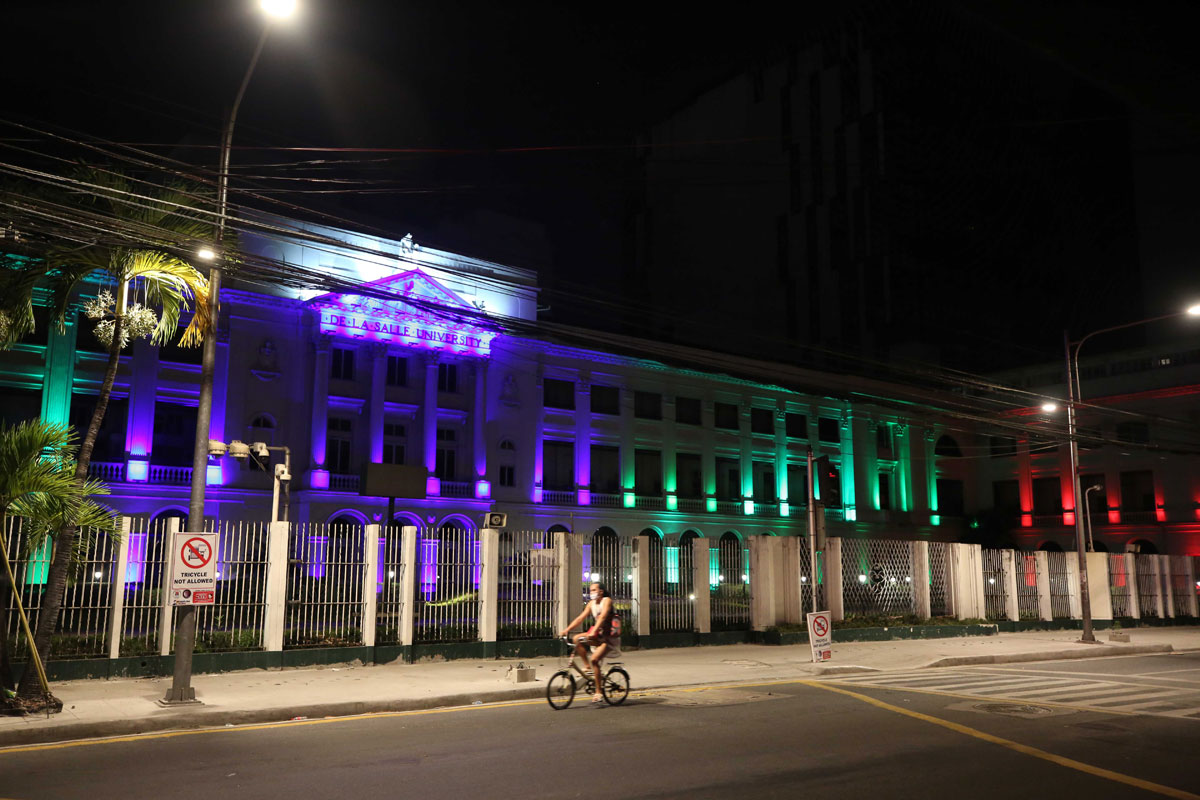
The De La Salle University lit up its campus in the colors of ABS-CBN in solidarity with the network and its employees.
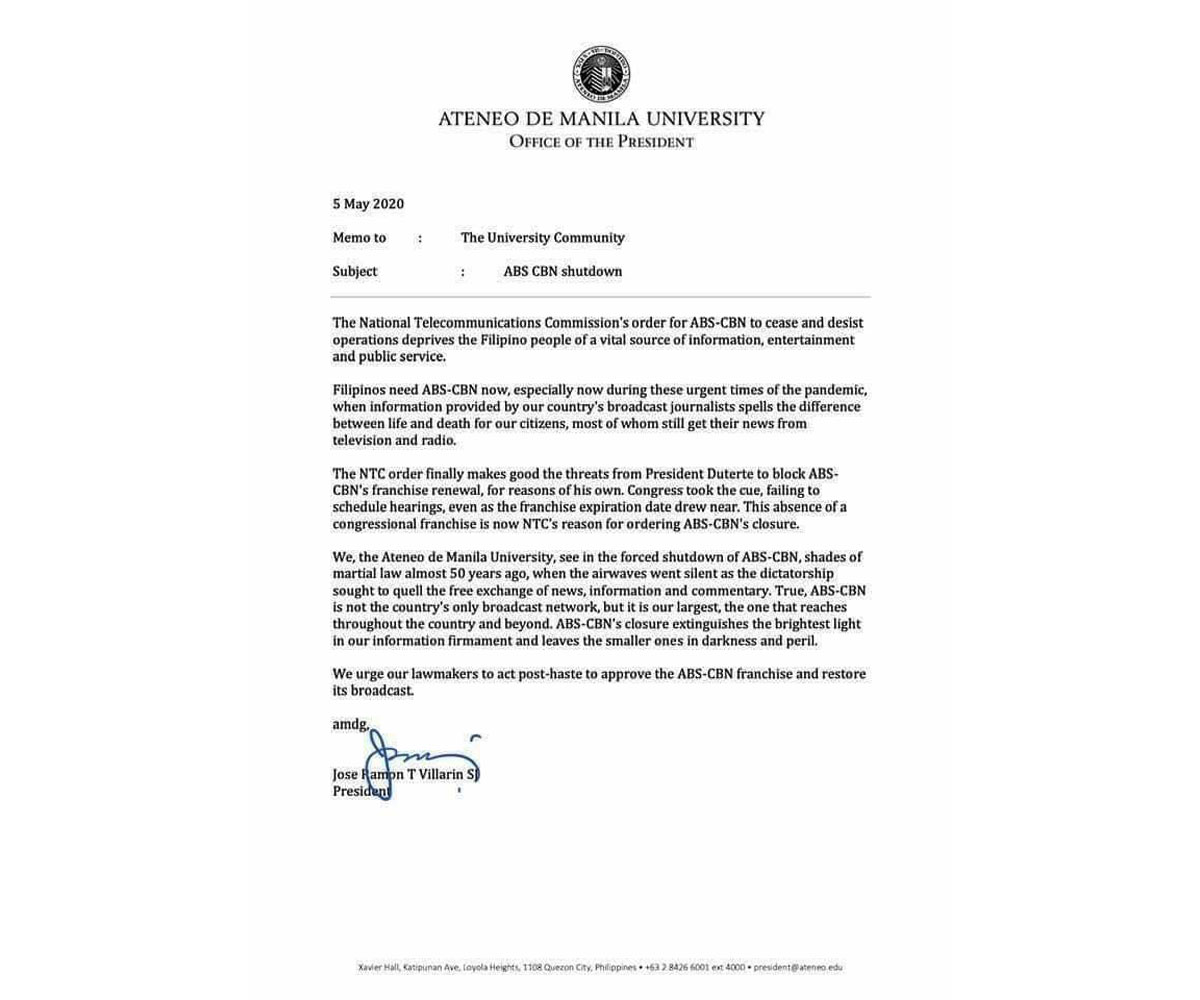
For his part, Ateneo de Manila University president Jose Ramon Villarin said the network’s shutdown shows “shades of martial law,” noting how Marcos silenced the media and free speech.
“True, ABS-CBN is not the country’s only broadcast network, but it is our largest, the one that reaches throughout the country and beyond,” Villarin said. “ABS-CBN’s closure extinguishes the brightest light in our information firmament and leaves the smaller ones in darkness and peril.”
Ateneo de Davao president Joel Tabora called for the restoration of the network, saying “it is integral to the Filipino way of life.”
The Polytechnic University College of Communication also condemned the NTC decision, describing it as a clear attack against freedom of the press.
“Sa panahon na tayo ay humaharap sa isang pandaigdigang krisis, hindi parte ng solusyon ang pagpapasara ng isang institusyon na nagbibigay ng mahalagang impormasyon sa bansa,” it said.
The Department of Communication of the Far Eastern University said shutting down the network is a clear threat to democracy as ABS-CBN plays a crucial role in ensuring that checks and balances in the government are in place.
“Furthermore, the livelihood of more than 11,000 media workers is at risk. In the face of a public health crisis, the unemployment of the network’s employees aggravates their economic and health situations as well as those of their families,” it said.
“They need a government that understands their plight,” it added.