



‘ICC Can Pursue Phl Probe Sans Gov’t Cooperation’
International law experts explained there are many ways to investigate the Philippines over the bloody drug war even if the Duterte administration refuses to cooperate.
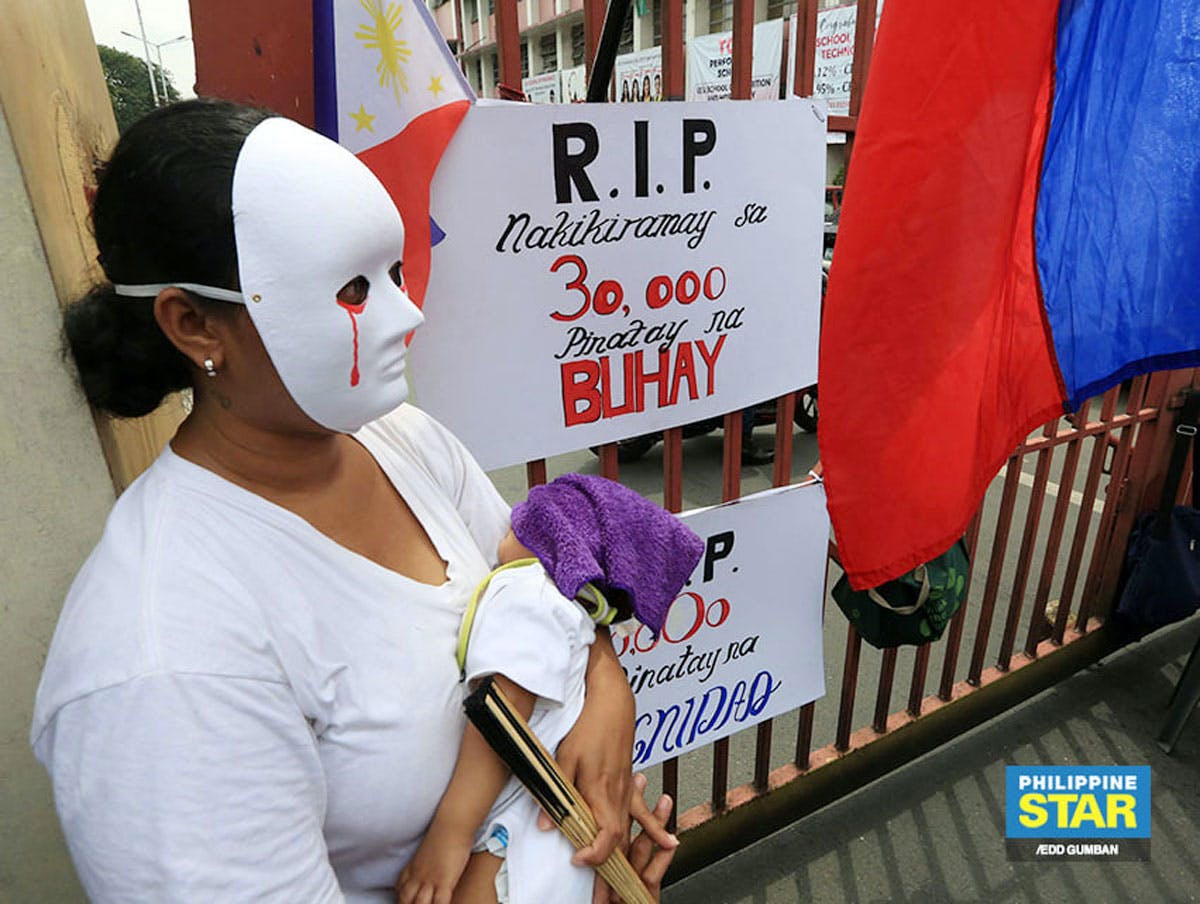
The prosecutor of the International Criminal Court (ICC) can proceed with its investigation into alleged crimes against humanity in the Philippines even if the government refuses to cooperate, international law experts said on Tuesday, June 15.
In an interview with “The Chiefs” on One News / TV5, Center for International Law trustee Gilbert Andres said the Philippines has a residual obligation to cooperate with the ICC’s probe into the Duterte administration’s bloody war on drugs even if the country already withdrew from it in 2018.
“But in the unfortunate event that the Philippine administration refuses to cooperate, then I think the ICC Office of the Prosecutor still has creative means to resort to so that it can have a good investigation as to the international crimes committed in the Philippines,” Andres explained.
Ruben Carranza, senior expert on programs at the International Center for Transitional Justice, said it is not impossible to pursue an investigation even if the government refuses to cooperate.
“There are various ways this can be done,” he told The Chiefs, noting that some of the information used by the ICC prosecutor when it examined the situation in the Philippines were taken from publicly available sources or submitted by various groups.
“There are also situations, some of them in the ICC but many outside the ICC, where commissions of inquiry – investigators from the UN (United Nations) – brought witnesses, specific individuals outside the country where they were located,” Carranza said.
Remote proceedings have also been conducted in the ICC recently, making it easier for witnesses to testify via the internet.
“What might be problematic are physical evidence, for example bodies that have to be exhumed or bullet casings that have to be examined,” he said.
Carranza said it is possible that there would be difficulties with the government’s refusal to open case files of police operations related to the so-called war against illegal drugs.
But he noted the statement made by ICC prosecutor Fatou Bensouda, who said that the prosecutor’s office has begun to preserve evidence and to protect witnesses regarding the matter.
On Monday, June 14, a day before the end of her term, Bensouda announced that she has requested for authority from the ICC Pre-Trial chamber to conduct an investigation into the situation on the Philippines.
She said there is reasonable basis to believe that crimes against humanity of murder have been committed in the country in relation to the Duterte administration’s deadly war against illegal drugs.
Moving forward
Asked if Bensouda’s successor Karim Khan might overturn her decision, Andres said this was unlikely.
“The next prosecutor, prosecutor Khan, will most probably not withdraw that request for investigation. There’s already that momentum not only of the facts presented but also the analysis of the fact,” he added. “The Pre-Trial Chamber, it may or may not approve. But I think that it will approve based on the facts presented and the numerous sources cited in the report that indeed there are really instances of crimes against humanity in the Philippines during the time when we were a state party.”
The decision on the request for authority to investigate may take months up to a year, he said, depending on how the ICC Pre-Trial Chamber decides to look into the details provided in the prosecutor’s request.
At this point, Andres said the chamber is not expected to consider the matter regarding admissibility of the case, saying it would happen during the trial phase.
He also maintained that the ICC retains jurisdiction over crimes that happened in the territory of a country during the period that it is a state party to the Rome Statute, the treaty that established the international court.
The Philippines is a party to the treaty from November 2011 to March 2019. One year after, the Duterte administration formally withdrew from the Rome Statute due to the preliminary examination initiated by Bensouda’s office.
Malacañang on Tuesday said that it will not cooperate with the investigation should it be allowed by the ICC Pre-Trial Chamber, alleging that it is legally erroneous and politically motivated.
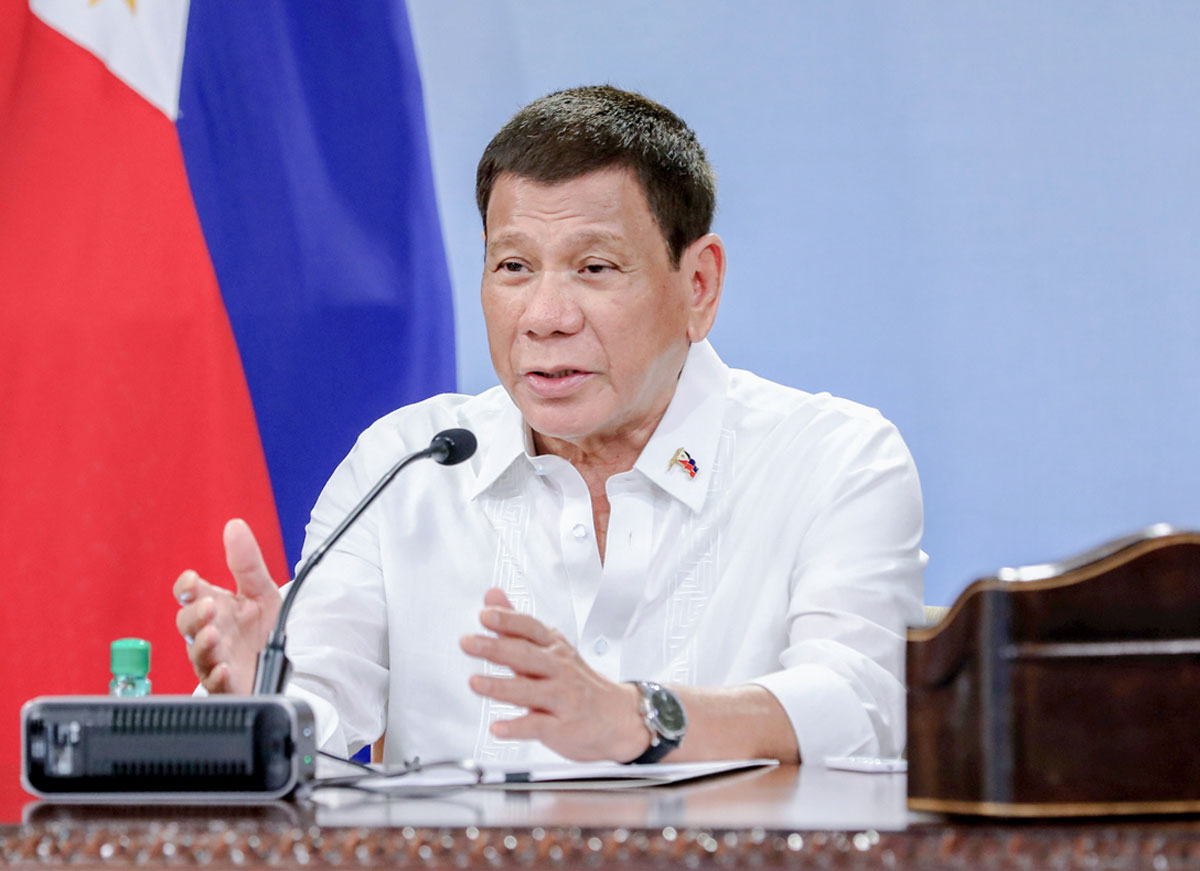
Sara willing to cooperate, if...
In Davao City, Mayor Sara Duterte-Carpio said her administration is willing to help the ICC investigate human rights abuses allegedly perpetrated by her father.
“If they (ICC) need anything from the city government of Davao, we are willing to help subject to the permission of the national government,” Duterte-Carpio said in an interview with broadcast journalist RG Cruz over Twitter.
“If the DILG (Department of the Interior and Local Government) tells us to open whatever documents that they need, so we would obey what the DILG says,” she said partly in Filipino, stressing the need for national government clearance.
Asked about her stance on the ICC probe if she were to become president, Duterte-Carpio said: “I’d have to decide first to run for president before I could answer that.”
Bishop’s appeal
Bishop Broderick Pabillo called on government to participate in the investigation, stressing that it should open its records to the ICC if it has nothing to hide in its war on drugs that killed thousands.
Speaking in Filipino at a virtual press conference, the Manila apostolic administrator said: “If they’re innocent, why won’t they submit to an investigation? Why won’t they participate?”
Pabillo stressed that transparency in the government’s program against illegal drugs has long been the appeal of the Catholic Bishops’ Conference of the Philippines (CBCP) and the Catholic Church in their desire to avoid a culture of impunity.
“Part of democracy is accountability,” the bishop added.
Likewise, Senate President Vicente Sotto III said it would be better if the administration would simply allow the ICC to review the anti-illegal drugs campaign.
Sen. Francis Pangilinan said the ICC probe would have serious political and economic repercussions for the country and “our standing in the eyes of the international community.”
Sen. Leila de Lima said the recent development means that Duterte’s days are “coming to an end.”
She said the only question now is whether Duterte’s own death will come as a boon and save him from the trial and judgment of the ICC for his crimes against humanity.
“He might actually be entertaining that notion now, better to die first than to suffer the humiliation of being dragged in chains to The Hague as one of the few individuals in history to be tried as hostis humani generis, an enemy of mankind,” De Lima said.
CRN welcomes ICC probe
On Wednesday, children’s rights advocates welcomed outgoing prosecutor Bensouda’s request to investigate Duterte and called on his administration to fully cooperate.
Child Rights Network noted that in June 2020, at least 122 children have been killed in the Philippines’ anti-illegal drugs campaign, citing a report published by the Children’s Legal Rights and Development Center or CLRDC, which is a member of CRN.
“As we welcome the ICC chief prosecutor’s request to the ICC to open an investigation regarding the killings, we also share her hopes that the incoming ICC chief prosecutor, Mr. Karim Khan, will prioritize the resolution of this case,” it said.
To date, the killing of 17-year-old Kian delos Santos in 2017 remains the sole case involving children under the administration’s anti-illegal drugs campaign that has already been resolved by a court, CRN said.
Caloocan Regional Trial Court Branch 125 handed a guilty verdict in 2018 against the three policemen involved in the operation that resulted in the teenager’s killing.
KMU: Terminate drug war
For its part, the militant Kilusang Mayo Uno (KMU) renewed its call to terminate the government’s war on drugs and condemned Malacañang’s statement that it will not cooperate with the ICC’s investigation on the pretext that it is “politically motivated.”
KMU secretary general Jerome Adonis said all operations in connection with “Oplan Tokhang” must be halted immediately after the ICC has found basis to believe a crime against humanity was committed through the war on drugs.
The government’s refusal to cooperate, Adonis said, is actually a sign of guilt and a desperate move to absolve those behind the killings. – With Edith Regalado, Robertzon Ramirez, Paolo Romero, Cecille Suerte Felipe, Mayen Jaymalin, Helen Flores


