


Caloocan Plastic Ban Nets Hundreds Of Violators
The city government of Caloocan believes there must be a national policy on the use of plastic instead of merely imposing fines in areas where it is regulated. But what about on the production side?
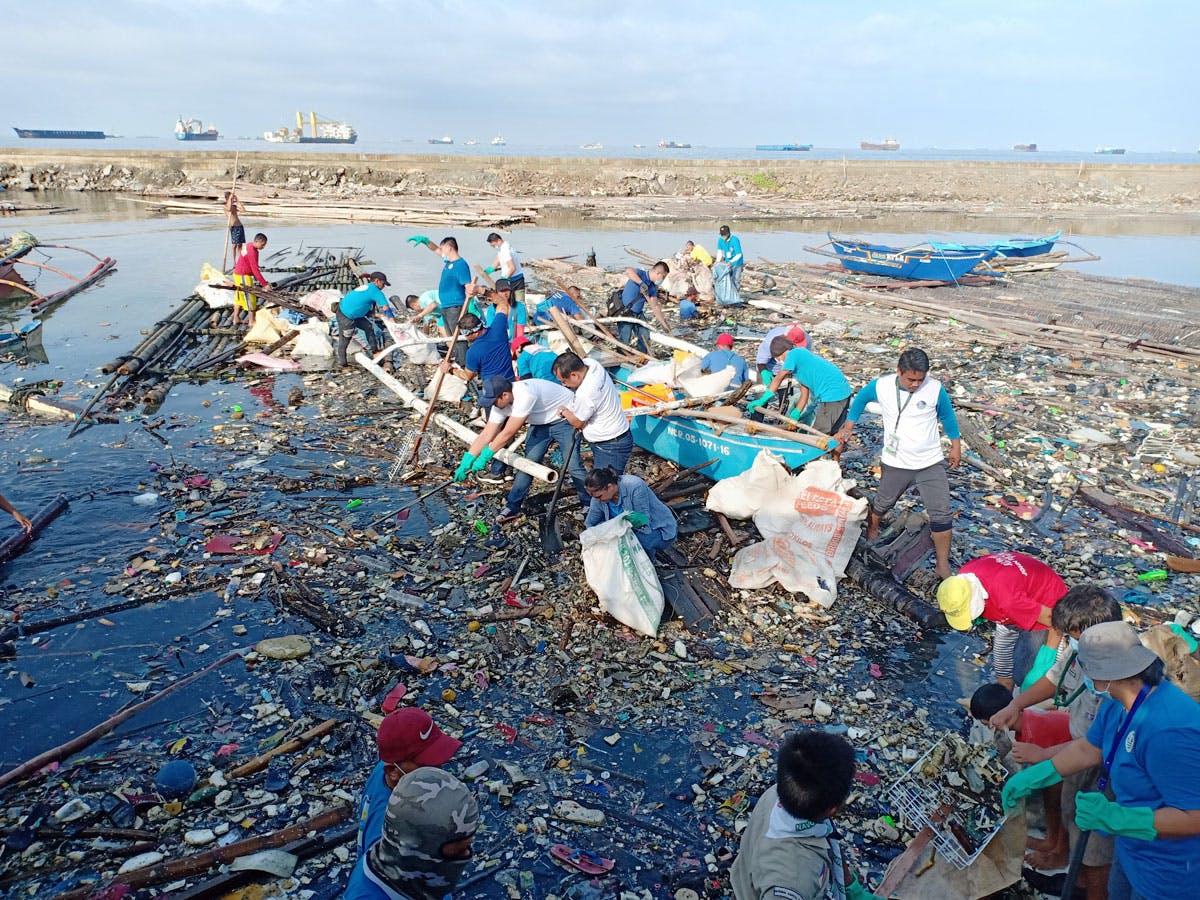
Even before President Duterte considered imposing a nationwide ban on single-use plastic, hundreds of stall owners had already been fined for violating a similar measure in Caloocan City, the only local government unit in northern Metro Manila that implements a total ban on plastic bags.
More than 400 people have been issued citation tickets since the ordinance was enacted in 2013, according to data obtained by The Philippine STAR from the City Environmental Management Department (CEMD).
In South Caloocan where the seat of power is located, there have been 59 violators so far this year, still below the total 81 citations last year. There were 26 violators in the southern part of the city in 2017.
Latest data regarding violators in North Caloocan is still unavailable; there were 199 citations in 2017 and 50 in 2016.
Of the 415 violators, 133 have not yet paid the P1,000 fine under Ordinance No. 0503. Only five were charged in court.
Total plastic ban
Under the ordinance, business owners are allowed to use only biodegradable plastic bags, according to Caloocan CEMD chief Gilberto Bernardo.
Exempted from the ban are primary plastic packaging of goods such as snack foods, frozen foods, hardware items, bottled water or soda, juice drinks, cooking oil, plastic sachet products containing soap, shampoo and conditioner, and cosmetics.
The ordinance specifically prohibits the use of plastic bags in wet markets, considering these as secondary packaging that must be biodegradable or oxo-biodegradable.
While it has been in effect for more than five years, Bernardo said implementing the 2013 ordinance poses difficulties as it requires changing people’s mindset about single-use plastic.
A national law on plastic regulation, he said, would help the local government in implementing the ban.
“If the President totally bans plastic, it will be a great help to the local government unit,” Bernardo said.
Varying measures
Plastic manufacturing companies are located in some cities of northern Metro Manila — referred to as Camanava (for Caloocan, Malabon, Navotas and Valenzuela).
Various measures have been implemented in Camanava with regard to the use of single-use plastics.
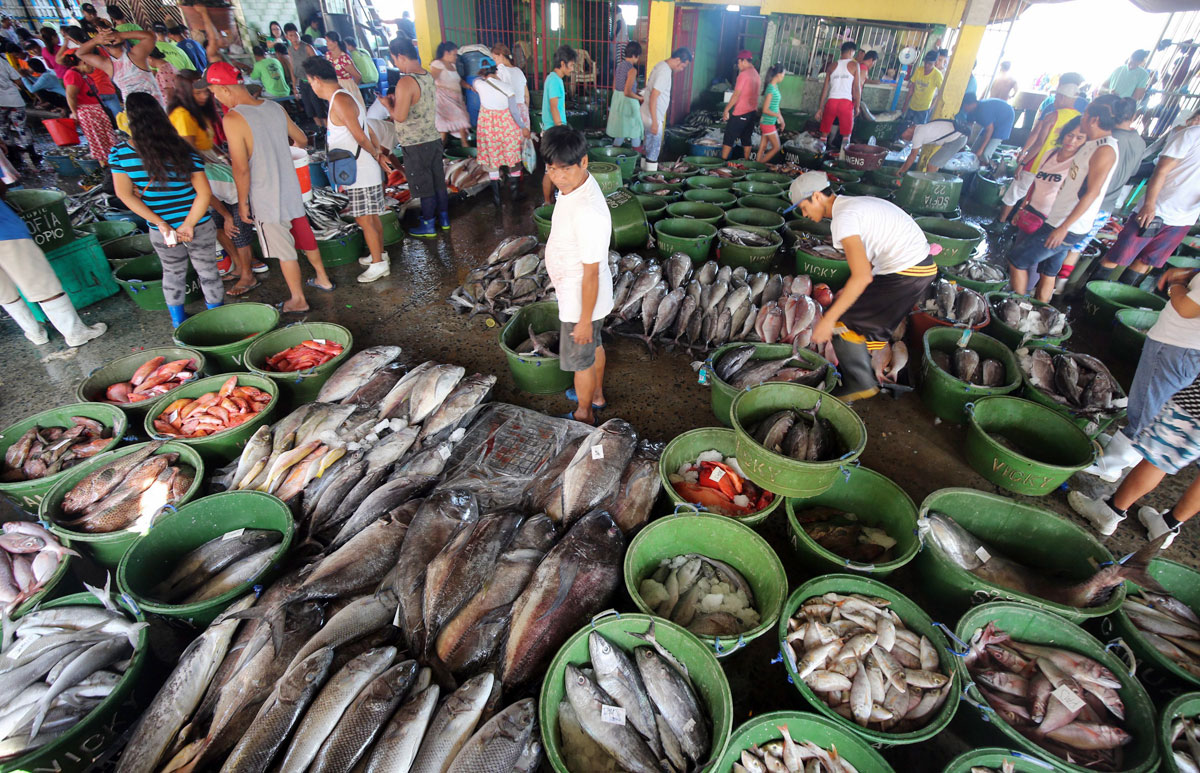
In Malabon, where plastic companies are operating, and Navotas, where fish vendors prefer single-use plastic, the local governments ban plastic use only on Fridays.
Malabon City Environmental and Natural Resources Officer (CENRO) Mark Mesina said the city government is coordinating with a plastic company to upcycle the plastic waste of barangays to manufacture furniture.
Instead of imposing a total ban on plastic companies, he said the city government works with these companies to collect single-use plastic items for recycling.
In 2013, Malabon issued Ordinance No. 01-2013 to regulate the use of plastic for wet goods and prohibit the use of plastic packaging/bags, foam polystyrene/styropor on dry goods, and prescribe penalties.
In Navotas, City Ordinance No. 2015-14 prohibits polystyrene packaging and plastic bags but only on Fridays.
Connie Labay of Navotas CENRO said the ordinance is being strictly implemented in drug stores and fastfood chains.
But she said it remains to be strictly enforced in Navotas fish markets, where fish products are packaged or purchased inside plastic bags.
In Valenzuela City where there is no plastic ban, the local government implements a program to recycle single-use plastic, according to information officer Zyan Caiña.
Caiña said the city is coordinating with Nestlé Philippines to recycle the sachet laminates and beverage cartons collected under the “May Balik sa Plastik” program.
Valenzuela is known as the country’s “Plastics City” as it is the location of the former plastics manufacturing hub of William Gatchalian.
Known as the “Plastics King,” Gatchalian is the father of incumbent Valenzuela Mayor Rex Gatchalian and former mayor and now Sen. Sherwin Gatchalian.
The family owns the sprawling “Plastic City Industrial Corp.” estate in the city, although it has since ceased operations due to losses.
Plastic problem
The Philippines is among the top contributors of plastic waste in the world’s oceans, according to a report by the United States-based non-profit organization Ocean Conservancy.
Ocean Conservancy said the Philippines is the third among five countries that contribute more than half of the plastic waste that enter the oceans, which is estimated to reach eight million metric tons a year.
Other countries cited in the report were China, Indonesia, Thailand and Vietnam.
The Philippines produces 2.7 million metric tons of plastic waste every year, with half a million metric tons believed to be exiting into the Pacific Ocean.
The organization said plastic-waste leakage in the Philippines comes primarily from local plastic consumption, noting that between 70 and 90 percent of the waste dumped illegally in the country ultimately ends up in waterways.
According to the Global Alliance for Incinerator Alternatives (GAIA), an average Filipino uses 591 pieces of sachets, 174 shopping bags and 163 plastic labo bags every year.
In its report, one of the GAIA’s recommendations is to make corporations transparent about the plastic packaging they produce, assume accountability and liability for the packaging, and immediately stop producing throwaway plastic packaging through innovations in redesign and product delivery.
“Single-use plastics and other plastic packaging are among the most problematic kinds of waste. Even with a ban on plastic bags and packaging at the local or national levels, communities in the Philippines with zero waste ambitions are still left with an estimated 20 (percent) of residual waste, about half of which is branded, which they have no way of managing on their own,” the GAIA report read.
According to the GAIA report, corporations produce and profit from these plastic materials, and therefore should be ultimately responsible and accountable for the negative impacts to human health and environment at any stage of its life cycle.
Because specific plastics require specific waste management interventions, the GAIA said corporations need to disclose production, consumption and disposal data as well as the kinds of plastic materials they are using to be able to sufficiently and effectively address the plastic pollution problem.
“Recent global developments indicate that big corporations recognize that plastic pollution is a global problem but prefer to keep the focus on improving recycling efforts instead of redesigning product, packaging and delivery system…Single-use plastics must be eliminated and replaced with new systems of delivery such as container-return systems, refill stations and other innovations that fall within a sustainable circular economy framework where materials are safely brought back into the production cycle as raw material, are durable, reusable, do not contain toxic additives, and do not result in pollution,” the GAIA stressed.