



Advocates, Gov’t Clash On Calls To Decriminalize Cannabis
Advocates insist that regulating the use of cannabis is better than prohibiting it. Some government officials, however, believe that decriminalizing marijuana could lead to abuse.
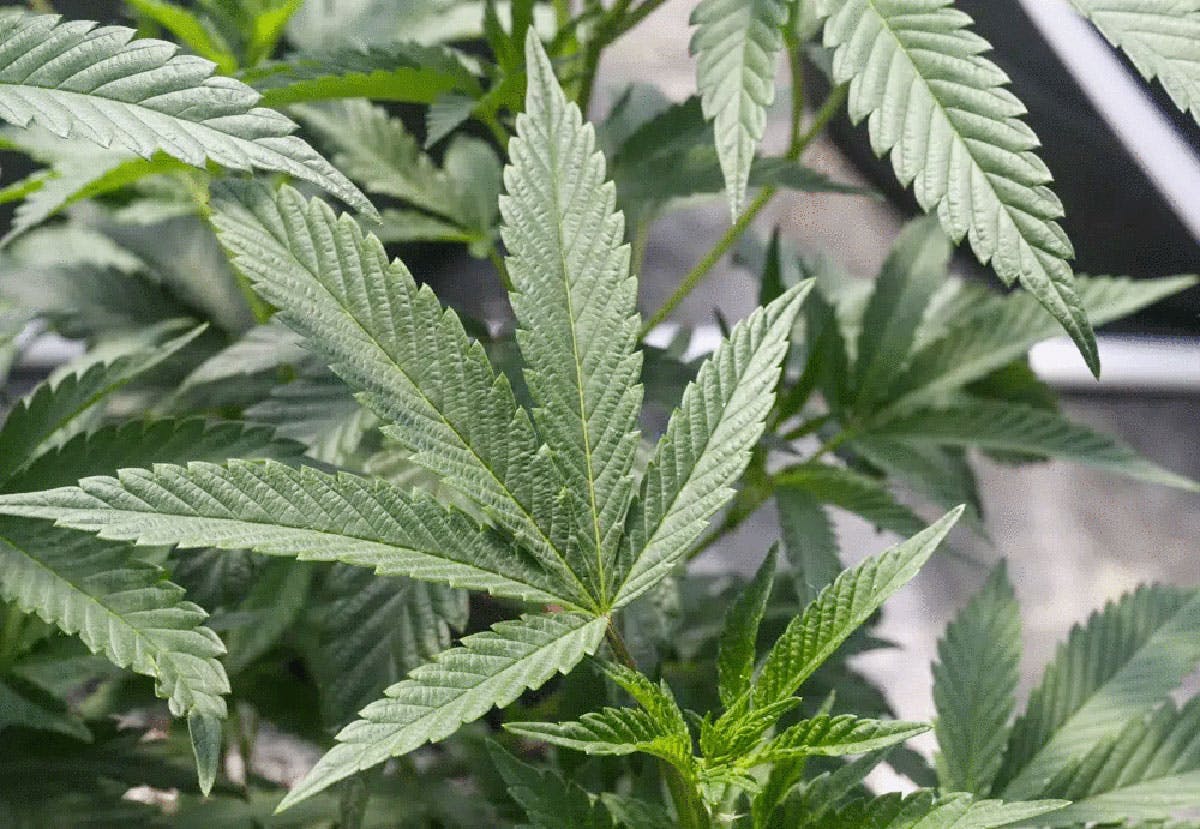
Advocates continue to urge the government to reconsider classifying cannabis as a dangerous drug, pointing out that current laws and policies oppress people who use it, especially those in the lower social class and those suffering from certain illnesses.
One of them is Jommy Teotico, a former model who won in the Philippine franchise of reality show Fear Factor in 2009.
In October 2014, or five years after he was declared grand winner of the show, police arrested him for smoking weed inside the house of his live-in partner in San Pedro City, Laguna. He was caught with an estimated 225.75 grams of marijuana, as well as a glass pipe used as “tooter.”
Charges against Teotico for violating Sections 11, 12, 15 and 16 of Republic Act No. 9165, or the Comprehensive Dangerous Drugs Act of 2002, were all dismissed by the San Pedro City Regional Trial Court (RTC) Branch 93 in late January 2021, granting his demurrer to evidence.
Aside from inconsistencies in statements from police and in performing the chain of custody, the court highlighted the chemistry report that proved there was no trace of marijuana in the glass pipe. Police also failed to prove he smoked weed at the time of his arrest, it added.
He was released from detention in early February 2021, or around six years and three months after the filing of criminal charges. Teotico’s imprisonment did not dampen his spirit, but instead fired him up to continue his advocacy to decriminalize cannabis use.
While incarcerated, he was doing self-research, even solving math problems, and wrote notes that made up his book “Mind of an Altruist.” After his detention, he gave and is still giving talks on his advocacy, particularly how marijuana could help address mental health issues and even medical issues like epilepsy and attention deficit hyperactivity disorder (ADHD), which he was diagnosed with.
He also launched a clothing line named “HEMP” or “Help Educate Misinformed People.” In addition, he is preparing for his comeback in showbiz.
Teotico believed he suffered six years in jail not because of “the plant,” but because of the “wrong law,” adding that police made him fall into the trick of getting caught for violating RA 9165. He argued that people using marijuana like him for recreational or medical purposes should not be arrested.
“Napatunayan kong na-set up ako dahil sa maling batas ng marijuana. Hindi naman dangerous ang halaman, iyong batas ang nagpapadelikado sa buhay ng tao (I have proven that the incorrect law about marijuana had set me up. The plant is not dangerous, it is the law that puts people’s lives at risk),” he noted.
“Gusto ko lang mag-relax, mag-heal, bukas nasa kulungan na ako kasama ang mga kriminal talaga. Bakit tinawag na kriminal kung inaayos ko lang ang sarili ko? (I just wanted to relax, to heal, then I found myself in jail with real criminals the next day. Why was I called a criminal when I was only trying to fix myself?)” Teotico said.
Meanwhile, a man who goes by the name “CannaBeast,” in his 30s, thrives in his business of selling high-grade marijuana to clients nationwide while working in government. He would use packages from legitimate products to make it appear he was shipping real goods.
This person managed to conceal marijuana, still considered a dangerous drug under RA 9165, by using a material that could pass through X-ray machines and even avoid detection from drug-sniffing dogs.
He showed a sample marijuana product to The Philippine STAR, packed in a bag of chia seeds. He included a bag of champoy candy to make the package – all stuffed inside a loose eco-bag that he described as “very poor packaging” – look like a legitimate food delivery.
“CannaBeast’s” marijuana products have reached both professionals and students, especially those who have succeeded in board exams for lawyers and physicians, among others. Government officials like mayors and congressmen, as well as patients suffering from chronic pain from illnesses like epilepsy, asthma and ADHD were also his clients.
He would keep his customers safe from getting caught by assigning them aliases for “plausible deniability,” while he ensures his employees who deal with clients should not be connected with shippers and the safehouses.
“CannaBeast” could earn as much as P500,000 to P600,000 a month just by selling cannabis products.
Decriminalizing marijuana
Davao del Norte 1st District Rep. Pantaleon Alvarez is proposing to amend certain provisions of RA 9165, delisting marijuana as a dangerous drug.
In his House Bill No. 6783, he suggested that the words “marijuana,” “marijuana resin” and “marijuana resin oil” be removed from provisions like Section 11 or possession and Section 16 or cultivation. He also wanted to remove cannabis and its other forms in the law’s definition of dangerous drugs under Section 3.
Alvarez wrote marijuana “is not as harmful as it was first thought out to be. Its benefits, as it turns out, far outweigh the supposed harms it poses.” “Change, therefore, is needed to remedy the misclassification of marijuana as a dangerous drug,” he said.
Aside from the medical benefits of cannabis, he pointed out that legalizing marijuana use “creates a massive economic opportunity for new businesses, jobs, and further revenue generation for the country, which can be used to fund social programs.”
Considering himself a “victim” of the “harsh law,” Teotico supports Alvarez’s proposal, saying it would help “misinformed people” know more about marijuana.
People dependent on marijuana, particularly those with medical issues like epilepsy, and even those who support his advocacy have become victims of discrimination – removed from their jobs, deprived of government licenses after testing positive for marijuana use – just because cannabis is still labeled as illegal, according to Teotico. He felt it was time for him to speak up more.
“Bakit may ganoong posisyon? Kami ang naiipit. Kaya hindi na kami natatakot, nilalabanan namin ang sistema na mali kasi marami kaming naiipit (Why is there such a position? Because we feel trapped. That’s why we are no longer afraid. We are fighting the wrong system because a lot of people are caught in between),” Teotico said.
He maintained that using marijuana, or any other drug, should not be considered a crime. “Hindi kriminal ang taong gumagamit ng drugs, kaya hindi dapat isama sa mga kriminal na tinitingnan natin. Hindi siya krimen. (A person who uses drugs is not a criminal, so he should not be with the kind of criminals that we look down on. It [drug use] is not a crime).”
Teotico likewise asserted that people using marijuana “need help, not imprisonment,” as some of them struggle with mental health issues. “Kung kailangan may psychiatrist sa kada barangay, sana may ganoon. O kahit hindi psychiatrist, may makinig lang sa kanila (If there is a psychiatrist in every village, I hope we can have that; or even just someone who can listen to them),” he said.
“CannaBeast” believed the law and even the government’s so-called “drug war” picked on the ordinary folk, and not on people who hold high positions in society. For example, while it would be easy to conduct drug tests on employees, it could be difficult for government officials because they would insist not to undertake it.
“Mga mayor o congressman, paano magkakaroon ng lakas ng loob na sabihing magpa-drug test siya? Parang in-imply na gumagamit siya ng iligal na droga, at hindi mo gustong gawin ‘yan sa ganoong kalaking tao. Para uli sa mahirap, at hindi gumagana sa mga may mataas na posisyon (Would you have the courage to tell a mayor or a congressman to undergo a drug test? It’s like you already implied that he is using illegal drugs, and you don’t want to do that to a person of stature. So, it just applies to the poor again, not to those in high positions),” he said.
Regulating the use and supply of cannabis, therefore, would be better than prohibiting it, just like how alcohol and cigarettes – which he believed are more addictive and harmful a– are controlled, “CannaBeast” added.
As a cannabis advocate, he always felt “frustrated” by those who refuse to see its benefits even if the information is available on the internet. He also mentioned there are countries that have legalized weed, which could serve as a “model” after realizing that its benefits far outweigh the risks.
Aside from helping in job and income generation, “CannaBeast” believed decriminalizing marijuana would be “morally correct.” Under our current laws, he said even aging people who happen to have this plant inside their own property could get arrested, which should not be the case.
“We shouldn’t be incarcerating people for trying a plant. Kasi ang pag-legalize, hindi lang sa pag-smoke sa public (Because when you legalize it, you're not only allowing people to smoke it in public). Kung may ayaw, huwag. Pero kahit sa bahay, in homes na kahit lola na 80 years old hinuhuli (If they don’t like it, fine. But even at home, an 80-year-old grandmother gets arrested) for growing this plant, and it’s no different from growing lavender or any other plant.”
He echoed Teotico’s position that there is no basis for anyone using cannabis to be put behind bars when they are only using it to help themselves.
“For example, may taong may (a person has) depression or mental health problem. Kung mag-try siya ng cannabis para matulungan siya sa problema niya imbes na mag-suicide, ngayon papasok ang pulis para hulihin siya at ilayo sa pamilya niya at parusahan, I don't think there is any way na makakatulong ang ganoong pamamaraan (He tries out cannabis to ease his burden instead of committing suicide, then a cop enters and takes him away from his family as punishment, I don't think that method helps him in any way).”
Reforms not enough
These alleged injustices in the implementation of RA 9165 and other drug policies motivate certain groups like the Medical Cannabis Party (MedCann), a recognized political party, and Philippine Cannabis Legal Resource Center to push their agenda of completely removing cannabis in the list of the country’s dangerous drugs.
These groups acknowledged certain reforms in the country’s drug policy at present, according to MedCann Chairman and lawyer Henrie Enaje.
For instance, the Dangerous Drugs Board (DDB) – the country’s policy-making body tackling dangerous drugs – reclassified “cannabidiol with no more than 0.1-percent tetrahydrocannabinol,” a derivative of cannabis, from Schedule 1 to Schedule 4. Under Schedule 4, the substance is recognized as being with “currently accepted medical use in the Philippines and with lesser potential for abuse.” However, those planning to acquire the substance should secure a compassionate special permit (CSP) from the agency.
Also, the Supreme Court drafted rules on plea bargaining agreements for people caught with illegal drugs. In a 2018 circular, the en banc declared that those caught with marijuana and violated Sections 11, 12, 14 and 5 of RA 9165 could undergo drug rehabilitation for six months, but depending on the amount of marijuana set by the high tribunal.
According to Enaje, these policies were “more of a token” for cannabis advocates, and at the same time, an “admission” of inconsistencies in the government’s general drug policy.
“Those were victories sa (in the) cannabis movement, kasi nawawalan na sila ng (they are losing their) argument sa (to our) main argument namin na (that) it’s a medicine, maraming ginagamot (it has many uses for treatment), and allow it sa mga pasyente (for the patients). Pero pinapaikot-ikot nila kami dahil sa (But they are spinning us around because of) 9165,” he said.
He also pointed out that comparing the amount of marijuana considered as punishable by law to other dangerous drugs is “unfair.” “One gram of meth, one gram of (marijuana), not the same. Kahit sa (Even in terms of) potency or gamit (use) it’s not the same. Magkaiba pa rin ang threshold pero logically parang ginaganoon nila na ang taong ito (ay) ganito (It has different threshold, but logically, it appears they are lumping them together).”
For Enaje, decriminalizing cannabis would work in the meantime rather than legalizing it. Removing all acts involving cannabis as a crime would help in decongesting jails and declogging courts that are both overwhelmed with drug cases, he said.
The proposed measure would also prevent groups engaging in crime and violence to depend their income on selling and distributing marijuana to fund their illegal activities, the lawyer added. The government could also formulate regulations on how cannabis should be used and distributed.
“Makakapagpasok ng mas maraming regulations, mas titingnan ng government and policymakers on a different lens, to address the issue hindi on a criminal aspect, but whatever problem na mag-result siya (More regulations mean the government and policymakers can look at it on a different lens to address the issue, not on a criminal aspect, but whatever problems may arise as a result),” Enaje said.
‘Law is harsh’
Amid growing calls to amend RA 9165 and delist cannabis as a dangerous drug, government agencies see nothing wrong with the present law. Caloocan is among the cities in Metro Manila that enforce the 2018 guidelines of the Supreme Court on plea bargaining agreements for persons arrested for drug-related offenses.
As of May this year, the Caloocan Anti-Drug Abuse Office (CADAO) admitted 343 persons under plea bargaining agreement. From the total, 244 or 71.14-percent face violation of Section 11 or possession of dangerous drugs, while 46 or 13.41-percent were charged with offense under Section 13 or possession of dangerous drugs during social gatherings or “pot session” in local terms.
Meanwhile, a total of 44 persons were charged with violating Sections 12 and 14 or possession of drug paraphernalia, while 21 face charges of sale of dangerous drugs under Section 5.
From the 343 persons under plea bargaining, only 82 or 23.91-percent were found positive for using marijuana, while a whopping 254 or 74.05-percent tested positive for the use of shabu or methamphetamine hydrochloride. Five others were positive for using sedatives and inhalants or solvent.
Persons under plea bargaining agreement would undergo CADAO’s drug dependency examination to determine their level of drug use, explained the department’s Project Development Officer 3 Paolo Buenviaje. Those found with low levels of drug use could be admitted to CADAO’s outpatient programs like the GINHAWA (General Interventions for Health and Well-being Awareness) for Level 1 or low-risk users, and the Katatagan, Kalusugan at Damayan ng Komunidad (KKDK) program for Level 2 or moderate-risk users.
CADAO has become known for its CARROTS or Community-Assisted Rehabilitation and Research Outpatient Treatment and Training System program, its version of the KKDK. Under the said program, so-called clients or persons under plea bargaining will go through 24 outpatient counseling sessions and, once completed, engage in after-care programs such as livelihood opportunities and community outreach.
Buenviaje shared CADAO personnel called persons under plea bargaining “clients” as part of their training in practicing the concept of harm reduction. “Kami sa (We in) CADAO we don’t use the word ‘user,’ ‘adik’ (addict). Lahat ng pumapasok ‘client’ ang tawag namin. Siguro kailangan matanggal ang stigma (Those who enter, we call them ‘clients,’ supposedly to break the stigma).”
He also recognized that Caloocan was among the cities in Metro Manila that has a high percentage of drug offenders inside jails at 85 percent.
When asked about proposals to decriminalize cannabis use to possibly decongest jails, Buenviaje seemed reluctant in his answer. He pointed out insights from the medical community that excessive use of cannabis could lead to mental diseases.
“Opinyon ko lang, paano ‘yung sinasabi ng medical experts na kapag decriminalize baka ma-abuse? Lumuwag nga ang mga kulungan, namroblema naman sa (This is just my opinion. How about the statement of some medical experts that once you decriminalize it can be abused? The prisons may loosen up, but it’s a problem for the) medical side,” Buenviaje noted.
The project development officer also acknowledged that RA 9165 once used to be a “harsh law” with 12 to 20 years of imprisonment as a minimum penalty for drug offenders, until the Supreme Court released its 2018 guidelines.
“Given na meron talagang may gusto na more on imbes na ikulong o i-detain ay ipasok na lang sa rehab, pwede. Siguro darating ang panahon kung bawat city may kanya-kanyang rehab (center), mas humane ang pag-rehab kaysa i-detain (Given that there are those who prefer rehabilitation over detention, that’s possible. Maybe there will come a time when each city has its own rehab center. Rehabilitation is more humane than detention),” he said.
Meanwhile, the DDB – the architect of the Philippines’ anti-drug policy – believes RA 9165 is working right now despite calls to remove cannabis as a dangerous drug. Under the law, cannabis used for medical purposes is considered legal for as long as a CSP is acquired, according to DDB Chairman Secretary Catalino Cuy.
Also, a person who voluntarily wants to undergo rehabilitation will not face any charge including possession and use of illegal drugs. The DDB is also set to submit proposals to amend RA 9165 to Congress, stressing that those who need dangerous drugs to treat certain illnesses should not be prevented from accessing it, Cuy said.
Decriminalizing cannabis could lead to abuse, he told The STAR. “It is prone to abuse talaga (really). It will be another challenge for law enforcers, paano i-assure na ang papasok na (how to assure that the entry of) medical cannabis oil, na considered medical ay i-restrict na magamit (is restricted for medical purposes only and will not be) for illicit use.”
This story was produced with the help of a grant from the Drug Policy Reform Initiative.


