Phl, US Moving Towards Renegotiating VFA
Security analysts believe the two countries are trying to salvage the Visiting Forces Agreement as the coronavirus disease 2019 pandemic has drastically altered the geopolitical landscape.
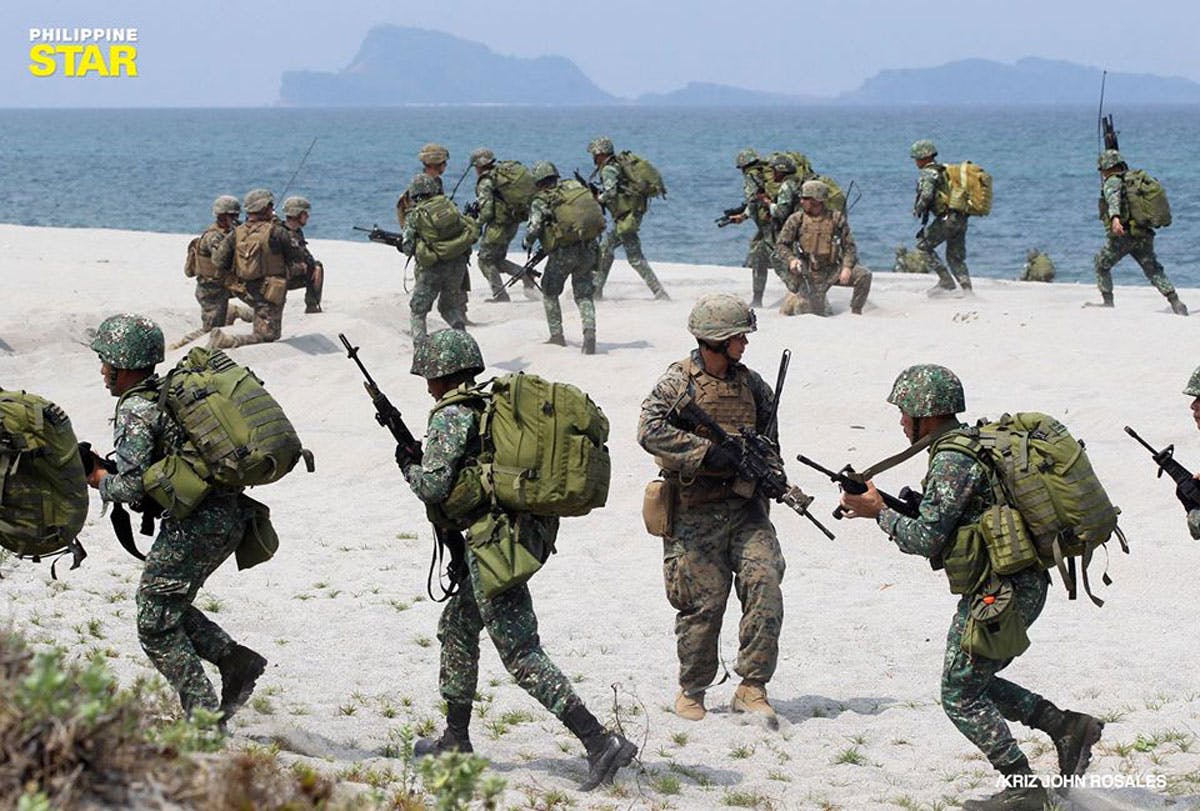
The Philippines and its oldest security ally in the region, the United States, are moving closely to renegotiate a key military arrangement allowing American soldiers in the country to train and conduct exercises, security analysts said.
In February, an angry President Duterte ordered the 1998 Visiting Forces Agreement (VFA) with the US revoked after Washington canceled the US visa of Sen. Ronald dela Rosa, a close political ally who was linked to widespread human rights abuses while he was chief of the Philippine National Police.
Barely two months before the military agreement is set to be terminated, Duterte made a surprise move to suspend the process of abrogation, giving the VFA another year of effectivity.
Security analysts see the development as a clear signal that the two allies are trying to salvage the accord as the coronavirus disease 2019 (COVID-19) pandemic has drastically altered the geopolitical landscape.
Victor Andres Manhit, managing director of Stratbase, an advisory and research consultancy group, said the two six-month suspension would give the country enough time to review “the strategic importance of the VFA to Philippine national security interests, considering the current geopolitics and international order.”
“Renegotiation will most likely happen to shape the ‘new’ agreement to the current security landscape and toward a more forward-looking defense posture on the part of the Philippines,” Manhit told The Philippine STAR.
Another expert, Jay BatongBacal of the University of the Philippines’ Institute for Maritime Affairs and Law of the Sea, shared the same views, saying both sides would look for new ways to continue with the VFA.
He also described the President’s move as a step in the right direction. He explained that the COVID-19 pandemic allowed countries in the region to reassess their security interests as China took advantage of the health crisis to boldly push forward its own interests in the South China Sea.
“There might be compromises made between the US and the Philippines on the VFA,” Batongbacal said, adding that the six-month extension could test whether the two sides have made some progress on certain issues related to the arrangement.
“There could be some milestones set, and both sides would like to see if requirements have been met during the period,” he noted.
A former Western intelligence official who spoke to The STAR on condition of anonymity said Duterte’s decision was not reached overnight, suggesting there were a lot of backroom talks and lobbying involved.
“We got wind of this change of heart about three weeks ago from sources within the Philippine military,” the intelligence officer, who has extensive posting in Southeast Asia, said.
He said China’s more aggressive behavior in the South China Sea over the last four months, when the pandemic has distracted countries around the world, could be the main driver of the change in policy.
There was also a lobby group in the US that convinced the Pentagon and the US State Department to agree to sit down and renegotiate the VFA, the intelligence officer said.
In the past, the US has rejected any review and renegotiation of the VFA, agreeing only to a clarificatory meeting every time a controversy arises, like the case of Lance Corporal Daniel Smith, who was convicted of raping a Filipina in 2006, and that of Private First Class Joseph Scott Pemberton, who was found guilty of killing Filipino transgender woman Jennifer Laude in 2015.
VFA critics have used these cases to point out the supposed one-sided agreement favoring US interests and compared it with the Philippines’ visiting forces accord with Australia, ratified in 2012, which they said was a better deal that provided reciprocity.
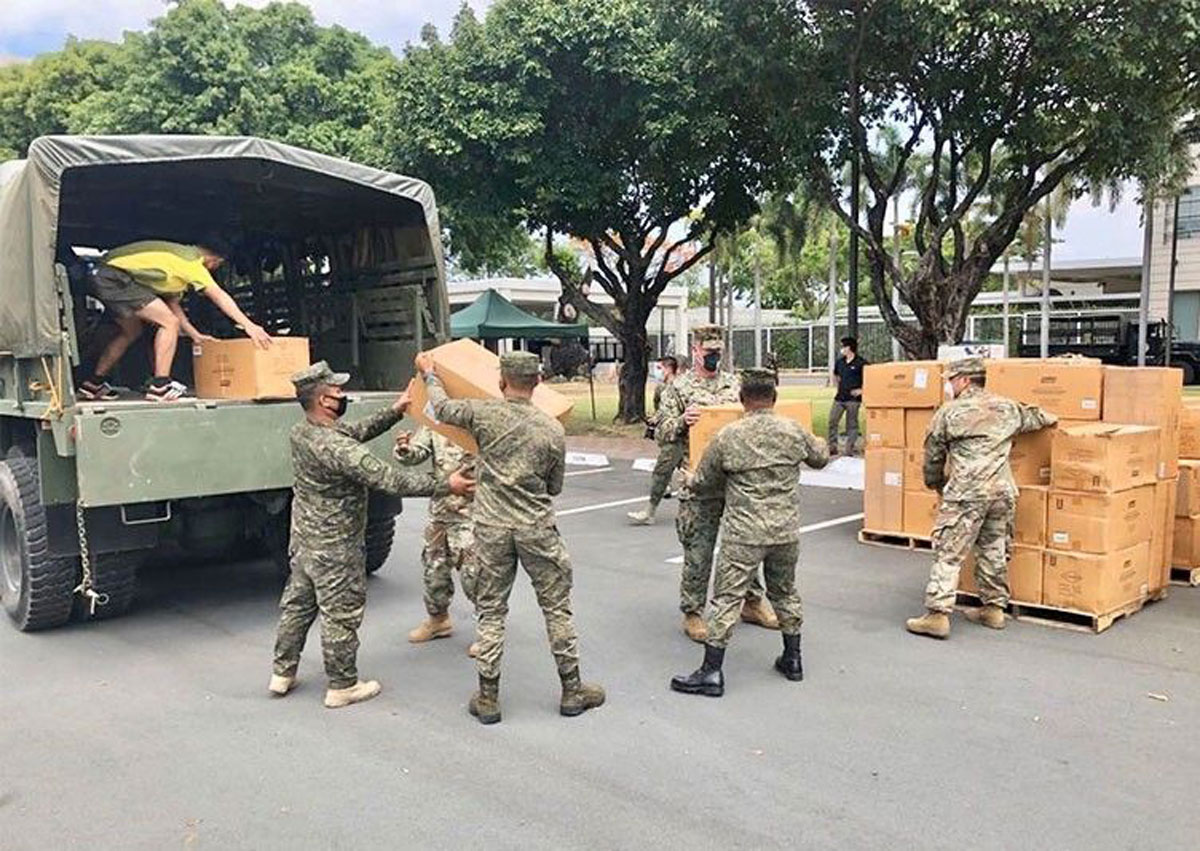
Based on the diplomatic note sent by Foreign Affairs Secretary Teodoro Locsin Jr. to the US embassy on June 1, the abrogation of the VFA was suspended for six months until December 2020. Then it will be extended by another six months until June 2021.
During that period, US and Philippine officials will sit down and discuss new terms and conditions under the VFA, which allows more than 300 exercises and training activities for both armed forces on rotation basis every year.
Several retired generals who have Duterte’s ear were instrumental in the decision not to terminate the VFA as he had originally announced, according to a military officer assigned in one of the Southeast Asian embassies in Manila.
“The President was convinced by these ex-generals to delay for some months the termination because of recent security developments in the region,” the officer said, adding that the retired generals had told Duterte there is so much uncertainty caused by the pandemic that it is more prudent to wait until the crisis blows over.
Both Defense Secretary Delfin Lorenzana and Locsin have said that the COVID-19 pandemic was a major reason for the President’s decision to suspend the abrogation.
Locsin also cited rising “superpower tensions” as another reason for the VFA extension. China and the United States have stepped up criticisms of each other as well as some actions on the ground.
In early April, a Chinese vessel rammed and sank a fishing boat from Vietnam near Woody Island in the Paracel Islands. Beijing also sent its coast guard to circle around a Malaysian oil field, and a Chinese warship made a dangerous maneuver against a US destroyer near the Taiwan Strait.
Much earlier, a Chinese warship also threatened a Philippine Navy ship, the BRP Conrado Yap, near Commodore Reef in another part of the South China Sea.
Beijing also created two administrative districts in the South China Sea – one covering the Paracels and Scarborough Shoal off Zambales and another covering the Spratly island group.
China has mobilized troops to pressure India to stop building a strategic bridge along its borders in the freezing Himalayas.
Domestically, it is also moving to impose a tough security law in Hong Kong and has dissuaded independence moves in Taiwan – developments that have drawn strong reactions from the US and other Western powers.
Manhit said these events have been fueling a growing instability in the region and have “increased uncertainties in the overall security landscape.”
“For the Philippines, these issues are a cause for concern especially with the interests in the West Philippine Sea,” he noted.
Manhit said defense and foreign affairs officials did not give up trying to salvage the VFA, realizing that the threats posed by COVID-19 and regional instability needed “cooperation with like-minded states to deter further risks… to minimize fatalities and repercussions.”
The President has listened to reason, Locsin said, describing Duterte as a world leader who is “quick in mind and fast on his feet for the safety of our nation and the peace of the world.”
Locsin also assured regional neighbors, without directly referring to China, that Duterte’s decision “alarms no countries in Asia and the rest of the world.”
“On the contrary, it greatly reassures everyone,” Locsin said, adding, “everyone now is free to speculate about what is clear and true on its face.”
No change of heart
On Thursday, June 4, presidential spokesman Harry Roque said Duterte had not changed his mind about terminating the VFA.
“When it comes to the VFA, what was suspended was the process of termination. The President has no new decision when it comes to the termination,” Roque said in a virtual press briefing. “He did not say that the termination would no longer push through so the President has not changed his mind.”
Earlier, officials claimed that the issue on Dela Rosa’s visa was just one of the reasons that impelled the President to scrap the treaty. They cited the US Senate resolution condemning alleged human rights violations in the Philippines, the demand of some American senators to free detained opposition senator Leila de Lima, and the US travel ban against persons responsible for her detention.
Roque also said the suspension of the VFA termination had nothing to do with the anti-terrorism bill that was passed by Congress.
But he stressed that the VFA and other security agreements with other Philippine allies are important at a time when the world is facing terrorist threats.
“The face of terrorism has changed. It does not have any border and does not side with any country. All our allies – America, China, Russia, India, Australia, all of them are important,” Roque said.
“The VFA is as important as our other relations with our neighbors, our allies. All of them are our friends and we do not have enemies except the terrorists,” he added. – With Alexis Romero