



Voters Want Bets Asserting WPS Rights – SWS
Some 78 percent of the survey respondents said would vote forp “a candidate who believes that the Philippines must assert our rights against China’s aggressive actions in the West Philippine Sea.”
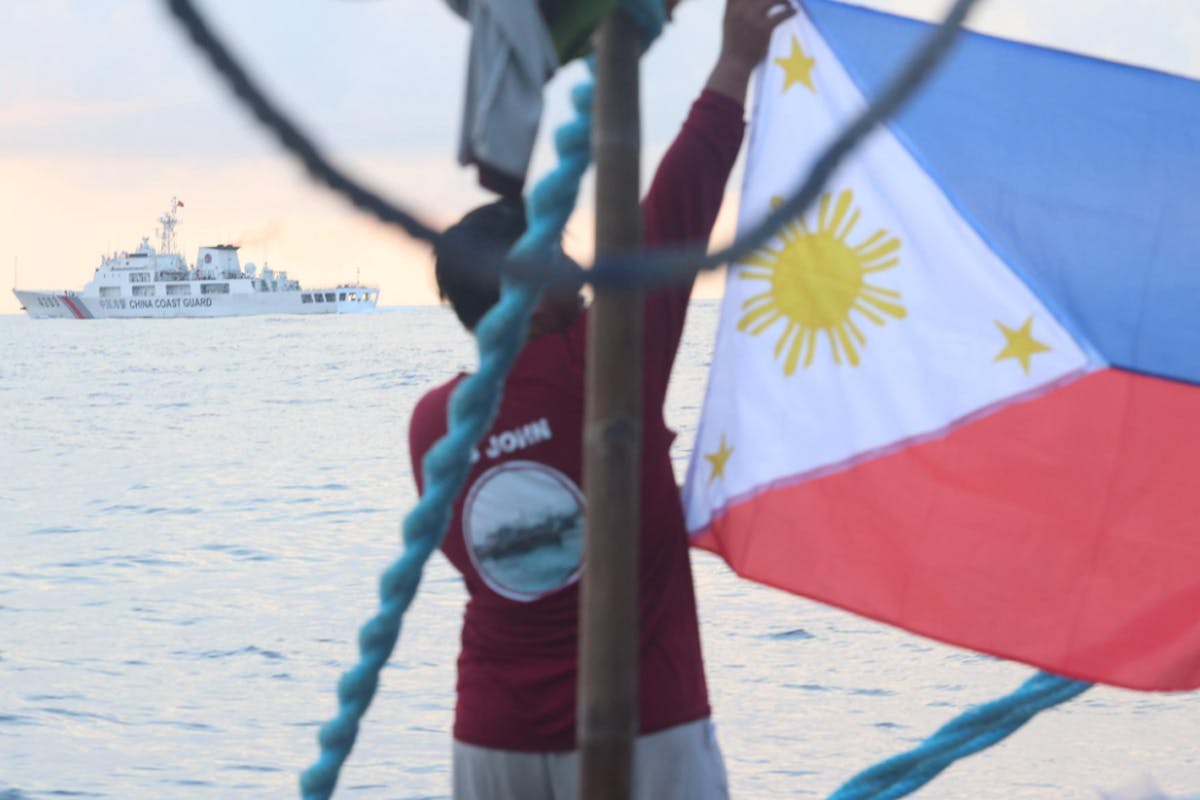
Eight in 10 Filipino voters will support candidates they believe will assert the country’s rights against China’s aggression in the West Philippine Sea, a recent commissioned survey conducted by Social Weather Stations (SWS) showed.
The Feb. 15 to 19 survey, commissioned by the Stratbase Group, showed that 78 percent of the respondents prefer “a candidate who believes that the Philippines must assert our rights against China’s aggressive actions in the West Philippine Sea.”
Only 22 percent said they prefer “a candidate who does not believe that the Philippines must assert our rights against China’s aggressive actions in the West Philippine Sea.”
Support for candidates who vow to fight for the country’s rights in the West Philippine Sea was highest among those in Metro Manila at 87 percent, followed by those in the rest of Luzon at 83 percent, the Visayas at 76 percent and Mindanao at 67 percent.
The survey results reflect a separate Stratbase-commissioned poll, also conducted by the SWS in February, showing top issues Filipinos consider in selecting their favored candidates.
In the survey, 77 percent of respondents prefer candidates advocating national security and sovereignty in the West Philippine Sea.
At a forum last week, Stratbase president Dindo Manhit said the survey results underscore the urgency for the Philippines to reinforce its defense posture, uphold international law and collaborate with allies to deter any threats.
“Filipinos recognize that a firm and united approach – through diplomacy, military readiness and strategic partnerships – is essential in safeguarding our territorial integrity. These numbers send a clear message: the nation stands resolute in defending what is rightfully ours,” he said.
“The increasing tensions in the West Philippine Sea and East China Sea remind us that sovereignty and territorial integrity directly impact the security, economy and livelihood of our people,” he added.
The February SWS survey had 1,800 respondents and a margin of error of plus/minus 2.31 percent.
Disinformation
Meanwhile, the National Maritime Council (NMC) has labeled as “disinformation” claims spreading on Chinese social media that the province of Palawan was historically part of China.
In an interview with state-run People’s Television, NMC spokesman Alexander Lopez said while Chinese explorer Admiral Zheng He had visited Southeast Asia in the 14th and 15th century, there is no historical record that he had ever set foot on Palawan.
“It is very clear: Palawan has been, is and will always be part of the Philippine territory. It has to be very clear, there is no debate there,” he added.
Asked why China is spreading such a claim, Lopez replied: “You know, it’s part of what they call cognitive warfare. They are trying to shape the minds of the people, internal audience, external audience, so that their opinion would shift to their favor... So we need to debunk these lies actually, these discourses.”
Lopez emphasized the importance of the Philippines’ presence in the West Philippine Sea, the area in the South China Sea that is within the Philippines’ 200-nautical mile exclusive economic zone and continental shelf.
“With those activities, we are asserting our rights, our jurisdiction, our sovereignty over the area,” he said.
In 2016, an international tribunal based in The Hague voided China’s maritime claim in the South China Sea, but Beijing refused to recognize the landmark ruling.
In a recent statement, National Security Adviser Eduardo Año described the claim that Palawan was historically part of China as “baseless” and “revisionist.”
“We are currently tracing the source of this disinformation which first appeared in Chinese social media app Weibo and Red Note, a TikTok-like mobile application but we wish to underscore that they do not come from official government sites nor have they been carried by Chinese mainstream media outlets,” Año said.
“Nonetheless, these false narratives, proliferated through digital disinformation and information warfare tactics, appear to be part of a broader effort to undermine Philippine sovereignty and manipulate public perception both in the Philippines and China,” he added.
Año urged the public to remain vigilant against disinformation campaigns and rely on verified historical and legal sources rather than on propaganda. – With an additional report from Alexis Romero