



SC Upholds Law Giving Barangay Officials 5-Year Term
Republic Act 12326, enacted in September this year, increased the terms of barangay officials from four to five years and moved the next BSKE to November 2028.
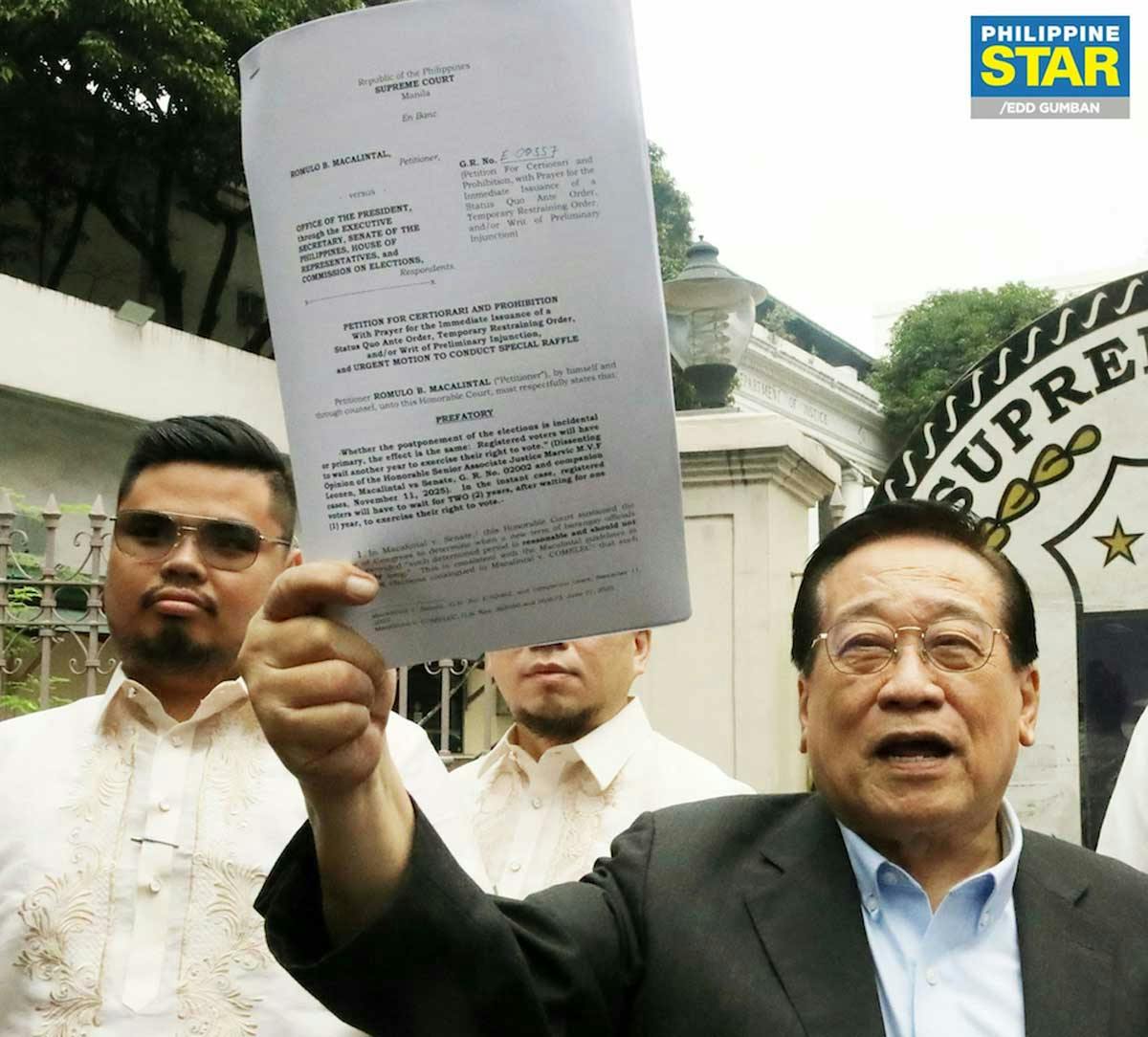
The Supreme Court (SC) has upheld the constitutionality of the law that postponed the barangay and Sangguniang Kabataan elections (BSKE), effectively extending the term of office of incumbent officials by another two years.
In a decision written by then associate justice and now Chief Justice Rodil Zalameda, the high court dismissed the petition filed by election lawyer Romulo Macalintal, who sought to declare the law unconstitutional for postponing elections without compelling reasons and violating the public’s right to suffrage.
Republic Act 12326, enacted in September this year, increased the terms of barangay officials from four to five years and moved the next BSKE to November 2028.
Macalintal argued that the law failed to meet the guidelines set by the SC in its 2023 ruling in Macalintal v Comelec, which allows the postponement of elections only for important, substantial or compelling reasons.
But in its ruling, the SC said the strict guidelines in the 2023 SC ruling do not apply, saying RA 1236 is fundamentally a term-fixing law, not an election postponement law.
The SC said that Congress has the power to fix, change and extend the term of barangay officials as needed, so long as the period before the new term begins is reasonable and not unduly long.
In this case, the high court found the November 2028 date reasonable and not unduly long, pointing out that local leaders were elected in October 2023 and will complete a five-year term consistent with the term set by the law.
The SC also acknowledged lawmakers’ concerns that holding the BSKE in 2027 could interfere with the Commission on Elections’ preparations for the May 2028 national and local elections.
A five-year cycle beginning in 2026, meanwhile, would also cause the BSKE to coincide with the 2031 national and local elections.
The high court also held that the law does not violate due process or right to vote as it serves legitimate government objectives, including effective local governance and continuity of barangay programs. It added that setting a uniform five-year term and election cycle is a reasonable way to achieve these goals.
SC Justices Marvic Leonen, Benjamin Caguioa, Jhosep Lopez and Antonio Kho dissented from the majority ruling.
The BSKE, scheduled last Nov. 2, had already been moved from last year after a law was passed giving BSK officials a four-year term from the previous three.
Critics of the repeated postponements have said the jurisprudence could mean endless postponements and extensions of the BSK term even in 2028. They noted that some youth council officials would already be too old for the SK.
Comelec Chairman George Erwin Garcia has welcomed the SC’s decision, noting that the ruling, despite not being unanimous, now forms part of jurisprudence and the law of the land, thanking the high court for promptly settling the legal challenge.