



PAGASA Declares Onset Of Amihan, But …
The state weather bureau said compared to the average temperature for the season, there will be days that will be cool but not sustained due to the El Niño phenomenon.
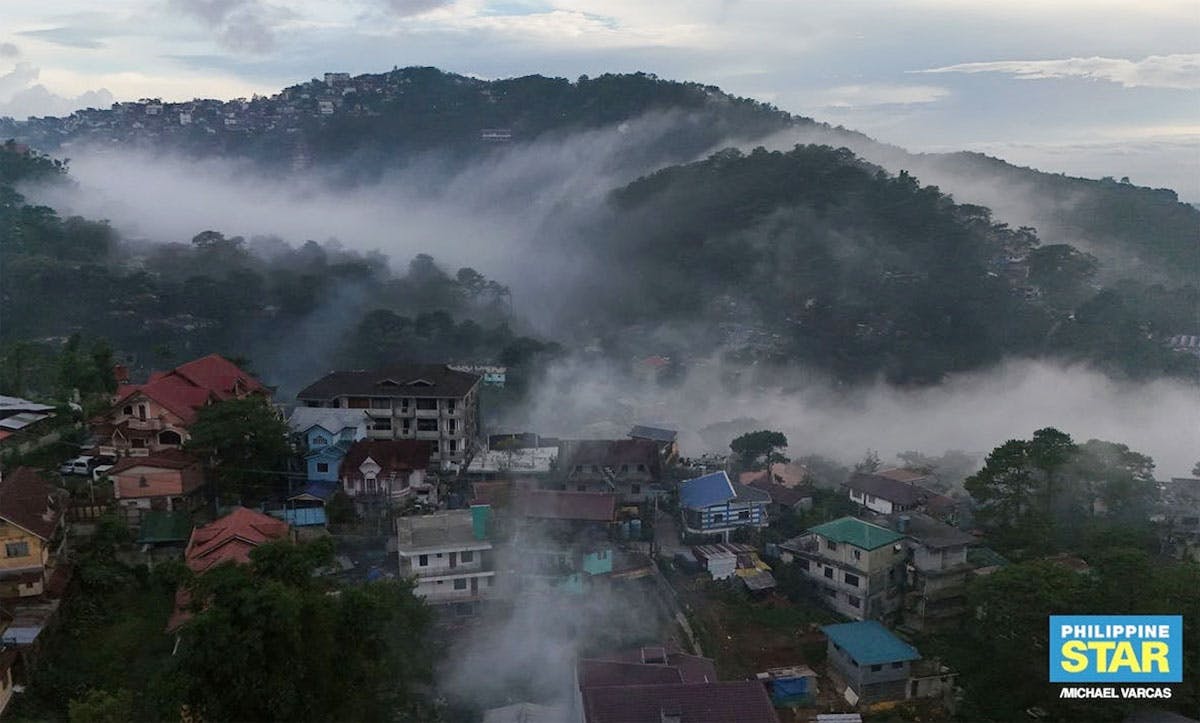
Amid the prevalence of El Niño, cold winds are expected in the coming days as the Philippine Atmospheric, Geophysical and Astronomical Services Administration (PAGASA) declared the start of the northeast monsoon or amihan season.
PAGASA observation over the past few days showed that the high-pressure area over East Asia is strengthening, “resulting in a surge of northeasterly winds and lower air temperature over extreme Northern Luzon.”
“In the coming months, the amihan is expected to become dominant over most parts of the country, bringing cooler weather, episodes of cold surges and rough sea conditions,” PAGASA said in its advisory on Tuesday, Oct. 27.
“Furthermore, the shear line, tropical cyclones and InterTropical Convergence Zone may influence the country’s weather conditions during the season,” it added.
With the “very strong” El Niño at its peak by November, PAGASA administrator Nathaniel Servando urged the public to watch out as projections on the temperature is above normal despite the northeast monsoon season.
“Relatively, compared to the average temperature for the season, November-December-January, we expect that it will be warmer. There will be days that will be cool but not sustained,” he said.
Globally, the effects of El Niño are being felt, ranging from floods in Argentina, deadly fires in Peru and drought in French Guiana, prompting a United Nations call for speedy action to face an unprecedented “wrecking ball” this year.
El Niño warms surface temperatures in the central and eastern equatorial Pacific Ocean, bringing worldwide changes in winds, pressure and rainfall patterns.
It typically takes place every two to seven years and lasts around nine to 12 months.
The naturally occurring weather phenomenon is set to bring higher temperatures to much of the planet this year, with its impact compounding the effects of man-made climate change.
“The current El Niño event could be unprecedented in strength: literally off the monitoring charts that we have used for the past four decades,” said Celeste Saulo, head of the United Nation’s weather and climate agency, the World Meteorological Organization.
She and UN aid chief Tom Fletcher issued a joint call for “urgent and coordinated anticipatory action” to protect the most vulnerable communities already living on the edge.
“We cannot stop El Niño, but we can prevent many of its worst human consequences,” said Saulo.
“The risk is you have tens of millions of people pushed into humanitarian need,” he said, warning that 50 million people could face increased hunger.
“From one day to the next, a meter of water rushed into my house,” Juan Pablo Gomez, a resident of the northeastern Argentinian tourist town of Paso de la Patria, told AFP.
The flooding linked to El Niño has claimed two lives in recent days and in some parts of the town only the rooftops of houses remain above water.
Last week, more than 2,000 people had to leave their homes in the northeast of the country due to heavy rainfall that swelled the Parana, Uruguay and Iguazu rivers, which separately border Argentina, Brazil, Paraguay and Uruguay.
Higher Yellow corn MAV
In anticipation of the effects of El Niño, President Marcos has increased the minimum access volume (MAV) for the importation of corn this year.
Under Executive Order 129, signed on Tuesday, the MAV for corn has been increased from 220,000 metric tons to 500,000 MT.
“The country is projected to experience a yellow corn supply deficit of approximately 1.422 million MT from March to December 2026 due to constraints on domestic production and increasing production costs, which may further be aggravated by higher fertilizer, fuel, freight and other agricultural input costs, as well as weather-related risks, including the potential effects of El Niño,” the EO read. – With AFP, EJ Macababbad, Helen Flores, Pia Lee-Brago