



The Struggle Is Real For Some Transgender Teens Wanting To Break Free In Phl Schools
According to a social and behavioral scientist focused on the experiences of queer Filipinos, clothing and haircut help people present a version of themselves they are comfortable in and this is even more significant for transgender people.
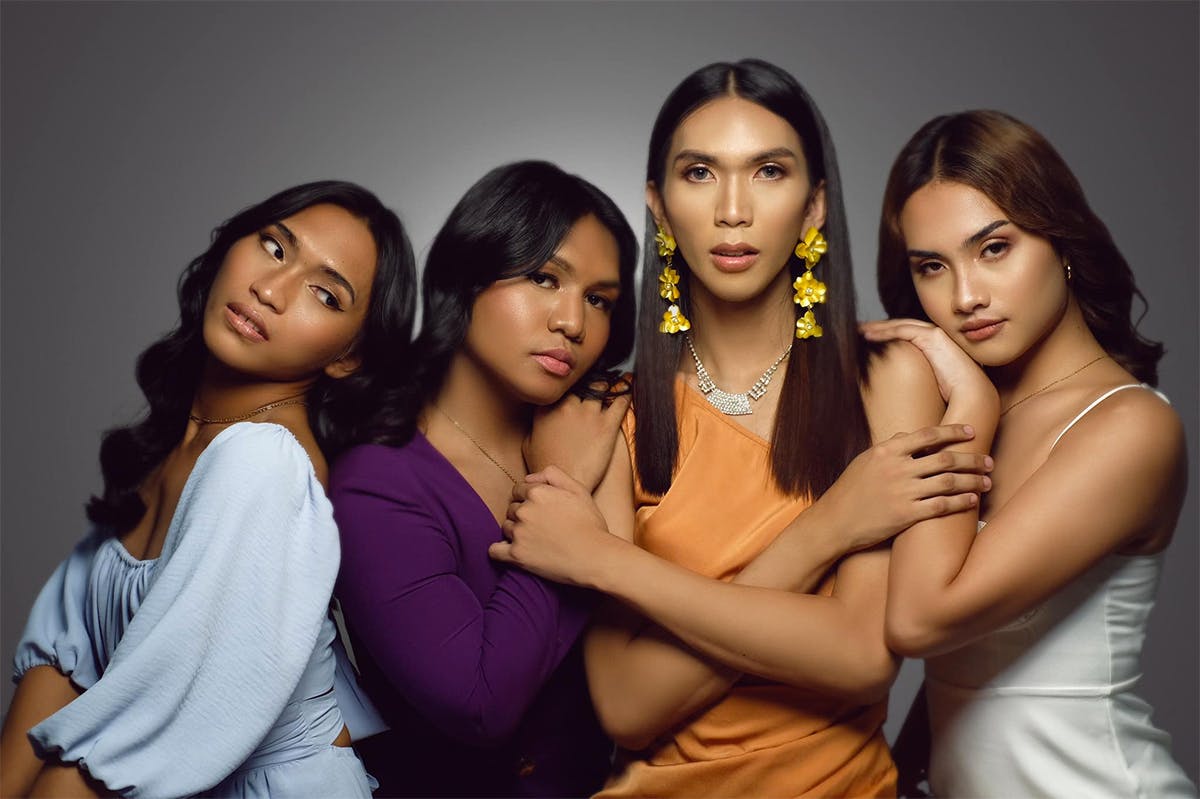
Four transgender senior high school students recently found themselves at the center of a controversy due to their schools’ rules about wearing particular sets of clothes and hairstyles that are deemed more suitable for their assigned sex at birth during their respective graduation ceremonies.
While some people would have easily dismissed it as a minor issue, the transgender teens in question could not, prompting them to reach out to an influential kindred spirit in Miss Trans Global 2020 Mela Habijan for a much-needed moral support.
Together, 18-year-olds Kendy Clatero, Rey Vincent Bergado and Rei Nicole Reyes from the Muntinlupa National High School, as well as Jade Gozo of the Upper Bicutan National High School in Taguig City ensured that Department of Education (DepEd) memorandums don’t just remain as words on paper in challenging what they believe are outdated haircut and dress code policies of their respective schools.
“Why can’t they be themselves [on] an occasion they worked hard for? Why aren’t they allowed (to attend their graduation)? Why do they have to compromise their identities?” Habijan wrote in a June 26 Facebook post with a photo of the group.
According to Clatero, she wanted to wear make-up, dress and heels while Gozo agreed to wear the uniform for male students for their separate graduation rites. However, Gozo was told to cut her hair and refused.
The four transgender teens cited DepEd Order No. 32 issued in 2017 or the Gender-Responsive Basic Education Policy addressed to public school authorities, which was reiterated last June 23, aimed at promoting gender equality, equity, sensitivity and non-discrimination in the provision of basic education.
Under this memorandum, students must also be allowed to attend school-initiated activities, such as graduation or moving up rites wearing clothes that are aligned with and reflective of their gender identity and expression, subject to the approval of their parents or guardians.
The concept of gender dysphoria
Luis Abesamis, a social and behavioral scientist focused on the experiences of queer Filipinos, said clothing and haircut help people present a version of themselves they are comfortable in and this is even more significant for transgender people.
“Clothing and haircut, those are ways for us to feel comfortable in our own bodies, but for trans people, there is an added layer to that cause a lot of them experience gender dysphoria. And for them, cutting their hair a certain way, wearing make-up, not wearing make-up, [and] dressing themselves up a certain way, helps them feel more comfortable in their own bodies,” Abesamis explained.
Gender dysphoria means psychological distress or feeling of unease commonly experienced by transgender people.
“Though gender dysphoria often begins in childhood, some people may not experience it until after puberty or much later,” according to the American Psychiatric Association (APA), and there are members of the transgender community who will go to great lengths to alleviate this condition.
Apart from changing their names, some are taking hormone pills and/or subjecting themselves to various gender reassignment surgeries under extreme cases just to satisfy their physical, mental and emotional desire to transition from one sex to another.
“One way that they mitigate or address their gender dysphoria, aside from identifying with or using their chosen names or lived names, is the way they dress,” Abesamis said.
Clatero, Bergado and Reyes admitted they are taking unprescribed oral medications or feminizing hormones to achieve a more feminine physique, regardless of risks to their own physical and mental well-being, among other potential side effects.
Gozo, meanwhile, said she started taking her own hormone pills and other drugs for her transition only last year with the guidance of healthcare providers working at a clinic. She also gets them for free unlike the other three who each spend at least P1,000 per month for their medicines.
Besides putting themselves under the constant glare of society because of their appearance and attitudes, all four said they generally have no problems getting accepted and supported as transgenders by their own friends, teachers, and families.
Still, however, prejudicial treatment does happen from time to time – like their conflict with some of their school administrators over the said dress code and haircut policy – on top of receiving some accusatory looks from people who are bothered by their presence.
“If (the) trans people (and) queer people, behave differently, present themselves differently, speak differently, that doesn’t make them any less of a human being, and I think that’s what our policies need to re-evaluate,” Abesamis reminded.
Battle for gender diversity and inclusivity
For these reasons, despite eventually getting what they initially wanted – to attend their graduation rites dressed as their transgender selves – the students are still calling for wider awareness about other queer issues and respect for their basic human rights.
“We’re not yet there, to our ultimate goal, but there’s progress. And we are not going to stop until we achieve equal rights, inclusivity, equality that we have long been fighting for… We just don’t want tolerance anymore, we want the full acceptance of society,” Bergado said.
“Ang mga matang namulat ay hindi na muling pipikit…Ang mga buhok na nalugay ay hindi na muling mapupusod (The eyes that have been awakened will stay woke… The hair that has been let down will no longer be tied up),” Clatero added, echoing the sentiments of her friend.
Adding her voice to this clarion call is 22-year-old transwoman writer Loreta Arroyo, who graduated in 2020. While she understands that students are supposed to be bound by the rules of their schools, some exceptions have to be made on a case-to-case basis.
Arroyo shared that she was diagnosed with psoriasis and developed acne when she was in high school, which made her feel so conscious about her skin, so she had to wear make-up. “It’s not glam make-up, it’s more of corrective make-up,” she clarified.
One of her teachers called her out for that and asked her to wash her face. She said this episode affected her self-esteem. It did not help that she also struggled with her weight during her early teens, which easily made her a target of bullying among her peers.
What helped her survive, Arroyo said, is the motivation and support of her good English teachers who encouraged her to ignore the bad things that some people told her. Fortunately, she was also described as a brilliant student that excelled in her studies.
While she still has issues against the snide remarks of transphobic individuals, the young writer pointed out another problem she has with the larger society – the so-called “pretty woman privilege” most people would extend to transwomen who already pass as “real women” based on their looks.
Arroyo was referring to the likes of KaladKaren, the transwoman impersonator of broadcast journalist Karen Davila, and 2012 Miss International Queen Kevin Balot, who have appeared on television and are celebrated for their external beauties.
“I don’t want to be mean, but for some reason, if you’re a transwoman who passes as a woman, there’s a high chance that you’re also seen as attractive by men or even by other women – and by older women at that—or the whole society. You get the pretty woman privilege,” Arroyo said.
“But for transwomen like myself who don’t [easily] pass [as a woman because] our transition journey is a lot different… We don’t get that privilege. Instead, we get all the hate for some reason. The hate (that) doesn’t stem from us being ourselves, but because it stems from us being trans,” she added.
According to the APA, transgenders suffer from high levels of stigmatization, discrimination and victimization, contributing to negative self-image and increased rates of other mental health disorders. This puts them at higher risk of hate crimes and suicide cases than the rest of the populace.
Abesamis is calling for positive representation of all transgenders. He said the schools have to do their part to achieve this because the general take on their community is “still very much harmful” to its members, whose sexuality is usually perceived as a sin or mistake.
“It’s very not inclusive at all. It’s even illogical to have those sort of school policies because, at the end of the day, you are entering (a) school to kill your ignorance, to be educated about the world, not to be indoctrinated further (about) the ills of our society,” Arroyo argued.
So, while they all welcomed the decision of DepEd to step into the recent dress code controversy, enacting a law that would ensure equal rights across everyone in the entire LGBTQ-plus spectrum would be a huge leap towards the kind of progress that the transgenders demand.
They are referring to the Sexual Orientation or Gender Identity or Expression or SOGIE Equality Bill – the drafts of which have been languishing in the legislative mill of both Houses of Congress for over 20 years. “A policy like that is not an outlier. It doesn’t make it seem that we’re giving special rights to the LGBTQ+ community because we’re not,” Abesamis said.
“For the community side, we’re only asking for what other people enjoy. At the end of duty-bearers, we’re only giving them the rights that they already should have,” he noted. The proposed legislation seeks to end gender-based discrimination by penalizing people involved in such activity.
Respect Students’ Gender Expression In Graduation Attires, Schools Told


