



Should Children Be Penalized For Neglecting And Abandoning Elderly Parents?
While Sen. Panfilo Lacson wants to penalize children who neglect or abandon their elderly parents, an advocate for senior citizen’s rights thinks it’s not a good idea.

Hidden behind the Philippines’ largest shopping mall is a community for abandoned elderly.
Once called the Golden Acres, a reception facility for the elderly established in 1969 as part of the Marcos regime’s social welfare program, it is now known as GRACES or Golden Reception and Action Center for the Elderly and Other Special Cases.
Every day, the facility receives a number of senior citizens rescued from the streets by the Department of Social Welfare and Development (DSWD) or by different local government units (LGUs). But sometimes, families themselves turn over their elderly to the facility, as they can no longer bear the responsibility of taking care of the senior citizens.
The facility is designed to accommodate 150 individuals but most of the time, the actual number of senior citizens admitted to the facility goes beyond capacity.
Some of GRACES’ buildings are dilapidated and abandoned. The elderly and the paraplegic sleep in cottages with leaking roofs that bring cold nights and sweltering days. More often, the lack of decent beds forces them to sleep in makeshift cots, woven mats or even pieces of cardboard.
There are only a few working electric fans, fluorescent light bulbs and wheelchairs in a facility where sterile smells combined with the odors of old age can dampen one’s spirits.
With government funding depleted just for maintenance and operating expenses (such as food, medicine, utilities and salaries), the facility needs additional financial support from private donors in order to improve the quality of life of its elderly residents.
Strengthening filial responsibility
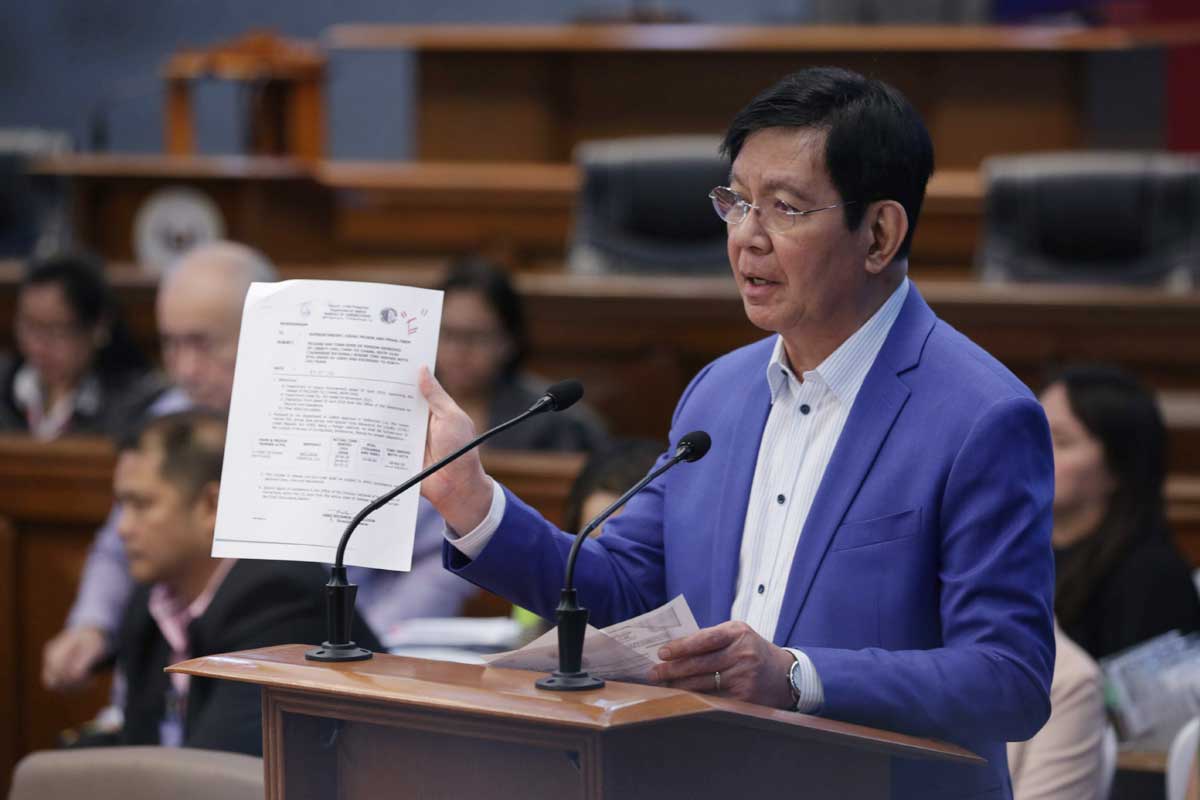
For Sen. Panfilo Lacson, taking care of the elderly in facilities such as GRACES is a responsibility not just of the state alone, but also a task shared with the children of the elderly. Now, he wants children of the elderly to commit to this obligation by introducing a law on filial responsibility.
Such laws have been around for centuries. As far back as the 3rd century AD, the Roman Empire had filial responsibility laws mandating the mutual obligations of support and maintenance between children and parents.
In 18th century France, the Napoleonic Code also defined the filial duty of children toward their elderly parents or relatives and imposed harsh penalties on those who failed to fulfill these duties.
Currently, there are 30 states in the United States that have some form of filial responsibility laws. These are Alaska, Arkansas, California, Connecticut, Delaware, Georgia, Idaho, Iowa, Indiana, Kentucky, Louisiana, Maryland, Massachusetts, Mississippi, Montana, Nevada, New Hampshire, New Jersey, North Carolina, North Dakota, Ohio, Oregon, Pennsylvania, Rhode Island, South Dakota, Tennessee, Utah, Vermont, Virginia and West Virginia.
In the Philippines, Article XV, Sec. 4 of the 1987 Constitution states that, “The family has the duty to care for its elderly members but the State may also do so through just programs of social security.” Article 195 of the Family Code also mandates support for parents, including sustenance, dwelling, clothing and medical attendance.
Despite these legal provisions, many senior citizens are still abandoned by their children when they can no longer support the needs of the elderly.
In Senate Bill (SB) No. 29, Lacson aims to strengthen filial responsibility by making abandonment of an aging, sick or infirm parent a criminal offense.
Under the bill, children who fail to provide support to their elderly parents can face penalties ranging from one to six months in prison or a fine of P100,000.
Children who abandon elderly parents who are in need of support can face prison terms ranging from six to 10 years or a fine of P300,000.
To compel a child who is failing to provide the elderly parent with support, an elderly person may file a petition in the regional trial court. The Public Attorney’s Office (PAO) will provide legal representation to the petitioner and no court fees shall be charged.
Aside from the parent, a petition for support can also be filed by a child against his or her siblings for reneging on their obligation to support their parent. Ascendants, descendants or collateral relatives within the fourth degree of consanguinity or affinity can also file the petition.
In the absence of any relative that will file a petition for the parent, DSWD officials, social workers from the LGU, a lawyer or health-care provider, any person or institution caring for the parent in need of support, or at least two concerned, responsible citizens of the community where the parent in need of support resides, can file the petition in court.
Aside from penalizing neglect or abandonment of an elderly parent, Lacson’s SB No. 29 also mandates the construction of an Old Age Home in every municipality. Each facility should be able to accommodate up to 50 elderly persons and the LGU in charge of the facility shall appropriate funds for its operation and upkeep.
This isn’t the first time that Lacson has introduced such a bill in the Senate. He had introduced it as SB No. 257 in the 17th Congress. Former Cavite representative Roy Loyola also introduced a similar bill in the House of Representatives in 2014.

Incentivizing children who care for parents
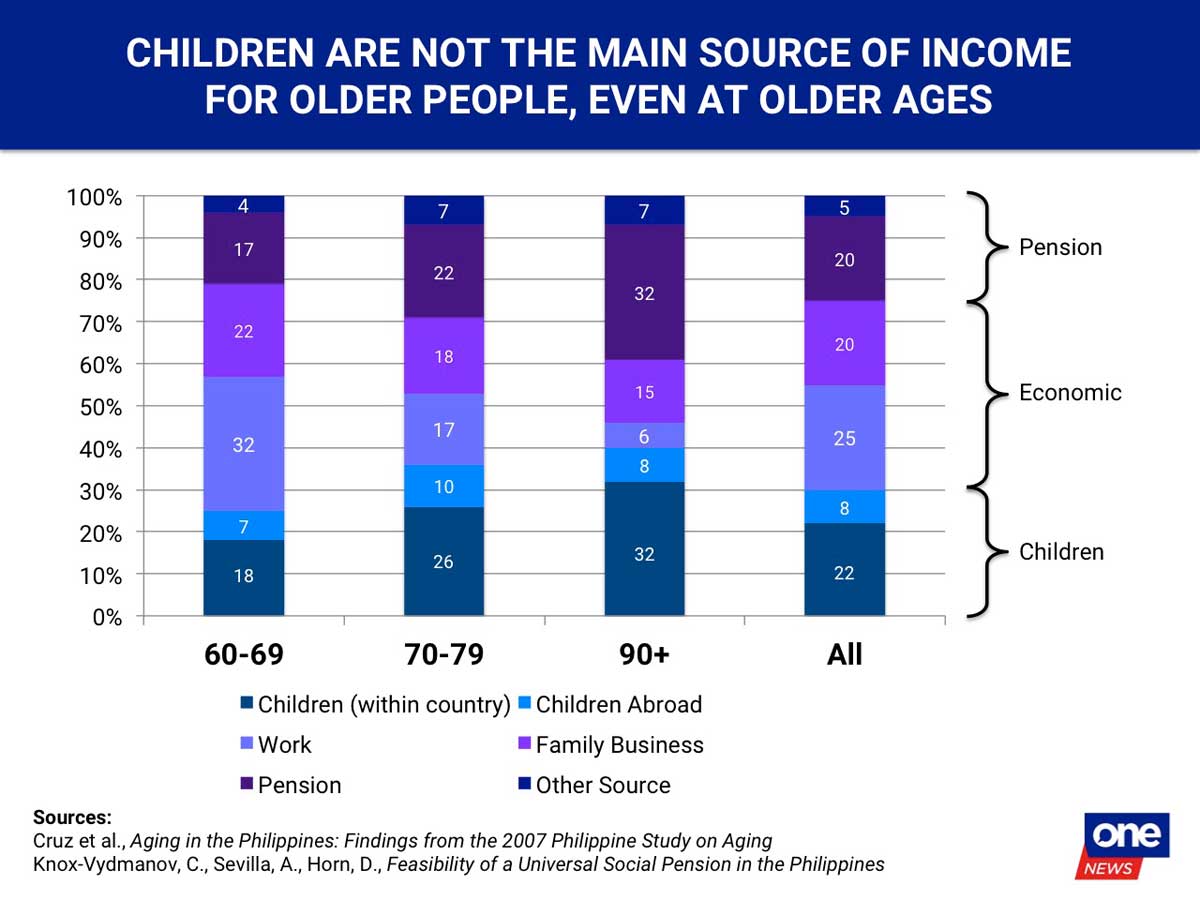
In response to Lacson’s bill, Aura Sevilla, a consultant of the Commission on Human Rights on the rights of older persons, said that while the intention of the bill is laudable, it will not address the increasing number of elderly parents being abandoned by their children.
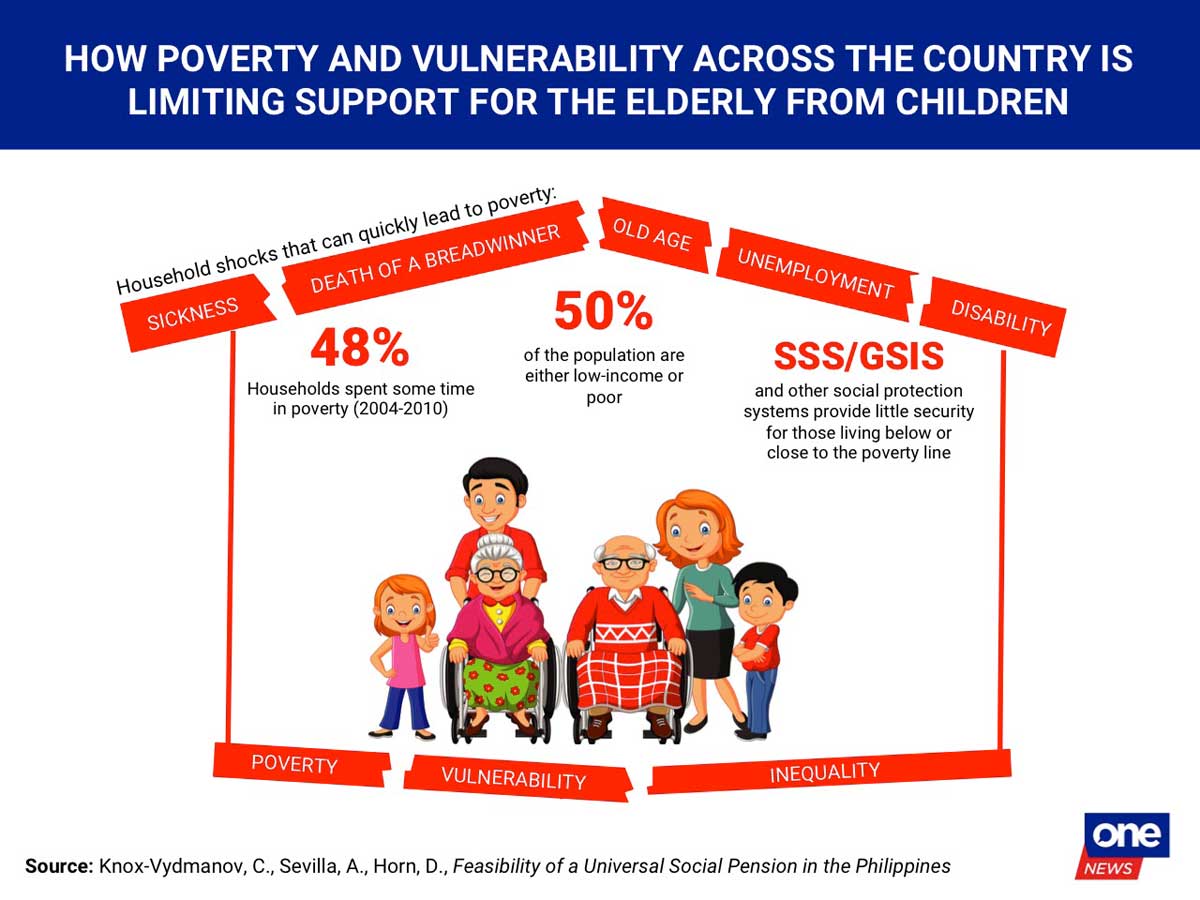
“The family is facing high vulnerability and poverty, leaving many Filipino families financially incapable of taking care of their aging parents,” Sevilla said in a social media post after a query made by The Philippine STAR.
“The working population or the so-called ‘sandwich generation’ is torn between two competing priorities: raising their children and taking care of their aging parents. Imagine if the state keeps on pressuring this generation, they will also end up unprepared for their own old age, if ever they get there. We should put an end to this vicious cycle,” Sevilla explained.
“Traditionally, the family is the social security mechanism in old age, a.k.a the retirement plan. While many children feel indebted of taking care of their parents and love to keep them if they can, this is not a guaranteed and sustainable retirement plan. Many elderly also find it demeaning to completely rely on their family for support. Financial literacy, retirement planning and a shift in mindset about aging are key, not legalizing the family as retirement plans,” she added.
Instead of penalizing children who cannot provide support or who abandon their elderly parents, Sevilla said that the state should provide incentives through tax breaks, subsidies and cash transfers.
“Besides, who's left to take care of the elderly and the grandchild/children is you jail the adults?” Sevilla said.
She also encouraged Lacson and the rest of the Senate to file bills that strengthen the country’s contributory and non-contributory pension systems, establish a long-term care framework, facilities and workforce, facilitate financial and retirement planning, establish community-based programs for the elderly, promote active and healthy ageing, and initiate a holistic approach for elder abuse and neglect.
With changing demographics such as Filipinos having fewer children, an ever-increasing population of elderly Filipinos, and the migration of women who are the traditional caregivers of the elderly, Sevilla said it further challenges the family’s ability to take care of elderly members.
“The state should step in taking care of the aging population. Sen. Lacson, hope you're listening. Eldercare shouldn't be a burden or responsibility bear alone by the family, but the whole country,” Sevilla said.


