



UNAIDS Warns Of Global HIV Resurgence As Unprecedented Funding Cuts Threaten Decades Of Progress
UNAIDS executive director Winnie Byanyima cautioned that the world stands at a turning point – one where major scientific breakthroughs could end AIDS, but severe financial shortfalls threaten to trigger a deadly resurgence.
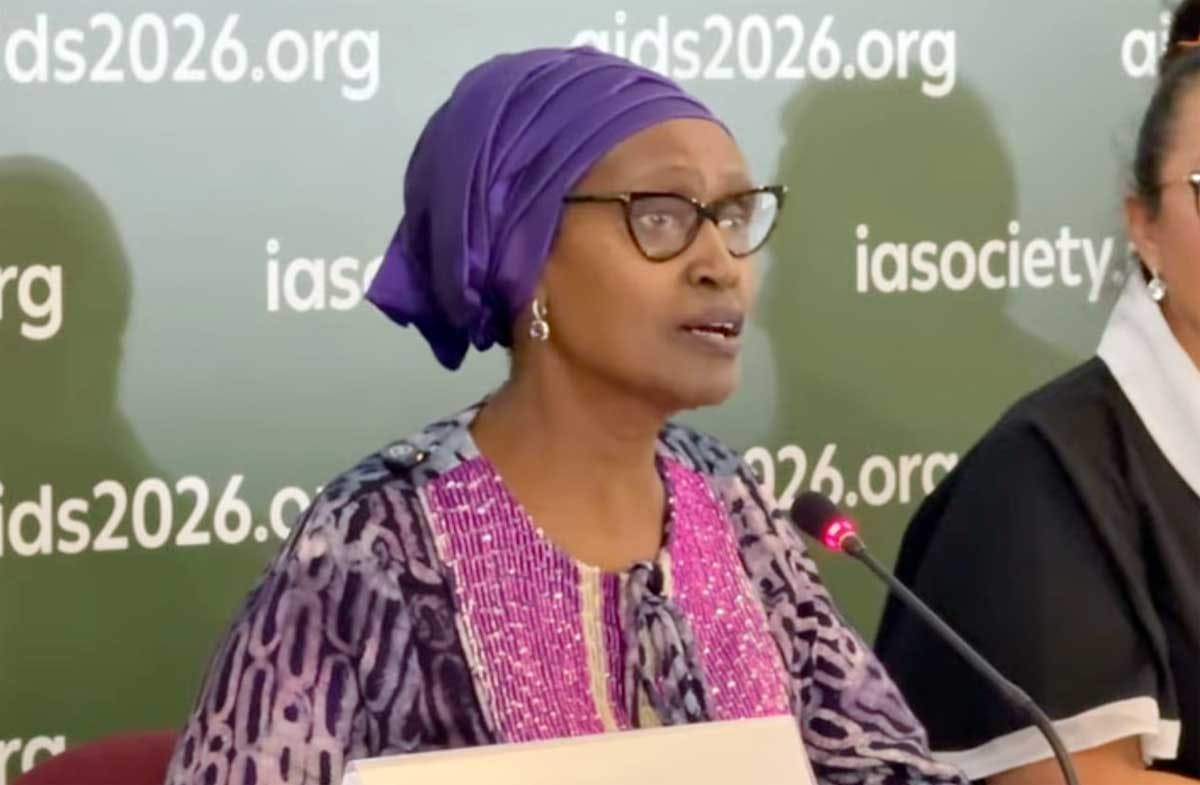
RIO DE JANEIRO — Decades of hard-won progress in the global fight against HIV/AIDS are at risk of being undone following severe, unprecedented cuts in international funding, the Joint United Nations Programme on HIV and AIDS (UNAIDS) warned.
Speaking on Monday, July 27, at the opening press conference of the 26th International AIDS Conference in Rio de Janeiro, UNAIDS executive director Winnie Byanyima cautioned that the world stands at a turning point – one where major scientific breakthroughs could end AIDS, but severe financial shortfalls threaten to trigger a deadly resurgence.
“Everyday, around 3,400 people acquire HIV around the world. Everyday, around 1,600 people dies from AIDS related illnesses daily. The HIV pandemic is not over. Without urgent action, it could resurge,” Byanyima told journalists.
While the report confirms that new HIV infections and AIDS-related deaths have reached their lowest levels in years, it highlights how fragile these achievements remain.
A severe deficit in global funding
UNAIDS launched its 2026 Global AIDS Update in time for the opening of the conference.
According to the report, an estimated 1.2 million people worldwide acquired HIV in 2025, while more than 500,000 people died from AIDS-related illnesses. Crucially, approximately 8.9 million of the 41 million people living with HIV globally are still without access to lifesaving treatment.
The report points to a historic drop in financial support as the primary driver of the crisis with total donor disbursements for HIV/AIDS drop by $2.1 billion. The decline was heavily driven by the United States, where HIV outlays dropped sharply from $6.7 billion to $4.6 billion.
The funding cliff was compounded in 2025 by the phaseout of the US Agency for International Development (USAID) under the Trump administration, which severely disrupted funding for the President’s Emergency Plan for AIDS Relief (PEPFAR)— a landmark US global HIV program that has invested over $100 billion since 2003.
The sudden withdrawal of funds has forced aid organizations worldwide to scale back prevention initiatives, close community health facilities, terminate staff, and disrupt treatment plans for millions of patients.
As the international conference continues in Rio de Janeiro, health leaders and advocates are calling on donor countries and global partners to urgently restore funding before recent progress is irreversibly lost.
The Philippines: Asia-Pacific’s fastest-growing epidemic
The impact of these global funding cuts is acutely felt in low- and middle-income nations that rely heavily on foreign assistance.
Among countries affected is the Philippines, which UNAIDS identified as having the fastest-growing HIV epidemic in the Asia-Pacific region, after it recorded an increase in annual new infections.
Despite the stoppage of PEPFAR funding, the Philippine government has maintained direct collaboration with the US Department of State to sustain basic HIV prevention and care services.


