



Protests, Funding Crisis Shadow Opening Of AIDS 2026 Conference In Brazil
Most protesters directed their anger at recent US global health policy changes, which have drastically reduced financial support for global prevention and treatment programs.
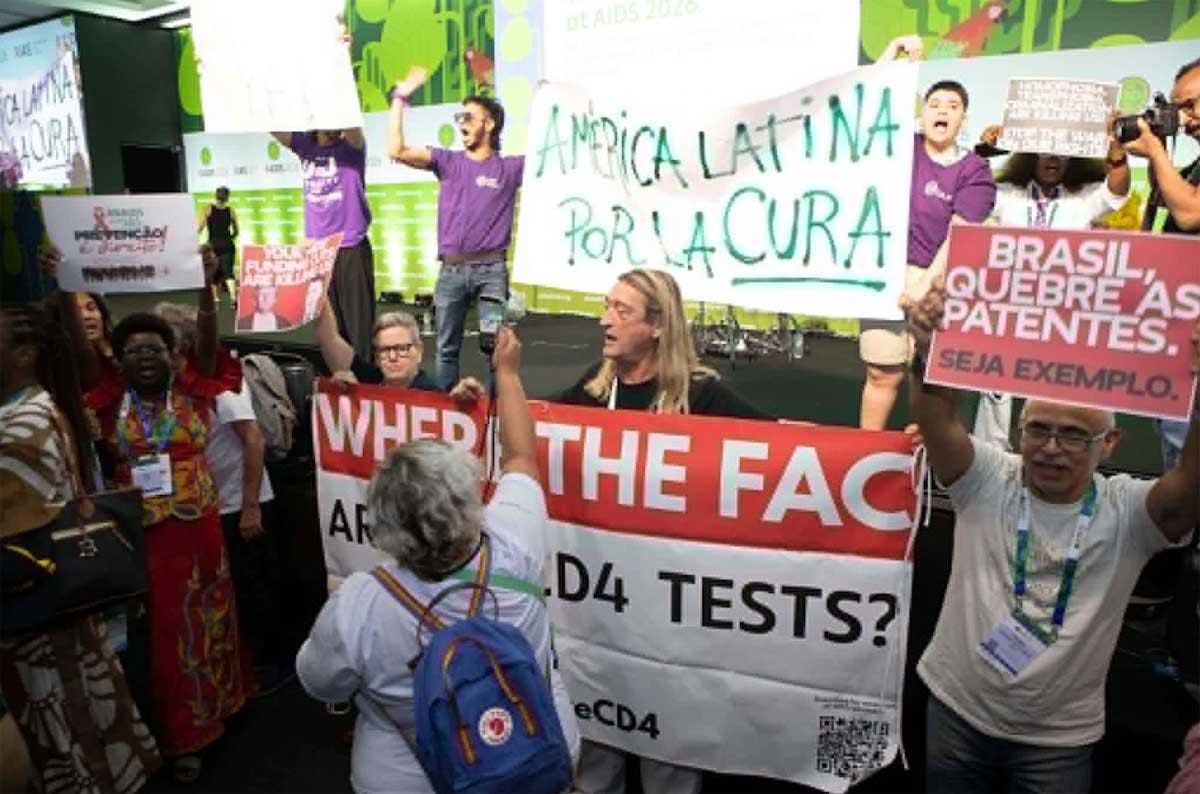
RIO DE JANEIRO — The official opening ceremony of the AIDS 2026 conference on Tuesday, July 28, was disrupted by vocal protests, signaling a tense start to the landmark gathering as delegates confront severe global funding cuts threatening the fight against HIV/AIDS.
Most protesters directed their anger at recent US global health policy changes, which have drastically reduced financial support for global prevention and treatment programs.
Scientific progress overshadowed by financial reality
Hosted here in South America for the first time, the five-day AIDS 2026 conference has drawn over 7,000 delegates to discuss promising scientific breakthroughs. However, despite optimism around medical advances, the overwhelming focus among attendees remains the urgent financial crisis facing the continuing battle against HIV AIDS.
A joint report released by KFF and Joint United Nations Program on HIV/AIDS (UNAIDS) to coincide with the conference highlights the full scale of the shortfall, with total donor disbursements for HIV/AIDS dropping by $2.1 billion year-over-year. The HIV outlays of the US fell sharply from $6.7 billion to $4.6 billion. The staggering decline has directly impacted front-line health services, prevention initiatives, and critical HIV/AIDS research worldwide.
Leaders sound the alarm
Global health leaders, led by Dr. Beatriz Grinsztejn, president of the International AIDS Society (IAS) and AIDS 2026 co-chair, expressed deep concern over the trajectory of international support and its impact on long-term targets.
UNAIDS executive director Winnie Byanyima echoed these concerns during the opening press conference, emphasizing that reduced funding risks undoing decades of hard-won progress against the epidemic.
But despite the bleak financial picture, World Health Organization Director-General Dr. Tedros Adhanom Ghebreyesus offered a message of hope, calling on international stakeholders to stay committed despite the steep challenges ahead.
A call to rethink, rebuild, and rise
As deliberations continue over the coming days, the mandate for the 7,000 stakeholders assembled here is clear: given the unprecedented funding constraints, the global health community must rethink, rebuild, and rise together to keep the target of ending AIDS by 2030 still within reach.


