



Funding A Universal Social Pension: Is It Possible?
With the proposal to introduce a universal social pension for senior citizens comes concerns from various sectors of where to get the funding.

“Where will we get the funding?”
This is the crucial question in the mind of senior citizens and netizens regarding the proposal of several lawmakers to create a universal social pension that would benefit the country’s eight million individuals aged 65 and above.
In the Policy Forum on Funding a Universal Social Pension held on Wednesday, Sep. 18, in Quezon City, the funding source for the proposed program is the main concern of the senior citizen organizations who attended.
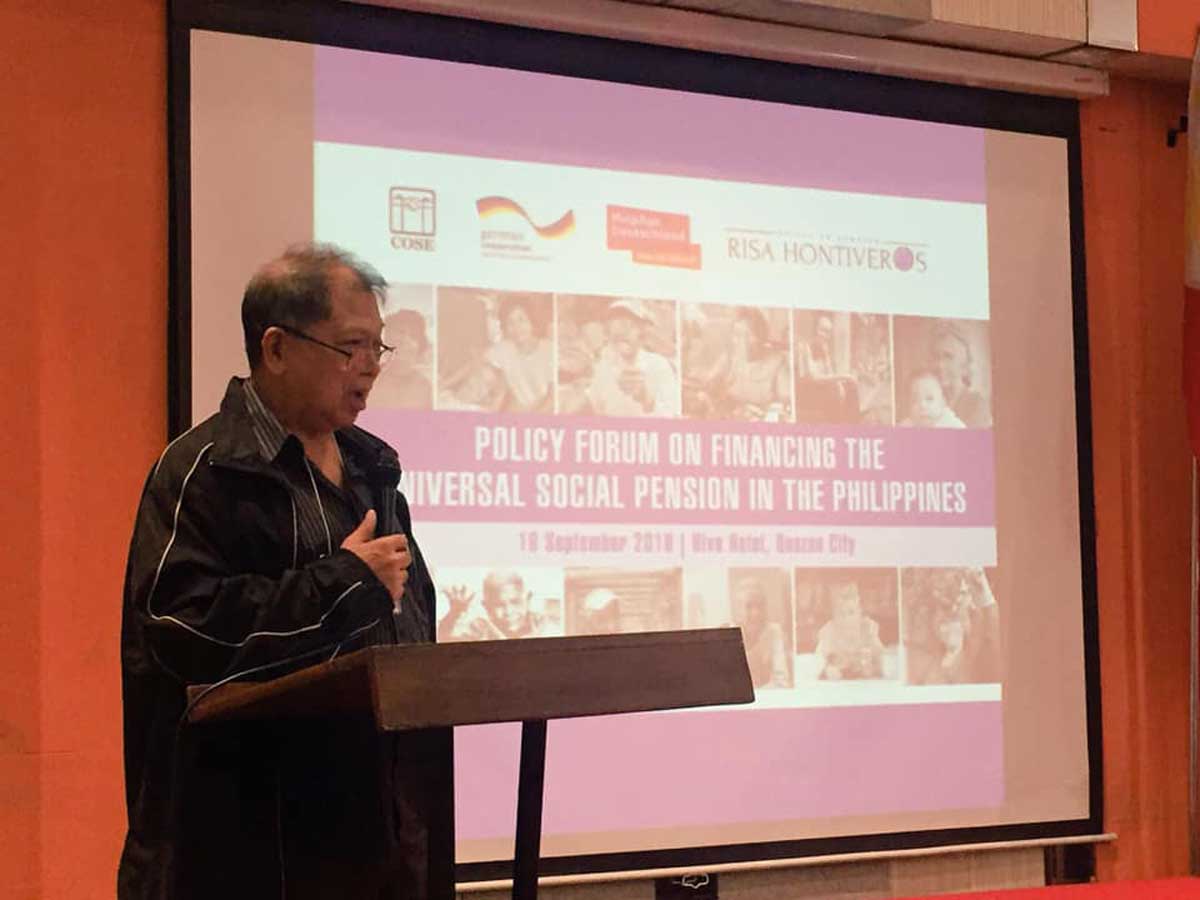
The forum, which was organized by the Coalition of Services of the Elderly (COSE) and the Office of Sen. Risa Hontiveros, brought together different senior citizen organizations and representatives from different government agencies and other stakeholders on the issue.
When The Philippine STAR first posted the story on OneNews.PH yesterday, several netizens who did not attend the forum also had similar concerns.
“How (will) the State fund this? There is no Provident Fund Law yet. There is only the SSS (Social Security System), Philhealth (Philippine Health Insurance Corp.) and GSIS (Government Service Insurance System) which are already experiencing cashflow issues,” said netizen David Francis Castaneda.
“Tanong: Saan kukunin ang pera para ibigay sa seniors dapat (isipin) mo muna bago lumabas sa lip mo. Reklamo kayo ng reklamo sa Build Build Build program, (eh) future iyon para sa mamamayan,” netizen Alberto Dumantay commented.
The concerns of both the senior citizens and netizens reflect their notion that the concept of a universal social pension is a new one.
Currently, under the Expanded Senior Citizens Law of 2010, all indigent senior citizens aged 60 and above, who are frail, bedridden and do not have any pension are entitled to a P500 social pension. This is different from the monthly contributory pension many senior citizens already receive as members of the SSS or the GSIS.
But according Sen. Risa Hontiveros, guest speaker at the policy forum and author of one of the proposed bills on the universal social pension, the current social pension scheme is no longer enough to cover the basic needs of the elderly. According to her, the measly P500 social pension often goes to helping in household expenses, especially in poor families where the children and grandchildren are also poor, instead of the personal needs of the elderly.

According to Analiza Salud, a social welfare officer at the Department of Social Welfare and Development (DSWD) and the national focal person for social pension, the government has sustained the social pension mandated under the Expanded Senior Citizens Law of 2010 since it was first implemented in 2011.
“More or less, nasa 50 percent na rin ng siguro ng indigent population ang nabigyan. Malaki din ‘yung budget increase na ibinibigay ng gobyerno. Posible namang ma-cover natin lahat sa pamamagitan ng universal social pension,” Salud said.
“Hindi lang naman sa national scope pwedeng mangyari, locally pwede ding i-implement. Nasa batas din naman ‘yun na pwedeng kunin ang budget appropriations sa local government, aside from the national budget,” she added.
Nevertheless, she also called on the other government agencies, particularly the Department of Budget and Management and the Department of Finance (DOF), to take another look at the fiscal space available for a universal social pension.
For Guillermo Francisco II, economist for DOF Strategy, Economics, and Results Group, the Philippines’ current macroeconomic condition is capable of supporting a universal social pension program that has a higher amount compared to the current P500 social pension scheme.
“In 2005, noong nag-survey ang World Bank, ang problema ng Pilipinas ay macroeconomic stability, corruption at electricity. Ngayon po, ang sinasabi nila ay bureaucracy, corruption and infrastructure. Ibig sabihin, ayos na tayo sa macroeconomic stability at nagfo-focus na tayo sa mga micro issues o yung maliliit na bagay.”
To indicate this macroeconomic stability, Francisco cited statistics showing that the country’s real gross domestic product (GDP) has been rising historically.
“Isa po tayo sa tinatawag na fastest economy in the fastest growing region. GDP per capita po — ‘yung percentage ng GDP na napupunta sa populasyon — tumataas din po. Inflation pababa ng pababa. Ngayon nga po, bumaba tayo sa 1.7 percent last month. Patuloy na ibinababa natin yung inflation para bumaba ang presyo ng bilihin sa merkado,” Francisco explained.
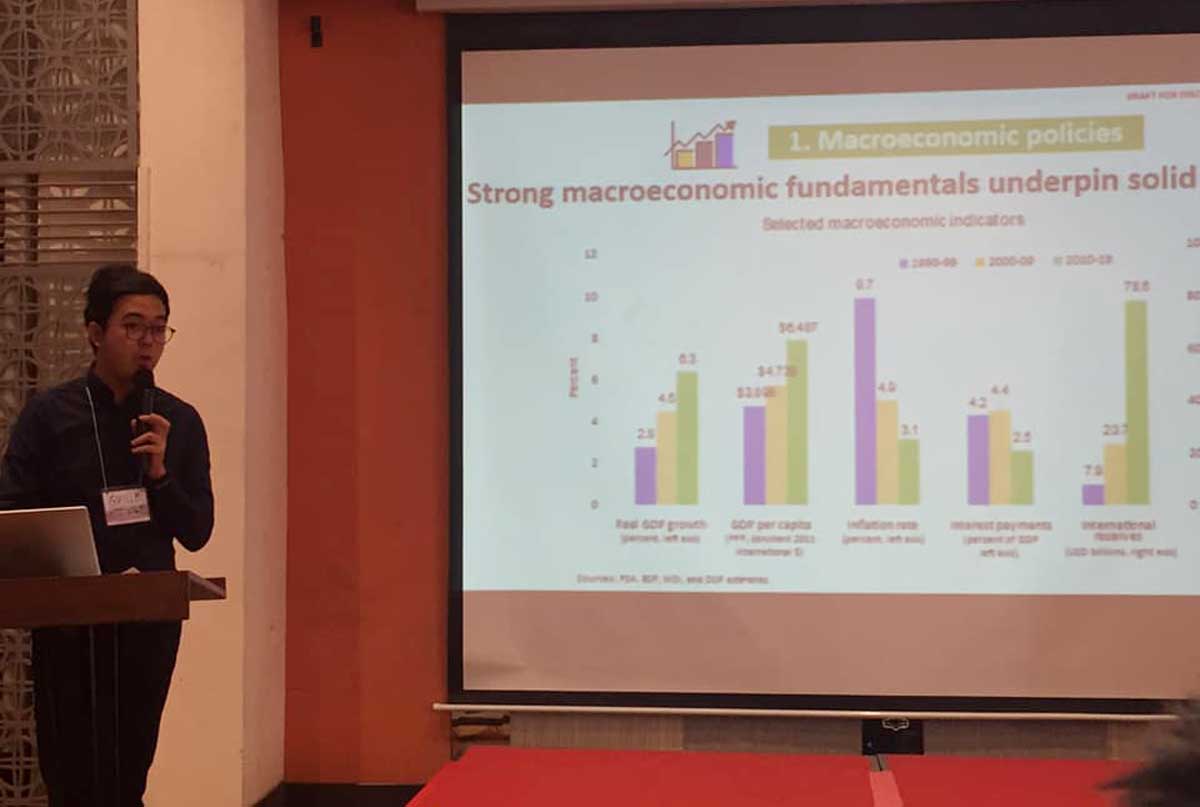
Francisco also said that interest payments for the country’s foreign loans have decreased from 4.4 to 2.5 percent, while international reserves — a portion of the national budget that can be used for debt servicing — has gone up from $7.9 million to $78.5 million. These conditions, he said, has led to the improvement in the country’s credit rating from Standard & Poor’s, from BBB to BBB+ stable, which is the highest credit rating in the country’s history.
“Ibig sabihin po niyan, mas mabibigyan po tayo ng cheaper access to loans, makakaipon po tayo, at makakapag-invest tayo sa mga social reforms,” Francisco said.
Moreover, Francisco said that with the introduction of a tax reform law, a corporate income tax bill, new excise taxes, and financial taxes are expected to increase the country’s fiscal space to fund social protections such as a universal social pension. He also clarified that while the Tax Reform for Inclusion and Acceleration (TRAIN) Law is aimed at increasing infrastructure spending, not all of it goes to that and that amount can also be used to spend social services.
Likewise, Dr. Rene Ofreneo, president of Freedom from Debt Coalition (FDC) and former dean of the University of the Philippines School of Labor and Industrial Relations, agreed that there is a need to strengthen the current social pension program, especially now that certain government policies such as the junking of the Security of Tenure Bill, Rice Tariffication Law and the excise taxes on sweetened beverages under the TRAIN Law have further plunged the country’s vulnerable sectors into deeper poverty.
Currently, the price of palay in the local market has dropped down to P7 per kilo, putting farmers’ income into jeopardy, while the excise taxes on sweetened beverages has affected the local sugar cane industry. These policies had the domino effect of increased inflation for products involving rice and sugar.
“Napakaliit ‘yung P500 na natatanggap ng maraming pensioners. Marami diyan eh naging miyembro lang ng SSS for several months pero nawawala na din sa listahan dahil sa short-term contractual jobs o yung tinatawag na endo,” Ofreneo said.
Nevertheless, Ofreneo believes that politicians are more appreciative of the concept of a universal social pension today than in previous years because they’ve seen how social protections in other countries have worked.
“Mayroon ding pananaw na it’s not just a rights-based approach. It is also in the investment in better economic growth and a stable society. Medyo pinagsasama natin diyan ang papel ng market at social development. At nakita natin na ‘yan ang basis ng paglago ng ilang mga ekonomiya sa daigdig. Halimbawa, sa Scandinavia, Canada, to a certain extent Australia at New Zealand. Mataas ang proteksyon diyan sa lahat ng sektor ng lipunan at dahil diyan nakita natin na mas lalong lumusog ang kanilang ekonomiya,” Ofreneo explained.
With the low debt-to-GDP ratio the country enjoys right now, Ofreneo said that it gives the country the fiscal space to fund social protections such as a universal social pension. But he also cautioned that certain policies that promote greater reliance on external debt, such as the Build, Build, Build infrastructure program of the Duterte administration, could take away that fiscal space for debt servicing instead of more needed services such as social protections.
Further reading: Effective Pension Scheme For Phl Senior Citizens Sought


