



Maharlika Fund Must Hurdle Legislative Mill – Salceda
Albay 2nd District Rep. Joey Salceda said robust discussion is needed for the proposed Maharlika Investment Fund.
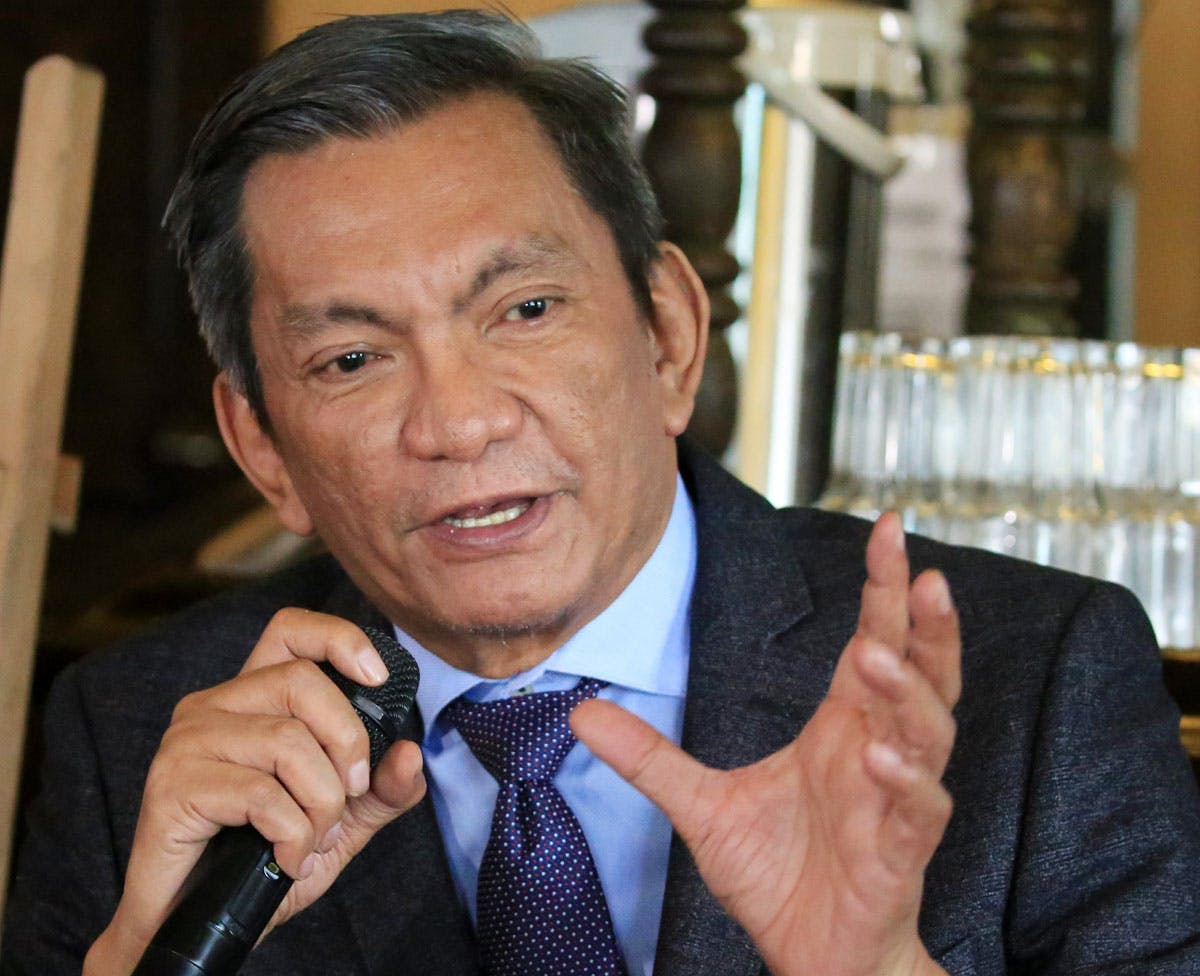
A key member of the House of Representatives assuaged fears expressed both by the public and several government officials in the wake of a committee approval of a bill creating the multibillion-peso Maharlika Investment Fund.
“The bill will still go through deliberations in both Houses (of Congress), and the Senate, I believe, has already constituted a study group on the matter,” Albay 2nd District Rep. Joey Salceda, who chairs the House ways and means committee, said over the weekend.
“Proposals and suggestions are welcome because robust discussion is needed for a proposal of such importance,” he added, reassuring Sen. Imee Marcos and Bangko Sentral ng Pilipinas Governor Felipe Medalla that their concerns will definitely be addressed.
House Bill No. 6398, or the proposed Maharlika Investment Fund, seeks the creation of a sovereign wealth fund by initially pooling some P275 billion of the government’s wealth to be used for strategic investments to generate revenue.
HB 6398 was filed by Speaker Martin Romualdez, cousin of President Marcos. It was approved by the House committee on banks and financial intermediaries last Thursday and is now up for plenary deliberations.
Co-authors of the bill are presidential son Ilocos Norte Rep. Sandro Marcos, Romualdez’s wife Tingog Sinirangan party-list Rep. Yedda Marie Romualdez and several other administration allies.
Under the proposed measure, some P275 billion will be sourced from the Government Service Insurance System, Social Security System, Land Bank of the Philippines, Development Bank of the Philippines and several other government-owned and controlled corporations and financial institutions to be pooled as the Maharlika Investment Fund (MIF), which shall be managed by the Maharlika Investment Corp. (MIC), a GOCC that shall be created once the proposed bill becomes law.
The MIC shall have the authority to place the MIF in strategic investments such as in cash, foreign currencies, metals and other tradable commodities; domestic and foreign corporate bonds; listed or unlisted equities; financial derivatives; Islamic investments, such as Sukuk bonds; joint ventures or co-investments; mutual and exchange-traded funds; real estate and infrastructure projects; and other investments as may be approved by the MIC Board.
At the same time, Salceda categorically stated that he is “open to an amendment that spells out that the fund will remain a BSP-Supervised Financial Institution, just to ensure that the BSP oversight will continue to apply.”
“And, of course, the independence of the BSP’s operations must be respected,” he said.
Unknown to the public, who, again, will bear the brunt of creating such fund through taxpayers’ money, Salceda insisted that the “BSP has more powers over this fund than Malaysia’s monetary authorities had over 1MDB.”
The Bicolano lawmaker made the disclosure due to fears that creating a Maharlika Fund might only suffer the same fate of former Malaysian prime minister Najib Razak, who was ousted based on allegations of massive corruption that surrounded the 1MDB financial entity.
“The BSP can sanction both the GFIs (government financing institutions) and the fund itself, and even order the unwinding of the involved financial institutions themselves as the BSP’s Supervisory Enforcement Policy allows,” Salceda said.
“The Malaysian central bank warned the central government about the risks that 1MDB was taking as early as 2014. It couldn’t do much on its own,” he added as he recalled the height of the Malaysian controversy.
In sharp contrast, the BSP does not need to warn the government and the former can conduct enforcement action on its own, according to the veteran lawmaker.
Salceda disclosed that he is open to “discuss the mix of assets that the fund will invest in, but some allocation for foreign securities is necessary.”
“It diversifies the portfolio and allows the fund to take positions in potentially higher-return investments. A fund that grows faster due to some exposure to high-return foreign investments is better than a smaller and severely constrained fund exclusively investing in domestic investments,” he said.
“That said, I will welcome a proposal to ensure that a certain percentage, at the minimum, of the fund should be invested in domestic investments,” he added.
Peasant group opposes bill
Amid this development, peasant group Anakpawis has raised its opposition to the proposed Maharlika fund.
In a statement issued on Sunday, Dec. 4, Anakpawis, an umbrella organization of the country’s marginalized sectors, said it is opposing the proposed Maharlika Wealth Fund “on the basis of its nature being dubious, concentrated to few hands of ruling political dynasty, and prone to corruption and abuse.”
“The name Maharlika Fund speaks for itself – it will be for the members of the ruling party, who are the same ones pushing hard for this bill,” the group said in Filipino.
It added that such a huge public fund being placed in the hands of a few people should be cause for worry as the government has yet to address the high inflation and to provide sufficient funds for basic social services, education, health, public facilities and relief assistance to the sectors severely affected by the COVID-19 pandemic.
Anakpawis also noted that the administration has yet to heed the fisherfolk’s and farmers’ call for a P15,000 production subsidy amid the rising cost of fuel, fertilizer and other implements for production.
“It is clear to us, the poor sector of society, the fishers, farmers and laborers, that this so-called ‘Maharlika Funds’ – is not for us, the anakpawis (peasants),” the group said in Filipino.
“We will closely monitor this proposed bill, and we will remain vigilant against any attempt to use public coffers for corruption by unscrupulous politicians, especially those belonging to the clan and party of the Marcoses,” it added. – With Elizabeth Marcelo


