


Filipino Men Spend More Hours On Household Chores But Bulk Of Tasks Still Fall On Women – Survey
Filipino men now spend an average of eight hours a day doing household chores including caring and supervision of dependents, as compared to only five hours a day in 2017.

Due to the COVID-19 pandemic, Filipino men are spending more hours caring for their family members and doing household chores, but the bulk of the tasks still fall on women, a recent survey showed.
Based on the “2021 National Household Care Survey”, commissioned by Oxfam Philippines and partner organizations, Filipino men now spend an average of eight hours a day doing household chores including caring and supervision of dependents, as compared to only five hours a day in 2017.
The 2021 survey, conducted in January to March this year, involved interviews with 1,177 individuals from randomly sampled households in Cagayan, Metro Manila, Masbate, Eastern Samar, Cebu, Maguindanao, North Cotabato, and Sultan Kudarat.
The 2017 survey, on the other hand, polled 541 individuals from Cotabato, Eastern Samar, Leyte, Maguindanao and Sultan Kudarat.
“While the coverage of the two surveys is not exactly the same, it was expected that time spent on care work would increase for men, especially since many were forced to stay and even work at home,” Leah Payud, resilience portfolio manager of Oxfam Philippines, said.
“However, it is disappointing that there is still inequality at home and that the bulk of unpaid care work still falls on women,” she added.
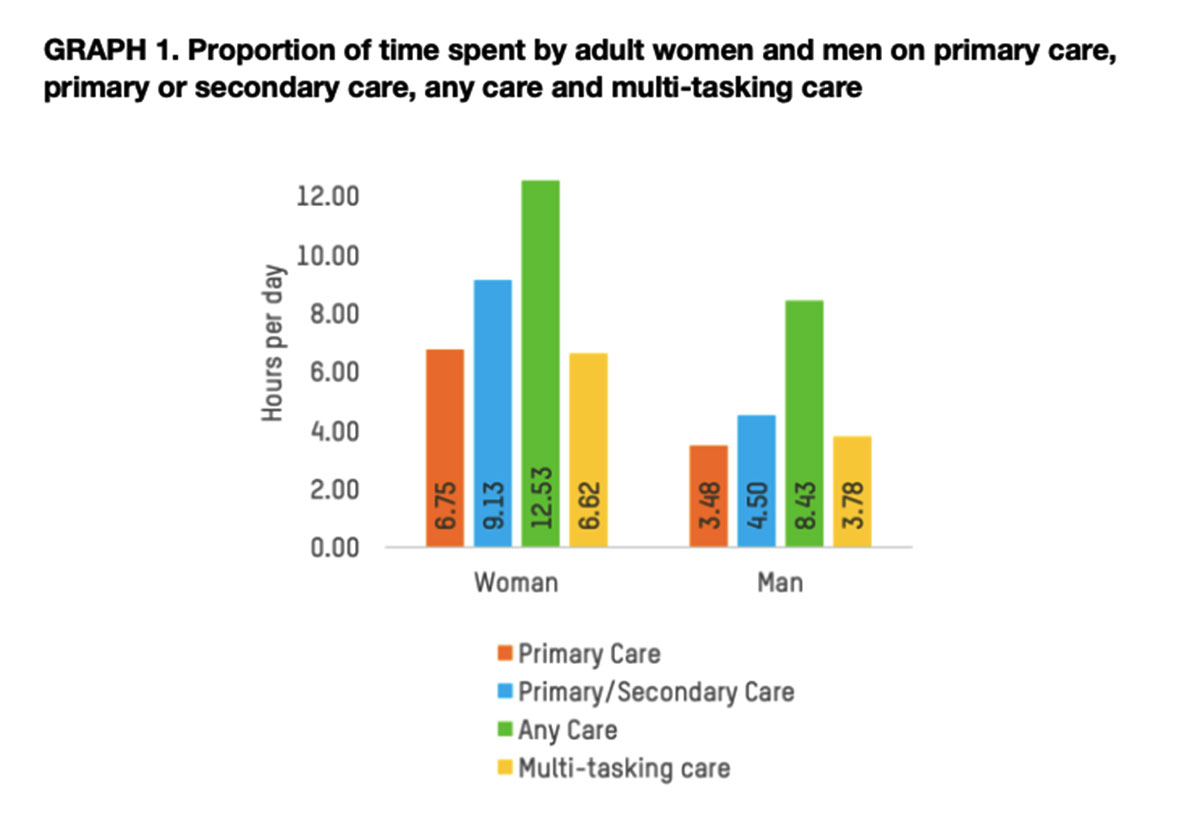
The 2021 survey showed that women spend an average of 13 hours a day on household chores from 12 hours a day in 2017.
The survey also showed that more than half or seven hours out of the 13 hours spent by women on household works involve “multi-tasking or juggling at least two activities at the same time.”
A chart provided by in the survey showed that on average, Filipino women spend 6.5 hours a day on household “care work” as their primary activity while men spend an average of 2.4 hours a day on care work as their primary activity.
The Oxfam said care work includes activities such as “fetching water, doing laundry or taking care of sick family members.”
The survey showed that on the average, Filipino men spend five hours daily for their paid work while women only spend 2.6 hours.
Filipino men spend an everage of 15 hours a day on non-work activities while women spend an average of 14 hours. These activities include leisure, sleep, personal care, education and social and religious functions.
“We’re hoping that more men, especially those from the younger generations, would start to take on care work and challenge social norms,” Payud said.
Payud cited the need for institutional changes such as legislation or policies that support the care economy.
“Hopefully, this will improve care-related services such as water systems, health care delivery, and day care services that will result in the redistribution of care tasks and recognition of the importance of care work for both men and women,” she said.