



DMW: No Deployment Ban For Saudi-Bound OFWs
Migrant Workers Secretary Hans Cacdac said his department is closely coordinating with other government agencies regarding political and security assessments.
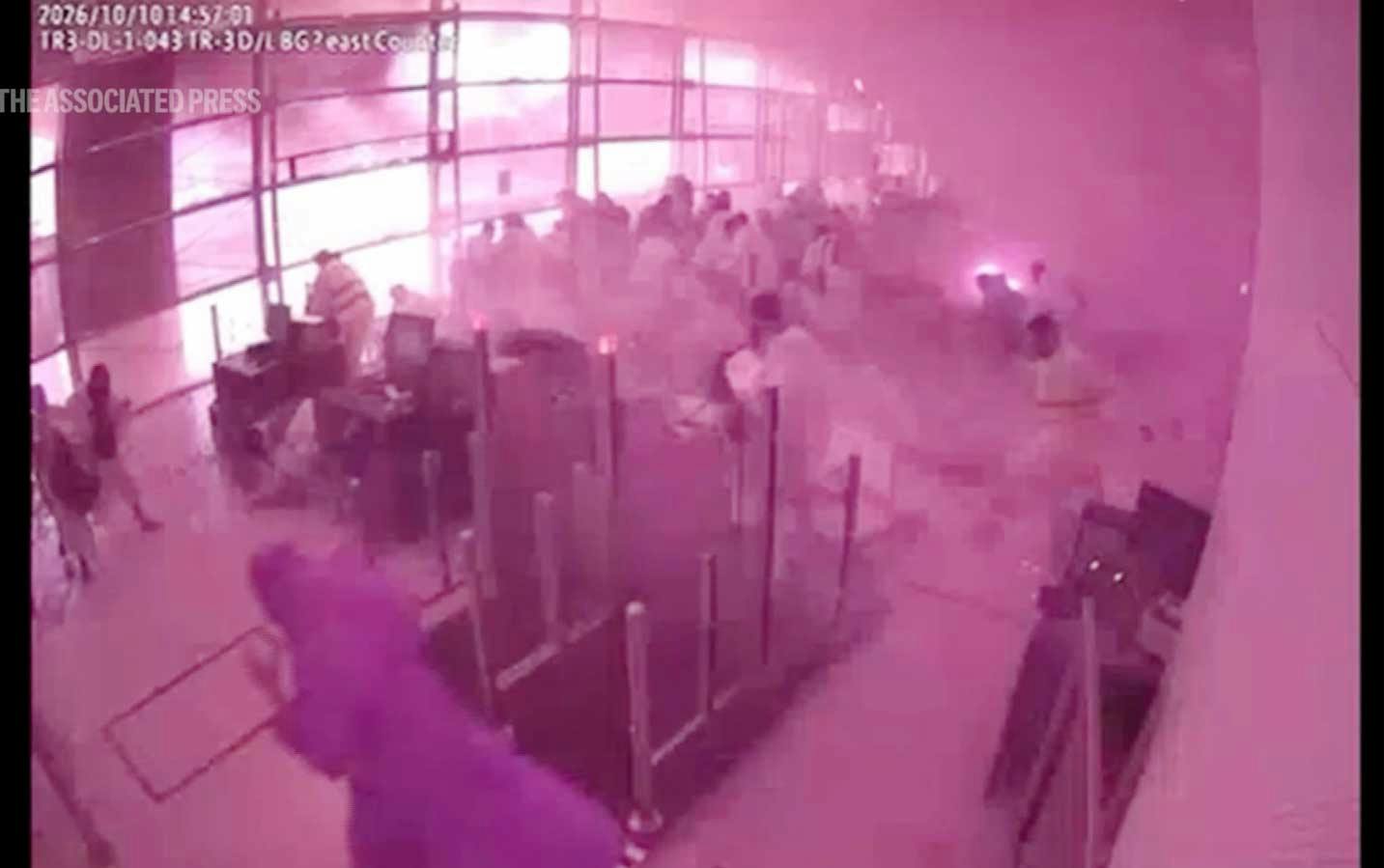
Despite the recent attack on Saudi Arabia’s King Khalid International Airport in Riyadh, which resulted in 13 deaths and over 300 hurt, the Department of Migrant Workers (DMW) said there will be no deployment ban in Saudi Arabia.
“Right now, there is no deployment ban in Saudi Arabia. Economic life continues within the Kingdom. What we are seeing here is that the attacks are targeted, and the Kingdom has kept Filipinos safe. We are talking here of decades of protection afforded by the Kingdom to Filipinos in Saudi,” DMW Secretary Hans Cacdac said at a press briefing on Monday, Oct. 12.
Cacdac said the DMW is closely coordinating with the Department of Foreign Affairs and the Department of National Defense regarding political and security assessments.
“Rest assured, we will coordinate with the DFA and DND in terms of getting advise on the political situation, but at this stage there is no deployment ban to Saudi Arabia,” he stressed.
Currently, 30 overseas Filipino workers (OFWs) are stranded in Riyadh due to canceled flights, 20 of whom are staying in DMW or Overseas Workers Welfare Administration (OWWA) sponsored hotels.
“Meanwhile, seven OFWs were picked up by their relatives in Riyadh, two are seafarers in transit given accommodation in a hotel sponsored by the airline and one was fetched by the employer,” OWWA administrator Patricia Yvonne Caunan reported.
In Manila, the 37 OFWs affected by canceled flights were provided accommodation at the OFW lounges in Terminals 1 and 3.
“These 37 (OFWs) asked for assistance in going back to their respective homes in Metro Manila and in the provinces. Three of them are staying in a hotel in Manila,” she said.
Cacdac said there are also 94 OFWs whose flights to Riyadh were diverted to Jeddah.
“They are being assisted by OWWA and our migrant workers offices. They are being billeted and assisted in Jeddah while awaiting resumption of flights,” the official said.
“We are also helping them with the rebooking service with their respective airlines and we are continuously providing assistance in all facets – food, transportation and shelter,” he added.
At the same time, Cacdac said they continue to monitor the condition of the four injured Filipinos.
“Three are still in the intensive care unit with one in critical condition. Meanwhile, there is one who has been released from the hospital. He had some problem in his lumbar area and trauma burns so this will be continuously monitored but he is healthy enough to be released from the hospital,” he said.
Flight cancellations
To avoid inconvenience, the DMW advised OFWs going to Riyadh to check their flight status before going to the airport since the Saudi airport is temporarily closed.
Flag carrier Philippine Airlines announced on Monday the suspension of flights to and from Riyadh until Nov. 29 “due to the evolving security situation at Riyadh’s King Khalid International Airport.”
“PAL continues to closely monitor developments and assess conditions affecting the safe operation of its flights. Further updates will be provided as necessary,” it said.
Meanwhile, the Philippines led discussions on stronger protection mechanisms for seafarers caught in armed conflicts and other crisis situations at the Human Rights Council.
“With Filipino seafarers accounting for about a quarter of the global seafaring workforce, protecting their rights and welfare is a key pillar of Philippine foreign policy and a clear expression of a deeply rooted societal value. Our stake in this issue is clear and undeniable,” Philippine Permanent Representative Carlos Sorreta said.
Among the proposals made were the establishment of a coordinating mechanism of relevant maritime stakeholders to assist crews targeted by missiles, drones or sea mines, as well as a dedicated United Nations Task Force to address unfair criminalization and arbitrary detention of innocent seafarers.