



Barangay Community Quarantine Eyed After ECQ, GCQ; Flexible Learning Plans Sought
President Duterte told Congress that the government is dealing with the coronavirus disease 2019 pandemic in different phases to mitigate its social, economic and other impacts.

The government is planning to implement barangay community quarantine (BCQ) after the enhanced community quarantine (ECQ) and general community quarantine (GCQ) should it succeed in flattening the curve of coronavirus disease 2019 in the country.
This was stated in President Duterte’s fifth report to Congress on April 27, as mandated by Republic Act No. 11469 or the “Bayanihan to Heal as One Act” granting the Chief Executive special powers to deal with the COVID-19 crisis.
The three phases of possible quarantine restrictions and periods were mentioned after the Technical Education and Skills Development Authority (TESDA)’s plan to provide new skills, employment and livelihood to Filipinos after the pandemic.
The operational plan of TESDA, the report read, was anchored on the three phases of quarantine and restriction periods: survival (during ECQ), transition (modified community quarantine after the lifting of ECQ), and structural (barangay community quarantine or BCQ).
The report also said that the Commission on Higher Education is in discussion with state universities and colleges or SUCs and private higher education institutions (HEIs) on flexible learning plans and arrangements in preparation for post-ECQ scenarios.
According to the President’s report, the technical working group on anticipatory and forward planning had submitted its recommendations to the Inter-Agency Task Force (IATF) for the Management of Emerging Infectious Diseases on April 22, which outlined three phases of the government’s action against the COVID-19 threat. These are:
• Response – strategies are focused on strengthening the healthcare system by increasing the number of COVID-19 testing, contact tracing, quarantine facilities, hospital beds and medical equipment to curb the transmission of the disease
• Mitigation – ensuring food security and reducing financial losses; strategies seek to define conditions that will allow social and economic activities to proceed while observing the rules set by the IATF and the Department of Health (DOH)
• Transition to new normal – whole-of-government approach in formulating programs under the new normal scenario
Under the transition phase, the government will provide an economic risk assessment plan and study the resumption of activities in high-value sectors with a low risk of spreading the virus.
Also in line with the whole-of-nation approach in transitioning to a new normal, the National Economic and Development Authority (NEDA) will convene inter-agency committees wherein departments, agencies, local government units (LGUs) and Local Development Councils are required to submit their priority programs and projects, and identify their respective budget priorities for 2021 related to the strategies defined in the TWG report.
Earlier, the NEDA proposed a three-phased program of interventions to mitigate the impact of the COVID-19:
• Phase 1a: Clinical/medical response
• Phase 1b: Public health response
• Phase 1c: Short-term augmentation of health systems capacity
• Phase 2: Rebuild consumer and business confidence
• Phase 3: Resume a new normal state of economic activity that is more prepared for another possible pandemic
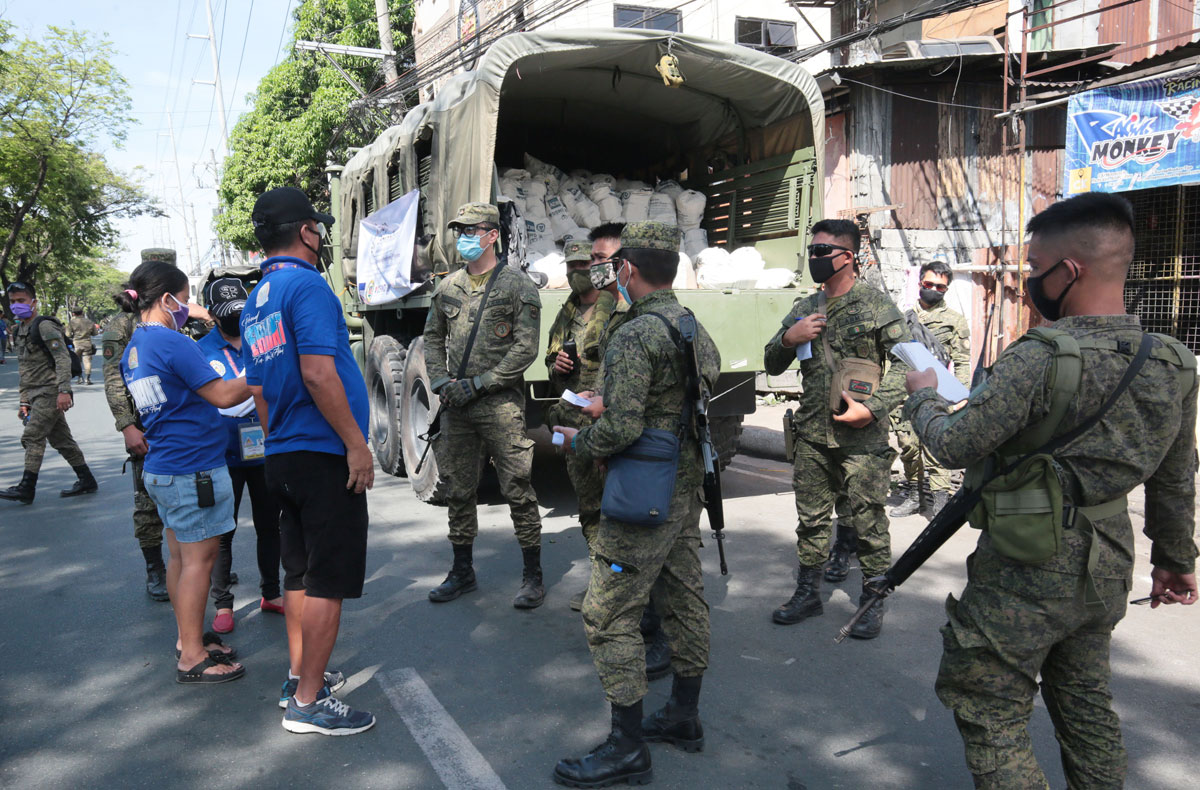
The President assured Congress that the Department of the Interior and Local Government is consolidating directives and issuances related to COVID-19 to map out provisions for interventions to enable the LGUs to address the pandemic.
To be able to adapt to a new normal in carrying out its mandate, the report said TESDA is espousing OPLAN TESDA Abot Lahat: Technical-Vocational Education and Training or TVET Towards a New Normal, consistent with NEDA’s three-phased program of intervention.
The Philippine Statistics Authority, the report added, shared data with the Board of Investments to assist in formulating measures to address the impact of COVID-19 on investments. The BOI is also conducting a Labor Force Survey to study the pandemic’s impact on employment as well as on consumers.
Missing the target
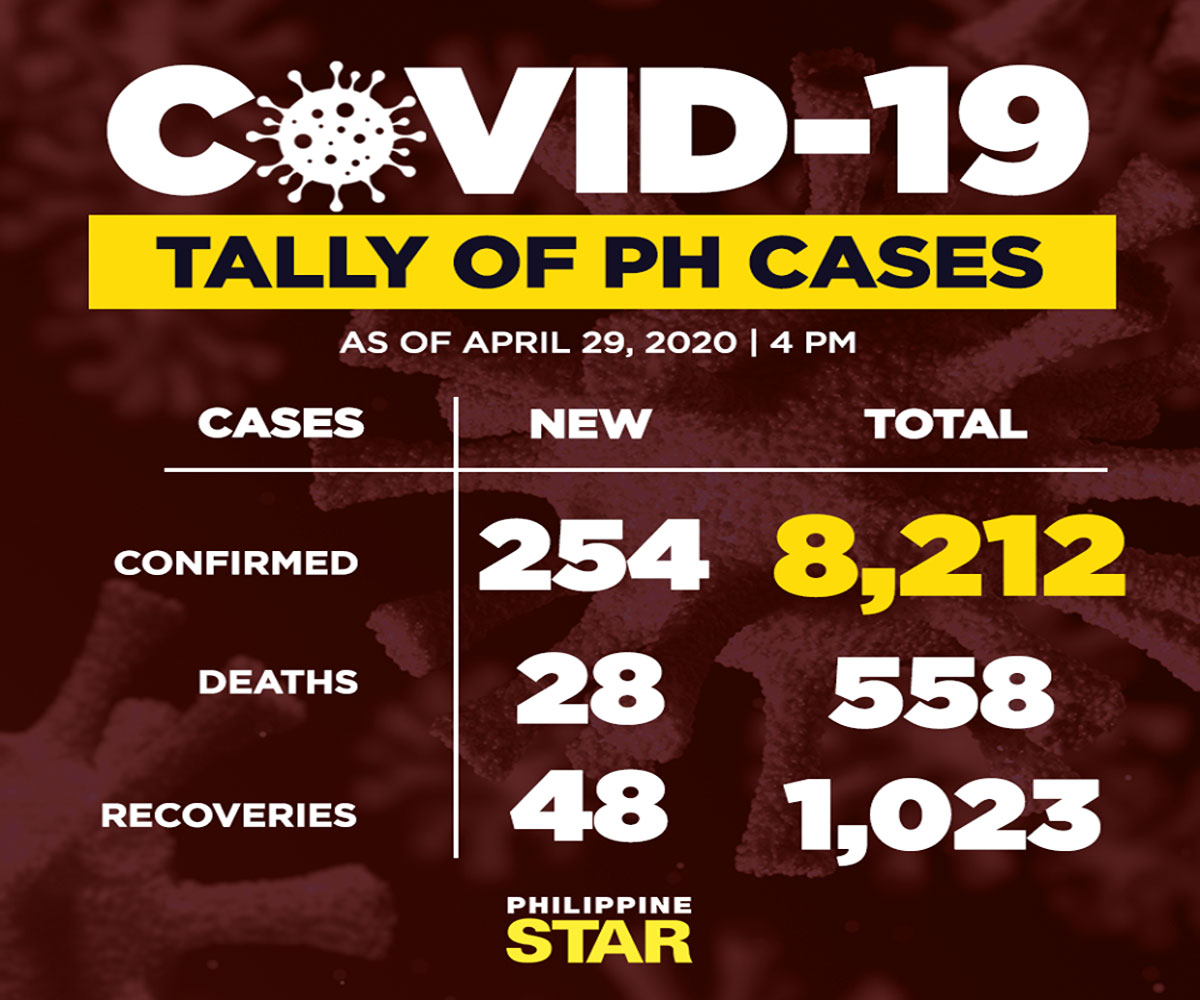
The DOH reported a total of 8, 212 COVID cases as of Wednesday with 558 deaths. More than a thousand recovered.
The department admitted it would not be able to meet the target of conducting 8,000 tests daily for COVID-19 by today, April 30.
“It seems we cannot meet it. We did our best but so many things happened this past week,” DOH Undersecretary Maria Rosario Vergeire said in a press conference.
She cited the scaling down of the laboratory operations at the Research Institute for Tropical Medicine (RITM) after 45 of its personnel got infected with the virus.
RITM is the country’s main laboratory for COVID-19 tests. It has a current testing capacity of 1,500 per day.
The official noted that as of April 28, some 4,900 tests have been done at the RITM and other sub-national laboratories of the DOH.
But Vergeire assured the public that the DOH is not giving up on its goal, especially since more laboratories are opening up.
Aside from this, she said the 3,000 United States-made Cepheid GeneXpert cartridges that they had been expecting arrived Tuesday.
Cepheid's GeneXpert System technology is a unique approach to molecular diagnostics, enabling a complete menu of tests on a single, fully scalable, consolidated workstation. These kits are expected to boost the country’s testing capacity.
These kits will be used at the Jose B. Lingad Memorial Regional Hospital in Pampanga, which is opening up its laboratory for COVID-19 specimens.
Vergeire added the testing laboratories opened by the Philippine Red Cross in Mandaluyong City have also been strengthening the country’s testing capacity.
"We won't adjust our target (of 8,000 tests). But if we don't reach the target, we will strive (to increase the capacity in the coming days),” she said. This will be done by extending the operating hours in laboratories and by increasing the number of their staff, among others.
The DOH has been cautious when making statements about flattening the curve, which involves reducing the number of new COVID-19 cases from one day to the next. This helps prevent healthcare systems from becoming overwhelmed.
New normal
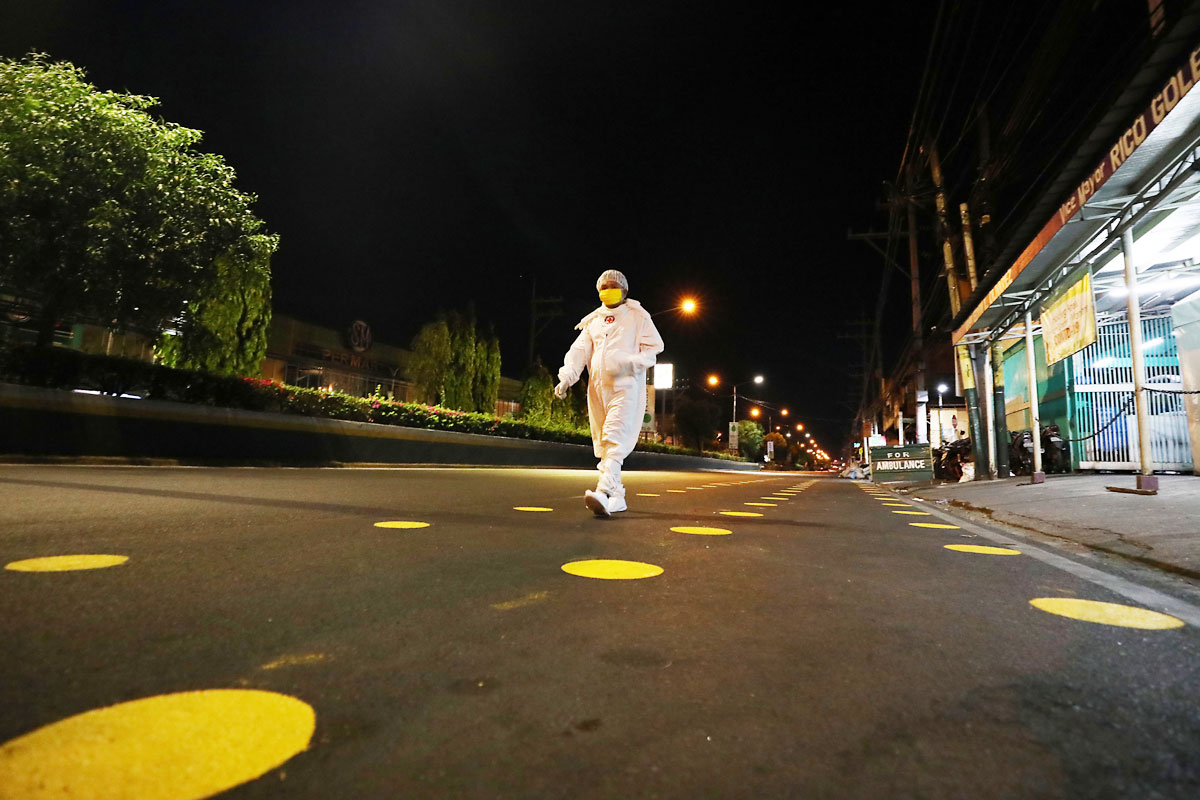
The government has been saying that Filipinos must be prepared for a new normal once the quarantines and lockdowns have eased.
LIST: Areas under ECQ, GCQ until May 15; September class opening recommended
To avoid lingering or loitering, the IATF said shopping malls in areas under GCQ must increase air conditioning temperature to 26 degrees and remove free internet connection.
Presidential spokesman Harry Roque reiterated this on Wednesday, April 29.
Restrictions in areas with low to moderate risks will be downgraded from ECQ to GCQ by May 1.
Under ECQ, public mass transportation is suspended and only essential businesses and services are allowed to operate. Once an area is placed under GCQ, some forms of public transport can operate in a reduced capacity. Select establishments, including malls, may reopen but should observe health protocols.
The IATF met on Wednesday to discuss GCQ guidelines and to finalize the list of industries that may reopen under the “new normal.” Roque said “substantially all kinds of industries” may reopen under GCQ except those that entail mass gatherings.
Roque said it is important to monitor what would happen in GCQ areas because they would be the “frontrunner” of what could be implemented nationwide.
On April 24, Roque announced that Duterte approved the IATF’s recommendation to extend the ECQ in Metro Manila and other areas until May 15 instead of lifting it today, April 30 as earlier planned.
The IATF said the National Capital Region and other areas remain at high-risk for COVID-19.
Moderate- and low-risk areas were placed under GCQ subject to guidelines, including curfews to be imposed by the LGUs, wearing of face masks, taking of body temperature as well as observance of physical distancing and proper hygiene.
On Tuesday, April 28, leaders of the House of Representatives filed a measure defining the new normal way of life upon lifting of the quarantines and resumption of various sectors’ operations as the country continues to battle COVID-19.
House Bill No. 6623 or the proposed “New Normal for the Workplace and Public Spaces Act of 2020” sets protocols to be implemented once social and economic activities resume.
The proponents of the bill specifically prescribed new norms of physical distancing and safety measures in government and private offices, schools, commercial establishments and other public spaces.
Like the IATF, the lawmakers seek mandatory wearing of masks, availability of hand washing or sanitizing stations in public areas, temperature checks and physical distancing of at least one meter in all public spaces or universal and mandatory safety measures.
Read more: Lawmakers file bill on ‘new normal’
Other proposals include the management and regulation of government-controlled public spaces and privately managed spaces, management of public transportation, monitoring of schools and learning institutions, and monitoring of private commercial and industrial workplaces. – With Sheila Crisostomo, Edu Punay


