



Amid Corruption Scandal, A Graceful Exit For The PhilHealth Chief?
Based on the pronouncements of Philippine Health Insurance Corp. chief Ricardo Morales, he asked President Duterte to allow him to resign because of his ailment, and was not told to leave amid the controversies hounding the agency.
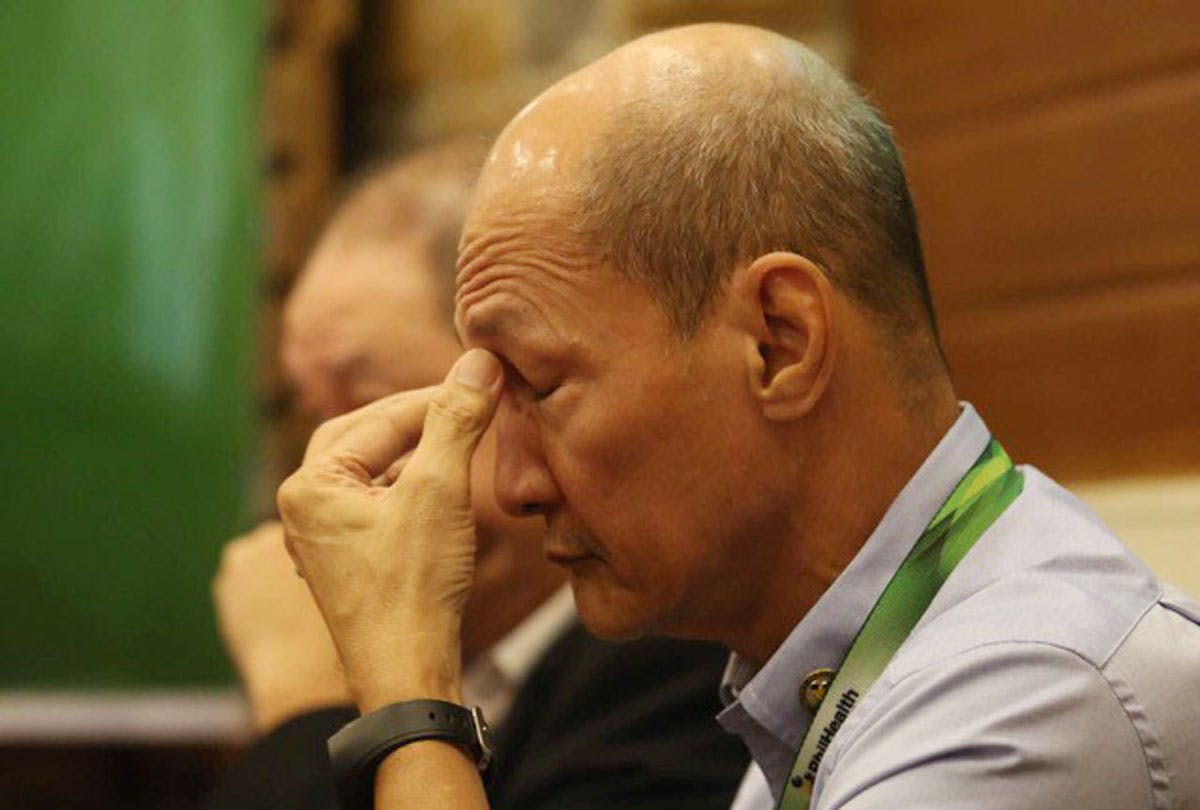
Embattled Philippine Health Insurance Corp. (PhilHealth) president and chief executive officer (CEO) Ricardo Morales resigned from his post on Wednesday, Aug. 26, while investigations into the alleged fraudulent schemes that reportedly cost the state-run insurer billions in funds are ongoing.
In a statement, presidential spokesman Harry Roque confirmed that the Office of the President received Morales’ resignation letter on Wednesday, Aug. 26.
Roque said they “are still awaiting” President Duterte’s “further action/instruction on the matter.”
Morales’ resignation came after the President said on Monday, Aug. 24, that it would be best for the PhilHealth chief to quit while the health insurer is facing “critical times.”
Justice Secretary Menardo Guevarra, the head of the multi-agency task force probing the alleged corruption in PhilHealth, said Duterte also noted the “on-and-off health situation” of Morales, who is currently undergoing chemotherapy for lymphoma.
“Executive Secretary Salvador Medialdea added that he had talked earlier to Morales, and that the latter said he would understand if he had to be replaced,” Guevarra disclosed on Tuesday night, Aug. 25.
Morales had previously rejected calls for him to quit, saying he would act like a “good soldier” as long as he was needed in PhilHealth.
On Wednesday morning, following reports that Duterte thought it “best” for Morales to resign, the PhilHealth chief said in a radio interview: “I am thankful to the President after he allowed me to take a rest. Now I can focus on my health and family.”
According to Morales, the President’s confidence in him never wavered as Duterte did not use the corruption issues besetting PhilHealth as the reason for letting him go.
“I am humbled. He is a true friend,” Morales, a retired military general who hails from Davao City where Duterte served as mayor for a long time, said. He has promised to continue participating in the investigation of the PhilHealth anomalies.
Morales said he had already signed a bank secrecy waiver, submitted himself to a lifestyle check and complied with the ongoing investigation of the Department of Justice (DOJ) into the alleged irregularities in the agency.
He expressed confidence that a fair and thorough investigation would prove that he and several other PhilHealth officials are innocent of the accusations hurled against them.
As head of the PhilHealth board, Health Secretary Francisco Duque III reportedly said he understood and accepted the decision of Morales to resign.
“Secretary Duque understands the predicament of (retired general) Morales. We all know, and he announced, that he is sick and he is seeking treatment. That is probably why he decided that he will just resign,” Health Undersecretary Maria Rosario Vergeire said in a virtual briefing.
Vergeire said Duque appreciated all that Morales had done as head of PhilHealth.
“He has illness, but despite this, during this pandemic he worked well and provided the necessarAugy health services to the people through PhilHealth,” Vergeire pointed out.
On Thursday, Aug. 27, Roque announced that Duterte has accepted the resignation of Morales but his decision to quit won't absolve him of possible criminal and administrative liabilities.
"There is no replacement yet," Roque said in a press briefing.
"The President has always been of the opinion that health should come first. He is hoping that the resignation of (retired general) Morales will lead to [his] recovery...from his current ailment," he added.
Roque said PhilHealth officials may still face charges even if they quit their posts.
"The law is very clear: If there is a criminal liability incurred when you are in office, it subsists; and public officers can be held liable for them whether or not they continue to be in office," the Palace spokesman noted.
Roque also said there is no timeline for the naming of Morales' successor but expressed hope that the next PhilHealth chief would help the state-run insurer regain the public's trust.
"The replacement should have no record of corruption, should have managerial skills, should have skills in the field of insurance and health service. Since PhilHealth is not just an insurance company but also the implementer of universal healthcare, the successor should have a background in community health and public health," he emphasized.
"We do not lack people who are capable of providing service but the President will choose the one who has the qualifications that will allow PhilHealth to recover. The President admits that PhilHealth requires his personal attention... He needs someone who can help him restore the public's trust in PhilHealth."
Roque said the President is already considering some names for the post but is very careful in making his choice. The Palace spokesman also shrugged off Morales' comment that he can now take over PhilHealth.
"I’m praying for your good health. May you recover and may you live long," Roque, who previously criticized Morales for supposedly failing to cleanse PhilHealth of corruption, said.
Pressed if he is willing to take over PhilHealth, Roque replied: "I’m presidential spokesperson. I’m busy with my job right now."
Another official resigns
PhilHealth’s senior vice president for legal sector Rodolfo del Rosario Jr. also tendered his irrevocable resignation as he admitted that the stress caused by the allegations of irregularities in the agency has affected his health.
“The past days have been grueling and stressful. The character assassination, trial by publicity and relentless persecution have left me in so much agony. My six-month preventive suspension is too much to bear,” Del Rosario posted on Facebook.
He said he also could not afford to be unemployed for six months so he decided to resign effective Monday, Aug. 24.
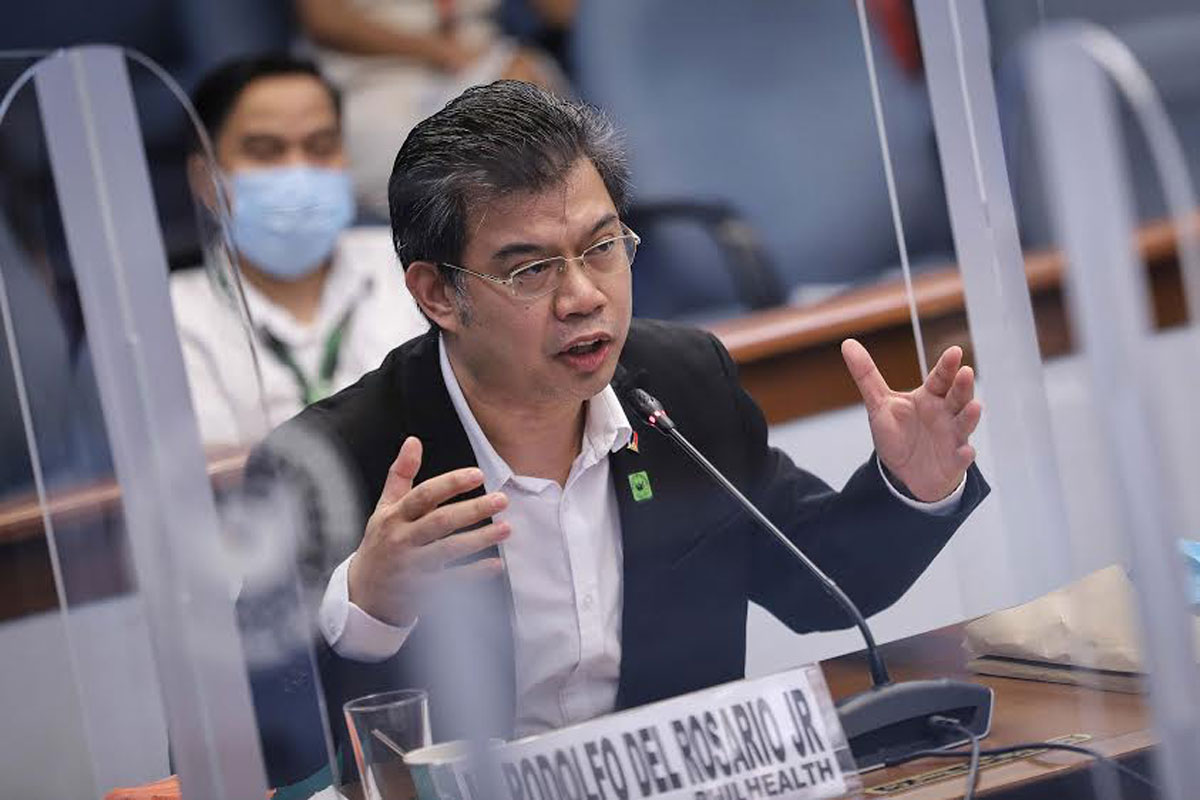
Del Rosario was among the former and incumbent officials of PhilHealth suspended by the Office of the Ombudsman as the anti-graft body probes schemes that allegedly defrauded the state-run insurer of billions in funds.
Guevarra said the decision of Del Rosario to resign would make it a little easier for the task force to conduct its investigation into the alleged anomalies in PhilHealth.
DOJ Undersecretary Markk Perete said Del Rosario told the task force that PhilHealth recommended the granting of amnesties to hospitals with late claims.
Under the law that created PhilHealth, hospitals have 60 days, from the time the patient has been discharged, to file their claim, otherwise they would have waived their right to claim from the state insurer.
“There was a recommendation from the legal sector – around P3.9-billion claims on appeal that they want to grant an amnesty,” Perete said.
The PhilHealth board reportedly approved the payment of P668 million as part of the amnesty.
The task force said the proper recourse was not the grant of amnesty to those who failed to claim within the 60-day period, but for the hospital to file a case in court.
Also, according to Del Rosario, out of the 5,000 cases of suspected fraud that are supposedly under internal investigation by the PhilHealth legal sector, only 11 cases have been filed.
“We are asking for the records, their inventory, including which region, which hospital and health care provider are involved, and how much were the claims. We are asking for the claims because we want to see if there is a pattern on why these are being allowed,” Perete said.
Technical malversation
PhilHealth officials who connived to bleed the state insurer of billions in taxpayers’ money can also be indicted for technical malversation for having used funds outside of the intended purpose, according to some members of the House of Representatives.
Reps. Elpidio Barzaga Jr. (Dasmarinas City) and Jesus Crispin “Boying” Remulla (Cavite) – both lawyers by profession – raised this possibility in light of the recent statements given by PhilHealth senior vice president Dr. Israel Pargas.
Pargas admitted to Barzaga that all excess funds that PhilHealth pays go to the hospitals – a practice that earlier prompted Anakalusugan party-list Rep. Mike Defensor to believe that there is connivance between some PhilHealth officials and the hospitals.
Aside from Defensor’s proposal to hold the PhilHealth officials responsible for the non-bailable crime of plunder, Remulla and Surigao del Norte Rep. Robert Ace Barbers also broached the idea of having the officials indicted for technical malversation.
Remulla, a senior House deputy majority leader, said it is clear that Interim Reimbursement Mechanism or IRM funds should not have been advanced to hospitals of PhilHealth’s choice. The agency also allotted funds for dialysis centers even if these were earmarked for coronavirus disease 2019 patients.
Lawmakers say the IRM, which has been suspended by PhilHealth, is the root of corruption.
State auditors from the Commission on Audit calculated PhilHealth’s overpayments at P154 billion from 2013 to 2018, through IRM and the agency’s all case rates system.
“This really means it is technical malversation. It was meant to be for COVID-19 patients, but was given to non-COVID patients. So public fund was used for a public purpose, but not for the intended purpose,” Remulla pointed out.
Barbers agreed. He stressed that PhilHealth officials could not fool them, following an explanation of how “reimbursement” should be defined, which also drew the ire of another House deputy speaker, SAGIP party-list Rep. Rodante Marcoleta.
Barzaga said the PhilHealth practice of paying private hospitals more than what patients have actually incurred is not sanctioned by any circular, which means it is a legal violation that can be used to file charges against those involved.
Garin, Padilla deny wrongdoing
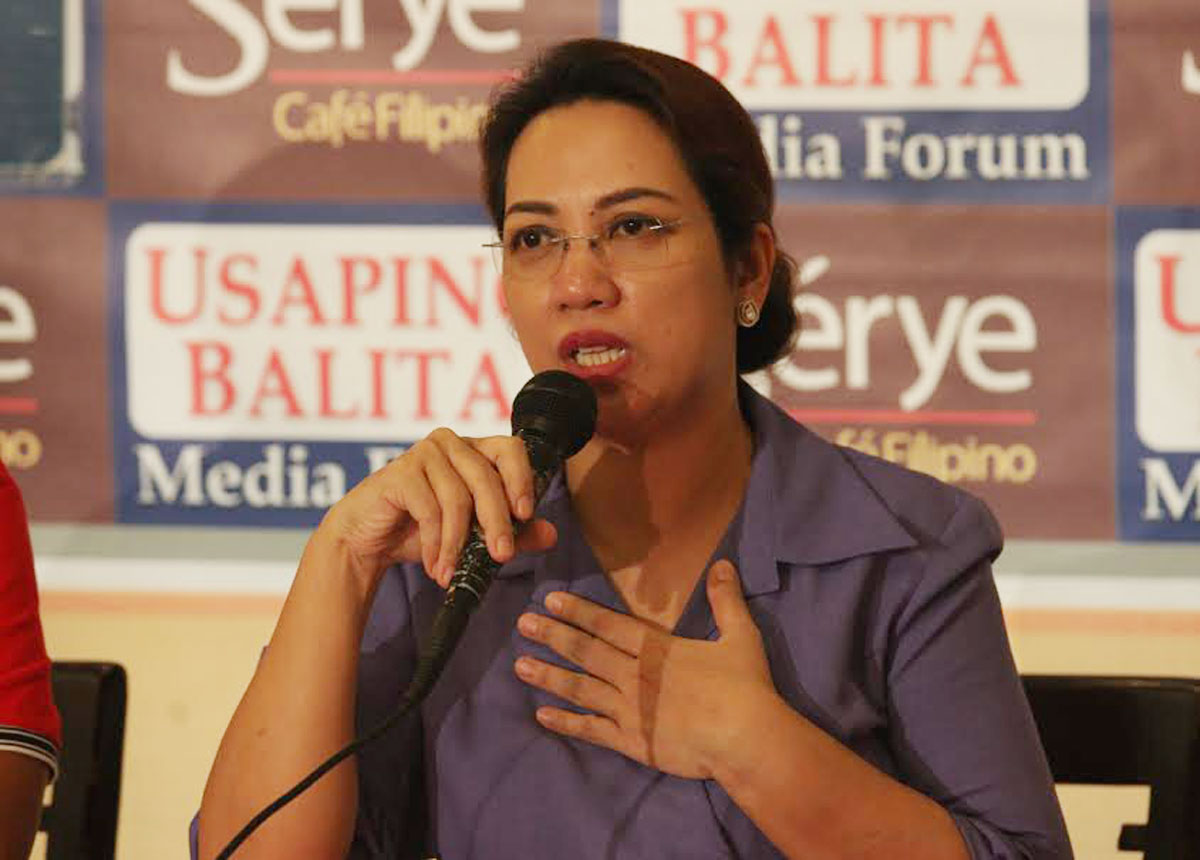
Meanwhile, Iloilo Rep. Janette Garin on Wednesday denied any anomaly in the disbursement of P10.6 billion in PhilHealth funds meant for senior citizens when she was health secretary.
In a virtual forum of the House minority on Wednesday, Garin dismissed as “a big joke” the recommendation of the Senate Blue Ribbon committee that she should be indicted for corruption over the misuse of the funds allegedly used in the 2016 elections by the Aquino administration.
Garin, who also served as PhilHealth chairperson when she was health secretary, believes the report of the Blue Ribbon chaired by Sen. Richard Gordon is politically motivated, as she slammed the “recycled, baseless accusations aimed at diverting the real issues.”
“Falsified and twisted statements from Gordon is not new to me. He has demonized me to the core, simply because I was a member of the Aquino Cabinet and refused to be manipulated by the PhilHealth mafia during my tenure,” Garin stressed.
Gordon told “The Chiefs” on Wednesday night on OneNews / TV5 that what was released was the Blue Ribbon chairman’s report and not yet of the entire panel.
Garin, who also faces several cases over the controversial Dengvaxia vaccine for dengue, claimed that it was she who introduced reforms in PhilHealth after discovering the operations of the so-called mafia in the state insurer.
Among the reforms she took credit for were the “stop-payment order against flagged institutions,” a stop to the review on case rates and alignment with medical associations, “and changes in the organizational structure installed for purposes of check and balance.”
Garin alleged that Gordon’s report was released ahead of the actual report of the Senate on PhilHealth anomalies as a “diversionary tactic.”
“I do not know of Senator Gordon’s true intentions and why he keeps on pointing fingers at me. I do not know why he has to release a report ahead of the real Senate report,” she emphasized.
She also changed the lyrics of the Filipino song Bakit Ngayon Ka Lang? to mock Gordon’s belated recommendation to press charges against them.
Former PhilHealth CEO Alex Padilla also belied the Blue Ribbon report linking him to an alleged P10.6-billion scam in the agency.
Padilla vowed to prove his innocence amid allegations that PhilHealth during his term illegally rechanneled funds for the payment of senior citizens’ premiums to the establishment of Department of Health (DOH) rural health units.
“I have not read nor have I been furnished the report of the Senate Blue Ribbon committee. But if reports are true, let me categorically state that the charge leveled against me for fund diversion is patently false, an outright lie,” Padilla posted on Facebook.
“It is indeed unfortunate that political grandstanding in our country has sunk to an all-time low where lies are passed off as truth and facts exchanged for fiction. I am certainly innocent of these malicious accusations and intend to prove the same at any time, any place and at whatever forum,” he added.
Padilla insisted that there was never any P10.6-billion fund intended for payment of senior citizens’ premiums, and no funds for the purpose were allocated in the 2015 General Appropriations Act or at any time when he was PhilHealth chief.
“It is impossible to divert any fund that does not exist,” Padilla stressed, echoing a comment of former Aquino budget chief Florencio Abad, who has also been implicated by Gordon in the PhilHealth mess.
Asked to comment on Abad’s claim that the P10.6-billion fund did not exist, Gordon told The Chiefs, “I am calling him a liar.”
While PhilHealth may have requested for funds for the senior citizens, Padilla said the request was never granted and the allocation never given.
Padilla also said that PhilHealth has nothing to do with the alleged P9.392-billion Health Facilities Enhancement Program or HFEP for barangay health stations since the state insurer is not in the business of funding infrastructure projects of the DOH.
He said the HFEP budget came from savings of unused personnel funds from the Miscellaneous Personnel Benefit Fund or MPBF, which was duly authorized by Congress in the 2015 GAA.
“I think a simple perusal of the budget allocations for PhilHealth and DOH during those years would reveal these simple truths,” Padilla noted.
Echoing another statement of Abad, Padilla said he was not even asked by the Senate to appear, explain or comment on the allegations at any time during the entire investigation. – With Delon Porcalla


