



Duterte Orders PhilHealth: Publish All Procurements, Even Paper Clips
President Duterte said he would impose stricter measures to ensure that the funds of state-run entities like Philippine Health Insurance Corp. would not be wasted on corruption and asked agencies to publish all procurement plans.
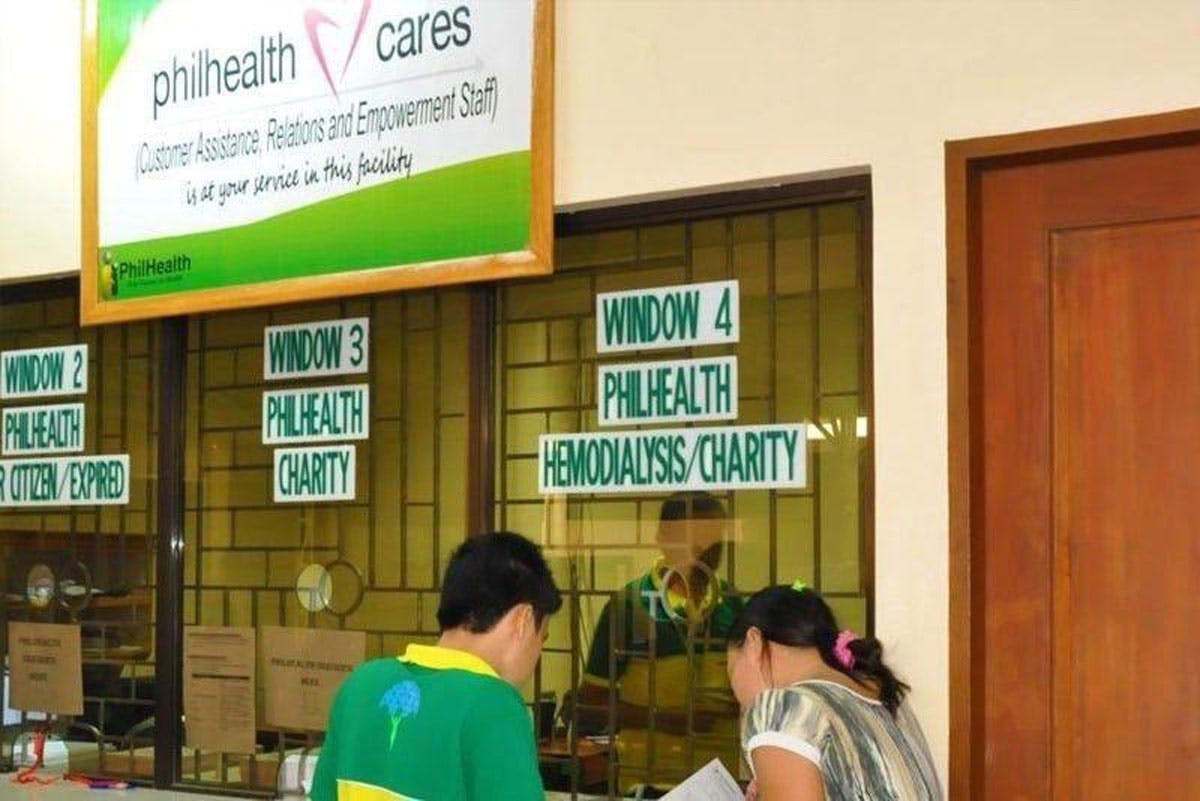
President Duterte has vowed to spend his remaining months in office building cases against people involved in the alleged massive corruption at the Philippine Health Insurance Corp. (PhilHealth).
Duterte, who recently formed a task force to probe the alleged fraudulent schemes in PhilHealth, said all officials behind the anomalies in the state-run insurer should be placed behind bars.
“PhilHealth should be investigated and everyone (involved) should be prosecuted and jailed. If that’s the only work I can do in the remaining two years, I would do that,” the President said in a recorded public address aired on Tuesday, Aug. 25.
As the Philippines is wrestling with the coronavirus disease 2019 (COVID-19) pandemic, PhilHealth, which administers the national health insurance program, is embroiled in a controversy over alleged irregularities that have resulted in the loss of billions in funds.
There are accusations that a “mafia” is behind the illegal activities, including the purchase of supposedly overpriced COVID-19 test kits and information equipment as well as the padding of hospital claims to PhilHealth. Officials of the health insurer have denied the allegations and have expressed willingness to cooperate with investigators.
A multi-agency task force led by the Department of Justice (DOJ) is now looking into the issues hounding PhilHealth. The task force is composed of the Office of the Ombudsman, Civil Service Commission, Office of the Executive Secretary, Presidential Anti-Corruption Commission and Palace Undersecretary Melchor Quitain.
Duterte said he would impose stricter measures to ensure that the funds of state-run entities like PhilHealth would not be wasted on corruption. He ordered agencies to publish all procurement plans.
“That is in view of the people’s negative sentiments on PhilHealth, especially on PhilHealth. Even if it’s just a paper clip, publish it and identify the bidder who will supply the paper clip... Publish it in the newspaper so it can be read,” the President said. “I hope that I have made myself clear on this. More measures will come.”
Reorganization sought
The multi-agency task force probing PhilHealth believes structural reforms are needed to cure the problems in the state-run insurer.
DOJ Secretary Menardo Guevarra said the information technology system is fragmented, making it vulnerable to manipulation. The task force is also investigating the health insurer’s legal sector, which was described by Guevarra as one of the possible biggest sources of fraudulent activities.
“In the fact-finding and investigation reports that we have received so far, including those from the Senate and the House of Representatives, it seems that the legal sector is a very ripe source of irregularities,” Guevarra told Duterte during a meeting in Davao City last Monday.
Guevarra said the task force is also looking at the interim reimbursement mechanism and PhilHealth’s financial management.
“We hope to be able to make recommendations as well for structural reforms at PhilHealth. In the course of our investigation, we’ll probably be able to discover what structural reforms need to be done at PhilHealth,” Guevarra said.
He expressed hope that the Governance Commission for Government-Owned and Controlled Corporations (GCG), which is under the Office of the President, could draw up proposals for the partial or total reorganization of PhilHealth.
Guevarra said the DOJ has also broached to the GCG the idea of creating an interim management committee for PhilHealth.
“It’s something that probably the Office of the President may direct the GCG to do so that they will do it more immediately,” Guevarra said.
He expressed hope that the findings of the task force would help Congress pass a law that would strengthen PhilHealth and make it more responsive to the needs of the public.
The DOJ has requested member agencies of the task force to expedite their ongoing investigations or special audits and resolve pending cases involving PhilHealth officials. The Office of the Ombudsman has preventively suspended 13 key PhilHealth officials for cases that were filed even before the creation of the task force.
Guevarra said the task force has also formed composite teams to pursue the information obtained during its meetings.
Charges recommended
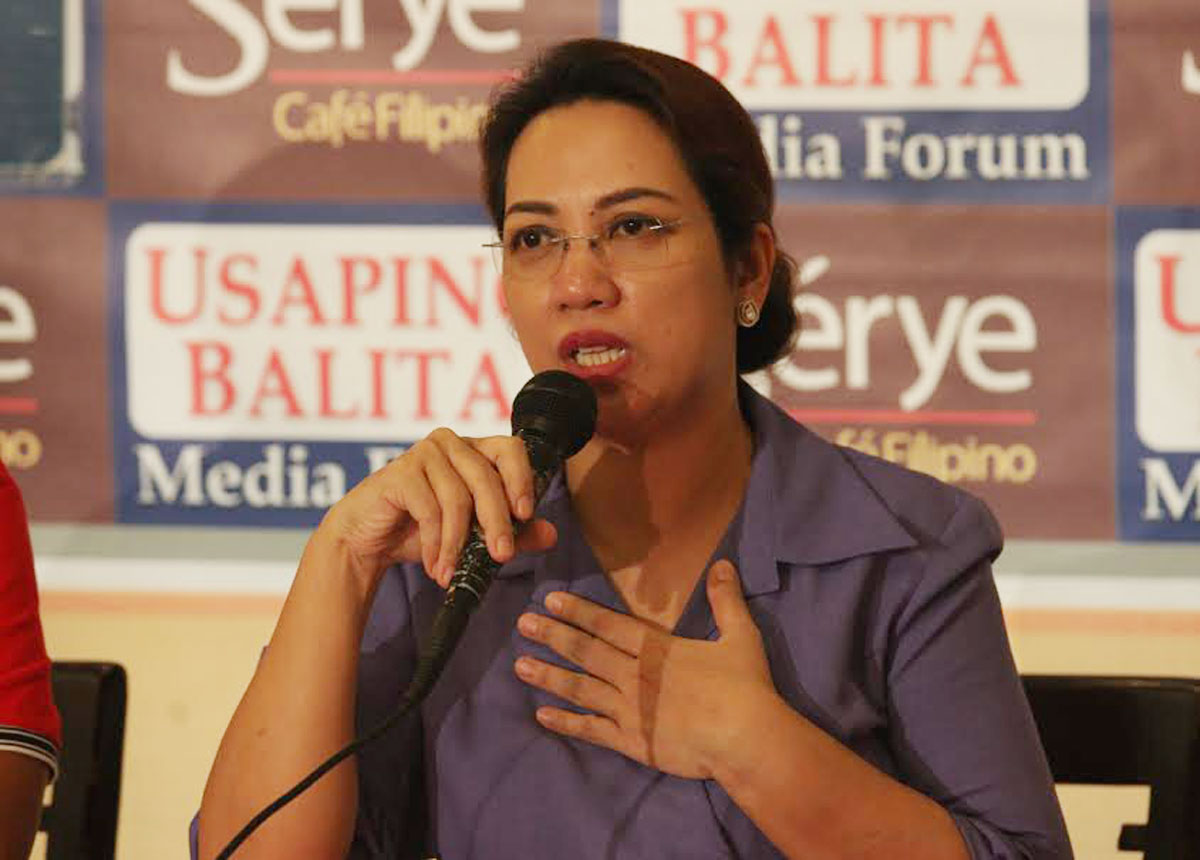
The Senate Blue Ribbon committee has recommended the filing of criminal charges against former health secretary Janette Garin, former budget secretary Florencio Abad and senior officials of PhilHealth for alleged anomalies. Garin is now a congresswoman representing Iloilo.
Sen. Richard Gordon, chairman of the committee, recommended the filing of charges against Garin, Abad, former PhilHealth president Alex Padilla and eight regional vice presidents (RVP) of the agency for violating Republic Act No. 3019 or the Anti-Graft and Corrupt Practices Act in connection with their alleged malversation of tens of billions of pesos in public funds.
Abad denied the accusations and said the release of Gordon’s report was “maliciously timed” to “confuse the public” amid the ongoing investigation by the entire Senate into PhilHealth anomalies perpetrated under the Duterte administration.
In the summary of the report provided by Gordon, the panel also asked the Office of the Ombudsman to study whether the same officials may be held liable for plunder – which can warrant life in prison – for “pillaging” PhilHealth.
“PhilHealth is no longer being used to serve the people. It is now used to serve the interest of the powerful and the greedy inside the institution. With its infamously known failure to pay legitimate claims on time and its inordinate speed in the payment of dubious claims, upcasing and overpayment, PhilHealth has become ‘FailHealth’ and its economic life has become fragile, kahit kumikita siya (even if it is earning income),” the senator told reporters in a video conference.
The release of the report came almost a year after the panel conducted an investigation into alleged anomalies in PhilHealth. This was shortly after Duterte appointed Ricardo Morales as PhilHealth president and tasked him to clean up the agency.
Gordon’s release of the report came days before the Senate Committee of the Whole, chaired by Senate President Vicente Sotto III, is expected to present its own report on the latest set of corruption allegations, this time with Morales and the agency’s executive committee in the hot seat.
Gordon said he was willing to have his report incorporated in Sotto’s special panel or be adopted separately, even as he stressed his findings were not totally at loggerheads with the possible conclusions of the Committee of the Whole, where all the senators are members.
The Blue Ribbon report also spoke of the existence of a PhilHealth “mafia,” although curiously, its alleged members are the same PhilHealth officials touted as whistle-blowers or “reformers” in the agency in the Committee of the Whole inquiry, which wrapped up its hearings last week.

Gordon recounted a long list of alleged malversation of PhilHealth funds, including what he described as the maneuvering by Abad, Garin and Padilla to divert some P10.6 billion allocated for premiums of senior citizens to Department of Health (DOH) infrastructure projects in 2015. Gordon said this was apparently done to boost the candidates of the Aquino administration, with the general elections just a year away.
Among the projects Gordon cited were the construction of barangay health stations and procurement of school-based health kits. A 2017 report from the Commission on Audit showed only 13.3 percent of the health stations were completed while the check-up kits were overpriced by more than three times.
“What the (Blue Ribbon) committee noticed is the parallelism between Dengvaxia (vaccine controversy) and the 2015 PhilHealth Senior Citizen Fund: both were intended to siphon funds from PhilHealth to finance the 2016 elections,” the senator said.
He also mentioned names of members of the “mafia” or the “Mindanao Group” who were either RVPs or managers who have been at their posts for some 20 years, having connections with ranking officials “enough to be able to sow intrigues that can result in kicking PhilHealth presidents out.”
Gordon pointed out that PhilHealth has had 13 presidents since 1995. He described this as a revolving-door situation caused by members of the “mafia.”
Among the “mafia” members he named was RVP Paolo Johann Perez. One of the allegations against Perez is that he had a girl dressed only in her underwear dance in front of him during a celebration of his birthday in his office.
Gordon also mentioned Valerie Hollero, Dennis Adre, William Chavez, Jelbert Galicto, Khaliquzzma Macabato, Dr. Miriam Grace Pamonag and Masiding Alonto as members of the group. With the exception of Galicto, all these persons are RVPs.
The officials filed leaves of absence earlier this month to pave the way for the task force formed by Duterte to investigate anomalies in PhilHealth. Hollero, Galicto and Adre were among those who provided documents to the Committee of the Whole and testified on what they knew of the anomalies.
Adre lamented the contents of Gordon’s report as “grossly false and libelous” even as he maintained that his group was the “good mafia.”
“We take offense that we’re being accused by the (Blue Ribbon) committee of the same offenses that we helped uncover or reported,” Adre said.
He said they would consult with their lawyers to determine what legal remedies they could take in light of the report.
In a statement, Abad said the charges recommended by Gordon against him “are baseless, built on nothing but unfounded accusations.”
“Let me set the record straight. The basis of the charges against me – that I helped divert P10.6 billion originally intended for the payment of senior citizens premiums for PhilHealth – is a brazen lie. In the first place, there was no P10.6-billion budget to speak of. Not in the 2015 GAA (General Appropriations Act), not anywhere. How could funds be diverted if they were not in the budget to start with?” Abad contended.
“What is in fact true is that PhilHealth applied for funding for the payment of senior citizen premiums under the Unprogrammed Fund of GAA 2015. But this source had no funds, since no new or additional sources of revenues were available. For this reason, in 2015, no item of this nature was funded under the Unprogrammed Fund,” he said.
“So how and where was DOH’s P9.392-billion Health Facilities Enhancement Program for barangay health stations, rural and urban health centers and dental equipment funded from? The funds came from savings from unused personnel funds from the Miscellaneous Personnel Benefit Fund. The use of said savings was authorized under the 2015 GAA and was approved by the Office of the President,” Abad explained.
Abad said it was strange and suspicious that throughout the 39-page executive summary, his name was never once mentioned in discussing the issues related to the case, or in identifying those allegedly involved.
“And yet – surprise! – in the recommendation for the filing of charges towards the end of the report summary, Gordon suddenly dragged my name in. That’s laughable magic: no facts stipulated, no violations soundly alleged, but a recommendation nonetheless to file charges against me,” Abad stressed.
He said he was neither asked to attend a hearing on the issue nor to submit a position paper to give his side.
“That at least makes sense, because I am in no manner involved in this inquiry. I can only conclude that the release of this report is maliciously timed to confuse the public and distract them from the real PhilHealth scandal that Gordon should be investigating: the current PhilHealth scam that reeks of anomaly and unabashed corruption, and which the proper parties should be strictly held accountable for –based of course on facts, and not on wild conjecture,” Abad declared.


