



To Ban Or Not To Ban: Health Workers Asked To Rethink Plans To Leave Phl
The government has decided to lift the deployment ban on health workers, but only partially as it does not want the Philippines to experience a shortage in human resources as it grapples with the coronavirus disease 2019.
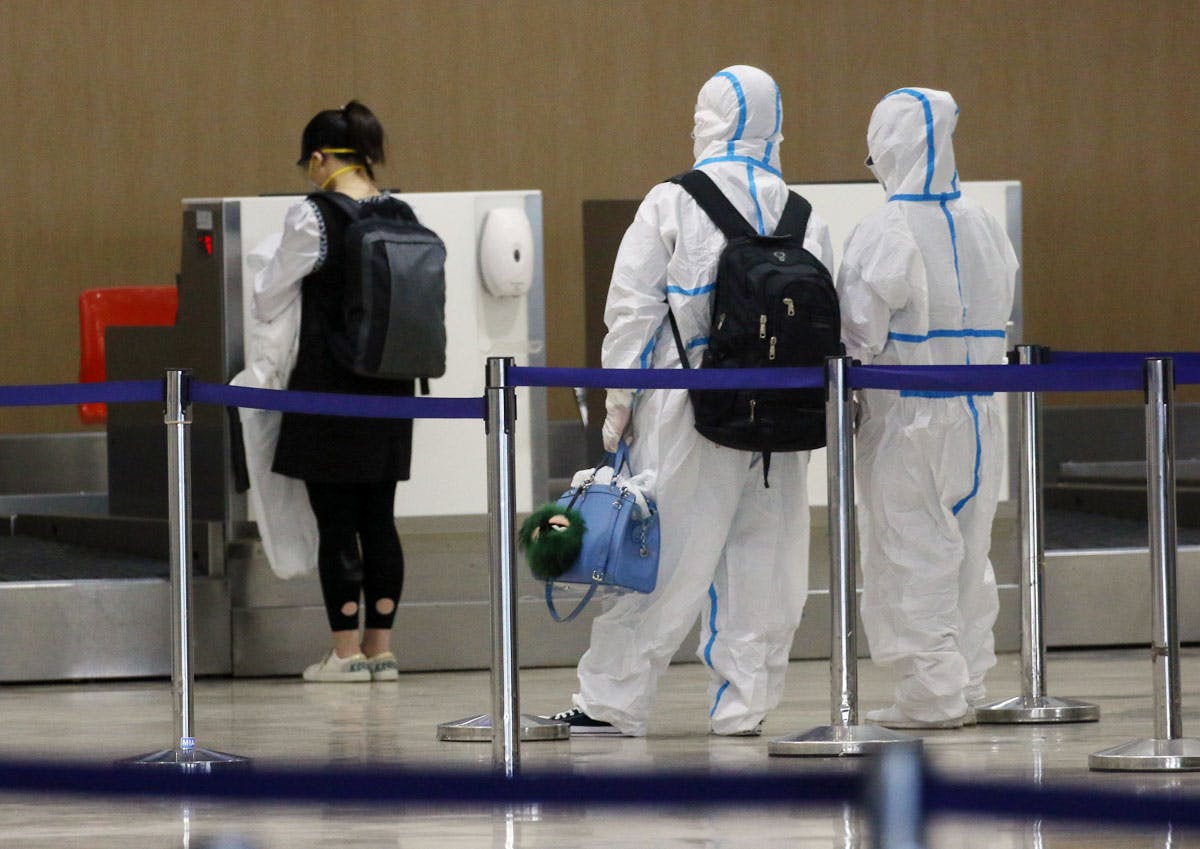
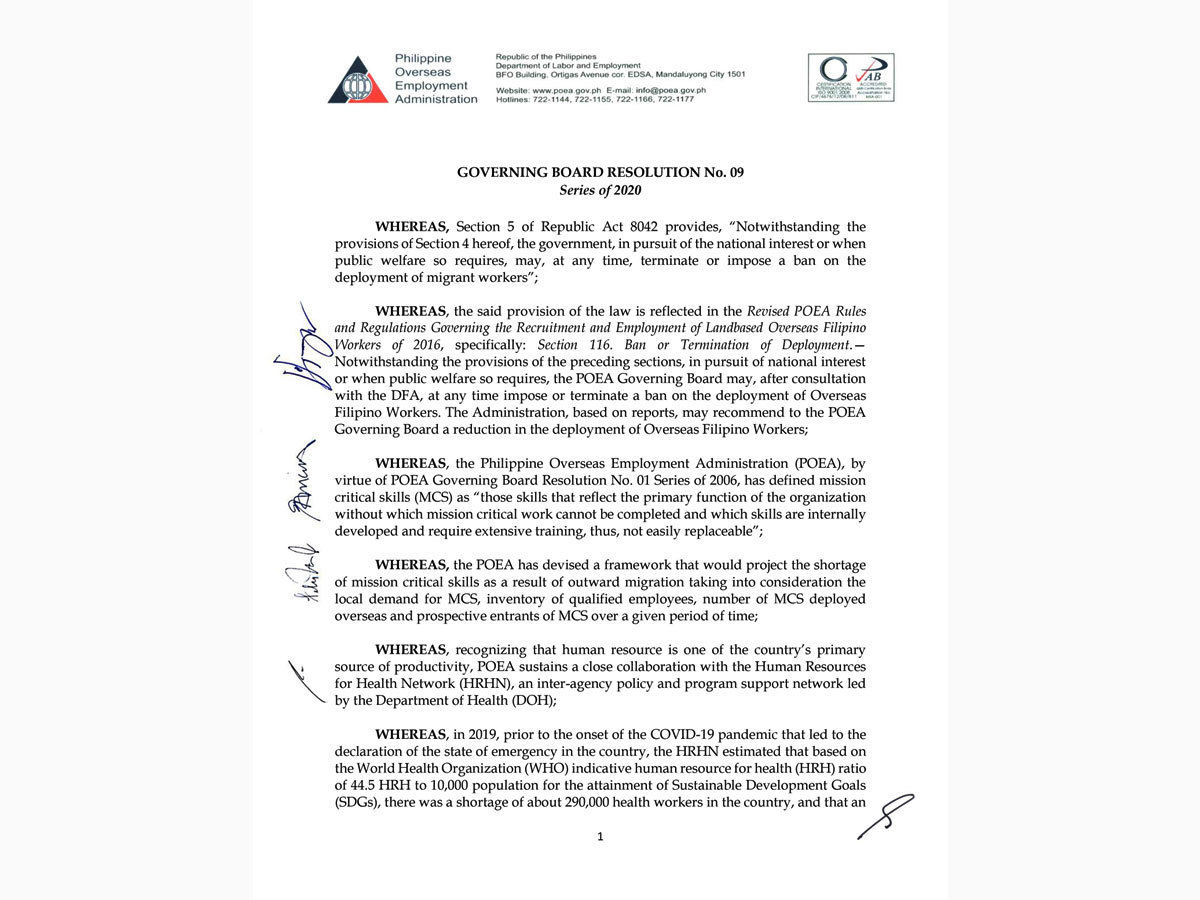
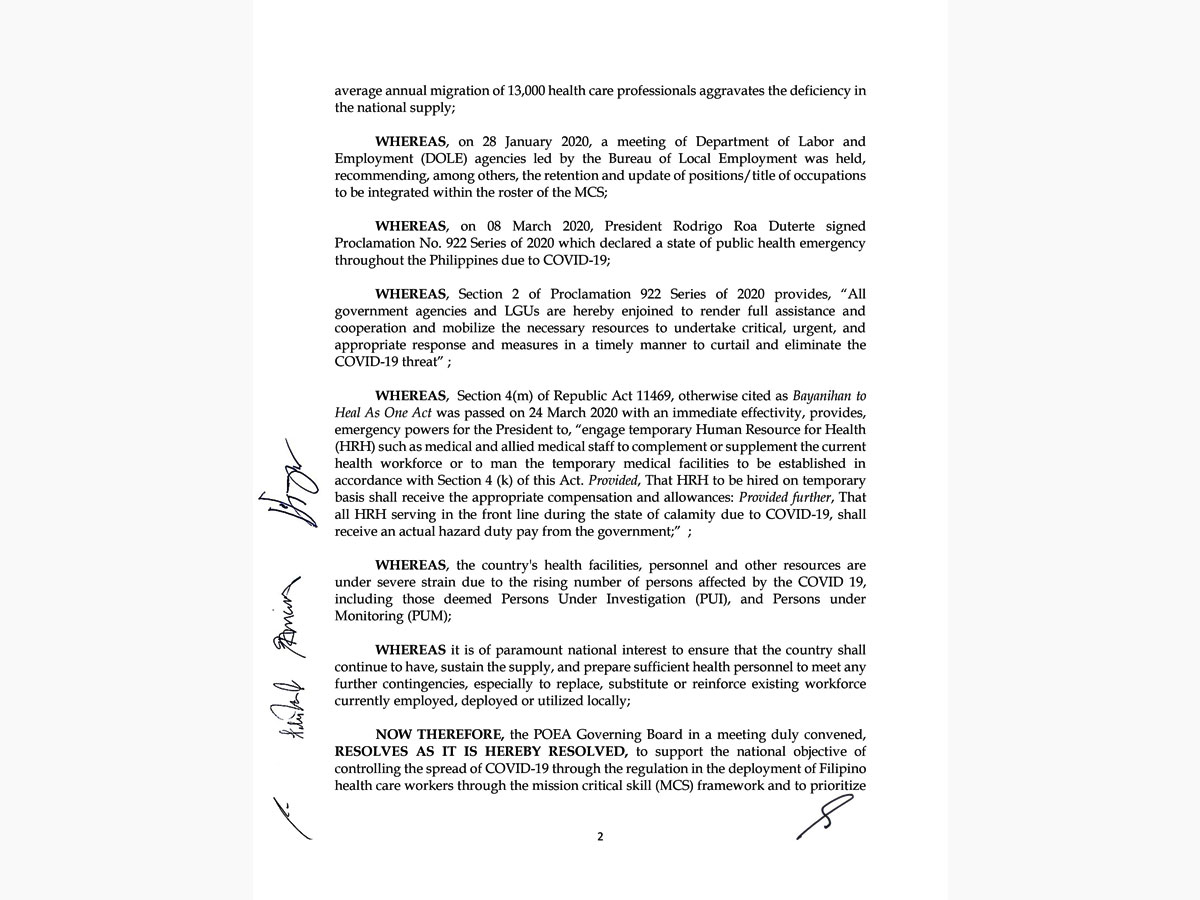
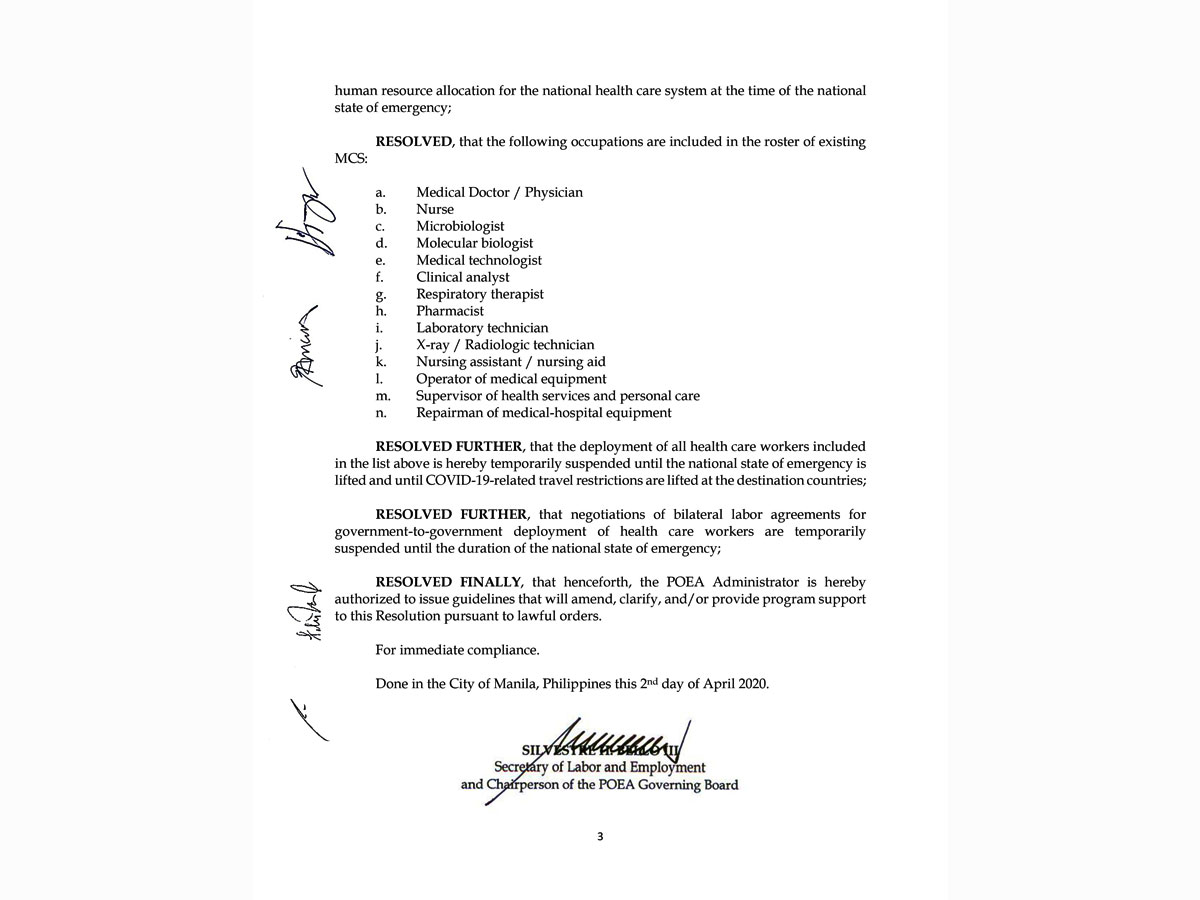
On April 2, the Philippine Overseas Employment Administration (POEA) issued Governing Board Resolution No. 09 suspending the deployment of health care workers abroad “until the national state of emergency is lifted” together with the travel restrictions related to the coronavirus disease 2019 (COVID-19) pandemic.
Based on the resolution, the policy is meant “to support the national objective of controlling the spread of COVID-19 through the regulation in the deployment of Filipino healthcare workers through mission critical skills framework and to prioritize human resource allocation for the national healthcare system at the time of the national state of emergency.”
The ban covers physicians, nurses, microbiologists, molecular biologists, clinical analysts, respiratory therapists, pharmacists, laboratory technicians, X-ray/radiologic technicians, nursing assistants or nursing aids, operators of medical equipment, supervisors of health services and personal care, and repairmen of medical-hospital equipment.
Various sectors opposed the ban, saying it prevents health workers from securing opportunities in other countries, promotes involuntary servitude and curtails their right to travel.
As a consequence, medical workers bound for the United Kingdom, Qatar, Germany, Sweden and Ireland were barred from boarding their planes as airport authorities implemented the POEA’s resolution.
On Monday, April 13, the Inter-Agency Task Force for the Management of Emerging Infectious Diseases (IATF-MEID) recommended the partial lifting of the deployment ban, exempting health care workers with perfected and signed overseas employment contracts as of March 8.
The health workers are required to sign a declaration signifying their knowledge and understanding of the risks involved in their decision to work abroad.
On Tuesday, April 14, IATF spokesperson and Cabinet Secretary Karlo Nograles announced the approval of the recommendation.
But thousands of health professionals will still not be able to leave the country to work abroad since the deployment ban stays for those without employment contracts, according to the POEA.
“An exemption has been provided for those with contracts signed as of March 8, but the deployment ban still stays,” POEA Administrator Bernard Olalia said in an interview. “So to be affected are thousands of health workers whose applications to work in Japan, Germany and Saudi Arabia are still in the pipeline.”
According to Olalia, most of those who will be allowed to leave are “Balik Manggagawa” or those returning to their jobs abroad and have already obtained overseas employment certificates (OECs) from POEA.
The Nagkaisa Labor Coalition supported the recommendation of the IATF to lift the deployment ban for medical workers with existing contracts.
“What matters most in the lifting is we are saving health care workers from a limbo of uncertainty, moving them away from being blacklisted and losing their livelihood due to breach of contract,” Nagkaisa said.
Avoiding brain drain
Olalia explained that the ban is meant not only to protect health workers, but also to prevent a looming domestic shortage amid the COVID-19 pandemic.
He cited the World Health Organization’s recommended ratio of 44.5 human resources for health per 10,000 population for the attainment of sustainable development goals. Based on this, Olalia said there is a shortage of 290,000 health workers in the country.
The average annual deployment of 13,000 healthcare professionals could aggravate the country’s deficiency, he said.
“What they don’t understand is that what we are doing is for their protection. They are frontliners and therefore at high risk of getting the infection. As we all know, COVID cases in Europe are increasing,” Olalia pointed out.
Except for European states, Olalia noted that many countries have already imposed travel restrictions, barring foreigners including Filipino workers from entering.
He said almost all countries in the Middle East including Kuwait, Saudi Arabia and Qatar have imposed travel bans as well as Japan and China.
Olalia said the government is currently working for the repatriation of Filipinos who have been affected by lockdowns imposed by other countries.
Among those to be repatriated, he said, are those who have lost their employment as their companies folded and those who were placed on forced leave.
“Kuwait has also declared an amnesty, allowing foreigners to leave without exit visas, so there are Filipinos there who availed themselves of the amnesty as well as our country’s repatriation program,” Olalia added.
Nagkaisa, however, favored the retention of the ban only for those seeking overseas employment for the first time.
Aside from low or even lack of compensation for nurses who practice in the country, for instance, Nagkaisa chairman Sonny Matula said in a statement on April 11 that the government “cannot just ban health workers from going abroad to work when it is not clear whether the DOLE (Department of Labor and Employment) or DOH (Department of Health) will utilize their skills or they will be hired or compensated during the temporary deployment suspension.”
President Duterte has another take on the matter.
In a televised address on Monday night, the President appealed to the health workers’ sense of nationhood to persuade them to remain in the Philippines as the country grapples with the COVID-19 outbreak.
“Teddy Boy said we cannot stop Filipinos (from leaving) to honor the contracts (otherwise, it would lead to) impairment of obligation of contracts and their right to travel... I’d like to take the opposite view,” Duterte said, referring to Foreign Affairs Secretary Teodoro “Teddy Boy” Locsin Jr.
“During ordinary times, you cannot be prevented from leaving, accept (job offers), sign contracts. But you know, during an emergency, other countries like China, when China says stop, they stop. When China says open, they open,” he added.
“I’m not trying to say that it’s not a democracy. It is a communist regime at it demands total obedience. There, you can’t say, ‘Ah, it should not be done this way.’ You’ll get caught,” he said.
Duterte said he does not mind seeing Filipino health workers leave while the number of COVID-19 cases in the country is rising.
“I do not blame anyone. I am not angry. I do not have emotions actually about this. But if you, Filipino nurses, want to serve other countries, other people, it’s OK with me,” the President said. “Just remember this when the time comes that we face difficulties. We do not know (what will happen). It keeps on increasing. It’s just the first wave.”
Duterte then blamed the United States, which already has more than 580,000 confirmed COVID-19 cases, for the departure of Filipino nurses.
“America is part of the problem of the Filipinos now. Many of them have been infected. Many have died. They are calling on just about anyone... they ask nurses to go to the embassy, they will process the visa for one day and tomorrow you can leave,” the President said.
“The problem with Americans, you could have relied on your own human resource... Now you are reducing the human resources of the Philippines. Soon, we will experience a shortage,” he said.
Duterte, however, maintained that he understands the decision of some Filipino health workers to go to the US to seek employment.
“Now you need nurses, express. We are nervous here because we cannot match the offer... I understand it’s about self-preservation. So they need to work. There are jobs in America so they go there,” the President said.


