



SUMMARY: How The ICC Prosecutor Found ‘Basis To Believe’ Crimes Against Humanity Are Committed In Duterte’s Drug War
Chief prosecutor Fatou Bensouda insists that the International Criminal Court can take jurisdiction over the Philippines. Whether she will move to a formal investigation will be known in the first half of 2021.
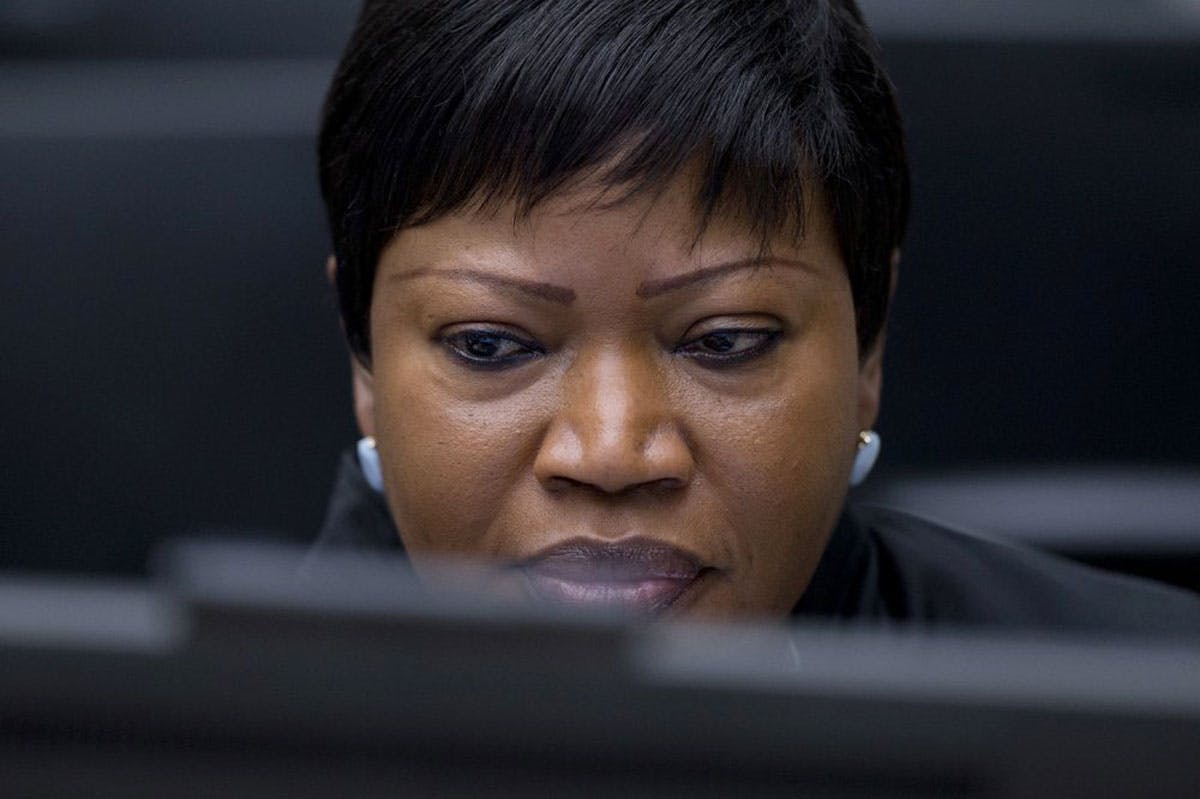
International Criminal Court (ICC) chief prosecutor Fatou Bensouda has found “reasonable basis” to believe that crimes against humanity were being committed in President Duterte’s “war on drugs” until March 2019 – but has not yet decided whether to move to the formal investigation stage.
Bensouda’s Report on Preliminary Examination Activities 2020, released on Tuesday Dec. 15, analyzed whether a potential case against the Philippines – as well as Colombia, Venezuela, and Guinea – could be admissible before the ICC.
“The Office is satisfied that information available provides a reasonable basis to believe that the crimes against humanity of murder (article 7(1)(a)), torture (article 7(1)(f)) and the infliction of serious physical injury and mental harm as other inhumane Acts (article 7(1)(k)) were committed on the territory of the Philippines between at least 1 July 2016 and 16 March 2019, in connection to the WoD (war on drugs) campaign launched throughout the country,” read the report.
This marks the first time that the Office of the Prosecutor identified international crimes that it had reasonable basis to believe were taking place when the ICC had jurisdiction over the Philippines from Nov. 1, 2011 until its withdrawal from the Rome Statute took effect on March 17, 2019.
Does the ICC still have jurisdiction over the Philippines?
Bensouda continued her preliminary examination of alleged international crimes that took place in the Philippines only up to March 17, 2019. But she stressed that her office would not be stripped of jurisdiction to keep looking into those crimes even after the withdrawal took effect.
To recall, Bensouda launched a preliminary examination on Feb. 8, 2018, following a review of communications and reports regarding crimes linked to the war on drugs. On March 16, 2018, the Philippines submitted its letter of withdrawal from the treaty that established the ICC.
After a yearlong process, the Philippines formally became the second country to leave the Hague-based tribunal. It followed the steps of the African state of Burundi, which was still subjected to an official investigation a month after its withdrawal from the Rome Statute took effect.
Like in the case of Burundi, the Philippines’ withdrawal from the Rome Statute did not prevent Bensouda from examining the situation. Her report stressed that the ICC’s exercise of its jurisdiction over crimes until March 16, 2019 “is not subject to any time limit.”
“The Court retains jurisdiction over alleged crimes that have occurred on the territory of the Philippines during the period when it was a State Party to the Statute, namely from 1 November 2011 up to and including 16 March 2019,” the report read.
How does the war on drugs fall under the ICC’s jurisdiction?
Bensouda said there was “reasonable basis” to consider the murder, torture, and other inhumane acts allegedly committed under Duterte’s campaign against illegal drugs to be “crimes against humanity” – as defined by Articles 7(1)(a), 7(1)(f), and 7(1)(k) of the Rome Statute – that fall under the ICC’s jurisdiction.
To count as crimes against humanity, the report said these acts must be “committed as part of a widespread or systematic attack directed against any civilian population, with knowledge of the attack.”
Article 7(2)(a) defines an “attack directed against any civilian population” as the multiple commissions of acts “pursuant to or in furtherance of a State or organizational policy” – implicating the government itself.
Citing available information, Bensouda said many of the persons murdered, tortured, or physically or mentally harmed were “included on drug watch lists compiled by national and/or local authorities.”
“Some of those targeted also included persons who had previously ‘surrendered’ to the police in connection with Oplan Tokhang,” the report said, referring to the Philippine National Police program that saw the collection of the names of alleged or admitted illegal drug users.
Oplan Tokhang, the house-to-house “knock and plead” operations conducted by policemen, is the government’s main strategy to curb the drug menace. The campaign has turned bloody, with alleged extrajudicial killings perpetrated by the police, vigilantes or hitmen and those involved in the illegal drug trade themselves.
Bensouda’s report noted that over 5,300 of the killings “were committed in acknowledged anti-drug operations conducted by members of Philippine law enforcement or in related contexts,” including detention.
It acknowledged the consistent claim that law enforcers were merely acting in self-defense, but it also noted criticisms that “the use of lethal force was unnecessary and disproportionate under the circumstances, as to render the resulting killings essentially arbitrary, or extrajudicial, executions.”
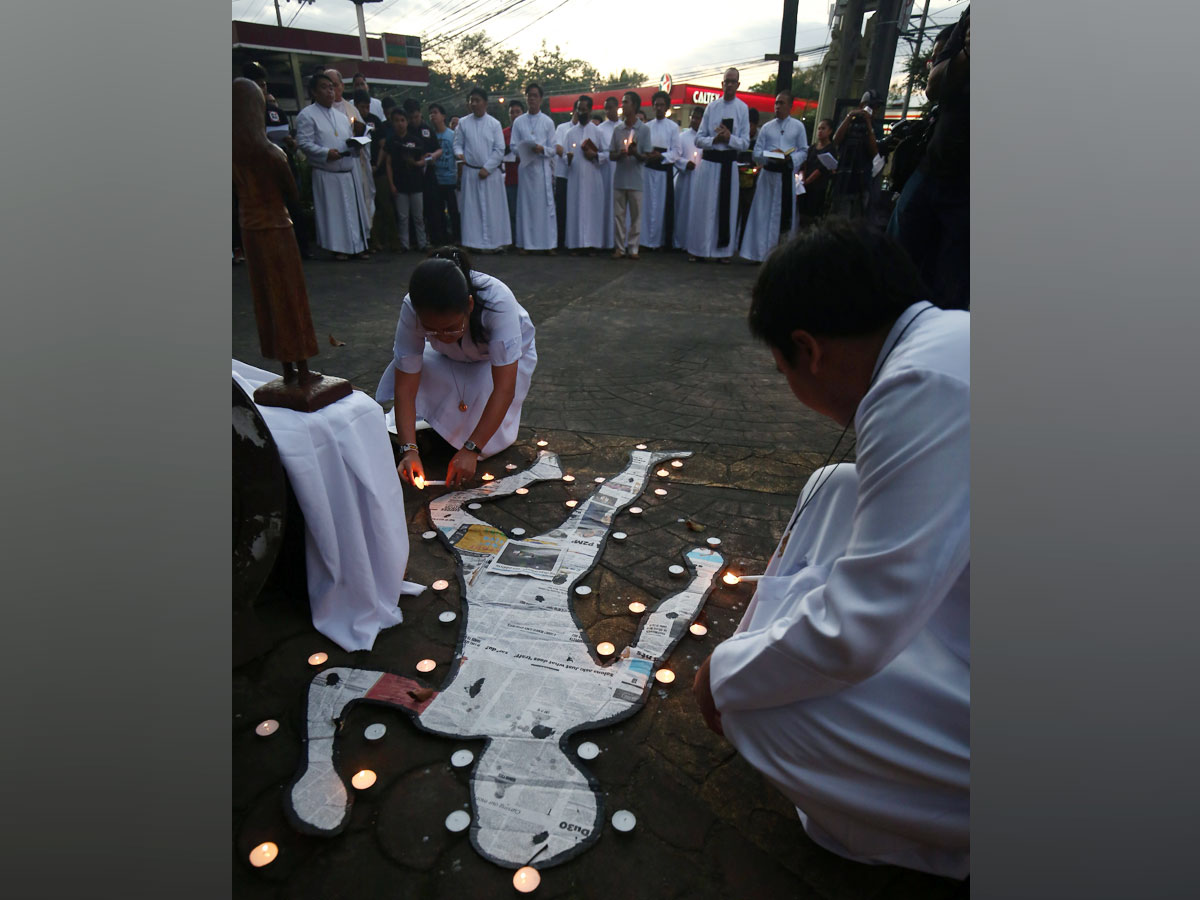
Bensouda also accounted for the thousands of killings carried out by “vigilantes” or “unknown gunmen.” Even though authorities insist that these are caused by love triangles or rivalries among gangs or syndicates, the report said: “Other information available suggests that many of the reported killings by unidentified assailants took place in the context of, or in connection with, the government’s anti-drug campaign.”
“It has also been alleged that some of these vigilante-style executions purportedly committed by private citizens or groups were planned, directed and/or coordinated by members of the PNP (Philippine National Police), and/or were actually committed by members of law enforcement who concealed their identity and took measures to make the killings appear to have instead been perpetrated by vigilantes,” the report noted.
The report cited the ill treatment suffered by some of the victims before their deaths, the mental anguish caused to the relatives who witnessed the killings, and the rape of women who were apparently targeted by law enforcers because of their personal relationships to drug suspects.
It also cited the killing of “a significant number of minors” as direct targets, as a result of mistaken identity, or as collateral victims.
Is the Philippines’ case admissible?
The issue of jurisdiction is one matter, and the issue of admissibility is another. Under Articles 17(1)(a) to 17(1)(c) of the Rome Statute, a case becomes inadmissible when it “is being investigated or prosecuted by a State which has jurisdiction over it.”
In other words, the ICC will not admit a case, unless the country is unwilling or unable to carry out investigations, prosecutions or trials on its own.
Bensouda noted that in principle, “only national investigations that are designed to result in criminal prosecutions can trigger the application” of these Rome Statute provisions.
The report said only “a limited number of investigations and prosecutions have been initiated (and, in some cases, completed) at the national level” against the perpetrators of the crimes associated with the war on drugs.
It recognized that criminal charges have been laid “against a limited number of individuals – typically low-level, physical perpetrators – with respect to some drug-related killings.” It also mentioned that the policemen involved in the murder of 17-year-old Kian delos Santos were convicted by the Caloocan City Regional Trial Court in November 2018.
The report also acknowledged Justice Secretary Menardo Guevarra’s June 2020 announcement of the creation of an inter-agency panel to reinvestigate deaths in connection with police operations conducted under the war on drugs.
The inter-agency panel missed its November deadline to come up with an initial report. Guevarra cited the loss of working days because of the back-to-back typhoons that struck Luzon and promised to release that report in December.
Bensouda said her office “will continue to closely monitor developments relating to this body.”
She added that “out of an abundance of caution,” the office is examining other developments that appear to fall outside the technical scope of the term “national criminal investigations.”
These include the Senate committee hearings into extrajudicial killings, disciplinary cases against policemen, writ of amparo cases seeking the protection of the courts, and cases brought before the Office of the Ombudsman.
What comes next?
Bensouda stopped short of saying if these efforts by the government were enough to avert an official investigation, the stage that may follow the preliminary examination.
She said her office would reach a decision on “whether to seek (authorization) to open an investigation into the situation in the Philippines in the first half of 2021.”
She added her office could not meet its goal to conclude the preliminary examination this year because of the coronavirus disease 2019 (COVID-19) pandemic.
For now, Bensouda stated her office would continue to monitor reports of “threats, killings and other measures apparently taken against human rights defenders, journalists and others, including those who have (criticized)” the war on drugs.
She said her office has “collected and analyses information relevant to gravity” of the Philippines’ case, another requirement to justify further action by the ICC.