PUP Students' Cloned Accounts Threaten To Rape, Jail Them Over Anti-Gov't Protests
The National Bureau of Investigation is considering the possibility that the surge in duplicate or fake accounts was due to a Facebook glitch, but some of these are sending threatening messages to students.
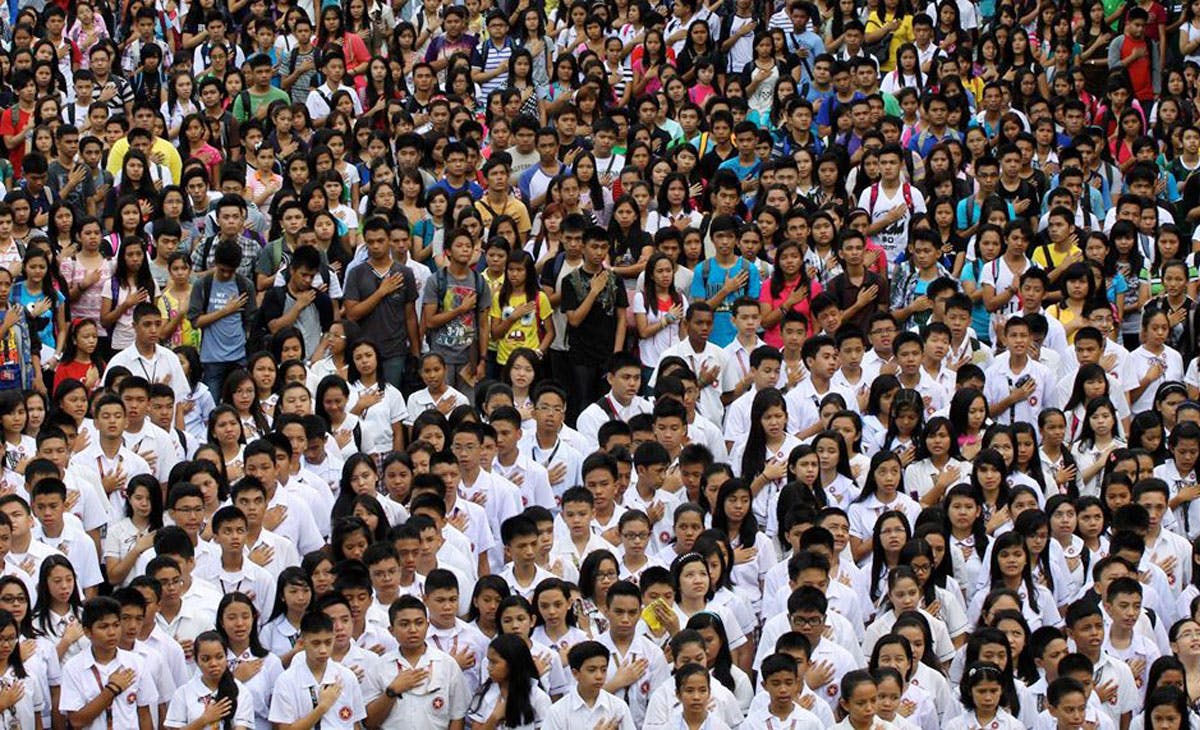
Several Facebook users have reported receiving from cloned or copycat accounts messages that threaten reprisal for the online uproar against the anti-terrorism bill. But the National Bureau of Investigation is looking into the possibility that the surge in the creation of dummy accounts over the weekend was just caused by a “glitch.”
Student publications from the state-run Polytechnic University of the Philippines posted screenshots of threatening messages from the dummy accounts of students.
“ALERT: A student from the PUP – College of Communication receives a message from one of the accounts with the same name as her in Facebook. The student is active on voicing her dissent against the mishandlings of the government on social media. #HandsOffOurStudents,” The Communicator posted on its Facebook page on Sunday, June 7.
“Ano sabi mo dati? Oust Duterte? Junk (terror bill)? Online protest ka pa ah himas rehas ka ngayon (What did you say before? Oust Duterte? Junk terror bill? You go on online protest, you will touch jail bars now),” read the message.
The same publication also posted rape threats and red-tagging messages sent to students who “aren’t vocal with their political views on social media.” Although the common factor was that they were PUP students, that information was not shared publicly on social media. Some of these threats were posted by The Catalyst on its Facebook page also on June 7.
“Aren’t you studying at PUP? You’re a terrorist, you son of a b****. You should be worn out, you animal. I will rape you if I see you in the streets. Just so you see),” one of the messages said in Filipino.
“Get ready, you terrorists! We will have you killed! You moochers who give nothing to society! You only give trouble!” stated another message, also in Filipino.
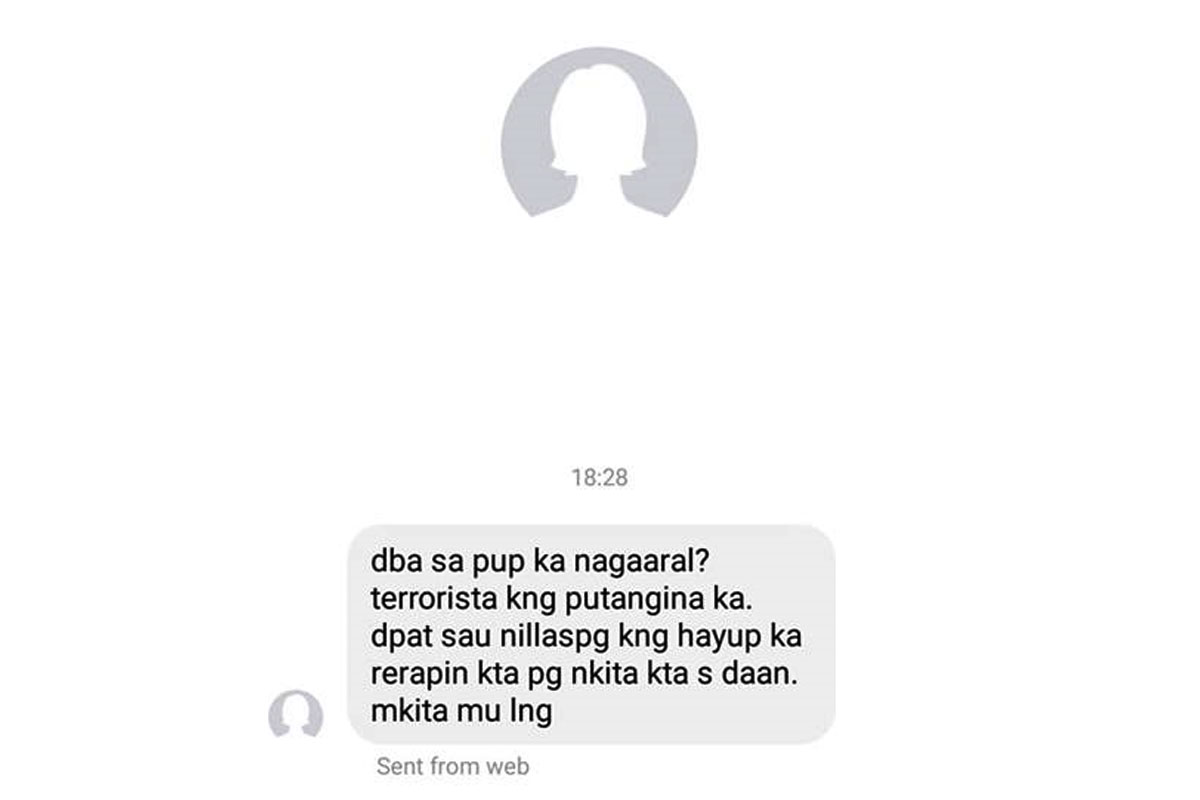
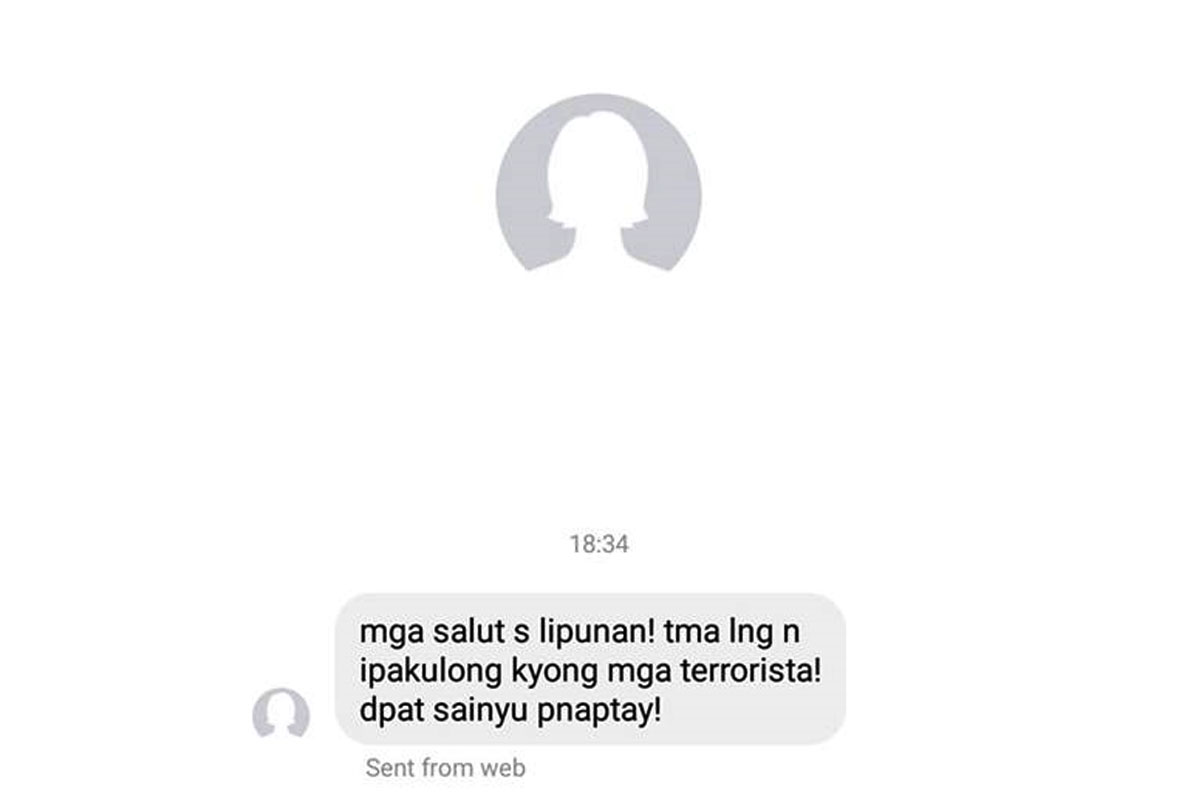
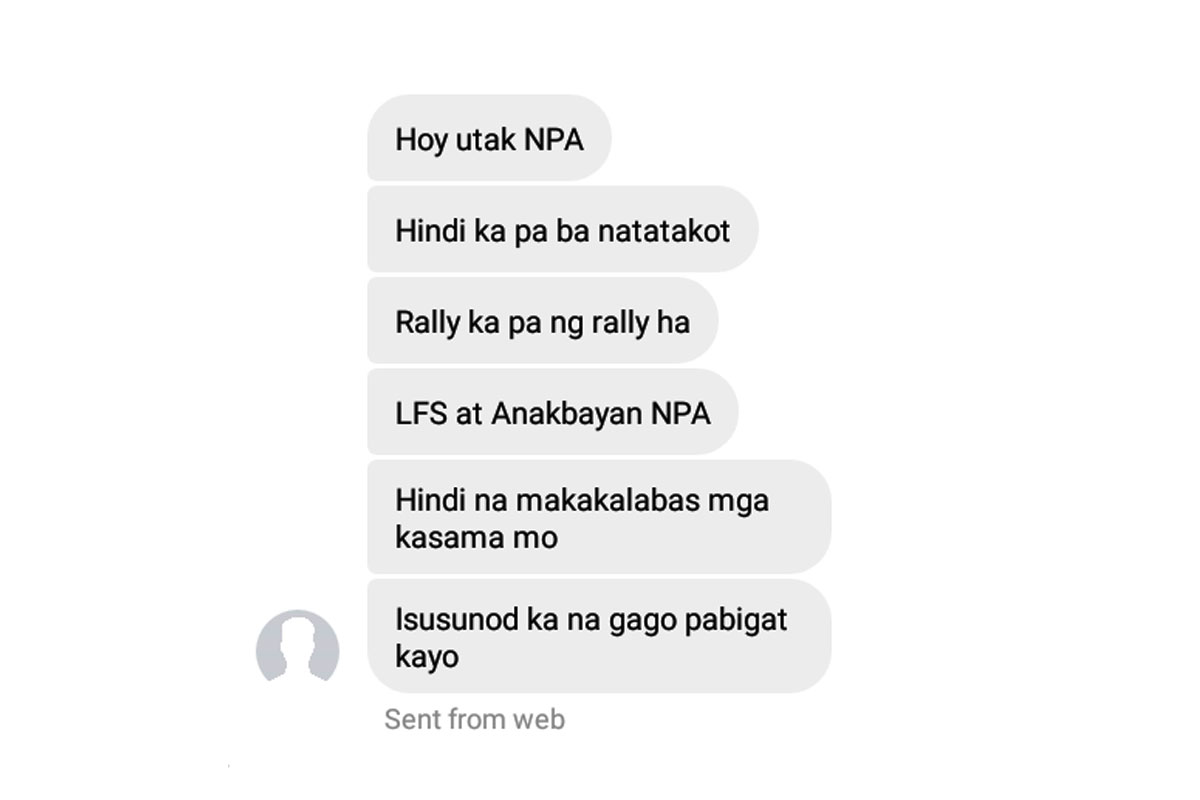
The Catalyst published more of such screenshots and called on the PUP administration to “take immediate action before the cases of harassment worsen.”
One of the messages alluded to the “mañanita” being readied on June 12 – a protest action in the guise of a birthday celebration like that held for National Capital Region Police Office chief Maj. Gen. Debold Sinas in disregard of quarantine measures.
“Report pa kayo mga inutil na anakbayan. Hintayin niyo kame sa June 12. Mga bobo kayo pabigat sa gobyerno (Just report us, you inutile Anakbayan. Wait for us on June 12. You idiots who are a burden on the government),” it stated.
United PUP, an alliance of organizations, student councils, publications and sectoral groups, collected reports of suspicious accounts and threats in order to “gauge the gravity of these online attacks against the PUP community and its looming consequences.”
Meanwhile, a student of a state university in Central Luzon claimed to have received a message from someone recruiting him to create “duplicate account sa FB ng kahit sino (on FB of anybody)” for a pay of P3,000 a day, seven times the daily minimum wage of P420 for non-agriculture workers in the region.
Stoking fear
The duplication of accounts stoked fear in Sen. Francis Pangilinan and Bayan Muna Rep. Carlos Isagani Zarate that such dummy accounts could be used to frame their real-life namesakes for speech and acts considered as terrorism under the controversial anti-terrorism bill.
Presidential spokesman Harry Roque dismissed this, saying, “Sana iwasan na iyong mga ganitong conclusions na wala namang ebidensya (Hopefully, these conclusions without evidence should be avoided).”
Roque warned that the creation of fake accounts is punishable under the Cybercrime Prevention Act of 2012, which seeks to punish internet-related offenses like forgery, fraud and identity theft.
“Ilegal po ’yan at humanap po kayo ng mas mabuting gagawin (That is illegal. Look for a more useful activity),” Roque said in a virtual press briefing on Monday, June 8.

Presidential Communications Secretary Martin Andanar described the proliferation of dummy accounts as “alarming and disturbing,” especially since these fake accounts have, without any regard, used the names of a multitude of people.
“We ask the public to do their part and be conscientious and vigilant. Please report fake accounts and do not fall prey to unsubstantiated posts from unverified accounts,” Andanar said.
Department of Justice spokesperson Markk Perete told the Laging Handa briefing that as of 10 p.m. on June 7, the Office of Cybercrime had received reports of over 100 dummy accounts.
NBI Cybercrime Division chief Victor Lorenzo told dzMM Teleradyo that Facebook prevents the creation of multiple accounts for the same person and containing the same information within a short period of time.
“Ang tinitingnan pa lang namin ngayon, in all probability, glitch lang ito dahil napakahirap mag-create ng account ngayon sa Facebook, especially kapag madami kang kini-create na account under one ID, one cell phone number, one location (What we are looking at, in all probability, is that this is only a glitch because it is so difficult to create an account on Facebook nowadays, especially if you are creating an account under one ID, one cell phone number, one location),” Lorenzo said.
“Machine lang naman iyon. Hindi imposible na mangyari na magkaroon ng glitch (It is just a machine. It is not impossible that there will be glitches),” he added.
The duplication of accounts mostly targeted students and alumni of major universities with vocal movements against the bill, as well as journalists.
However, the flood of dummy accounts occurred amid online campaigns against House Bill No. 6875 and Senate Bill No. 1083, which seek the repeal of the Human Security Act of 2007. Opponents of the new measure say the proposals could be used even on those who merely criticize the government.
Lorenzo did not explain in the interview how a glitch could cause some of those empty accounts sending threatening messages to the real persons that they imitate.
Jonathan Corpus Ong, associate professor of digital media at the University of Massachusetts Amherst, raised the need to determine how much of Facebook’s system is automated or manually operated, as well as the sources of personal information used in spoofing real people.
He observed that “the use of automated ‘cheapfakes’ ” on social media “represents a break from previous strategy” employed in disinformation campaigns.
“Was there a security breach / data hack that exposed our private (information)? What other info of ours do they have access to?” Ong asked in a post on Twitter on June 8.
There are those saying that these dummy accounts could be the handiwork of trolls or those paid to influence people on social media.
Don’t be cowed
Free Legal Assistance Group chairman and human rights lawyer Chel Diokno urged people not to be intimidated by the fake accounts. In the case of threats, he said recipients should take a screenshot of the message and save the URL of the sender’s profile.
Besides reporting the incident to Facebook, the NBI Cybercrime Division and the National Privacy Commission, Diokno said legal questions could be sent to Volunteers and Lawyers Organized for the Rule of Law.
“’Wag magpapasindak. Ginagawa nila ito para takutin tayo pero ang totoo ay sila ang takot na takot na sa taumbayan (Do not be intimidated. They are doing this to scare us, but the truth is they are the ones who are really scared of the people),” Diokno said.
Pangilinan demanded that Facebook investigate the incident because the lives of the real Facebook users could be endangered by the possibility of the planting of fake threats and statements that could later be used to accuse them of terrorist acts.
“The students are worried that these accounts may be used to plant bogus evidence that would implicate them in crimes outlined in the anti-terror bill,” Pangilinan said in a statement. “We must not allow social media to be used as a platform for identity theft, intimidation, or worse a tool to plant bogus evidence.”
“Facebook has been making billions of dollars as it turns a blind eye on disinformation and deception. Fake Facebook accounts can be likened to a crime scene and Facebook a willing accomplice to the crime. This must stop,” he added.
In a separate statement, Zarate noted that the Facebook users were being victimized by “online tanim-ebidensya (evidence-planting).”
“Are troll farms now harvesting names on online petitions so that their bots would not be detected and then use these fake accounts to spread fake news and get the real name owner into trouble?” Zarate asked. “If the proposed terror bill is enacted into law, real name owners of these fake accounts can be easily sent to jail for being framed by such means.”
The possibility of frame-ups through Facebook is not unheard of. Cebu City barangay watchmen Aldren Cabigon and Rengel Fajardo were questioned by the NBI last month for allegedly posting threats against Duterte and offering a bounty for his head. But the two claimed that an unknown person used their photos to create a dummy account named “Nogibac Aldren,” with the surname being spelled backwards.
Also last month, a security guard was reportedly framed by his estranged wife, who created a fake Facebook account in his name to call Duterte a “mamamatay tao (murderer)” and lambast the President for shutting down ABS-CBN Corp. Attached to the post was a picture of the security guard flashing the dirty finger, which he said was taken three years ago.
These incidents were investigated as inciting to sedition cases.
Read more: Facebook Probes Surge Of Fake Accounts; DOJ Taps NBI, PNP
Lawyers, Other Groups Terrified By Anti-Terror Bill. Here’s Why