



Officials: US Has Nothing To Do With Duterte’s Absolute Pardon Of Pemberton; Critics Decry Alleged Special Treatment
Transgender Jennifer Laude’s killing was a “hate crime,” but it also ended up being about the Visiting Forces Agreement, the Good Conduct Time Allowance law, and the “absolute pardon” of his killer, US Marine Lance Corporal Joseph Scott Pemberton.
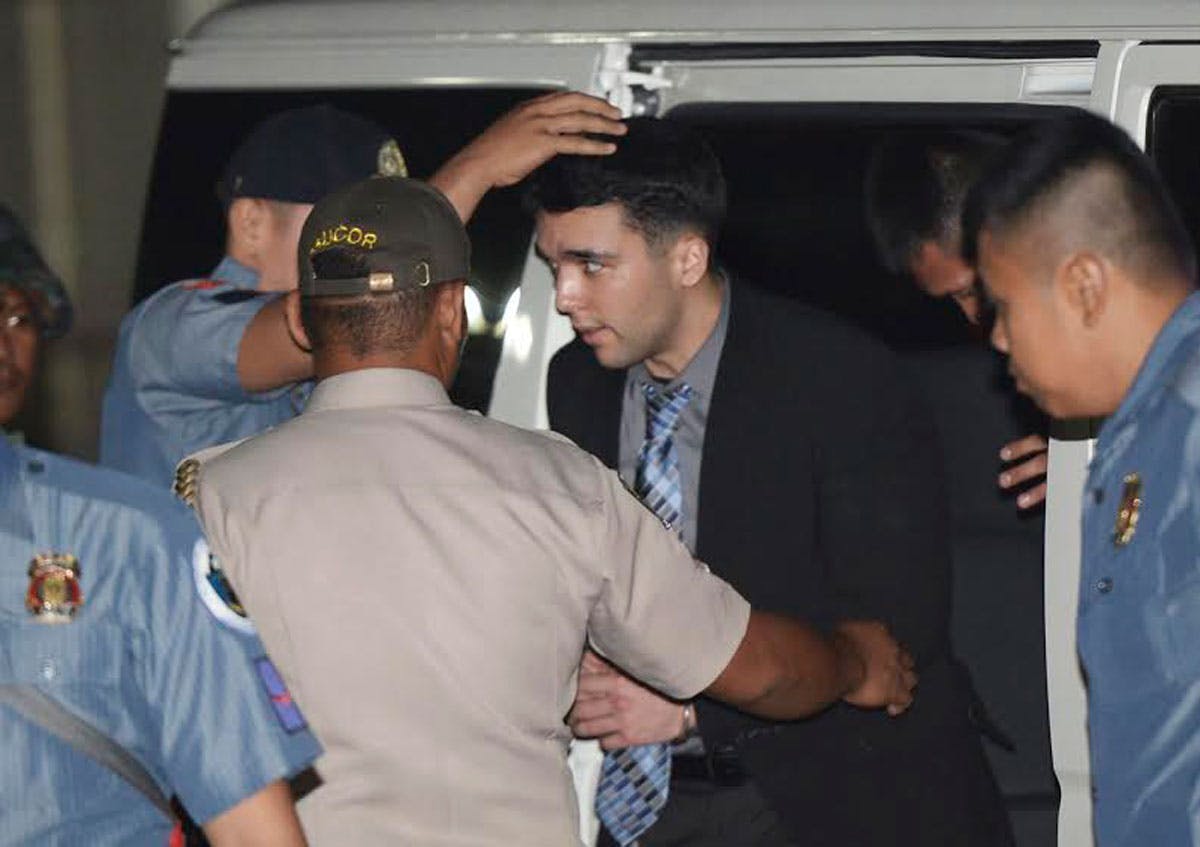
The fact that the killer of transgender woman Jennifer Laude – Lance Corporal Joseph Scott Pemberton – was an American serviceman entangled her case with a host of complicated legal and diplomatic issues.
Laude’s killing was a “hate crime,” but it also ended up being about the Visiting Forces Agreement (VFA) between the Philippines and the United States, the Good Conduct Time Allowance (GCTA) law or Republic Act No. 10592, and eventually Pemberton’s absolute pardon by President Duterte who previously claimed to be a supporter of the lesbian, gay, bisexual, transgender, queer and intersex (LGBTQI+) community.
Duterte’s Sept. 7 decision – which Justice Secretary Menardo Guevarra said was “solely his own” and prompted by no one – renewed outcries from the LGBTQI+ community, critics of American military presence in the country, and those who see a broken justice system rigged against the poor.
Vice President Leni Robredo, in a Sept. 8 statement, contrasted Pemberton’s fortune with the fate of thousands of Filipinos charged with lighter offenses but are unable to afford lawyers and are awaiting extremely slow court proceedings. For her, the fact that Pemberton can have Duterte’s attention is just another example of how the government favors the powerful.
“Isa lang ang kasong ito sa maraming patunay ng pagkiling sa makapangyarihan na nakikita natin mula sa pamahalaan. Napakaraming mga Pilipino na mas magaan ang sala, ngunit hindi nabibigyang-pansin o nabibigyan ng ganitong uri ng pribilehiyo (This is just one case out of many that proves the bias in favor of the powerful that we see in our government. So many Filipinos are accused of lighter crimes, but are not given attention or this kind of privilege),” she said.
The Supreme Court (SC) has established that the President’s power to grant pardons is not something that the judiciary can review, and Guevarra reiterated this in a statement to reporters. So Robredo expressed “hope that the President exercises his vast powers in a manner that is fair and that benefits the common Filipino.”
Since Laude’s death, Pemberton has been continuously detained. He was first held onboard the USS Peleliu docked in Subic Bay, before he was airlifted and transferred to the Joint US Military Assistance Group (JUSMAG) detention facility at Camp Aguinaldo in Quezon City on Oct. 22, 2014.
After five years and 11 months, Pemberton’s lawyer Rowena Garcia-Flores said in various interviews that she hoped her client “could get out by Friday,” Sept. 11, depending on compliance with the requirements of the National Bureau of Investigation and the Bureau of Immigration.
Serving less time for good behavior
Pemberton suddenly came back to the limelight after the SC on Aug. 24 confirmed that last June 2, he withdrew his petition questioning the criminal and civil aspects of his conviction. According to the SC Third Division’s minute resolution dated June 15, Pemberton “accepts and recognizes that his conviction will become final and executory” – closing and terminating the case.
Two days later, Flores submitted to the Olongapo Regional Trial Court (RTC) Branch 74 a check for the payment of the P4.65-million civil liability to Laude’s family.
While giving up on exoneration, Pemberton also filed a motion before the trial court to avail himself of GCTA credit under Republic Act No. 10592, which grants greater credits compared to the Revised Penal Code.
Under the law, for the first two years of imprisonment, prisoners can reduce their sentences by 20 days for each month of good behavior.
For the third to the fifth years, the reduction can be 23 days for each month of good behavior. The reductions can be 25 days for each month during the sixth to 10th years, and 30 days during the 11th year onwards.
The law, enacted during the term of former president Benigno Aquino III, also allowed four-fifths of the time of preventive imprisonment to be credited in favor of detainees undergoing trial, even if they do not agree to abide by disciplinary rules imposed on convicts.
On the heels of last year’s controversy regarding the aborted plan to free former Calauan, Laguna mayor and convicted rapist-murderer Antonio Sanchez, the Department of Justice (DOJ) issued new implementing rules and regulations that disqualify heinous crime convicts from availing themselves of the GCTA benefits. However, homicide is not considered a heinous crime.
On Sept. 1, Olongapo RTC Branch 74 Judge Roline Ginez Jabalde gave Pemberton a perfect GCTA score. Although he was actually detained for five years and 10 months (10 months of which were his jail time prior to conviction), the additional time credits meant he was considered to have served 10 years, one month and 10 days.
The Laude family questioned the court’s computation and pointed out that there was no time allowance supervisor keeping records of Pemberton’s good behavior. There was also no recommendation by a Management, Screening and Evaluation Committee (MSEC).
“How can the MSEC make a recommendation sans records of Pemberton’s active participation in the rehabilitation programs or productive involvement in authorized work activities or any record of his exemplary deed?” the Laude family asked.
Sen. Leila de Lima, who headed the DOJ when Pemberton was prosecuted for murder, highlighted various other legal issues as well.
In a dispatch from her detention cell on Sept. 5, De Lima argued that the RTC no longer had jurisdiction to order Pemberton’s release since his conviction had already attained finality after it was upheld by the Court of Appeals and he withdrew his case before the SC.
She added that even if Pemberton was qualified for GCTA benefits, he should have filed a petition for habeas corpus, which the Olongapo court could not grant since he was incarcerated outside its territorial jurisdiction.
De Lima said Pemberton’s camp had the burden to show that the requirements and procedure for availing himself of GCTA benefits were duly observed.
“We’re probably looking at another case here of misapplication or abuse of the GCTA Law, which is unfortunate as it undermines the very wisdom and salutary philosophy behind said law, a tool for restorative justice and intended only for deserving (persons deprived of liberty),” De Lima argued.
Lyceum of the Philippines College of Law lecturer Romel Bagares, who took part in the petition of Laude’s sister Marilou to detain Pemberton in a local jail as well as in a case involving American rape suspect Lance Corporal Daniel Smith, noted that in both cases, the SC held that the equal protection clause does not apply in detentions and convictions under the VFA.
Bagares, in Twitter posts on Sept. 2, opined that this meant Pemberton, as an American serviceman covered by the treaty unlike ordinary Filipino inmates, should not be entitled to the benefits of the GCTA law.
“There is a substantial difference in treatment between someone under the VFA and an ordinary convict. Thus, a different modality applies to Pemberton,” Bagares said. “Ordinary convicts do not enjoy the privileges Pemberton enjoys while serving his sentence. Ordinary convicts deserve the graces of the GCTA law. Pemberton doesn’t.”
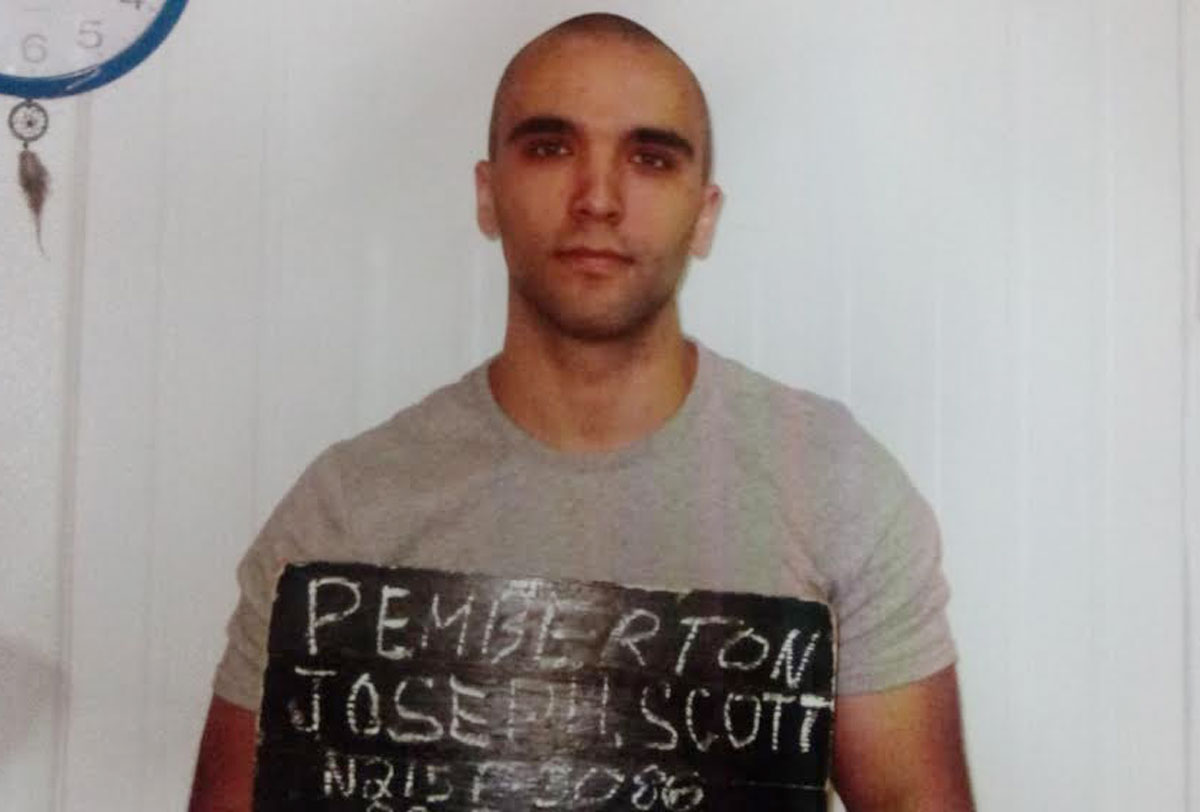
‘Good character presumption’
These questions could have been raised against Pemberton and set new precedents, but Duterte’s absolute pardon short-circuits a legal showdown that could clarify these issues.
Defending the American, Duterte said: “It is not the fault of Pemberton na hindi na na-compute because we should allow him the good character presumption kasi wala namang nag-report na Marines na nagsabi nagwawala siya (It is not the fault of Pemberton that there was no computation because we should allow him the good character presumption because no one reported to the Marines that he was acting up).”
This marked a departure from Duterte’s hardline stance against ordinary Filipinos who availed themselves of the GCTA benefit a year ago. Duterte ordered authorities to arrest those previously released on good behavior if they failed to surrender and return to prison.
Duterte on Sept. 4, 2019 issued a 15-day ultimatum and threatened: “If you do not, then beginning at this hour, you are a fugitive from justice, and… you will be treated as a criminal who is evading the law, and well, you know, things can go wrong.”
Guevarra explained that Duterte found Pemberton’s case to be different since he was not detained together with other people.
“The President simply felt that it was not Pemberton’s fault that there was no way of recording his behavior in a military detention center all alone by himself,” Guevarra told reporters. “So, since there were no reports of misbehavior, the presumption of good conduct was on his side.”
Roque, the former lawyer for the Laude camp, previously described Jabalde’s application of GCTA credits in favor of Pemberton as a “judicial overreach.” Now that Duterte acted in the killer’s favor, Roque said his boss did not have to justify himself.
“Hindi na po kinakailangan bigyan ng dahilan ng President iyan, dahil ang pag-grant ng pardon at parole, hindi po iyan katungkulan ng hudikatura, kundi katungkulan ng ehekutibo. Iyan po ay one of the most presidential of all presidential powers (The President does not have to give a reason, because granting pardon and parole, it is not the role of the executive and not the judiciary. That is one of the most presidential of all presidential powers),” Roque said.
“Binura na po ng Presidente ang kung ano mang parusa na dapat ipapataw kay Pemberton (The President has erased whatever punishment was supposed to be imposed on Pemberton),” he added.
Is the pardon legal?
Without mentioning and commenting on Pemberton’s case, Caloocan City Metropolitan Trial Court Branch 83 Judge Marlo Campanilla said on Sept. 8: “Wise or unwise, the granting of pardon is constitutional.”
Campanilla, an author of criminal law review books, noted that if it is done “within the limits of the Constitution,” the granting of pardon “is a political question, which is beyond the review power of the judiciary.”
He noted that there were only three limitations to the President’s “absolute authority” to pardon an offender: the pardon must be made after the conviction has attained finality, an impeachable offense cannot be pardoned, and an election offense cannot be pardoned without favorable recommendation from the Commission on Elections.
He cited the SC’s discussion in its Sept. 15, 1989 decision upholding then president Corazon Aquino’s prohibition on the return of dictator Ferdinand Marcos and his family from exile in Hawaii.
In the said decision, the late associate justice Irene Cortes noted that there are issues that can be exclusively determined by the president beyond the jurisdiction of the judiciary. As an example, she wrote: “We cannot set aside a presidential pardon though it may appear to us that the beneficiary is totally undeserving of the grant.”
For an actual test case, Campanilla cited the SC’s Jan. 21, 2015 decision dismissing a petition to disqualify former president and convicted plunderer Joseph Estrada from running for Manila mayor in the 2013 elections.
A lawyer had argued that Estrada no longer had the right to run for public office after he was found guilty of earning billions of pesos in kickbacks from the government’s purchase of Belle Corp. shares, as well as illegal gambling operations and misused tobacco tax proceeds.
Then president Gloria Macapagal-Arroyo, who took over when Estrada resigned, granted an “absolute pardon” on Oct. 25, 2007, or only six weeks after the Sandiganbayan on Sept. 12, 2007 meted out the penalty of reclusion perpetua. Like in Pemberton’s case, Estrada’s withdrawal of his appeal preceded his pardon.
The SC said Arroyo’s pardon explicitly “restored [him] to his civil and political rights.” It stressed that “the exercise of the pardoning power is discretionary in the President and may not be interfered with by Congress or the Court, except only when it exceeds the limits provided for by the Constitution.”
An ‘affront’ to LGBTQI+ and all Filipinos
De Lima’s minority bloc colleague Sen. Risa Hontiveros described the pardon as an “unbelievable affront not only to the LGBTQI+ community but to the Filipino people.”
In a Sept. 7 statement, the senator said Duterte’s move “gives the lie to his so-called support” for the LGBTQI+ community. She also saw this as another example of inequality and prioritization of foreigners over Filipinos.
“Instead of the President showing his support for Jennifer’s family, his own people, he favored an American soldier. Imbes na suporta sa Pilipina, bakit suporta sa Amerikano (Instead of supporting a Filipina, why support an American)?” Hontiveros said.
“Pinalaya ang isang Amerikano na mamamatay-tao habang nababalitaan natin ang mga kababayan natin na matatanda na nakakulong, o mga mahihirap na nakulong dahil nagnakaw ng pagkain (An American killer was freed while we hear about our detained elderly or the poor being detained for stealing food),” she added.
Bataan 1st Dist. Rep. Geraldine Roman, a political dynasty scion who became the country’s first transgender lawmaker, agreed that this was a case of “special treatment.” Expressing pain “as a human being with a trans experience,” she exclaimed: “Hindi dapat ganito (It cannot be like this). Do we deserve less?”
Albay Rep. Edcel Lagman said the pardon given to Pemberton - although deemed absolute under the law - may still be questioned before the SC for being arbitrary and capricious.
"There appears to be no just and valid reason for granting Pemberton an absolute pardon," the opposition congressman alleged.
Lagman explained that the Board of Pardons and Parole was created by Congress to recommend prisoners who are deserving of executive clemency, precisely to prevent abuse by the Chief Executive in exercising the constitutional power to pardon prisoners whose convictions have become final is deemed absolute.
"It appears that the Board of Pardons and Parole has not recommended the presidential pardon of…Pemberton since the (DOJ), to which the Board is an attached agency, is in the process of preparing a motion for the Olongapo City (RTC) to reconsider its order for the early release of Pemberton erroneously based on good conduct time allowance," he stressed.
"The President should have considered the sentiments of the family of the victim…as well as the escalating protests against the projected premature release of Pemberton and upholding Philippine sovereignty by making convicted US military personnel serve their full sentence," Lagman pointed out.
No forgiveness for the unrepentant
UP College of Law OUTlaws, an organization of University of the Philippines law students who are members and allies of the LGBTQI+ community, stressed that “forgiveness is not due to those who refuse to acknowledge their crimes,” especially when justice has not been served.
OUTLaws said the absolute pardon “solidifies the culture of impunity that has enabled violence and disrespect against the members of our community and the Filipino people.”
It demanded that mitigating circumstances like those applied in favor of Pemberton should stop being applied in hate crimes “as if the very existence of people of diverse SOGIE (sexual orientation, gender, identity and expression) is enough reason for hate and violence.”
Despite the tone of his defense during the trial and the appeal stages, Garcia-Flores claimed that Pemberton was “very sorry that all these things happened.” She said the killer had “always been spiritual” and had been raised in a family that read the Bible every day.
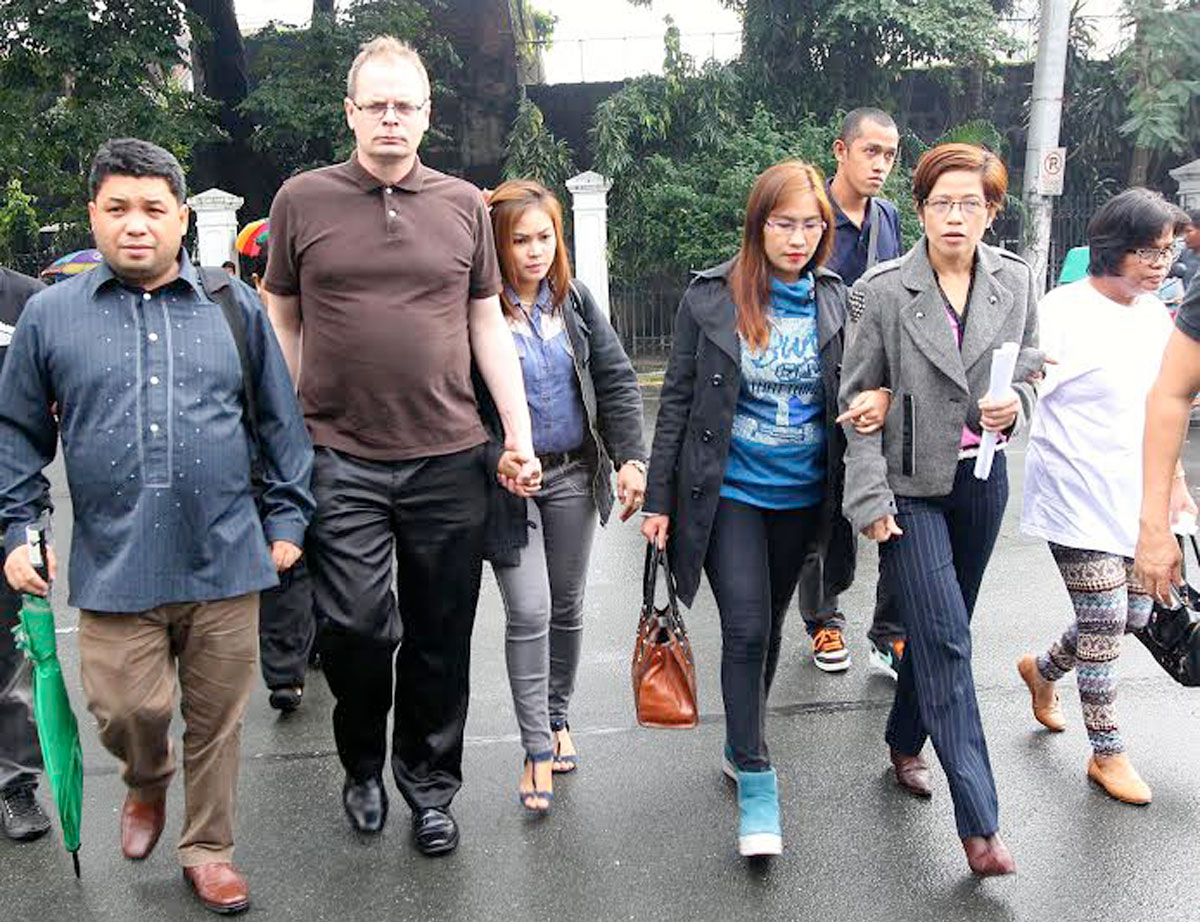
Not just a matter of discrimination
Beyond discrimination against the LGBTQI+ community, advocates stressed the connection of Laude’s case to the other issues.
Roman said she “understands” that there may have been negotiations between the Philippines and the US regarding political stakes, but she insisted on holding Pemberton accountable for killing her “trans sister” Laude.
“Bilang bahagi ng pamahalaan at bilang isang politiko, nauunawaan ko na mayroong mga ganitong negosasyon sa pagitan ng mga bansa, ngunit naniniwala ako na dapat panagutan ni Joseph Scott Pemberton ang kanyang krimen sa buong lawak ng batas ng Pilipinas (As part of the government and as a politician, I understand that there are these negotiations between the countries, but I believe that Joseph Scott Pemberton should be accountable for his crime with the full force of Philippine law),” she contended.
For Dinagat Islands Gov. Arlene Bag-ao, “it takes a whole system to murder a transgender person.” She described the VFA as “a treaty that allows the entry of foreign soldiers who commit abuses with not only impunity, but also met with special treatment.”
She also blamed “a justice system that renders trans persons invisible… a government that does not only close its eyes to injustice, but lends its support (and) a legislature that, again and again, fails to provide protection to all persons.”
As a lawmaker, Bag-ao had been a proponent of the Sexual Orientation and Gender Identity Expression or SOGIE Equality Bill that was unanimously passed by the House of Representatives but killed by the Senate during the 17th Congress.
On top of these failures by the society’s institutions, Bag-ao called out “a public that continues to shut out their minds and hearts from understanding and showing compassion towards the LGBTQ+ community, especially transgender persons.”
“Jennifer Laude doesn’t deserve this. No person does. It’s time to break a system that continues to murder our fellow Filipinos and human beings over and over,” Bag-ao said.
UP sociology professor Sarah Raymundo, in a Facebook post on Sept. 8, noted that “Jennifer Laude’s demise as a transwoman did not happen in a vacuum.”
Responding to those who disagreed with framing Laude’s killing as an issue connected to the country’s relations with the US, she urged “gender warriors to think twice before attacking the anti-imperialist line of critique in this issue for highlighting US military aggression in the brutal killing of Jennifer.”
“Not to miss a single opportunity to prove his worth to his US imperialist masters, Duterte unnecessarily and wrongfully grants clemency to Pemberton at the expense of justice and credibility of the justice system to protect trans lives,” Raymundo said.
“To refer to anti-imperialism as a larger struggle does not diminish other struggles. It simply means that all sectors within a national formation suffer the violence of national oppression inflicted by imperialism upon various spheres of life,” she added.
Rainbow Rights Philippines said “Jennifer has been brutalized over and over by Joseph Scott Pemberton, our media, the justice system, and the state.” Apart from the issues mentioned above, the group faulted the media for “deadnaming” Laude (using her birth name Jeffrey).
The group lamented that “the convicted felon seems to have more rights than Jennifer Laude.”
“This is the tragedy of our reality: LGBTQ+ lives do not matter to our state and to others like the United States,” it said. “It is unjust when our lives are used as bargaining chips to trade favors with global powers like the (US). It is the height of injustice when our justice system believes that the brutal loss of lives in this community only warrants a five-year stay in a swanky military facility for the perpetrators.”
A glossary by the National Geographic magazine explains that a “transgender” person is someone whose gender identity does not match the biological sex (male or female) that they were assigned at birth. “Gender identity” is the person’s deep-seated, internal sense of who they are and how they identify themselves.
In other words, a “transgender woman” is deemed male at birth because of the penis but identifies as a woman. When the person goes under surgery or hormonal treatment to change the body to match the gender identity, she is described as “transsexual.”
No request from the US
Guevarra and Foreign Affairs Secretary Teodoro Locsin Jr. said the US did not request Duterte to pardon Pemberton.
Both of them said US Ambassador Sung Kim was even “surprised” that the President granted absolute pardon to Pemberton. Locsin was the first to announce that Duterte pardoned the American serviceman.
Kim paid Duterte a farewell call at Malacañang on Monday, hours before the President announced the absolute pardon. During the call, Duterte conferred the Order of Sikatuna on the outgoing American envoy.
The killing of Laude put to test the VFA and whether the Philippines could compel the US to turn over Pemberton to Philippine custody after he was charged with murder and a court ordered his arrest.
The US invoked the VFA. On Dec. 19, 2014, the Department of Foreign Affairs (DFA) said it was no longer pushing for Philippine custody of Pemberton as the US justification for refusing to turn him over to local authorities was “not inconsistent” with the provisions of the VFA.
The State Department said the “US is retaining the suspect until completion of all judicial proceedings” in accordance with the VFA, as the US side reminded the Philippines that the agreement is a very “serious” and “solemn” obligation by both countries.
The DFA said the US is obliged under the VFA to make sure that its servicemen involved in infractions in the Philippines are present in all judicial proceedings.
Laude’s killing prompted renewed calls by various groups for the abrogation of the VFA.
Guevarra stressed that no one influenced the President to grant absolute pardon to Pemberton. The justice chief was called to Malacañang last Monday, Sept. 7, and met with Duterte, who consulted him on the granting of absolute pardon.
“The President simply felt that it was not Pemberton’s fault that there was no way of recording his behavior in a military detention center all alone by himself. So, since there were no reports of misbehavior, the presumption of good conduct was on his side. I stated that granting executive clemency was the President’s constitutional prerogative,” Guevarra said.
Their meeting had already started when Kim arrived, Guevarra added.
“Fifteen minutes into our meeting, the US ambassador arrived for his farewell call on the President. He seemed rather surprised when the President mentioned Pemberton’s pardon, and he thanked the President for it,” Guevarra disclosed.
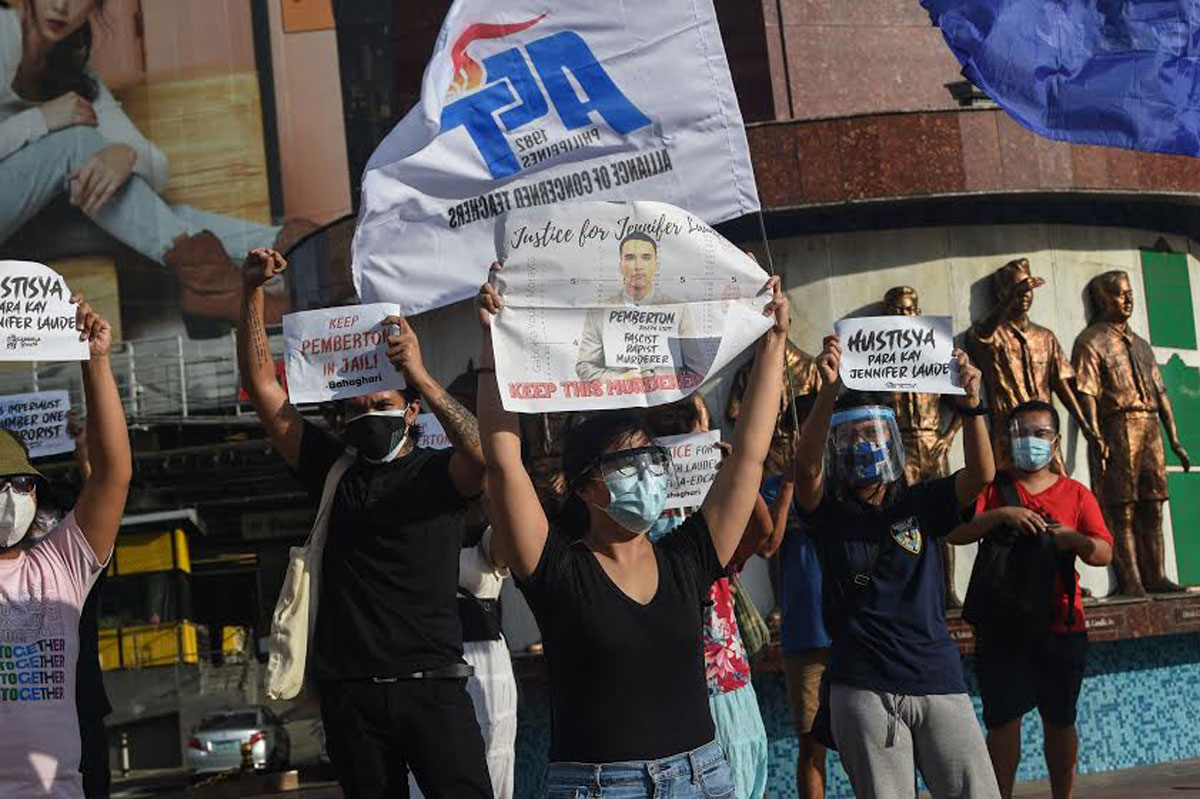
With the granting of absolute pardon, the motion for reconsideration that the DOJ filed before the Olongapo RTC Branch 74 on the Pemberton case has become moot and academic.
The DOJ secretary also stated that Pemberton would not be deported. Instead the court can lift the hold-departure order, if any was issued, and the Bureau of Immigration will simply let Pemberton depart.
“Since he is a US military personnel, there may be a different mode of transporting him out of the country,” Guevarra said.
The presidential pardon given to Pemberton will also be enough for the Bureau of Corrections to issue a release order.
Flores bared her client sounded pleased when she broke the news to him about the absolute pardon. “When I called him, I no longer said hello. I told him, ‘you’re free.’ He said, ‘I heard the news,’” Flores disclosed.
She asked him if he was happy and he replied, “Yes, I’m very happy.” They discussed the next steps they would be undertaking for his release. She said their conversation lasted only around three minutes.
Flores is hoping that Pemberton will be released by Friday. She also assured the public that he would not be “spirited away” from the Philippines and that he would comply with all the requirements for leaving the country.
In interviews, Flores said that once Pemberton has been cleared to leave the country, he would be escorted to a US military plane and might proceed to Hawaii or Guam. “That is what I know, but I am not entirely sure,” she said.
She said Pemberton wanted to resume his studies in the US and wanted to take up Philosophy. On OneNews / TV5’s “The Chiefs” last Tuesday night, she said she urged him to take up law.
Flores expressed her gratitude to Duterte for giving absolute pardon to Pemberton.
“I would like to thank him for applying the law to Pemberton and the principle that in case of doubt, the prisoner would be given the benefit of doubt. That is under the law,” she emphasized.
Never treated unfairly
The lawyer of the Laude family denied that Pemberton was treated unfairly as Duterte had said. In fact, the lawyer pointed out that the US had custody of him from the beginning.
This was the response of Virginia Lacsa Suarez to Duterte’s statement last Monday night that Pemberton was not treated fairly.
“From the very beginning, the Philippines has not been able to take hold/custody of Pemberton. US did,” Suarez maintained.
“During trials, the US soldiers were inside the court while the Laudes had only their counsels, and the media was prevented from getting in a situation that is very harassing and intimidating,” she pointed out.
Suarez also recalled that during that time, the police experienced difficulty in serving summons and notices.
“On the day of conviction, our police officers were not even able to get near Pemberton as he was immediately surrounded by the US soldiers – despite the court’s order for police to take him to National Bilibid (Prison) – rendering our own police inutile inside our very own court,” Suarez said.
She recalled that there was a “three-hour stand-off” since he invoked the VFA and requested that he be allowed to serve his sentence inside Camp Aguinaldo. The motion was reportedly supported by the DOJ and the VFA Commission.
All these events took place before the term of Duterte. But even after Duterte assumed power in mid-2016, Pemberton continued to be detained in an air-conditioned facility inside Camp Aguinaldo, guarded by US soldiers.
The Philippine government has pointed out that the special detention facility is under the jurisdiction of the Bureau of Corrections (BuCor).
Suarez said Pemberton’s GCTA was ordered reportedly without even furnishing copies of pleadings and notices to the Laude family and its counsel, and the public prosecutor. She points out that under the law, granting the GCTA should have been the sole discretion of the BuCor, the Bureau of Jail Management and Penology (BJMP) and the wardens of local jails.
This prompted the Laude family to file a motion for reconsideration that was set in the morning of last Sept. 7. But hours later, Duterte gave him an absolute pardon.
“And you call this ‘unfair treatment’ to Pemberton? This is subservience! A travesty of our dignity, democracy and sovereignty. A mockery of our legal and judiciary system,” she said.
Flores told The Chiefs that they turned to the RTC for the GCTA because the BuCor could not decide on an issue involving an American prisoner covered by the VFA.
“The Laudes deserve an apology from Pemberton. The entire Filipino people deserve an apology from Duterte. But even this is unacceptable!” Suarez said.
On The Chiefs, Flores said Pemberton is preparing a written letter of apology that will be sent to the Laude family. Suarez said this indicated that the apology is not sincere and merely dictated by the lawyer to her client. – With Pia Lee-Brago, Edu Punay


