


Rising Tides, Surge In Cases: Fiji, Philippines Face Unprecedented HIV Epidemics Amid Global Funding Cuts
While Fiji battles a crisis tied to syringe sharing, the Philippines has been identified by UNAIDS as having the fastest-growing HIV epidemic in the Asia-Pacific region driven almost mostly by sexual transmission.
RIO DE JANEIRO – Despite their geographical distance, Fiji and the Philippines are finding themselves in the same boat in a battle against a common health crisis: both island nations are grappling with some of the steepest increases in new HIV infections globally over the past decade.
As both nations fall short of the Joint United Nations Programme on HIV/AIDS’ (UNAIDS) 95-95-95 healthcare targets – which aim for 95 percent of people living with HIV to know their status, 95 percent of those diagnosed to receive sustained antiretroviral therapy, and 95 percent of those on treatment to achieve viral suppression – they are topping health lists no country wants to lead.
Fiji’s syringe crisis
Fiji currently holds the title for the world’s fastest-growing HIV epidemic. In a country with a population of less than one million, an estimated 12,000 people are now living with HIV.
The crisis is primarily driven by intravenous drug use and needle sharing.
The data paint an alarming picture:
- One in every 60 adults in Fiji is HIV-positive.
- Infection rates among women are rapidly increasing.
- One child is born with HIV every week.
- One child dies from HIV-related complications every month.
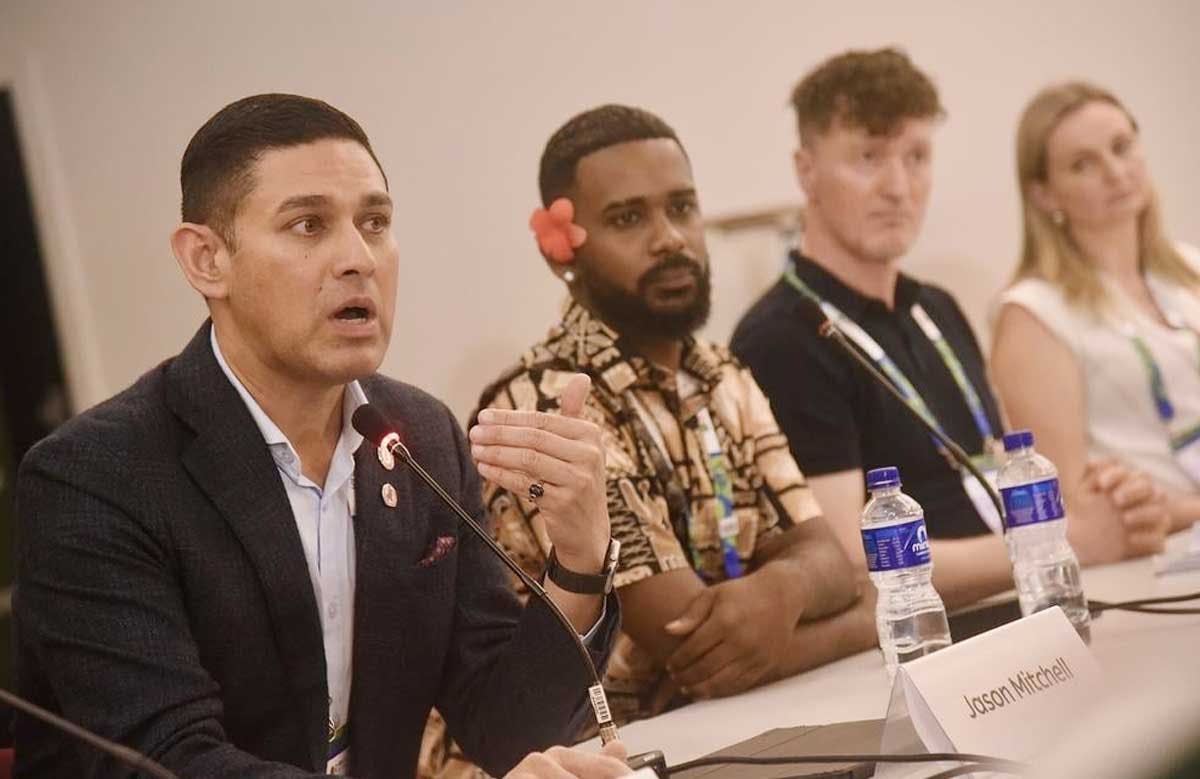
“In a country of less than a million people, this is significant,” said Jason Mitchell, chairman of the Fiji National HIV Outbreak Cluster Response Taskforce. “And perhaps for me, it is the greatest crime and shame of all because this is all preventable.”
Talking to media covering AIDS 2026 here last week, Mitchell emphasized the global stakes: “I think it is important for us to really talk about what is happening in Fiji because it is a lesson of what can happen all over the world.”
Youth at the epicenter in the Philippines
While Fiji battles a crisis tied to syringe sharing, the Philippines has been identified by UNAIDS as having the fastest-growing HIV epidemic in the Asia-Pacific region – a surge driven almost mostly by sexual transmission.
Data from the Department of Health (DOH) shows an average of 51 to 57 new cases diagnosed every single day. The DOH recorded 4,633 newly diagnosed HIV cases. Today, an estimated 288,000 Filipinos are living with HIV.
Young people are bearing the brunt of the epidemic, with individuals aged 15 to 34 accounting for nearly 80 percent of all new infections in the country.
“The challenge is almost the same when it comes to stigma, discrimination, [and] challenges to accessing treatment, support care, and prevention,” said Raybert Domingo, Strategic Communication Advisor for the Philippine-based advocacy group Love Yourself.
Navigating global funding cuts through community support
Compounding the crisis is a wave of global health funding cuts that threaten local healthcare infrastructures. However, international solidarity and grassroots community action are stepping in to fill the gaps.
Fiji is receiving support from neighboring nations, including Australia and New Zealand.
“Responses to HIV are strongest when they are community-led,” noted Dash Heath-Paynter, CEO of Health Equity Matters in Australia.
Michelle O’Connor, Director of the Global Division at ASHM Health in Australia, underscored the regional responsibility: “The situation has the potential to spread in the Pacific. We recognize we are neighbors – Australia is a neighbor to the Pacific Islands, also Papua New Guinea where we see cases. We see our role as integral.”
In the Philippines, assistance from the United States paired with local advocacy groups has proven vital.
Domingo emphasized that grassroots involvement is key to sustaining the battle: “One lesson is clear: communities must be involved in the response. Communities are not just beneficiaries of the HIV programs; we are the indispensable partners to end the epidemic.”
Lessons from Africa: A tactical shift
As nations adjust to tighter budgets, leaders are looking to Africa for strategies on resilience. After facing initial shocks from international funding cuts, African nations are recalibrating their responses.
“We are looking at policy shifts—a lot of African organizing is happening,” said Florence Riako Anam of the Kenya-based Global Network of People Living with HIV (GNP+).
South Africa’s Deputy Minister of Health, Mathume Joseph Phaahla, echoed the need for strategic resource management: “It is not a lack of will; it is also just that we have to do those adjustments with tactical ways of resources at our disposal. So we do have to acknowledge shortcomings, but I assure you it is not as a result of lack of will.”
As global funding shifts, the ultimate challenge for Fiji, the Philippines, and international partners remains clear: maintaining momentum and breaking transmission chains before the epidemic spreads further.
During the formal opening of the conference, World Health Organization Director-General Dr. Tedros Adhanom Ghebreyesus offered a message of hope, calling on international stakeholders to stay committed despite the steep challenges ahead: “Refuse to treat this as a finished fight, it is not finished.”
“We have the science, we have the tools, we have proof in country after country that this epidemic can be beaten. What we need now is what has always mattered most in this fight, the will to stay united and the determination to finish what we started,” Ghebreyesus added.