



Coca-Cola Sets A Sustainable Example In Water Leadership
Recognizing the impact of its business on water resources, Coca-Cola in recent years has moved to ensure the sustainability of water resources through reduction of water use, wastewater treatment, and providing water to far-flung communities.
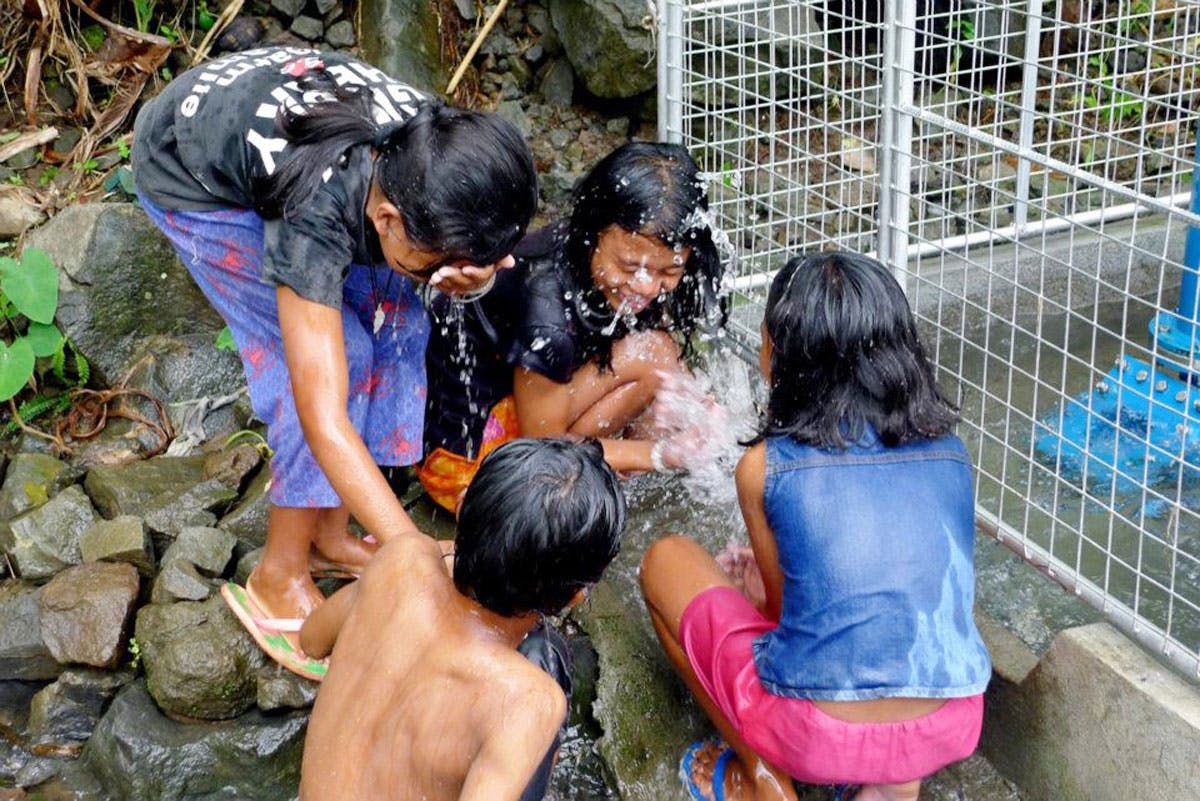
Water is an essential part of humanity’s daily existence.
From individual use for personal hygiene, sanitation, body hydration and food preparation to large-scale use in agriculture, businesses and industries, the importance of water cannot be emphasized enough.
Among the companies that rely on this precious resource is beverage company Coca-Cola Philippines, the local arm of global beverage giant The Coca-Cola Company.
“As you know, 85 to 100 percent of our beverages are made of water, so it’s really important for us to ensure the sustainability of our water resources,” said Coca-Cola Philippines’ public affairs and communications manager Samantha Sanchez during a briefing at The Philippine STAR on Nov. 18.
In the information kit provided by Coca-Cola during the briefing, the company discussed, among other things, its three-pronged approach to achieve industry leadership in ensuring the sustainability of water resources: reducing its use of water, reusing the water it uses in manufacturing, and replenishing water resources through wastewater treatment and providing deprived communities with access to clean water.
Reduce and reuse
In terms of reducing water use, Coca-Cola reported that it has decreased its water use by 27 percent and saved 5.78 billion liters of water from 2014 to 2018.
The company said it achieved this milestone through the adoption of the Top 20 Water Saving Initiative, which is a set of best practices in the efficient use of water. These include the use of more effective cleaning agents, reducing its Clean in Place process from five to three steps, use of optimal water pressure in bottle washing, and ensuring the efficient use of water during backwashing of bottling tanks.

Since the initiative started in 2014, the company’s water use efficiency ratio improved from 2.75 liters to two liters by 2018.
In terms of water reuse, the company stated that since 2014, it has reclaimed, treated and reused 17.5 million liters of water it used in compliance with standards set by the Department of Environment and Natural Resources.
Coca-Cola accomplished this responsibility by equipping its 19 bottling plants nationwide with wastewater treatment facilities. A portion of the reclaimed water is used for sanitation, cleaning of delivery trucks, and maintenance tasks in their bottling plants, while the rest is released back to nature.
“We ensure that the water we return to nature and communities is safe and can sustain life. If it’s not maintained and sustainability is not ensured, of course it will also affect our business,” Sanchez said.
Giving water back to communities
According to a 2008 study by the World Health Organization, 780 million people around the world do not have access to an improved water supply. The agency also estimates that by 2050, half of the world’s population will live in water-stressed areas.
In the Philippines, four percent or 960,000 out of the 24 million Filipino families lack sufficient access to water, according to the Philippine Statistics Authority’s 2017 Annual Poverty Indicators Survey.
Recognizing the impact of its use of water resources on the communities where it operates, Coca-Cola has committed to replenish these water resources and ensure community access.
To accomplish this, Sanchez discussed the company’s Agos Project, a joint initiative between Coca-Cola’s corporate social responsibility arm Coca-Cola Foundation and non-profit organization Alternative Indigenous Development Foundation Inc. (AIDFI) to provide clean water to deprived far-flung communities throughout the country through the use of hydraulic ram pumps.
Invented over 200 years ago by French balloonist, aviator and engineer Joseph-Michel Montgolfier, the hydraulic ram pump remains a viable solution to the lack of water in many parts of the world.


The pump uses the natural gravity of flowing water in streams or rivers to pump water into pipes and into a storage tank. Each concrete storage tank can hold 36,430 liters of water or the equivalent of 182 drums per day. The water can then be used for washing, sanitation and agriculture, and can also be used for drinking through water purifiers provided to every household at the project site.
According to Sanchez, since Agos Project started in November 2011, hydraulic ram pumps have been installed in over 210 sites in 49 provinces.
“We also train the communities on how to maintain the ram pump. In every community, there are two to three technicians and when we turn over the pump to the community, we provide them with spare parts and tools,” said Coca-Cola public affairs and sustainability director Jonah De Lumen-Pernia.
One of the over 210 sites that has benefited from an Agos Project hydraulic ram pump is Sitio Inabangan, a small Aeta community in Porac, Pampanga.
According to Sanchez, since the pump was turned over in 2017, the community has become more productive, as water access has enabled the beneficiaries to create other sources of livelihood such as farming and selling agricultural crops.
She added that through the Agos Project, CCBPI was able to contribute to its parent company’s ambitious goal of collecting and returning every single drop of water back to the communities or to nature.
“We’re very happy (that) in the Philippines, we can proudly say that we’ve returned every single drop of water and 24 percent more. So we’re 124 percent water replenishment, or naibalik na siya in one way or another either to nature or to a community,” Sanchez explained.


