



Cemeteries: The Heritage Of Death
As many of our heritage cemeteries fall into neglect and even desecration, one group of cemetery enthusiasts is using social media to highlight the need to preserve and protect them.
Since pre-colonial times, Filipinos have had various forms of burial practices, as seen in the hanging coffins of Sagada, Mountain Province, the anthropomorphic jars found in Maitum, South Cotabato, and the wooden coffins discovered in the cliffside caves of Banton, Romblon. Even in those early times, Filipinos valued the heritage that death creates.
Three centuries of Spanish colonial rule further enriched this heritage. With Filipinos learning to bury and honor their dead in cemeteries, each town and city in the country began to establish their respective camposantos. These cemeteries had their unique architectural styles, giving each place a distinctive character. The beauty of these cemeteries says a lot about Filipino artistry and ingenuity — expressed not just for the living but also for the dead.
The country’s only underground cemetery
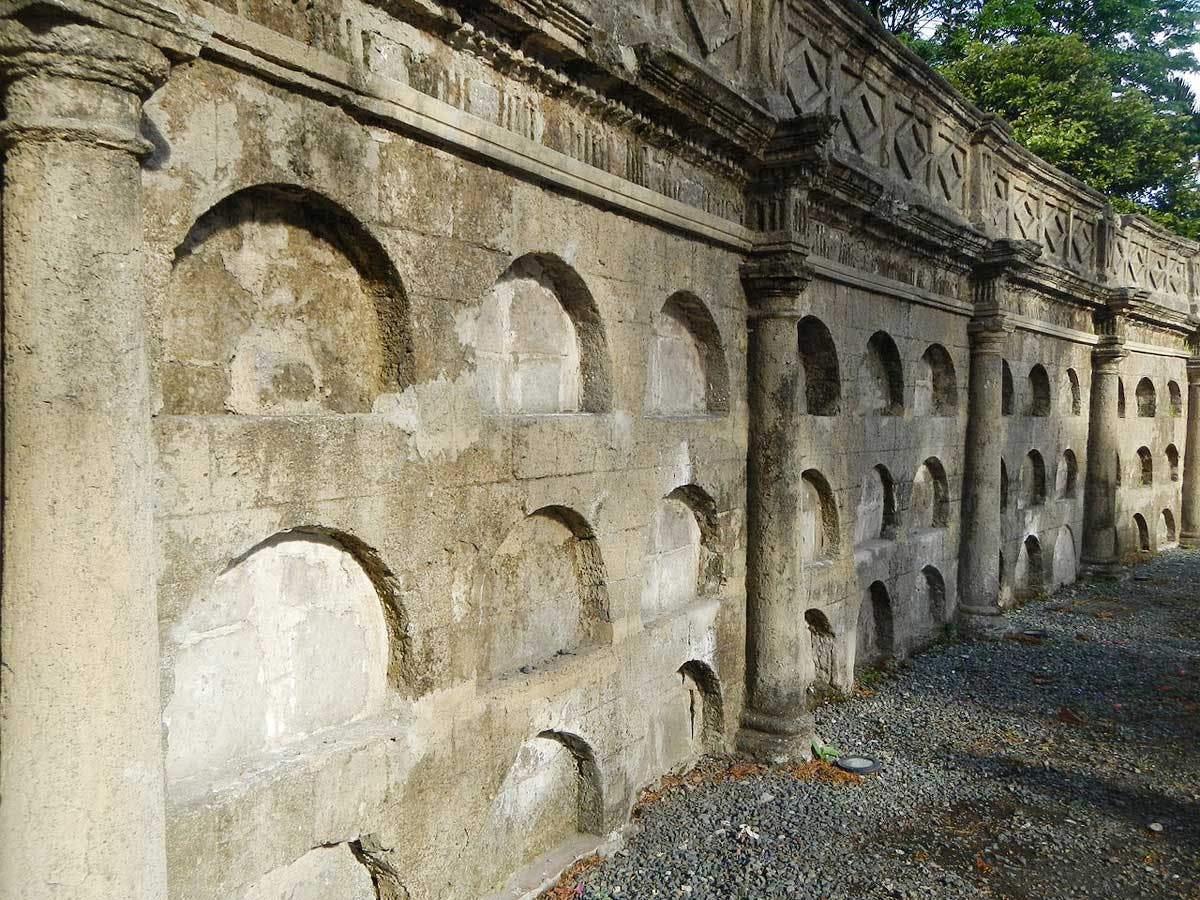
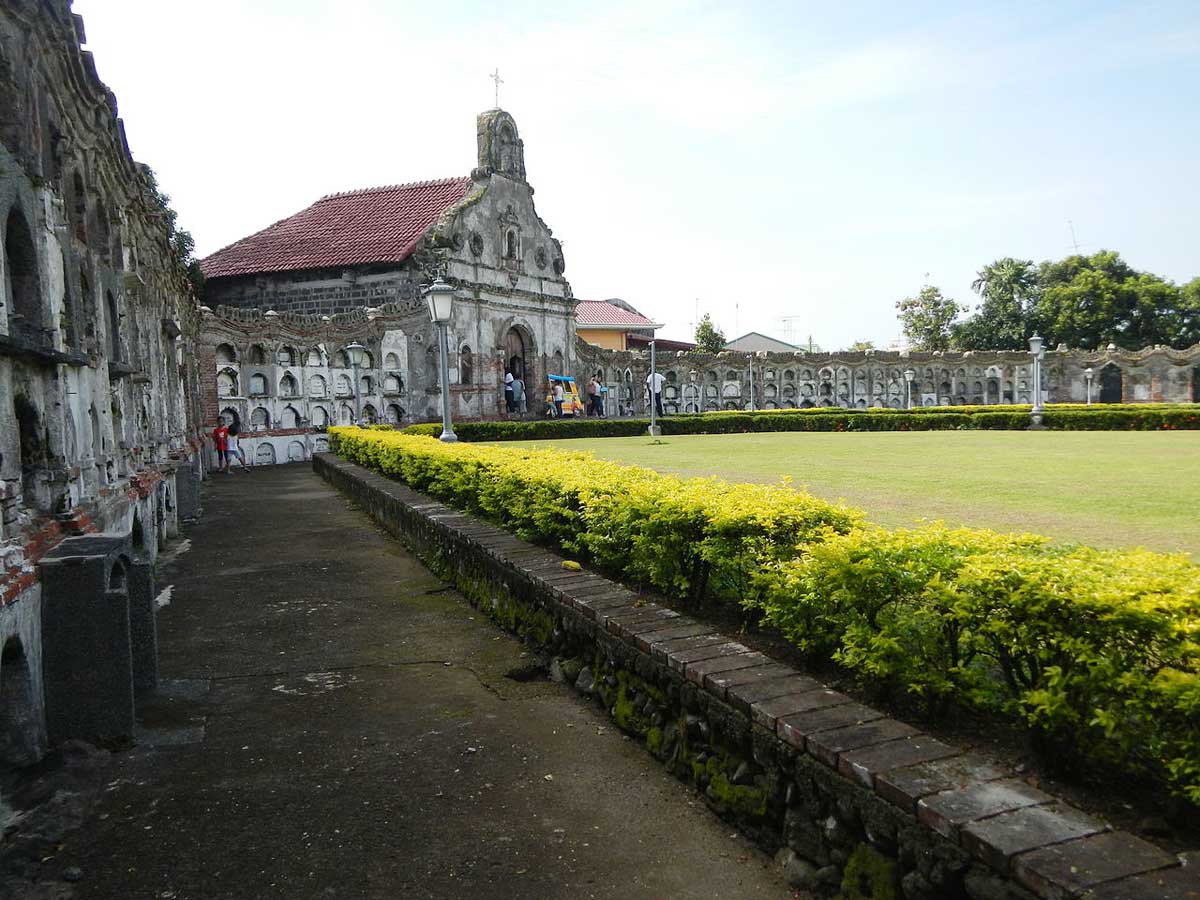
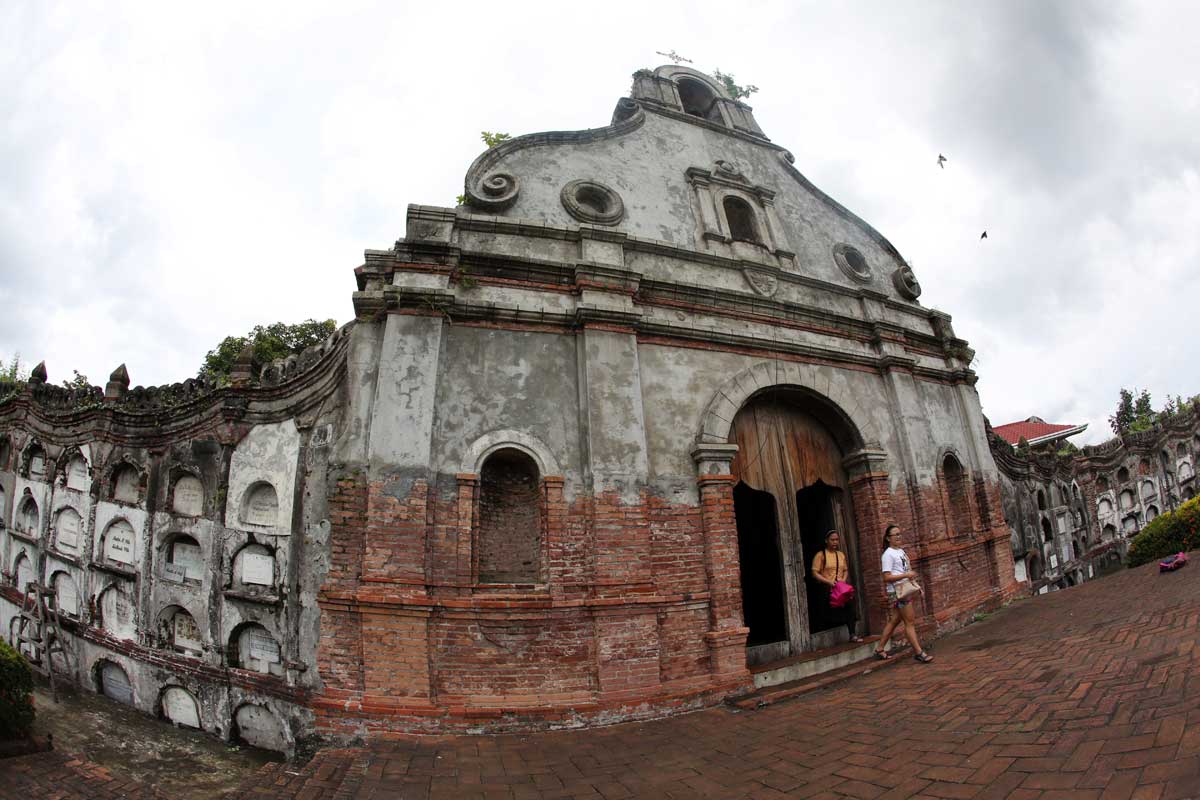
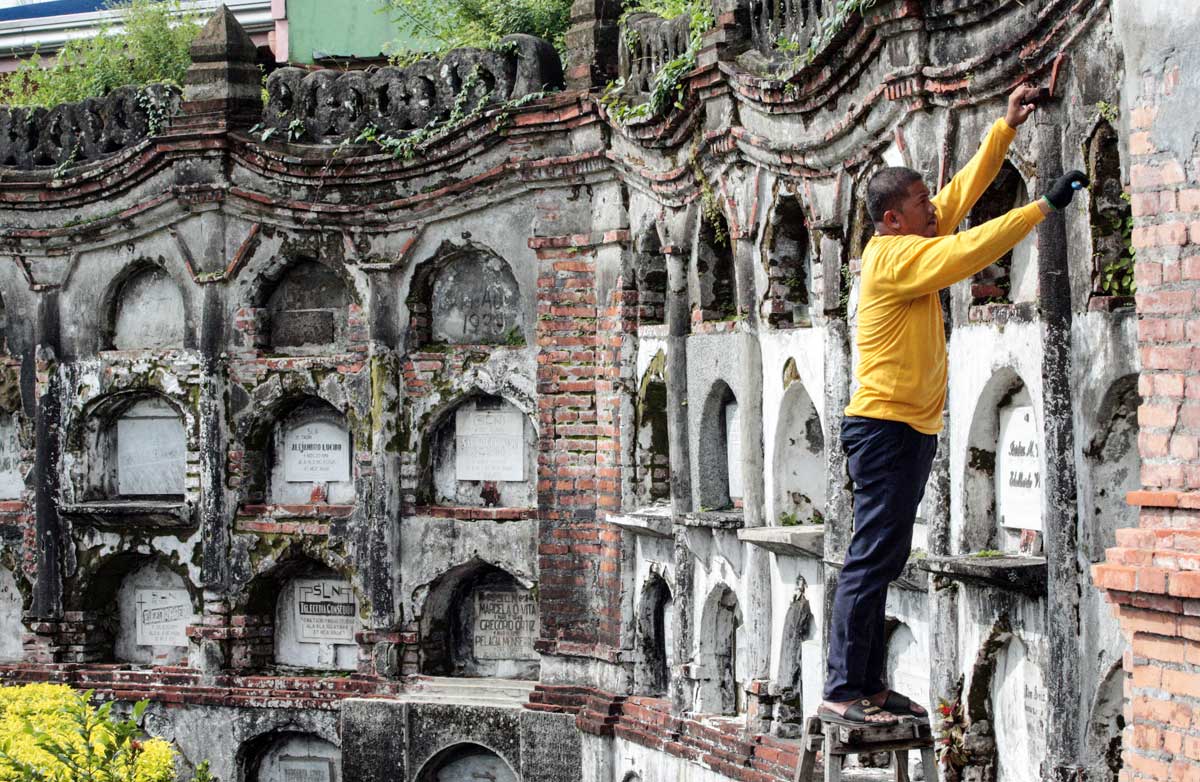
One of the finest examples of heritage cemeteries in the country is the Nagcarlan Underground Cemetery in Nagcarlan, Laguna. Spanish curate Fr. Vicente Velloc supervised the construction of the cemetery in 1845. The cemetery was established outside the town center, at the foot of Mount Cristobal. Around 240 people have been buried in the cemetery, the oldest in 1886 and the latest in 1982.
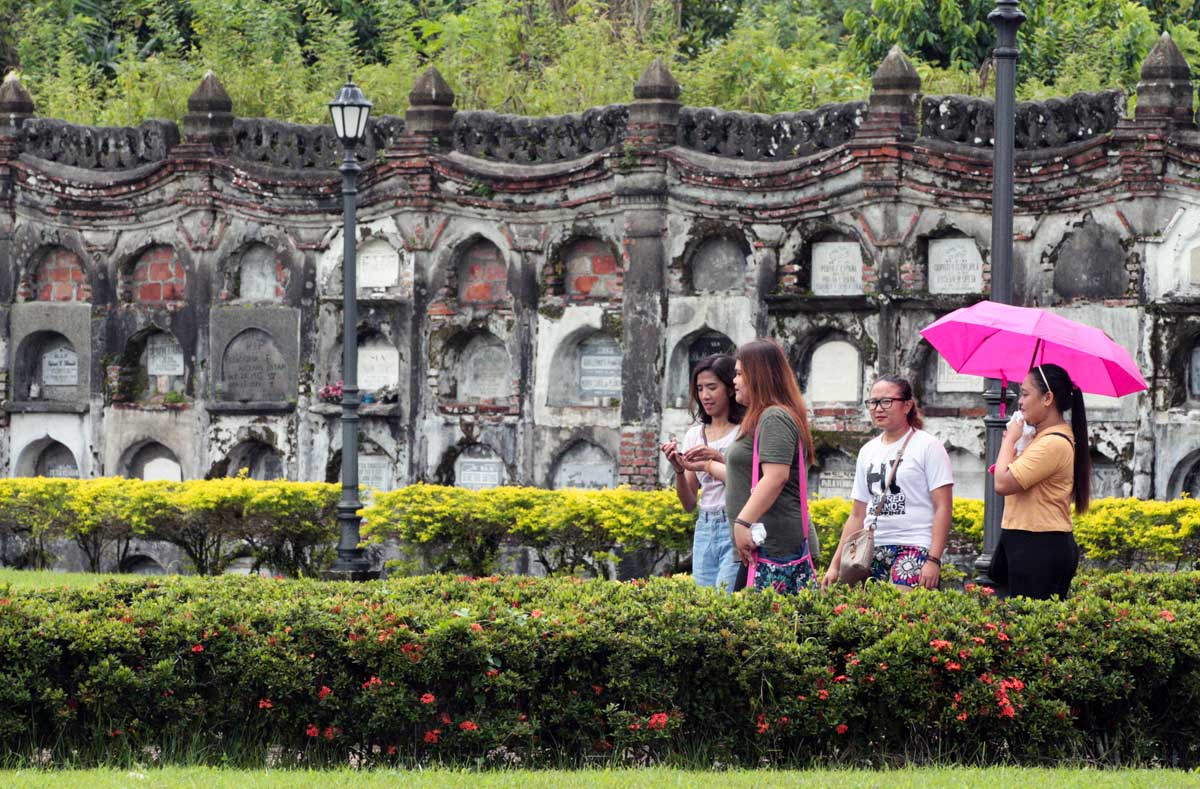
Unlike other cemeteries built during the Spanish era, the Nagcarlan cemetery has two levels. The deceased members of the town are buried in the niches on the surface, while an underground crypt serves as the resting place of friars and prominent members of Nagcarlan society. It is the only underground cemetery in the country.
The cemetery also played an important role during the 1896 Philippine revolution. Local leaders of the Katipunan revolutionary society used the underground crypt as a secret meeting place. It also served as a hideout for Filipino revolutionaries during the Filipino-American War and for guerrillas during World War II.
Today, the cemetery no longer serves its purpose and is now under the supervision and maintenance of the National Historical Commission of the Philippines (NHCP) after it was declared a National Historical Landmark in 1973. Aside from the cemetery, chapel and underground crypt, the NHCP also established a museum in the chapel to showcase the history of the place and the rare artifacts found in it.
Desecrated heritage
While the Nagcarlan Underground Cemetery is fortunate to have been preserved by the government, other heritage cemeteries in the country have gone to seed. Various elements such as weather, natural calamities and human activities have threatened to bury these cemeteries into oblivion.
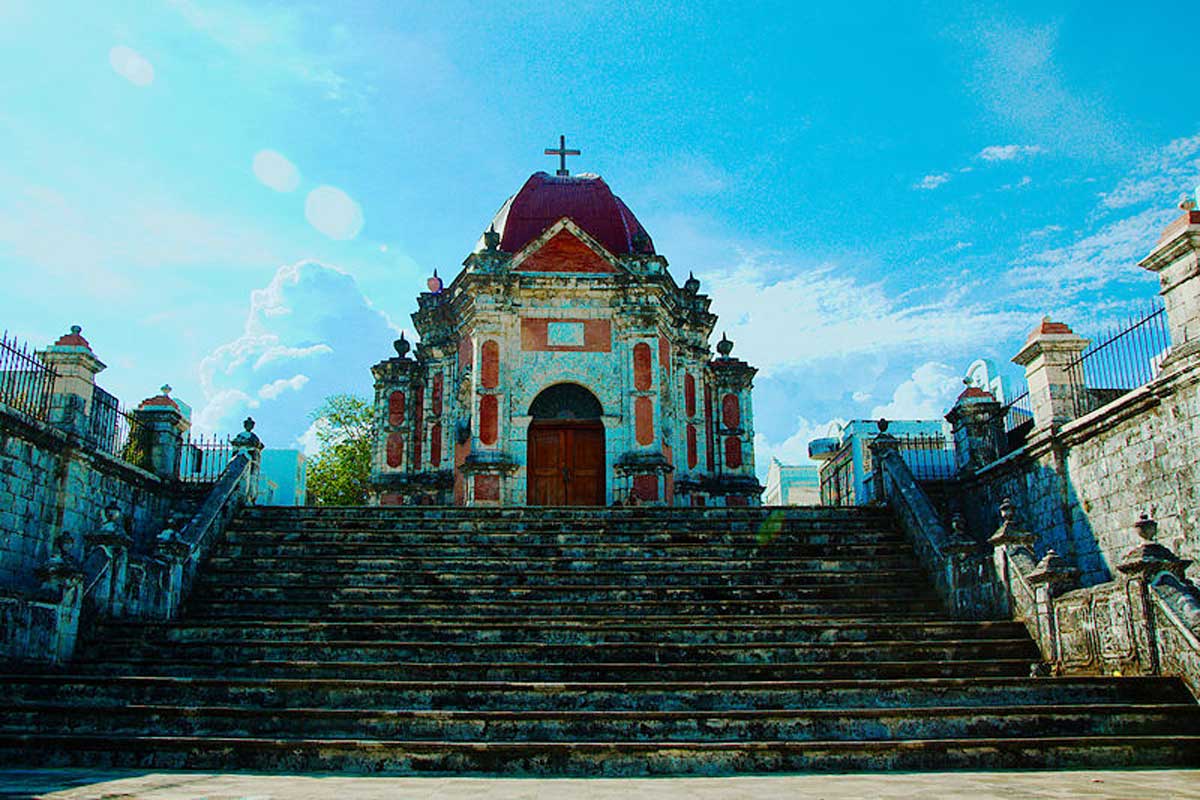
One such cemetery is the San Joaquin Campo Santo in San Joaquin, Iloilo. Built in 1892, the cemetery features an entrance arch and chapel built in the baroque style and is among the best-preserved Spanish-era burial grounds in the province.
But the pristine condition that the camposanto was in for more than a century was disturbed in 2015 after it was revealed that treasure hunters had dug a 60-foot-deep pit inside the chapel to look for buried wealth — threatening the structural integrity of the building.
The excavation even had the approval of the parish priest that oversees the cemetery. The priest has since taken an indefinite leave of absence from the parish, while the National Museum of the Philippines has filled the pit to restore its structural integrity.
In the same year, a road-widening project of the Department of Public Works and Highways also threatened to affect a portion of the cemetery’s perimeter fence. Fortunately, a written appeal from local townsfolk spared the cemetery from the agency’s roadwork.
To protect the site from further human intrusions that could damage its historic structure, the NMP installed a marker indicating the cemetery’s designation as a National Cultural Treasure. The National Commission for Culture and the Arts is also developing a conservation management plan to further protect and preserve the Campo Santo.
Saving cemeteries through social media
Aside from the Nagcarlan Underground Cemetery and San Joaquin Campo Santo, there are hundreds of heritage cemeteries across the country that are currently neglected and are in need of restoration so that future generations may appreciate and learn the country’s history from the sites.
But with hundreds of heritage cemeteries, some of which might not even be known to heritage conservationists, how can ordinary Filipinos be made aware of the need to preserve these artifacts of Philippine culture and history?
One group is using social media to put heritage cemeteries in the spotlight, enabling government agencies and heritage conservation groups to take action to protect and preserve them.
In 2014, Max Tuason and three other friends decided to start the Facebook page called Sementeryo: Heritage Cemeteries of the Philippines. It is the first-ever Facebook page dedicated to heritage cemeteries in the country, particularly those that are in dire neglect or are gravely endangered due to various natural and man-made threats. Their goal is to create awareness and inspire action for the preservation of heritage cemeteries.
“More than being the resting place of the dead, our old cemeteries — known variously as sementeryo, camposanto, libingan, himlayan, pantyon, patyo, and simboryo, among others — are filled with historical and cultural treasures. They are also tremendous repositories showcasing the lineage of Filipino families. Unlike well-known heritage sites such as ancestral houses and Spanish-era churches, our old cemeteries suffer from the results of ignorance, apathy, and indifference. Add to this the negative association of these places as spooky or haunted,” Tuason told The Philippine STAR via their Facebook page.
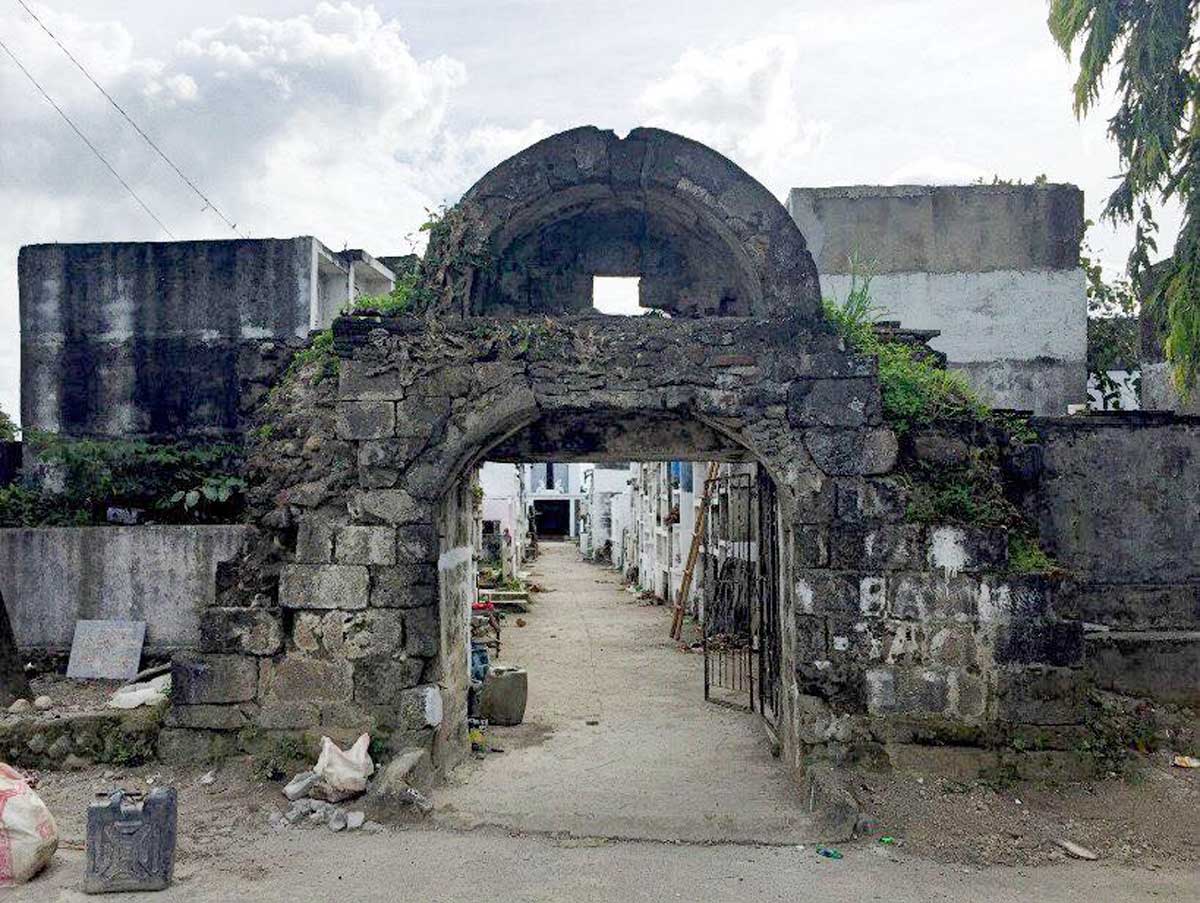
Since the Facebook page went online, Tuason and his fellow page administrators have already featured over 100 heritage cemeteries and related sites/structures. These include burial sites that have been known for the first time or have been forgotten for decades, mostly dating from pre-colonial times, the Spanish period, American period and the post-colonial period.
The Facebook page features a comprehensive dossier of photo albums, mostly crowd-sourced from fans of the page or taken by the administrators themselves. Photos include not just those of the cemeteries but also portals, gates, chapels, arches, walls, fences, gravesites, tombs, mausoleums, tombstones, epitaphs, sculptural pieces, markers and other forms of cemetery art and architecture.
Tuason and his friends continue to accept photo submissions from page followers, hence enriching their vast collection of photos. They organize weekly CamposanTours, which encourage people to visit their local heritage cemeteries, take photos, and submit them to the page.
“We also rely on contributions from heritage enthusiasts. There are no gatherings, no meetups, not even among the page administrators. Everything is a collaborative online effort,” Tuason explained.
According to Tuason, some of the sites featured on the page have received significant attention from concerned agencies and institutions, leading to their preservation and maintenance.
“For NHCP, our feature on Nagcarlan Underground Cemetery was utilized in their museum. We also noticed that some local government units and private groups initiated action on some places after they were featured. For instance, efforts were made to preserve the brick cemetery gate of San Isidro, Nueva Ecija after we posted stories about it. So, in a way we’re helping, too, through the power of social media,” Tuason says.
Today and tomorrow, as the country celebrates All Saints’ Day and All Souls’ Day, people like Tuason and the rest of the team behind Sementeryo: Heritage Cemeteries of the Philippines provide timely reminders of how we should treat our heritage sites, most especially our cemeteries. After all, how we treat our dead reflects the kind of people we are.


