



‘BLOODY SUNDAY’: Gov’t To Probe Nine Activists’ Killings As DOJ Chief Expresses Disappointment
Justice Secretary Menardo Guevarra said he hoped law enforcers “would be more careful” in conducting operations even as President Duterte ordered the military and the police to “kill” armed communist rebels.
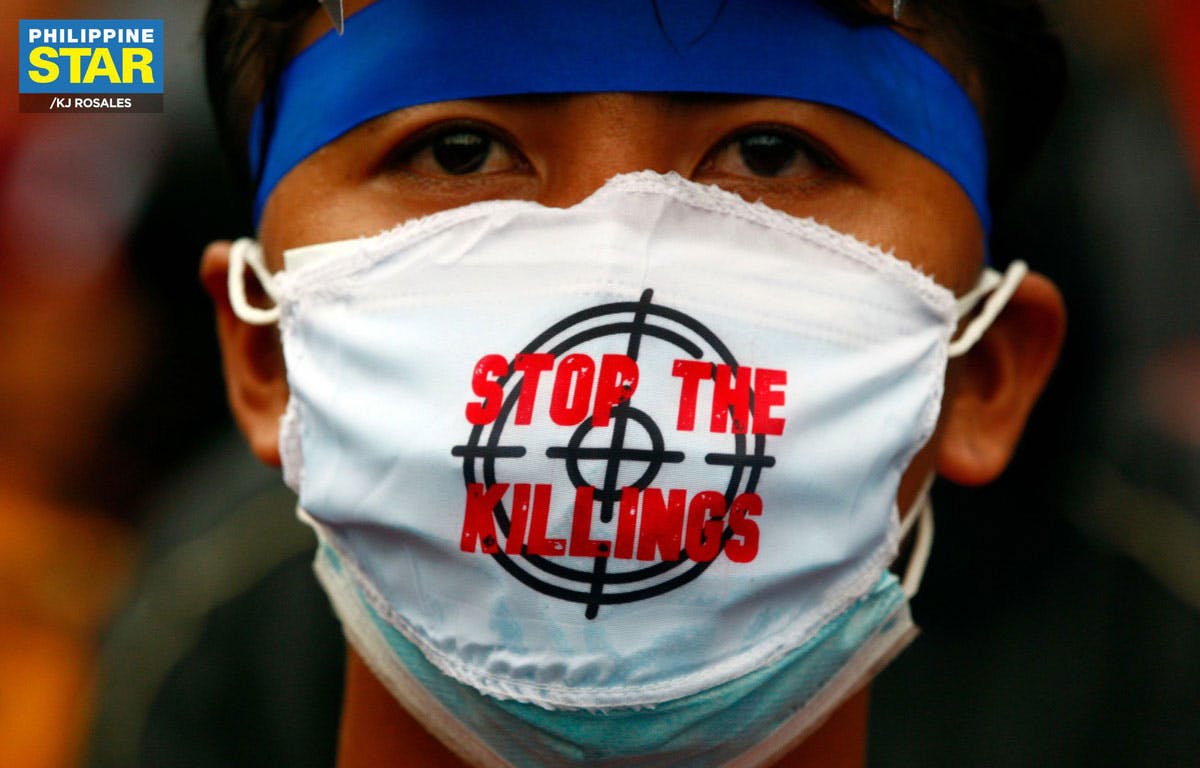
Malacañang on Monday, March 8, defended President Duterte's order for security forces to kill armed communist rebels as nine activists were killed and six others were arrested in several operations across the Calabarzon region during the so-called “Bloody Sunday,” March 7.
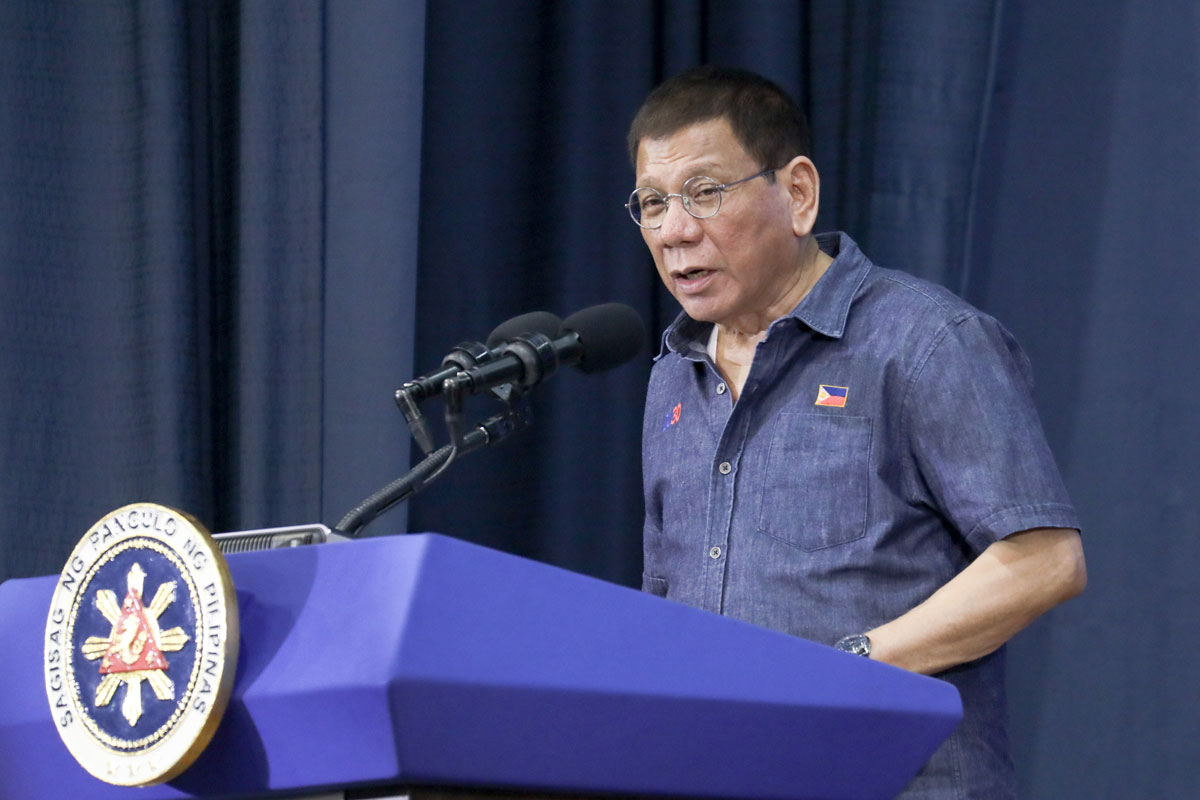
On Friday, March 5, Duterte ordered the military and the police to “kill them right away” and “ignore human rights,” referring to the communist rebels.
Justice Secretary Menardo Guevarra said he would not know whether Duterte’s remarks prompted the incident but emphasized he was “quite disappointed” that police killings continued weeks after he admitted to the United Nations Human Rights Council that in “more than half” of the anti-drug operations reviewed by a government panel, law enforcers failed to follow standard protocols.
“I am quite disappointed kasi nga hindi nabawasan, notwithstanding na sinabi na natin 'yan before the international body,” Guevarra told reporters.
“I was really hoping that with that statement I made before the UN, our law enforcers would be more careful in their operations but these things continue to happen,” he added.
Guevarra noted the Department of Justice would have to “really need to sit down with” the Philippine National Police, the Philippine Drug Enforcement Agency, and other law enforcement agencies “to make sure na hindi na masyadong mangyayari itong ganito (that these things will not happen too much again).”
On the other hand, Guevarra said he “really can’t speculate if may connection siya du’n sa sinabi ng Presidente (it has a connection with what the President said).”
Guevarra noted that it was not new for Duterte to speak about communists and alleged fronts in a violent manner.
“The President has always been vocal about 'yung fight against these communist terrorist groups, so nandu’n na 'yun a long time ago, so I cannot really say na dahil du’n sa sinabi ng Presidente (The President has always been vocal about the fight against these communist terrorist groups, so it has been there a long time ago, so I cannot really say that it was because of what the President said),” he said.
The police were only authorized by search warrants – many issued by Manila Regional Trial Court (RTC) First Vice Executive Judge Jose Lorenzo dela Rosa and Branch 174 Judge Jason Zapanta – to look for pistols and explosives allegedly kept by the activists.
Five of the nine slain activists were identified by the human rights watchdog Karapatan as follows:
- Emmanuel Asuncion, provincial secretary general of Bagong Alyansang Makabayan (Bayan), during a search for guns at the Workers' Assistance Center office in Dasmariñas City, Cavite;
- Chai Lemita Evangelista and Ariel Evangelista, spouses and members of Ugnayan ng Mamamayan Laban sa Pagwawasak ng Kalikasan at Kalupaan, during a search for hand grenades at their home in Nasugbu, Batangas;
- Mark Lee Bacasno and Melvin Dasigao, both members of the urban poor group San Isidro Kasiglahan, Kapatiran at Damayan para sa Kabuhayan, Katarungan at Kapayapaan (SIKKAD K-3)
Karapatan also identified the three of the six arrested activists as the following:
- Nimfa Lanzanas, Karapatan paralegal to political prisoners and member of Kapatid – Families and Friends of Political Prisoners – Laguna;
- Esteban Mendoza, vice-president of Olalia – Kilusang Mayo Uno;
- Elizabeth Camoral, spokesperson of Bayan – Laguna;
Bayan’s Laguna spokesperson Elizabeth Camoral and Kilusang Mayo executive vice president Esteban Mendoza were reportedly detained at the Canlubang City Jail and Camp Vicente Lim in Laguna province after police searched their homes in Cabuyao City for hand grenades as authorized by Dela Rosa.
Considered ‘extrajudicial killings’?
Guevarra said the Administrative Order No. 35 Task Force, named after former president Benigno Aquino III’s 2012 order that created the Inter-agency Committee on Extra-legal Killings, Enforced Disappearance, Torture and Other Grave Violations of the Right to Life, Liberty and Security of Persons, would look into the incident.
According to Guevarra, even if the police believed that the killed persons were members of the New People’s Army, the task force is not “bound by the characterization given by the police.”
The definition of victims of extrajudicial killings under AO 35 includes those who are a “member of, or affiliated with an organization, to include political, environmental, agrarian, labor, or similar causes” or are an “advocate of above-named causes.” The victims are “targeted and killed because of the actual or perceived membership, advocacy, or profession.”
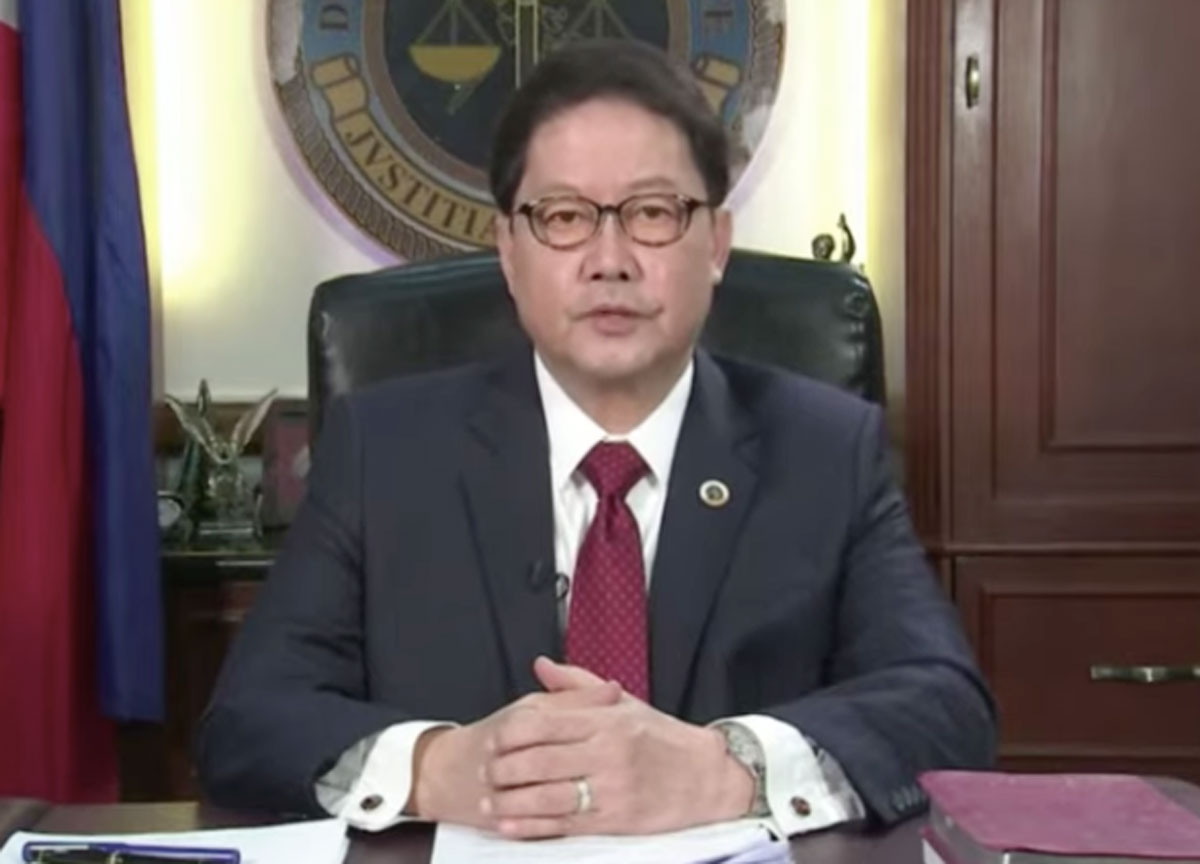
Although authorities have frequently claimed that they had to kill suspects because they were “fighting back (nanlaban),” Guevarra on Feb. 25 told the international community that this can never be confirmed because the allegedly recovered weapons were not fully examined, the ownership was not verified, and ballistic examinations and paraffin tests were not completed.
Bayan said all of those arrested and killed in Calabarzon were legal activists, not personalities of alleged “communist terrorist groups” as the Philippine National Police claimed.
“All were presented with questionable search warrants issued by Manila judges. The search warrant would usually show that the targets had ‘one hand grenade’ and this would be enough to give the police justification to raid the premises of the targets,” Bayan secretary general Renato Reyes said.
“A policeman makes a wild allegation that you are in possession of just one hand grenade and a judge will sign a search warrant that could lead to your arrest or death,” he added. “Nine were killed in the course of the operations. The judges who issued the search warrants are just as culpable for these deaths as the police who carried out the executions.”
Mere possession of firearms enough reason to kill?
Presidential spokesperson Harry Roque, in his regular press briefing, said: “Nakakalungkot po iyan dahil Pilipino, pumapatay ng kapwa Pilipino (That is very saddening because it’s a Filipino killing his fellow Filipino).”
Yet, the former human rights lawyer argued that in the times of war, “pupuwede talagang magkaroon ng labanan at meron talagang mamamatay, lalong-lalo na doon sa mga kasama po sa labanan (there can be a fight and there will really be deaths especially among those who are part of the fight).”
Roque claimed that under international humanitarian law, “tama iyong order ng Presidente (the President’s order is correct)—kill, kill, kill.”
He said that mere allegations of possession of firearms was sufficient reason to kill a person, instead of letting him face the criminal justice system.
“Kasi nga po kapag mayroong labanan, kapag ang kalaban mo, may baril na puwede kang patayin, alangan namang ikaw ang maghintay na (Because when there is a fight, when your enemy has a gun that can be used to kill you, it does not make sense for you to wait),” Roque said.
However, treaties such as the Geneva Convention provide protection to civilian persons in times of armed conflict.
Roque said the government would probe the killing of the nine activists, noting that under the international law, civilians should not be targeted by forces involved in the conflict. He noted that the state has the obligation to investigate and prosecute crimes like murder.
"I am very sure that (the killings) would be investigated and if there are people who committed wrongdoing, they would be prosecuted and punished," Roque said.
"With regard to the nine who were killed, we will investigate... when they were killed, they were unarmed," he added.
Roque stressed the probe would determine if there is necessity and proportionality in the killing of the activists.
"If there is none, that is the crime of murder," the Palace spokesman said.
Roque pointed out the government is working to stop the conflict with communists, including the distribution of land and the giving of livelihood to former rebels.
"You have a lot of party list groups, why not just engage in purely parliamentarian struggle? Armed struggle is already passé," he declared.
Turning to the Supreme Court
The National Union of People’s Lawyers, meanwhile, turned its attention to the Supreme Court and called for a review of the circular allowing the executive judges and vice executive judges of the Manila and Quezon City RTCs to issue search warrants outside their territorial jurisdictions.
Dela Rosa had previously issued the search warrant that gave rise to the Dec. 30, 2020 operation where nine members of the Tumandok indigenous group were killed. Meanwhile, Quezon City RTC Executive Judge Cecilyn Burgos-Villavert was criticized for issuing search warrants that yielded the arrests of nearly 70 activists in various raids nationwide.
NUPL lawyer Josalee Deinla said in a press conference on Monday: “We demand judges to be more circumspect and be more probing with these applications for search warrants.”
Massacre
In a statement on Monday, Vice President Leni Robredo stated “there is no other way to describe” what happened: “It was a massacre. And it came just two days after the President himself ordered state forces to ‘ignore human rights,’ kill communist rebels, and ‘finish them off,’ in his rant before the National Task Force to End Local Communist Armed Conflict (NTF-ELCAC).
Robredo lamented the killings continue despite the coronavirus pandemic that is causing hunger and deaths among Filipinos. She said poor people were also being killed in the name of the drug war for five years now.
She condemned the killings and called for a clean and independent investigation to determine those who should be made accountable.
“Indeed, these are difficult and dangerous times…The Filipino people deserve better than this murderous regime,” Robredo said as she called on the public to reach out, check on friends and stay safe.
Robredo also the people not to be afraid and instead unite to protect one another and stand up for those who believe in good governance, freedom and democracy.
Clear guidelines
Military and police officers must issue clear guidelines on the intensified campaign against the communist insurgency given the recent spate of killings that many attribute to Duterte’s recent order to “kill” communist rebels, Sen. Panfilo Lacson said on Monday.
“When the commander-in-chief barks out an order, the commanders of the troops must dish out clear guidelines on how to carry out such anti-insurgency operations to make sure that they target only the armed combatants,” Lacson pointed out.
The only legal justification to kill an adversary is in defense of oneself or another person, the senator, who chairs the committee on national defense and security, Lacson said, adding “it may not be proper to make premature conclusions and claims about the Calabarzon raids at this time, lest they affect the conduct of official investigations by the appropriate agencies.”
Sen. Grace Poe said police operations against any suspected groups or individuals must strictly adhere to due process.
She stressed the Constitution states that “no person shall be deprived of life, liberty, or property without due process of law, nor shall any person be denied the equal protection of the laws.”
“It is the mandate of law enforcers to ensure that these guarantees are observed and not just dismiss nonchalantly cries of possible human rights violations,” Poe said. “Protecting the right to life should have the highest threshold in our quest for peace and order.”
Sen. Leila de Lima said it was not a coincidence that the killings took place days after Duterte gave his marching orders to “ignore human rights,” especially since they happened in the provinces under the jurisdiction of the Armed Forces of the Philippines Southern Luzon Command, whose head Lt. Gen. Antonio Parlade, Jr., is also the spokesperson of National Task Force to End Local Communist Armed Conflict or NTF-ELCAC.
“For this regime, government critics, activists and other truth-seekers can be, and are being branded as enemies of the State, making them targets of Duterte's ‘kill, kill, kill’ policy,” De Lima said in a dispatch from her detention cell in Camp Crame. “We will not stop until these murderers are held accountable for their crimes.”
Sen. Francis Pangilinan found the killings “very disturbing” and said the “nanlaban” excuse would “always be under a cloud of suspicion” with the PNP yet to make the wearing of body cameras a standard procedure.
“Condemnation and outrage would be an understatement over the fate that befell the victims. Have we become a nation of butchers of our fellow Filipinos? Is there no more respect and value for life, rights, and due process?” Pangilinan said.
Sen. Risa Hontiveros blamed “this administration’s high level of disrespect towards basic human rights” and stressed that “labor and community organizers are not combatants.”
Calling for an investigation by the Commission on Human Rights, Hontiveros said: “There is no denying that this scale of violence, injustice, and impunity is being perpetrated by this administration. The President's recent televised threats of red tagging and outright murder are unbridled human rights violations that must be held to account.” – With Rhodina Villanueva


 Run 3.jpg?w=320&h=200&auto=compress&fit=crop&q=50)

