


Schools Told: Use Operating Funds To Buy Electric Fans
“It’s not that much, P2,000 depending on the model (of the electric fan),” Education Secretary Sonny Angara said.
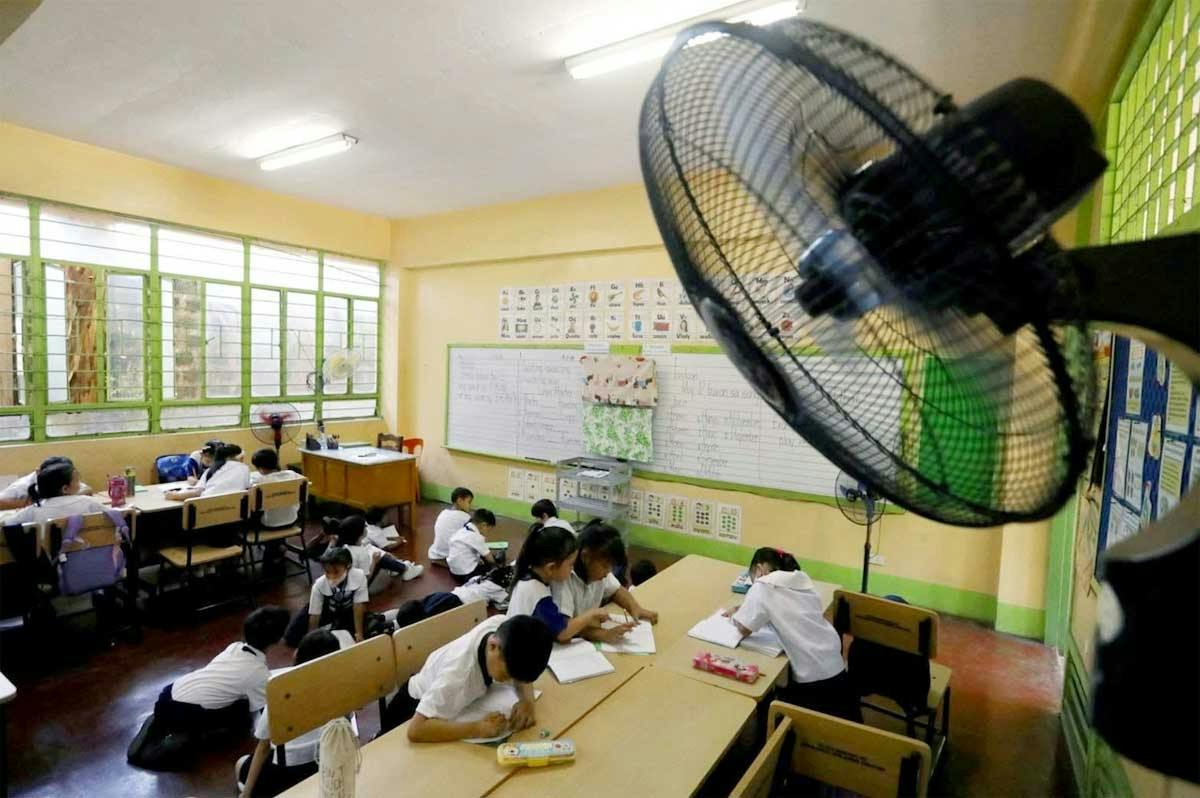
Schools can use their maintenance funds to purchase electric fans and mitigate the impact of the super El Niño during classes, according to Education Secretary Sonny Angara.
“They can use part of their MOOE (maintenance and other operating expenses) to spend on electric fans and at the same time we can download (additional funds). It’s not that much, P2,000 depending on the model,” Angara said on Wednesday, Oct. 28, following his visit to the Lakan Dula High School in Tondo, Manila.
Angara met with officials of Maynilad Water Inc., who promised to provide uninterrupted water supply in schools during the El Niño months.
“We need to ensure the availability of water and water conservation is also important,” Angara added.
He said school authorities are required to inform the local government units (LGUs) if classes will be suspended due to the harmful effects of El Niño.
The Department of Education has issued comprehensive guidelines for schools amid the threat of the super El Niño, ordering the suspension of all physical and home-based academic activities once ambient temperature hits 42 degrees Celsius, to ensure the safety of learners and teachers.
Angara signed DepEd Memorandum No. 64, Series of 2026, which aims to keep school environments safe, protect the health of learners and personnel and ensure that learning continues throughout the anticipated dry spell.
Under the guidelines, physical classes will be suspended when temperatures reach 33 to 41 degrees Celsius, with learners shifting to lighter home-based tasks and health check-ins.
When temperatures range from 27 to 32 degrees Celsius, school heads may shorten in-person hours or shift to hybrid and flexible home-based schedules.
Regular face-to-face classes with scheduled hydration breaks may continue when temperatures remain below 27 degrees Celsius.
No hoarding
The Department of Science and Technology called on the public to avoid hoarding drinking water in preparation for El Niño, giving assurance that current water supply remains adequate.
Science Secretary Renato Solidum Jr. offered practical ways to cope with El Niño, which is characterized by extreme heat, less rainfall and declining water supply.
“No need to hoard water,” the DOST chief said during the Handa Pilipinas Luzon Leg at the SMX Convention Center in Clark, Pampanga. “In fact, you don’t need to hoard because there’s no supply issue yet.
“What is important, though, is to save water that will drop from the sky for other purposes,” Solidum said, taking a cue from President Marcos’ controversial suggestion to buy buckets and store rainwater.
“I myself have been storing rainwater in two huge drums and bottles of soft drinks. I don’t throw them just to make sure that I have enough water for watering plants or cleaning your car.”
Philippine dams still hold adequate levels of water, with Angat Dam – Metro Manila’s main source of water – just a meter shy of its 210-meter normal operating level.
Water concessionaires like Maynilad and Manila Water have assured the public over the past weeks that no water interruptions are expected, citing investments in alternative sources.
Solidum also emphasized the need to be properly hydrated, since the phenomenon will coincide with the summer season, when the heat index reaches above 40 degrees Celsius.
Solidum clarified that filtration systems, like the Social Welfare Department’s water filtration kit, are only “emergency measures.”
The very strong El Niño is expected to intensify by the end of the year and will last until the first half of 2027.
Interim power
Meanwhile, the Department of Energy has put in place mechanisms to reserve 250 megawatts of interim capacity in preparation for El Niño.
“The DOE has already found power barges or generation sets – this means there are ships that serve as a power plant, will be delivered (to needed areas) and will be contracted even in the short term to add more power if needed,” Energy Secretary Sharon Garin, speaking on the sidelines of the Singapore International Energy Week, said.
Five power barges have already been identified, according to Garin.
Additional batteries are also underway, pending contracts from the National Grid Corp. of the Philippines (NGCP).
Besides the temporary fix, the DOE is monitoring scheduled maintenance of power plants to prevent further strain on the grid.
Garin reiterated that Task Force El Niño, composed of units such as the Office of Civil Defense, the National Disaster Risk Reduction and Management Council and the DOE Task Force on Energy Resiliency, is in full swing to ensure energy security during this critical time.
Preemptive interventions and the immediate pre-positioning of relief supplies must be rolled out to shield vulnerable sectors from the impending super El Niño, Sen. Francis Pangilinan said on Wednesday. – With EJ Macababbad, Neil Jayson Servallos


