



Who’s To Blame? Crowding In Malls, Roads Under MECQ, GCQ Bewailed
Malls are starting to become crowded with people with private vehicles since public transportation services remain suspended. Who should be made responsible if the coronavirus disease 2019 spreads because of this?
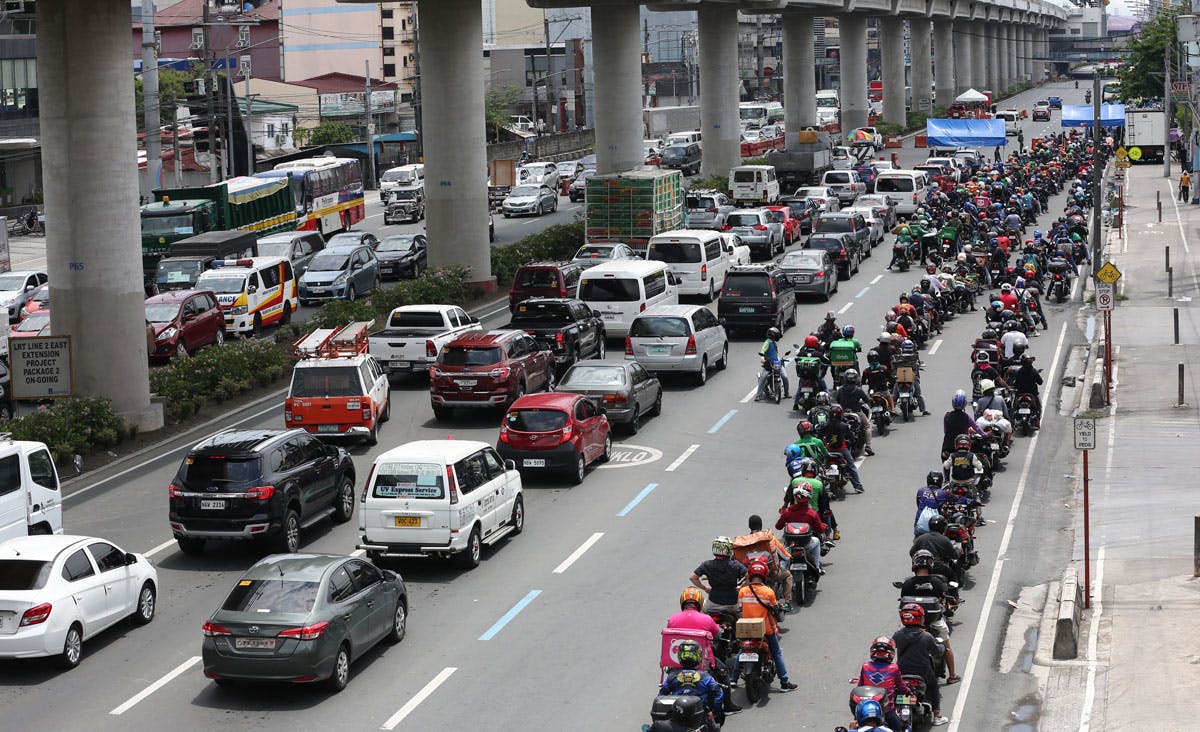
As quarantine rules were relaxed beginning Saturday, May 16, those who can afford to go around began crowding the roads and shopping malls during the first weekend of Metro Manila’s “modified enhanced community quarantine” or MECQ.
Photographs showed private vehicles crowding major thoroughfares like EDSA and Marcos Highway on Saturday, although checkpoints slowed down the traffic flow.
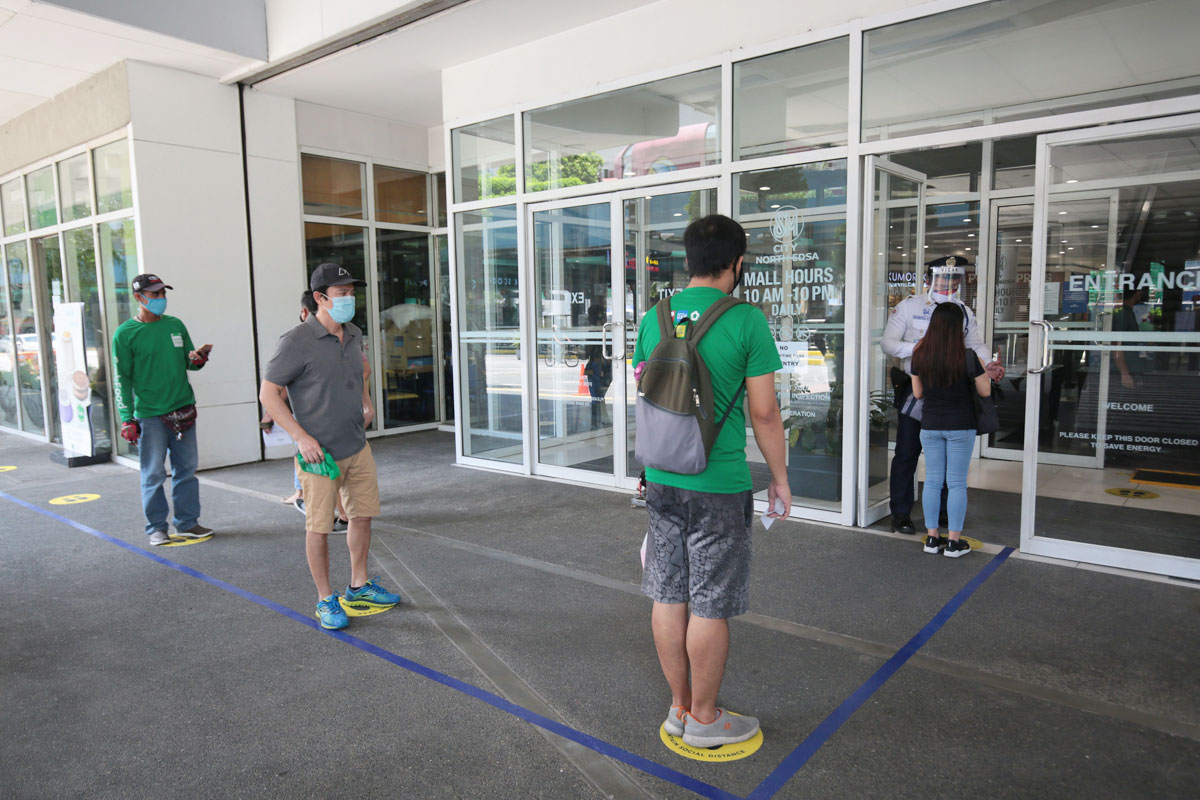
Meanwhile, malls like SM North EDSA – as seen in the photos by Mark Samson of TV5 – saw increased foot traffic on Saturday as more businesses were allowed to partially reopen, prompting reminders to observe strict social distancing protocols.
The Philippine STAR photos below, taken by Michael Varcas, showed that on the second day of MECQ on Sunday, May 17, mallgoers at SM North EDSA were much more observant of the need to stay away from each other.
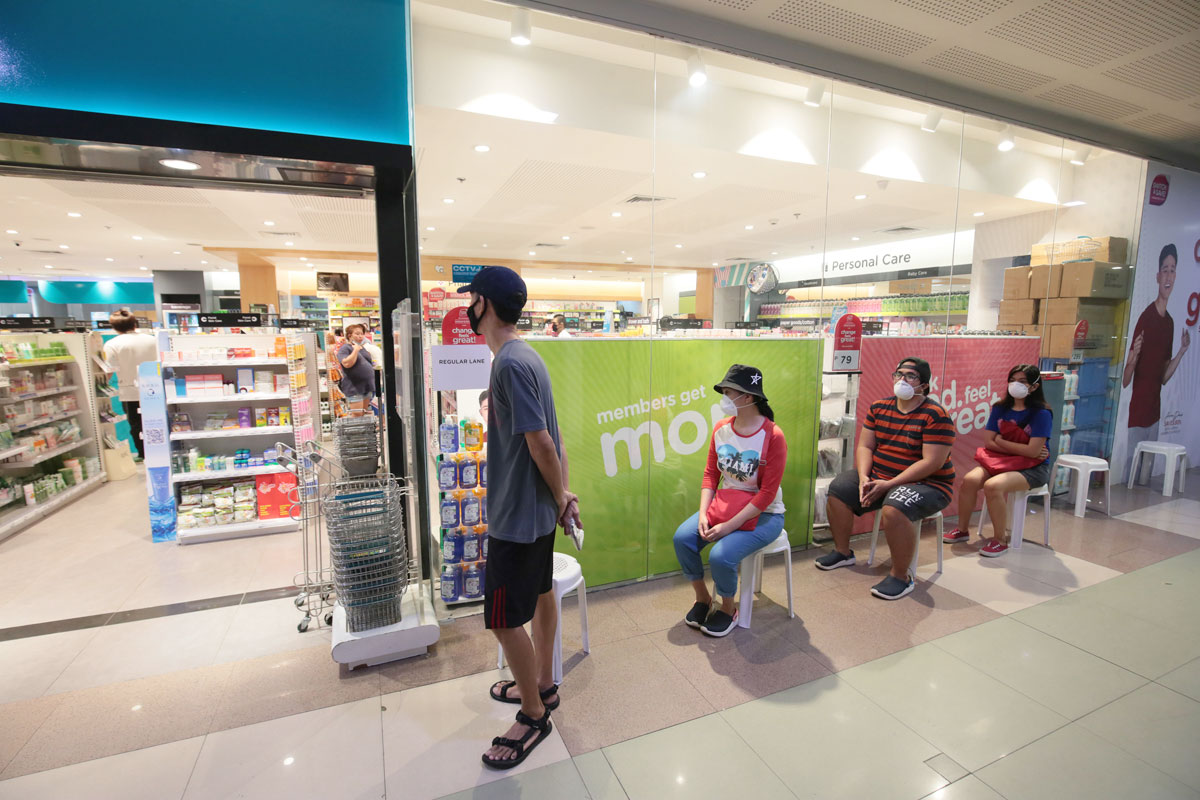

The MECQ is a softer version of the enhanced community quarantine (ECQ) imposed on Metro Manila and the rest of Luzon from March 17 to May 15.
Under the guidelines issued by the Inter-Agency Task Force for the Management of Emerging Infectious Diseases, the following measures would be relaxed: stringent limitations to movement and transportation of people, regulation of operating industries, provision of food and essential services, and heightened presence of uniformed personnel.
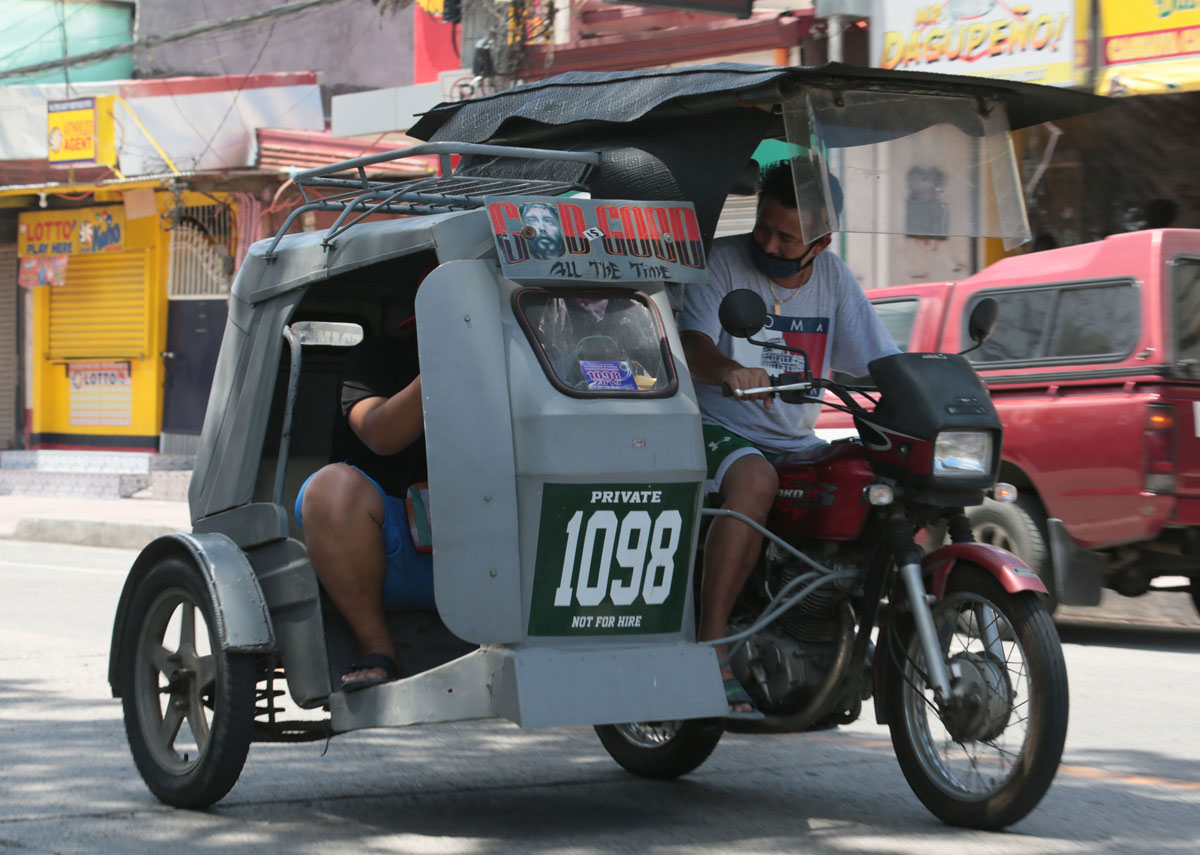
Non-essential businesses that were shut down during ECQ were allowed to reopen at 50 percent operational capacity, yet public transportation apart from tricycles would remain “suspended.”
So far, six cities in Metro Manila – Caloocan, Mandaluyong, Marikina, Navotas, Pasig and Valenzuela – have allowed tricycles to resume operations. Tricycles were banned by the Department of the Interior and Local Government (DILG) from national highways in February.
While businesses are allowed to provide their own shuttle services, this left open the question of how the employees of less capable companies can go back to work.
In his May 14 briefing, presidential spokesman Harry Roque did not mention how the Palace expected the workers of companies without shuttle services to earn income and feed their families. He only said such companies should not resume operations, and that curtailing the movement of people was “a policy decision.”
“Kung hindi naman po kaya talaga ng kumpanya na magbigay ng shuttle o kung walang sasakyan iyong kanilang mga empleyado, eh huwag na po munang magbukas (If the company is really unable to provide a shuttle or its employees have no vehicles, they should not open for now),” Roque said. “It’s a policy decision po. We want to restart the economy but not at the expense of having a second wave.”
Who’s to blame?
The issue of mobility prompted some Filipinos to question if the government’s targeting of public transportation has been misplaced.
Even with limited mobility, the poor get much of the blame from unsympathetic netizens complaining about their supposed lack of discipline for daring to leave their homes to buy necessities or try to earn a living.
Sociologist Sarah Raymundo, a faculty member of the University of the Philippines Center for International Studies, pointed out that public vehicles should not be singled out if the government wanted to limit the movement of people.
Raymundo said the photos of the SM North EDSA crowd showed that “public vehicles like buses, which are still banned under modified ECQ, are not heavy traffic culprits.”
She noted that the people seen hardly observing social or physical distancing measures in the shopping malls “can only be people with private cars since public transport is still banned.”
“Clearly, it is not the protest rallies or mass demonstrations, not working people driving and riding public utility vehicles like buses and jeepneys, those people that the ruling class loves to blame for the consequences of its own crimes who are responsible for yesterday’s ‘crowding,’ ” Raymundo said.
Transport group Pinagkaisang Samahan ng mga Tsuper at Operator Nationwide said that instead of restricting public utility vehicles, the government should allow more to resume operations.
This is to avoid having stranded workers crowding the streets as they wait for the few available vehicles that operate at a reduced capacity in compliance with social distancing guidelines.
“Sobrang agawan at siksikan sa mga limitadong bilang ng mga masasakyan. At masaklap dahil siksikan ay nabalewala ang pangangailangan ng physical distancing (There is too much fighting over and crowding in the limited number of vehicles. What’s worse is because of the crowding, the need for physical distancing has been ignored),” PISTON pointed out.
“Hindi na naawa ang gobyerno sa mga mahihirap at karaniwang mamamayan. Mahirap na nga, lalo pang pinahihirapan. Samantalang todo pahintulot naman ang gobyerno sa mga pribadong sasakyan pero bawal at limitado ang public transport (The government has not shown mercy to the poor and ordinary citizens. They’re already poor, but only made to suffer even more. Meanwhile, the government has eagerly permitted private vehicles but banned and limited public transport),” it added.
Government officials have explained that the number of passengers in private vehicles is limited, which can be difficult to enforce particularly in jeepneys. They have also noted that one of the most effective ways of limiting the number of people in the streets during community quarantine is by banning public transportation.
Twitter user @libraluxe said the lack of public transportation is “anti-poor.” “If we are truly controlling movement, then let’s control everyone. Policy should favor everyone or none at all. But if you’ve never had to wade through waist deep floods or experience being squished by people in packed vehicles just to get around, you would not understand that,” she said.
Writer Katrina Stuart Santiago said she expected President Duterte to continue blaming the masses for the return of the crowds. “He will deliberately mistake them for the poor even when parking lots were full and traffic heavy with private vehicles,” she said.
Duterte, in a late-night speech on April 16, 2020, accused the public of lacking discipline and not complying with the social distancing guidelines. He warned that the military and police would “take over” the enforcement of the lockdown in a scenario he described as “parang martial law na rin (just like martial law).” He was apparently reacting to the “throng” that may be seen in public markets where people get their food.
The police and military did take charge of enforcing quarantines and lockdowns together with barangay personnel.
In an Oct. 17, 2017 speech, Duterte had cursed out drivers and operators fearing displacement under the government’s public utility vehicle modernization program: “Mahirap kayo? Put**g ina, sige. Magtiis kayo sa hirap at gutom, wala akong pakialam (You’re poor? Son of a b***h, fine. Suffer from poverty and hunger, I don’t care).”
Aside from depriving millions of drivers and their families of livelihood, many health workers and employees of the few businesses allowed to continue operations during the quarantine were forced to walk to their workplaces, in some cases for several hours. The government did not initially take this into consideration; Cabinet Secretary Karlo Nograles said frontliners should ride private vehicles if they wanted to avoid walking. But efforts by private individuals to assist the frontliners led agencies and local government units to start providing shuttle services.
While taking exception to the notion of the undisciplined poor, Raymundo said “people should never be blamed for behaving like free citizens.” She instead called out the government for failing to use the quarantine as a chance to “flatten the curve” (limit the increase in the number of new VOCID-19 cases daily) while dooming Filipino families to “unthinkable states of hunger and misery.”
The government has admitted difficulty in balancing the need to save lives and livelihoods especially of the poorest sectors amid the pandemic.
Wiping the gains of ECQ?
Meanwhile, IATF special adviser Dr. Anthony Leachon expressed fear that “we have just lost the gains of our (two)-month lockdown” as a result of the crowding on Saturday. He listed “three reasons why we fail” – ignorance, ineptitude, and lack of culture of commitment of the people.
Historian Kristoffer Pasion, for his part, bemoaned that while it is likely that too many deaths could not be confirmed to be related to COVID-19 as a result of the country’s still-limited testing capacity, the government already allowed malls to partially reopen with “flimsy” regulations.
“It gave a go-signal for malls to open with a flimsy definition of the difference between ECQ & MECQ, and they expect people to stay inside? Are they that naive?” Pasion said.
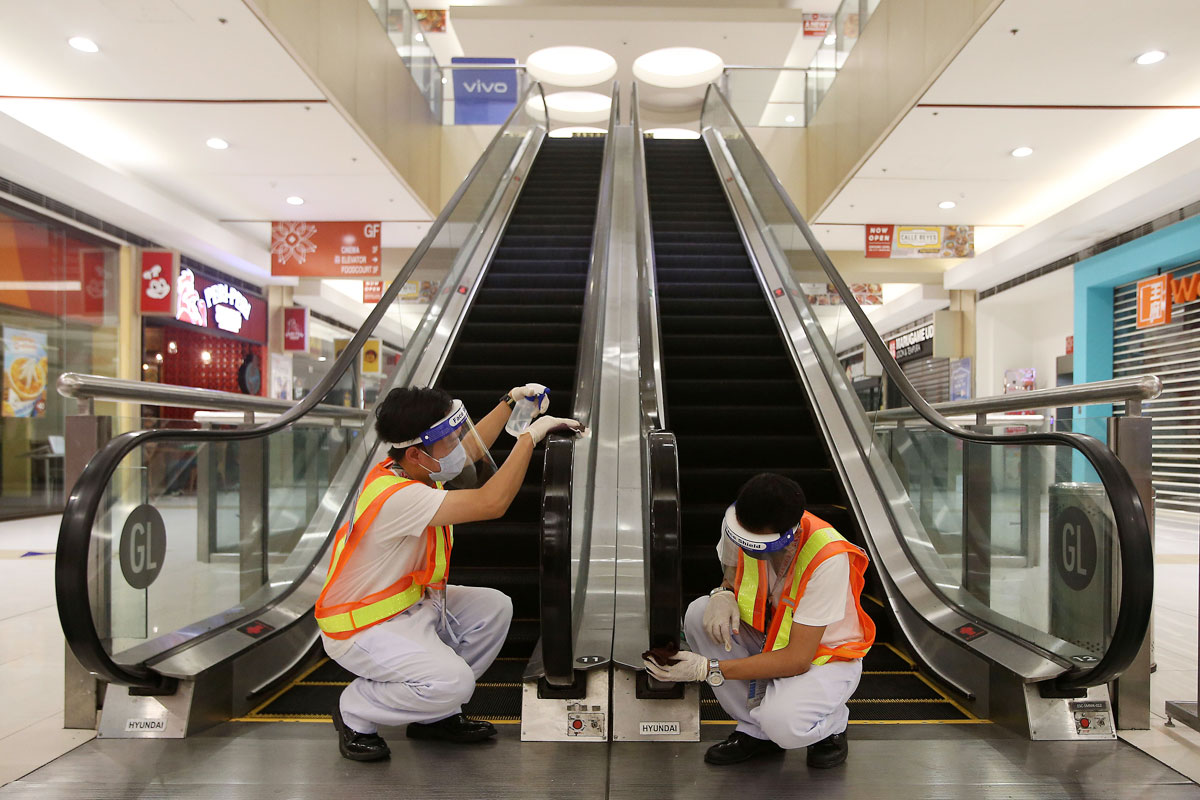
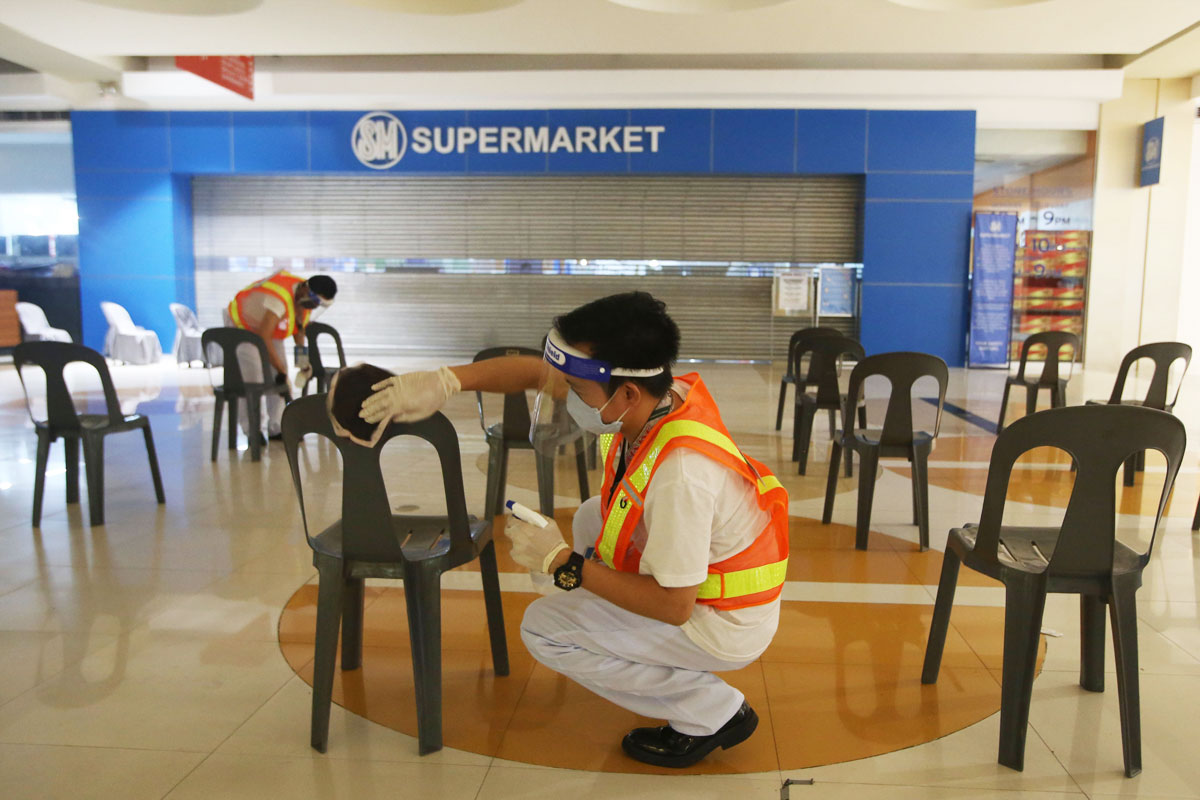
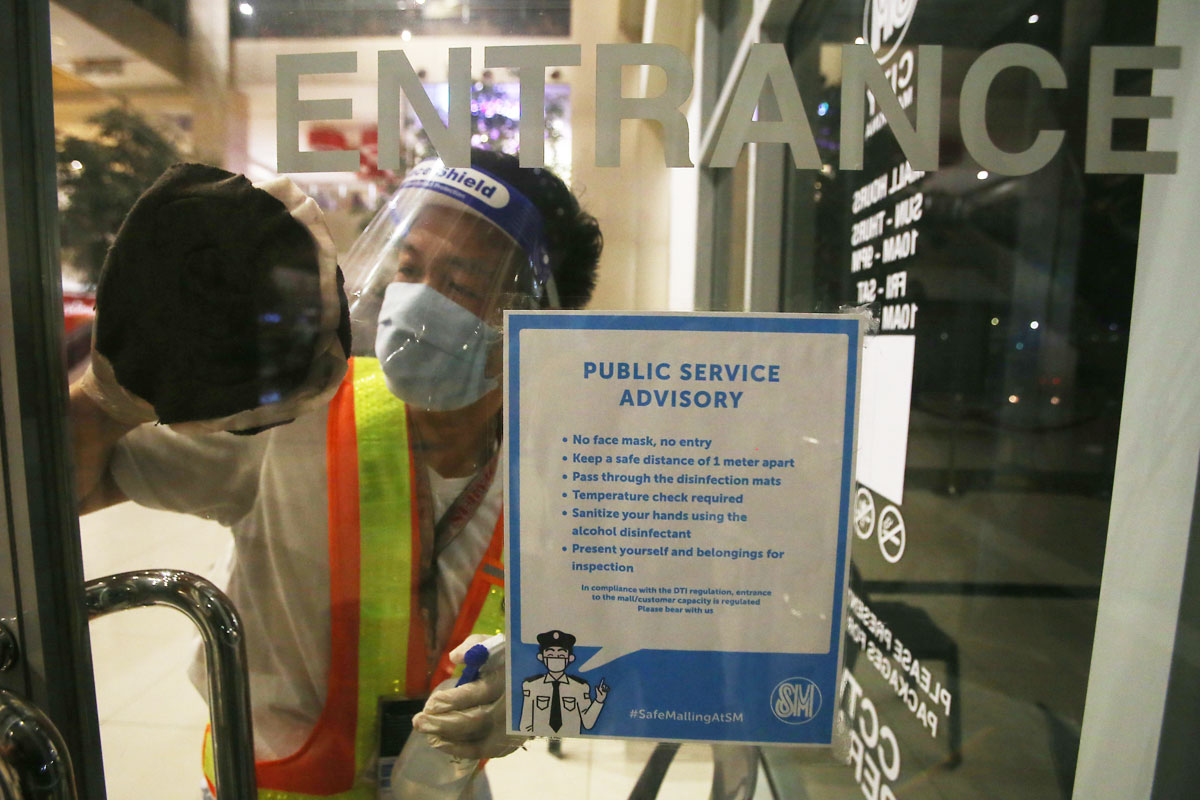
In a statement, SM Supermalls said it was carrying out strict safety and sanitation measures, such as thorough cleaning and disinfection throughout mall hours, sanitation of restrooms every 30 minutes, installation of temperature checks and disinfecting foot mats, provision of alcohol dispensers, and disabling of free Wi-Fi access to discourage loitering.
It said hallways and common areas would have directional arrows on the floor to encourage one-way customer traffic and avoid having them in contact with each other. Meanwhile, it said it would run COVID-19 antibody rapid testing for all employees and agency frontliners, including janitors and security guards, while tenants can avail themselves of the tests for their staff at cost.
“Everyone will be required to wear face masks at all times. In observance of social distancing, SM lays emphasis on ‘safe distancing’ as this promotes the importance of physical distance with social connectivity,” it said.
Shopping malls warned
Following reports of large crowds inside the malls, DILG Secretary Eduardo Año and the Philippine National Police warned mall operators that they would be closed down if they fail to implement public safety protocols amid the COVID-19 pandemic.
Año said it is the responsibility of mall operators to ensure the safety of their patrons by implementing health measures in their premises. These include the strict implementation of physical distancing measures, which include the control of the entry of people in the malls as well as density rationing.
He tasked LGUs and the PNP’s Joint Task Force COVID Shield to strictly inspect and monitor the compliance of malls with minimum health standards and quarantine protocols.
Año said that despite more foot and vehicular traffic, the police would continue its visibility operations, especially checkpoints to target quarantine violators, including those who violate curfew.
“The general rule continues to be ‘stay at home’ unless accessing essential services or going to work in permitted industries. Those found to be unauthorized will be fined, issued citation tickets, or detained if they refuse to go home,” he said.
Año said it seemed like many individuals were so excited to get out of the house after two months of lockdown since March.
“We have to admit na nabigla ang mga tao. Parang mga nakawala sa kural sa unang tendency. Siguro sa pagka-lockdown ng 60 days, gusto makakita ng ibang tanawin. Nangyari tuloy lahat gustong lumabas kahit wala namang reason,” he noted.
PNP deputy chief for operations Lt. Gen. Guillermo Eleazar warned in a statement that the police would not only facilitate the closure of erring malls but would also initiate the filing of appropriate charges against the management.
The PNP has identified the malls and other business establishments that have violated the protocols.
“Police commanders were instructed to warn the management of these malls and make sure that the warning be personally relayed to the mall management and other similar establishments,” Eleazar said.
Aside from strict implementation of physical distancing, Eleazar said mall security guards must also ensure that visitors are wearing face masks.
Eleazar said Año was frustrated with what he saw.
But the PNP is optimistic that the people will quickly adapt to the MECQ guidelines in the coming days after the ECQ was downgraded over the weekend in most parts of the country.
Eleazar said that based on the assessment of police on the ground, the first day of the partial resumption of business in the areas previously under ECQ was generally peaceful.
PNP spokesperson Brig. Gen. Bernard Banac said “we were quite alarmed, but this is understandable. As days go by, we will continue to learn, collaborate, and adjust accordingly our enforcement of MECQ guidelines.”
“After all, this is the new normal, we all must learn to live with it,” Banac said.
Police also observed that “many shoppers enjoyed the day at the malls and overstayed inside supermarkets and shops, such that by late afternoon, the accumulated number of people inside malls seemed to look like overcrowding,” Banac said.
Based on the guidelines, mall security managers should compute the maximum number of people to be allowed inside.
The limit is one person for every two square meters of the mall’s common area. Mall tenants should also limit the number of persons entering their shops to observe social distancing.
Security guards and mall employees should conduct regular patrols to remind people of the rules on physical distancing and wearing of face masks.
Those who cannot be accommodated after the mall reaches maximum capacity must wait in line outside the mall for their turn to replace those who would leave. Physical distancing should be observed in the waiting area. - With Emmanuel Tupas, Romina Cabrera


