



Martial-law Type? DOJ Says Duterte Can Call On Military To Enforce ECQ
By stopping short of declaring martial law, was President Duterte able to steer clear of constitutional issues?
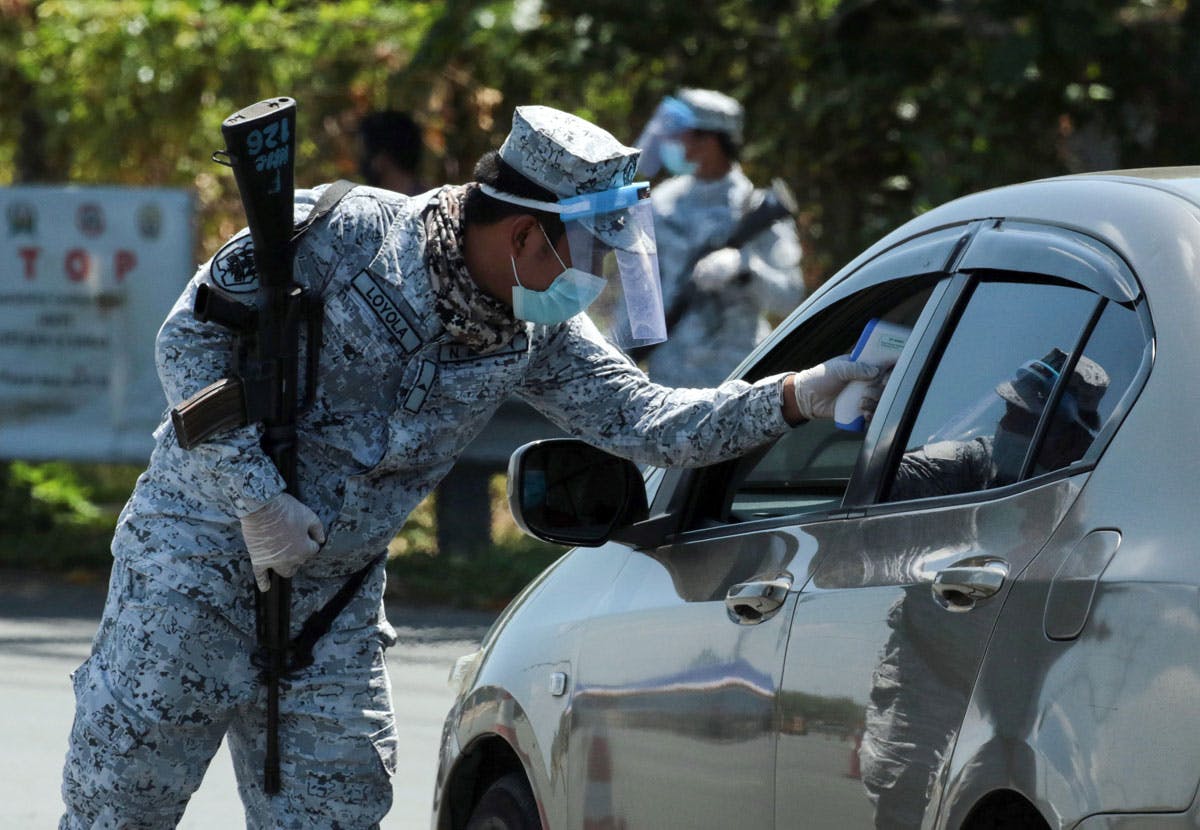
President Duterte can mobilize the military to help the Philippine National Police in enforcing the enhanced community quarantine (ECQ) even without declaring martial law, Justice Secretary Menardo Guevarra said, citing the “special powers” given to the Chief Executive under Republic Act No. 11469 or the “Bayanihan to Heal as One Act.”
This came after Armed Forces of the Philippines (AFP) spokesman Brig. Gen. Edgard Arevalo confirmed the veracity of a leaked memorandum instructing “all personnel to prepare for strict implementation of extensive enhanced community quarantine.”
Cited as basis in the memorandum was Duterte’s latest pronouncement on a martial law-type role for the AFP and Philippine National Police. This referred to his April 16 late night speech in which he berated the people for lack of discipline, and warned that the police and military would enforce physical distancing and curfews in a scenario he described as “parang martial law na rin (just like martial law).”
What prevents the President from declaring martial law outright is the requirement under Article 7, Section 18 of the Constitution that it can only be imposed “in case of invasion or rebellion, when the public safety requires it.”
The term “extensive enhanced community quarantine,” which seems to imply more stringent restrictions than those currently imposed by authorities, was mentioned for the first time in the April 17 memorandum that was leaked in a since-deleted April 18 post on Reddit board r/Philippines.
Arevalo explained that “as of now, there is no order to deploy,” but he said personnel were being alerted regarding the possible heightening of measures “if the observed deterioration in discipline and order will continue and the people will not heed the pleas of government.”
‘Not taking over as in a martial law setting’
Sought for comment, Guevarra told The Philippine STAR that the AFP “is not taking over as in a martial law setting.”
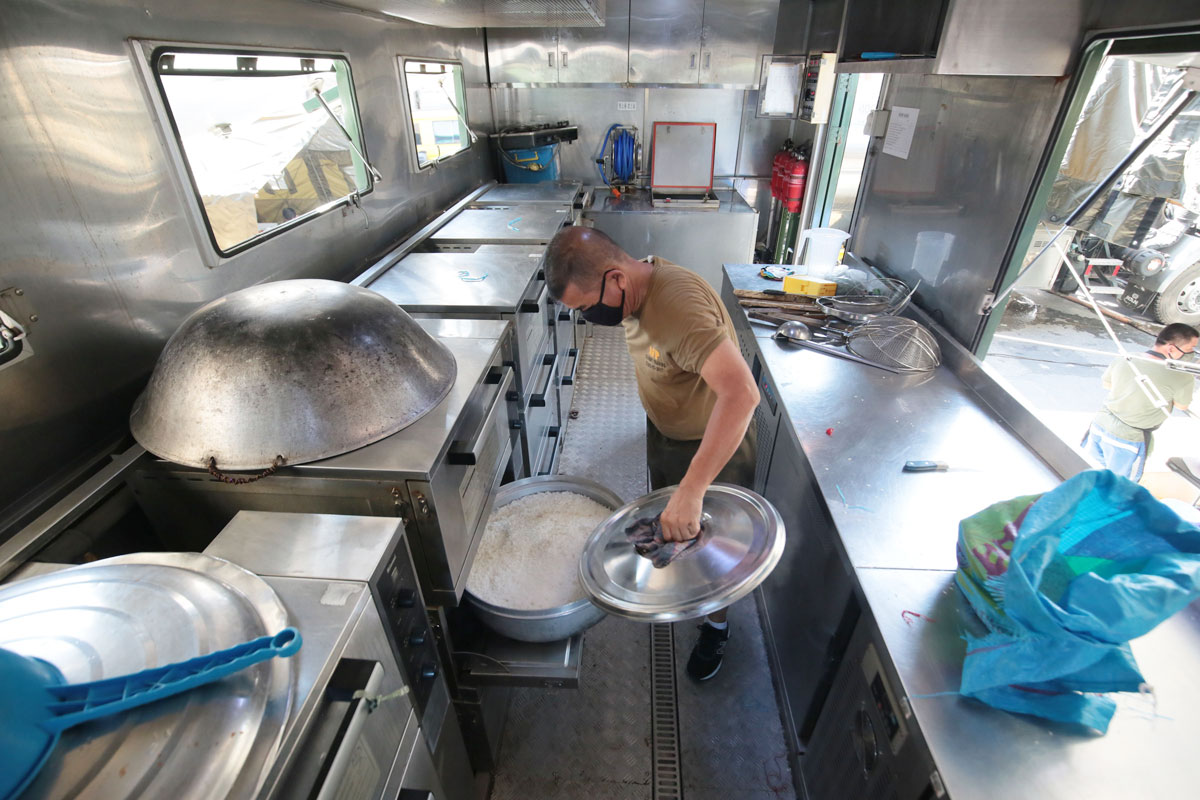
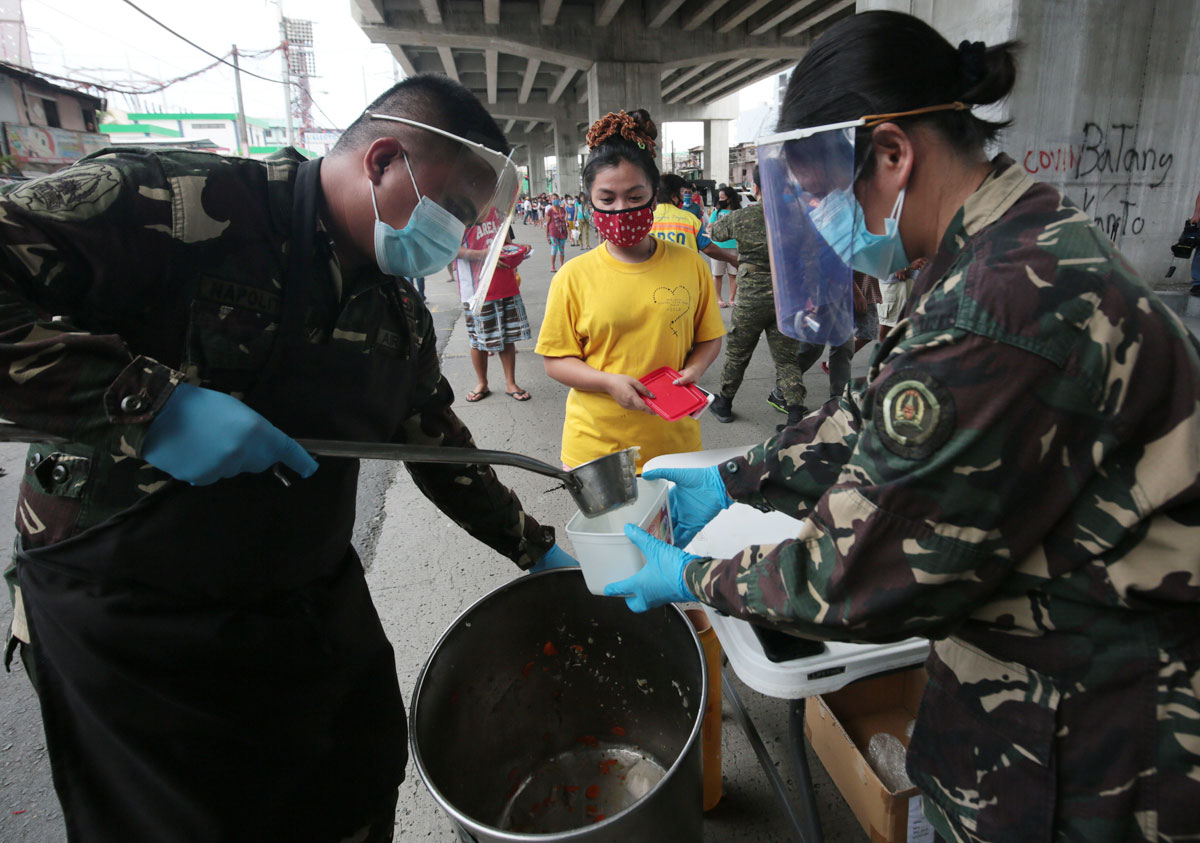
He said that even in normal times, the military “has been providing assistance in purely civilian matters whenever necessary.” He compared it to disaster situations, rescue and relief operations, and medical missions.
Guevarra said the AFP’s “engagement in the fight against” coronavirus disease 2019 (COVID-19) was “authorized under the special powers” granted last March under RA 11469 to impose the “necessary and proper” measures.
He explained that this was different from the “calling-out power” of the President under Article 7, Section 18 of the Constitution, which provides that “whenever it becomes necessary, he may call out such armed forces to prevent or suppress lawless violence, invasion or rebellion.”
“RA 11469 is enough for the purpose. But should lawless violence arise in the future (God forbid), the President, as commander-in-chief, may use his calling-out power under the Constitution,” Guevarra said.
‘Calling-out power’
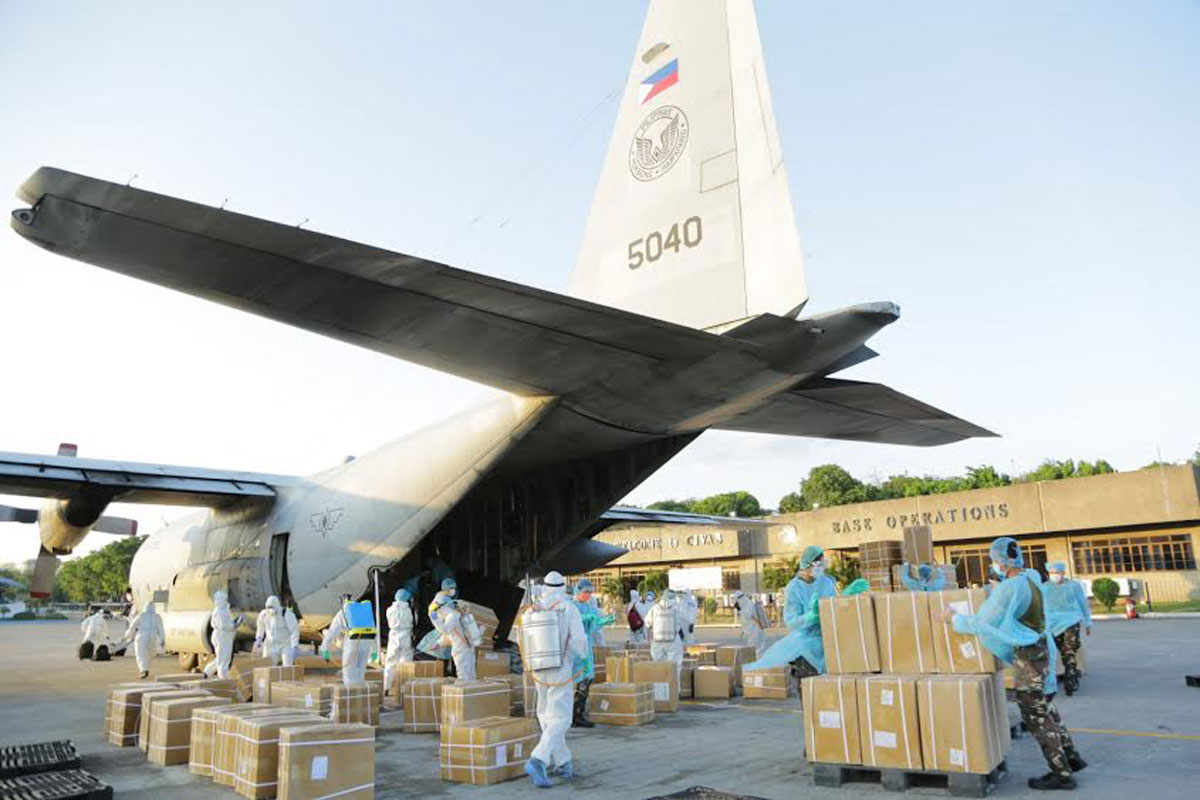
Unlike Guevarra, presidential spokesman Harry Roque described Duterte’s warning to deploy the police and military as his potential exercise of his “calling out power.”
Roque, a former human rights lawyer, reiterated that Duterte “has not actually exercised this extraordinary power of calling upon the military for this purpose.”
But he bristled at the description of the power invoked by Duterte. “It’s not a martial law-type,” Roque insisted.
Roque also reiterated that Duterte is not planning to impose martial law when he had threatened to order the military to enforce quarantine measures.
He pointed out that the power to call out the Armed Forces is the “least intrusive” among the extraordinary powers granted by the Constitution to the President – the others being the power to suspend the privilege of the writ of habeas corpus or place any part of the country under martial law.
The “calling out power” has less stringent requirements than the other two extraordinary powers – the suspension of the privilege of the writ of habeas corpus and martial law.
Roque argued that since calling out the military is inherent in the President as chief executive and commander-in-chief, he would not even need to formally issue an executive order.
“Kahit walang executive order… gawain talaga na natin na tawagin ang military para tulungan ang mga sibilyan (Even without an executive order… it is really our routine to call on the military to help civilians),” Roque said in a virtual press briefing on Monday, April 20.
Roque cited the Supreme Court’s Feb. 3, 2004 decision in the case of Sanlakas versus Executive Secretary as his basis. The SC ruled that the calling-out power is a “residual power” that the president is authorized to exercise by virtue of his powers as chief executive and commander-in-chief, and held that “a declaration of a state of rebellion is an utter superfluity.”
“Pupuwede po niyang tawagin ang Hukbong Sandataan para po ipatupad ang ECQ at, sang-ayon nga po sa kaso ng Sanlakas, muli, iyan po ay kapangyarihan ng Presidente at hindi po iyan martial law (He can call on the Armed Forces to enforce the ECQ and, in accordance with the case of Sanlakas, again, that is the power of the President and is not martial law),” Roque said.
Still, Roque hinted that Duterte would at least make things formal. “If he so decides, he will issue the necessary and corresponding executive issuance,” Roque said.
Derogation of freedoms requires UN notification
Lyceum of the Philippines University College of Law lecturer Romel Bagares agreed that “there is no martial law” in Duterte’s exercise of his special powers under the “Bayanihan to Heal as One Act.”
But he noted that “it may come to a situation where the government will now impose full restrictions on the freedom of assembly and freedom of movement in some areas identified as COVID-19 hotspots.”
While this is authorized due to the dire situation, Bagares stressed that “under human rights law, these measures may only be implemented for a limited period.” In this case, the “Bayanihan to Heal as One Act” was supposed to be in full force and effect only for three months, unless extended by Congress, which is dominated by administration allies.
However, Bagares noted that the Philippines is a party to the International Covenant on Civil and Political Rights, which requires the country to notify the United Nations secretary-general “that we are derogating certain freedoms protected under the ICCPR – freedom of movement, freedom of assembly – because of this emergency.”
“We are also required by the ICCPR to impose only those measures that are necessary, in a manner that does not violate all other rights,” Bagares said, adding that the government would have to submit to reportorial requirements to allow scrutiny of its human rights record.
Bagares pointed out that if the government does abide by this obligation, “this is the first time that we’ve done this at all.” He noted that no such reports were made during the previous declarations of a state of emergency especially during the administration of president Gloria Macapagal-Arroyo.
The country’s latest communication with the United Nations was during an April 9 teleconference with UN High Commissioner for Human Rights Michelle Bachelet.
Many other countries have imposed various degrees of quarantines and lockdowns to contain the pandemic, without notifying the UN.
‘No excuse for excessive use of force’
The issue whipped up by Duterte’s latest incendiary remark came as the UN special rapporteurs on human rights expressed grave concern over the “accounts of police killings and other acts of violence within the context of COVID-19 emergency measures” worldwide.
The experts reminded governments and law enforcement agencies that the prohibition against arbitrary deprivation of life, torture and other ill treatment is “absolute and non-derogable at all times.”
“Even during states of emergency, the use of force remains guided by the principles of legality, necessity, proportionality and precaution. They demand that the use of force and of firearms must be avoided, and that all possible non-violent means must be exhausted before resorting to violent ones,” read the statement.
“Breaking a curfew, or any restriction on freedom of movement, cannot justify resorting to excessive use of force by the police; under no circumstances should it lead to the use of lethal force,” it added.
The UN human right experts noted that marginalized sectors – people living in poverty, homeless people, minorities, detainees, women and children, trans women, and defenders of their rights – are “already affected disproportionately by the virus.”
“All these people who are often disproportionately affected by the virus, because of their precarious conditions of existence, should not be victimized further because of state of emergency measures,” the statement read.
Incidentally, Department of the Interior and Local Government (DILG) spokesperson Jonathan Malaya lambasted the progressive party-list group Anakpawis as “pasaway (disobedient)” for “attempt(ing) to organize a mass gathering in Norzagaray, Bulacan in the guise of distributing relief goods.” Former Rep. Ariel Casilao was among those detained.
Malaya cited the alleged discovery of propaganda materials in the group’s jeepney. The group Pamalakaya pointed out that the Anakpawis volunteers held a “food pass” issued by Bureau of Fisheries and Aquatic Resources National Director Eduardo Gongona. Media outfit Pinoy Weekly noted that the group actually carried back issues of its print magazine.
Amid these concerns about human rights abuses, Cavite Gov. Jonvic Remulla was one of the first local government officials to publicly seek military assistance in enforcing the ECQ in his province.
Remulla, in his Facebook post, explained that people were undisciplined and unwilling to cooperate with quarantine measures, even as he said he understood the plight of those who were deprived of livelihood. “Napupuno na ako (I’m getting fed up),” he said.
Because of the “10 percent” of the population who were “hard-headed,” Remulla said he asked the AFP to prepare for the deployment of personnel in his province. He said he also asked DILG Secretary Eduardo Año to use the Philippine Army and its Reserve Command to enforce the ECQ.
“Kung kulang ang patakaran at pakiusap ay subukan ko naman kaya ang higpitan ko ang pagtupad nito… Wala po sa loob ko ang manakit. Gusto ko lang patuparin ang batas para yung 10% ay tumino at ang 90% ay maisalba (If policies and pleas are not enough, I will try being stricter in enforcing these… It is not my intention to hurt anyone. I just want to implement the law so that the 10 percent would shape up and the 90 percent would be saved),” he said.
Human rights watchdog Karapatan viewed Duterte’s warning as the government’s way of “setting the stage for more attacks on people’s rights and civil liberties.”
“From mass arrests of the poor, abuses in checkpoints, heightened police and military deployment in communities, to continuing counterinsurgency operations in the countryside despite the government’s unilateral ceasefire declaration and the repeated scapegoating of the Left, Duterte’s threat of imposing martial law is already a lived reality for Filipinos,” Karapatan secretary general Cristina Palabay said in a statement.
“Instead of putting the government’s efforts to address this public health crisis and the people’s legitimate demands, Duterte is exploiting the pandemic to realize his Marcosian delusions of iron-fist authoritarian rule,” Palabay added.
Bayan Muna Rep. Ferdinand Gaite called Duterte’s warning “unconstitutional” for not being grounded in the existence of lawless violence, invasion or rebellion as outlined in the Constitution.
“None of these conditions exists, thus there should be no basis for the deployment of military forces amid the lockdown,” Gaite said in a statement. “It’s baffling why President Duterte insists on stepping up a military-centric solution when experiences of other countries, and opinions from the medical and scientific community repeatedly say that this health crisis must be confronted in a medical way. Countries who were successful in combating the virus did not resort to fascism.”
“Instead of mass testing, Duterte it seems is more hell-bent on mass arrests and mass imprisonment,” he added.


