



Visual Cues, Seating Arrangements In Mass Transport, Warmer Malls, Flexible Learning Under New Normal
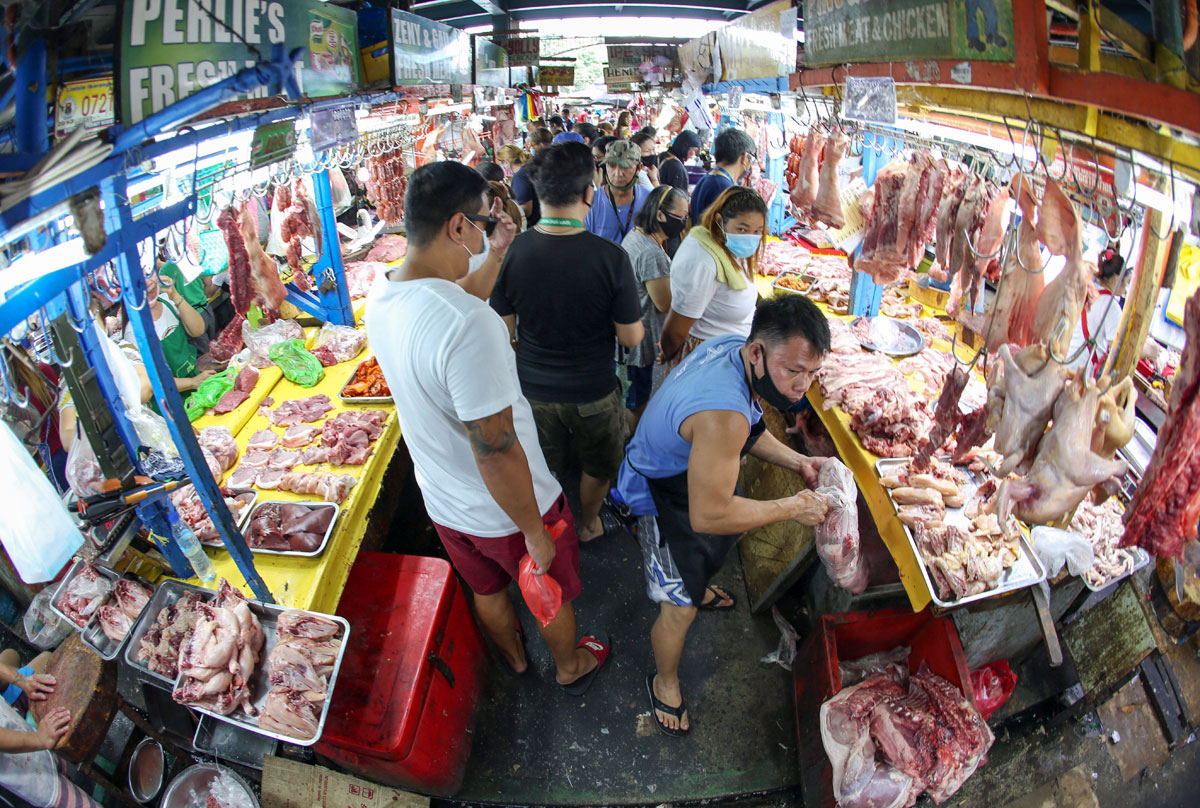
The government seeks to enforce physical distancing in public spaces, even in public transportation as quarantine rules are relaxed in some areas. Physical distancing is difficult to observe in crowded places like markets and informal settlements.
The first day of the implementation of the general community quarantine (GCQ) in many parts of the country went smoothly, according to the Philippine National Police on Saturday, May 2.
May 1, Friday, was a holiday, and no large crowds are expected during weekends as movements of people are still restricted under the GCQ.
House transportation committee chair Edgar Mary Sarmiento asked the Department of Transportation on Saturday to make sure that the DOTr is ready and well- equipped to implement the guidelines laid down by the Inter-Agency Task Force (IATF) for the Management of Emerging Infectious Diseases for the reopening of public transportation after May 15, or the expected lifting of the enhanced community quarantine (ECQ) in Metro Manila and other areas.
Sarmiento recommended a five-day dry run that would cover all public transportation systems for the road, air and maritime sectors.
When the ECQ was implemented on March 17, public transportation services were suspended as physical distancing could not be enforced on trains, buses and other mass transport vehicles when community quarantine was imposed over Metro Manila on March 15.
Read more: Buwis-buhay: Commuting in the time of social distancing
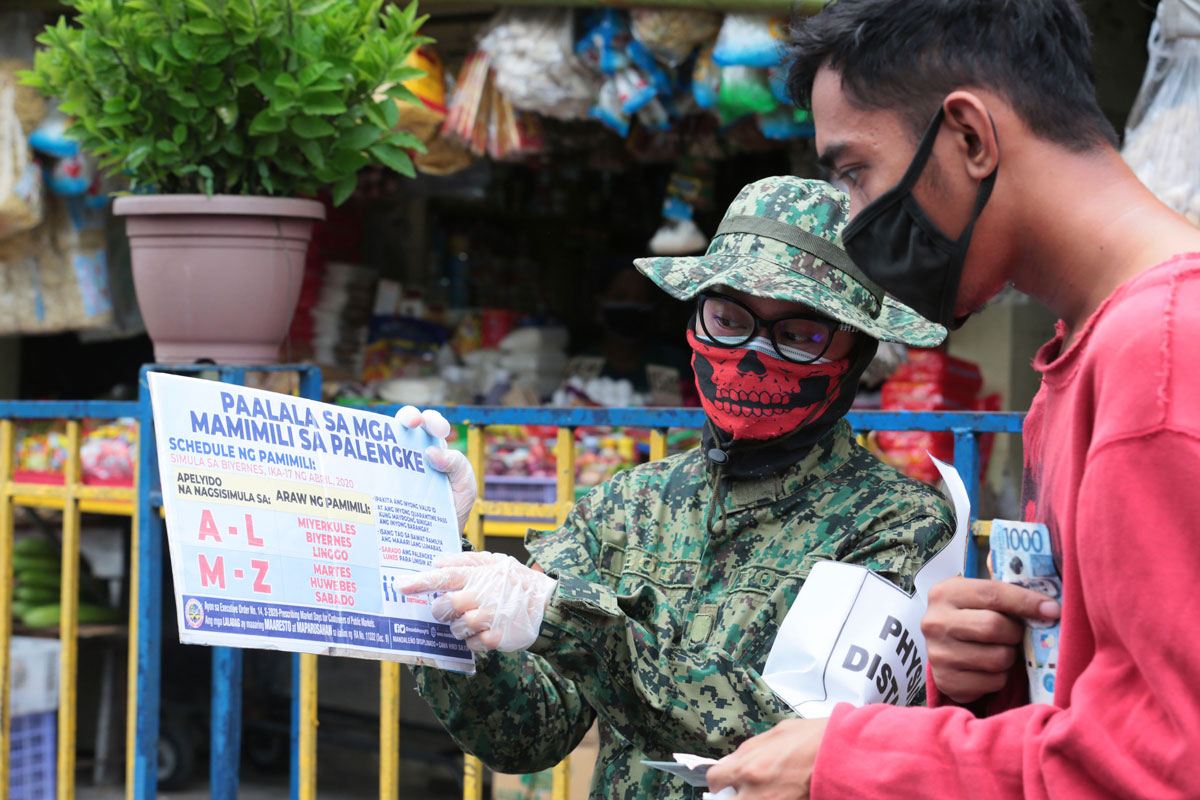
Aside from mass transportation, crowd control in public places like markets also proved challenging for authorities.
Under GCQ, transport workers who were sidelined and forced to depend on state dole-outs for weeks will finally be allowed to resume their livelihood. However, they may not earn as much as they used to because they may operate only at a reduced capacity to observe physical distancing.
On May 1, the DOTr also posted on its Facebook page the required seating arrangements for buses, jeepneys, shuttle services, taxis and transport network vehicle services, UV express services and tricyles.
Under the guidelines issued by the DOTr, only half of the passenger capacity is permitted for buses and modernized jeepneys per trip. Taxis can carry up to two passengers while UV express vehicles can accommodate up to two passengers per row.
“So it will be a new norm. You may no longer have a seatmate in buses. No one will stand in buses and even in queues. There should be social distancing,” presidential spokesman Harry Roque Jr. said in a press briefing on April 23.
For private vehicles, only the front passenger and up to two passengers in the back will be allowed. The transportation department is encouraging the use of automatic fare collection to limit contact. If it is not doable, passengers have to pay before boarding the vehicle.
Drivers, conductors and commuters are still required to wear face masks. Passengers with mild fever will not be allowed to board public utility vehicles or buses while transport workers who have coronavirus symptoms will not be permitted to operate. The driver area will have to be sealed off from the passenger area to shield transport workers from the virus.
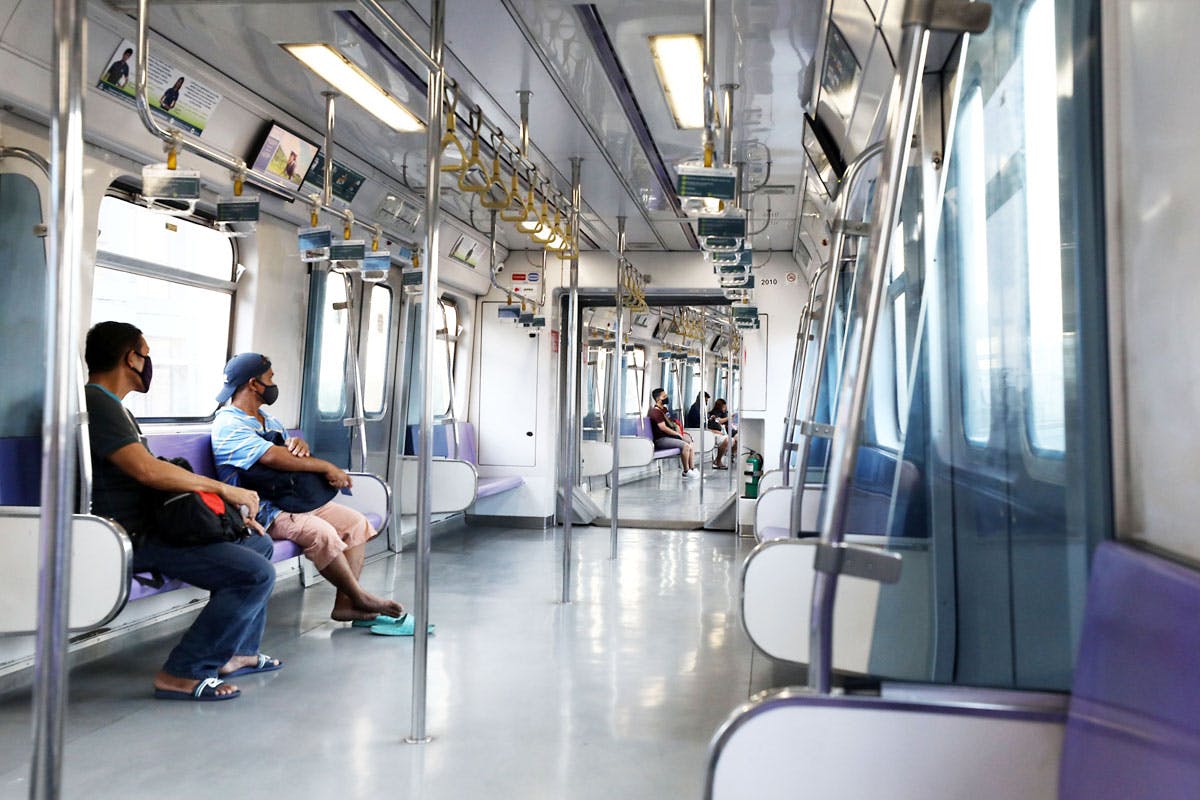
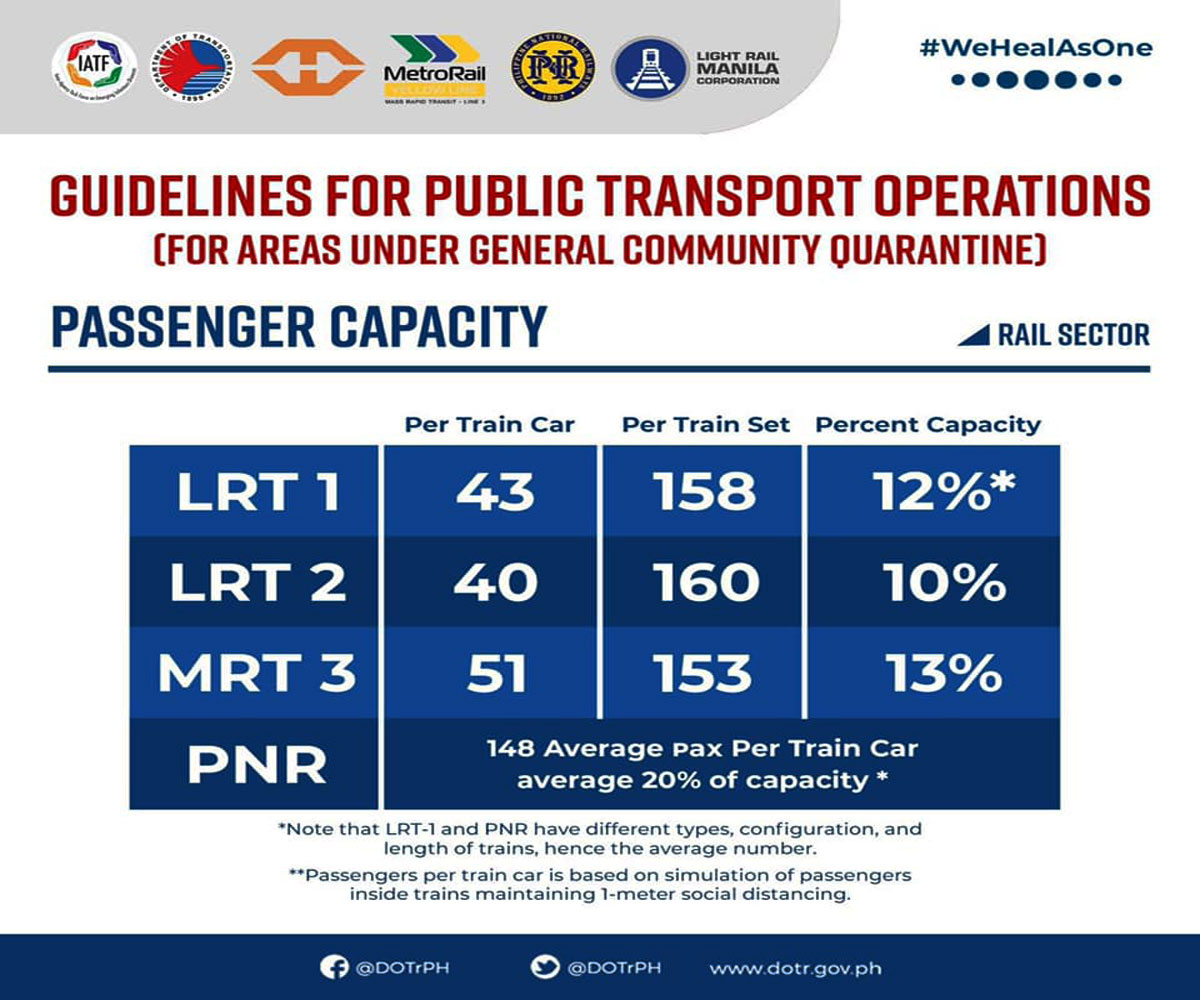
For trains, the DOTr said the number of passengers would also be limited.
Will the guidelines work?
In a Facebook post on May 2, Pasig City Mayor Vico Sotto said: “Nagbabago talaga ang behavior natin kapag may ‘visual cues.’ ” He was referring to circles and other nudges painted on the streets to help people observe physical distancing.
No loitering in malls
Some people go to shopping malls to escape the tropical heat, but this may not be possible while the quarantine measures are being enforced.
The IATF has announced that air conditioning temperature would be increased at malls that would reopen to discourage loitering and prevent overcrowding.
Not all establishments in malls will be allowed to reopen even if quarantine protocols have been eased.
Under the guidelines approved by the government, limited operations in malls and shopping centers shall be allowed “except for leisure establishments and services which shall continue to be closed.” Establishments and services that are allowed to reopen may operate at only half of their capacity.
Even the persons who can enter malls will be limited. Those below 21 years old and senior citizens or those 60 years old and above may not enter malls except when obtaining essential goods and services or for work in establishments located in the shopping center. The trade department may issue guidelines to limit foot traffic in the establishments.
No mass gatherings
The public will also have to get used to online masses or classes for now as mass gatherings will remain prohibited even in areas where restrictions have been eased.
Under the government guidelines, the prohibition on mass gatherings apply to places that are under GCQ.
The prohibition covers gatherings such as movie screenings, concerts, sporting events and other entertainment activities, community assemblies, religious gatherings, and non-essential work gatherings.
Flexible learning
Physical classes will be suspended for the duration of the GCQ. However, higher education institutions may hold classes through flexible learning arrangements to finish academic year 2019 to 2020 and may operate at a limited capacity to receive students’ requirements as well as prepare and issue their credentials.
Roque previously said the education department has not decided on calls to start public school classes in September.
“I think the primary consideration now is the health of the nation. The UP (University of the Philippines) study indicates that actually, the young people, the school-going age, the young people have the most contact with the vulnerable population, including the elderly. And that’s why there’s unanimity among all experts that classes should be suspended for as long we could,” he said last week. “But I can definitely announce that there will be no classes this June.”
Some educational institutions have decided to resume classes online while others opted to just end the semester.
Roque said “flexible learning” would be the new norm as long as the threat posed by COVID-19 remains.
“We now have a new normal (as long as) we do not have a vaccine against the coronavirus.”
These would include observance of physical distancing through signage and markings, regular disinfection and sanitation, installation of hand-washing stations, mandatory wearing of face masks and checking of body temperature.
According to the Philippine Institute of Interior Designers, visual nudges could help in the recalibration of public spaces with health, hygiene and safety considerations.
Read more: New normal: Even the design of your favorite café may have to change


