



Turkey-Based Filipinos Seeking Repatriation – DFA
Migrant Workers Affairs Undersecretary Eduardo Jose de Vega assured the Filipinos that lenient processes will be observed in sending them home along with consideration for those with Turkish citizenship or partners.
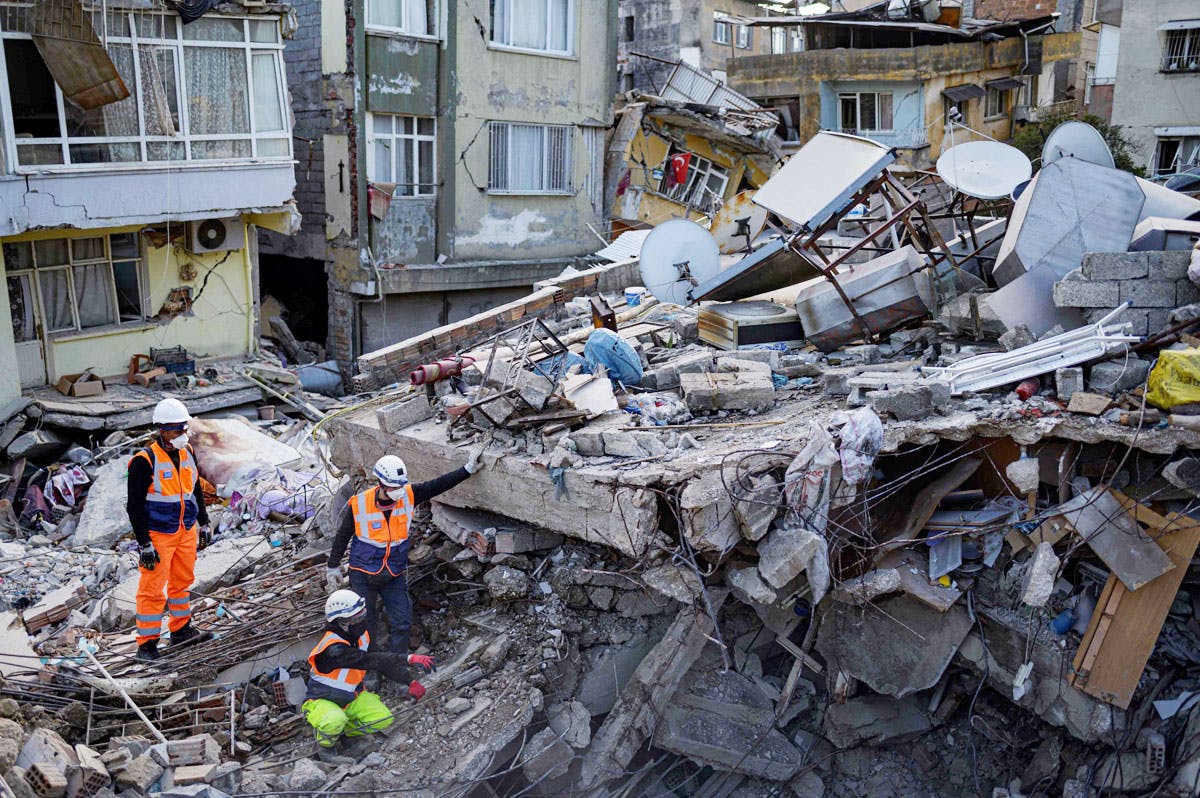
Filipinos in Turkey have begun to seek repatriation following the 7.8 magnitude earthquake that rocked Turkey and Syria, the Department of Foreign Affairs said on Wednesday, Feb. 15.
In an interview with “One Balita Pilipinas” on One PH, Migrant Workers Affairs Undersecretary Eduardo Jose de Vega of the DFA said around “a dozen or two” Filipino families have indicated their intention to go back to the Philippines.
He assured the Filipinos that lenient processes will be observed in sending them home along with consideration for those with Turkish citizenship or partners.
“Unti-unti na may nagpapahayag na gustong umuwi…Mga buong pamilya ‘to so kailangan ayusin pa kasi mga Turkish citizen na ‘yung karamihan eh (Gradually, requests for repatriation are being relayed…These are complete families so we’ll have to fix that as most of them are already Turkish citizens),” De Vega said.
Out of the estimated 64 or 65 total Filipinos in Ankara, De Vega noted that “most” of them were already Turkish citizens, or were married to Turkish nationals.
According to De Vega, naturalized Filipinos in the country may apply for dual citizenship and re-acquire their Filipino citizenship in line with Republic Act No. 9225, allowing them to be repatriated.
Under the Citizenship Retention and Re-acquisition Act of 2003, Filipinos naturalized abroad may apply for retention or re-acquisition of their Filipino citizenship by submitting a petition and oath of allegiance along with other needed requirements.
De Vega, however, said nothing is final yet amid increasing repatriation requests.
But he added those with Turkish or foreign partners will be covered by Balikbayan Program under RA 6768, which will allow to go back to the country visa-free for one year. Additionally, under Executive Order No. 468, Turkish nationals are allowed to enter the country without a visa for the first 30 days.
De Vega stressed that while they can bring their families, only Filipinos’ repatriation will be shouldered by the Philippine government.
“We can reassure you na hindi issue ‘yung foreign ‘yung asawa. Pwedeng pumuntang Pilipinas. Ang question lang, sino gagastos? Pero certainly we’re going to fund the repatriation ng ating mga kababayan (We can reassure you that having a foreign spouse is not an issue. They can go to the Philippines but who will pay for them? But certainly, we’re going to fund our fellow Filipinos’ repatriation),” De Vega said.
De Vega also said that DFA is in coordination with the Bureau of Immigration to be more lenient with documents especially for proof of citizenship, in consideration of lost papers during the harrowing earthquake.
He also stressed that the DFA is looking for ways to use the Department of Migrant Workers’ (DMW) reintegration program to help Filipinos once they start arriving from Turkey.
“Meron na silang tulong pinansyal dun sa Turkiye. Pag-uwi dito, titignan natin kung paano makakatulong ang DMW…’yung reintegration program (They have received financial assistance in Turkey. Once they get home, we will see how the DMW can help with the reintegration program),” he said.
Around 150 out of 248 Filipinos in the affected areas within Turkey are still in need of assistance, De Vega disclosed. In Syria, 60 Filipinos were affected by the earthquake and are in need of financial assistance due to a poor economy.
‘Parang Hinagis Na Kami’: Turkey-Based Filipina Recalls Harrowing Experience During Quake
No Filipino quake casualties in Syria
De Vega also said no Filipino was reported killed in Syria following the earthquake.
In another interview with radio station dzBB on Wednesday, said “there are 60 of them in northwestern Syria where the quake hit. Thankfully, there are no casualties,” De Vega reported.
A six-man team from the Philippine embassy in Damascus will provide assistance to Filipinos affected by the earthquake, according to the DFA official.
Syrian President Bashar al-Assad will open the two crossing points of Bab Al-Salam and Al Ra’ee from Turkey to northwestern Syria for an initial period of three months to allow the timely delivery of humanitarian aid.
Northwestern Syria has been in the grip of civil war for the past 12 years and is the last remaining region partly under control of opposition forces.
More than 4,300 deaths in Syria were reported last Sunday as deaths in Turkey have reportedly exceeded 40,000.
Prepared for ‘Big One’
Meanwhile, the government should prepare the Philippines for the worst, where the country, located in the precarious Ring of Fire,” should survive in the event that an earthquake as powerful as the magnitude 7.8 one in Turkey and Syria suddenly strikes, according to Speaker Martin Romualdez.
“We want to find out if we are really ready, and what should the general public do when it strikes. We have already experienced it in (Super Typhoon) Yolanda, where even our first responders were victims themselves,” Romualdez said.
“Who will take over once these first responders are not around? Do we have enough equipment that can dig through the rubble? Or do we have food packs that will be enough for the thousands that will be affected by the earthquake? Do we have enough equipment and manpower? From our experience in Tacloban, the first 24 hours is very critical, because if we are not ready then let’s prepare and anticipate,” he added.
The Speaker, who represents the Leyte province’s first district, stressed that the country has to be ready in providing rescue and medical attention and in food distribution.
“And, of course, before anything else, we also have to make sure that all of our infrastructure can withstand such a powerful earthquake,” he said.
Turkey Ambassador Niyazi Aykol on Monday, Feb. 13, went to the House of Representatives in Quezon City to accept Romualdez’s personal donation of $100,000 for quake victims.
The Speaker also turned over to former senator and Philippine National Red Cross chairman Richard Gordon the P10-million “humanitarian assistance” that the chamber donated to Turkey and Syria earthquake victims. This was the total contribution of members of the House of Representatives.
‘Antiquated’ building code
The 46-year-old National Building Code, implemented during the time of President Marcos’ late father and namesake, should be repealed to prepare Filipinos for the so-called Big One by making the country’s infrastructure sturdier and able to withstand stronger earthquakes.
“The country’s situation vis-à-vis earthquakes demands extreme urgent response on the part of Congress, in light of the ‘Big One’ that is bound to happen at any time,” Bulacan 6th District Rep. Salvador Pleyto, who authored House Bill No. 1180, said in his privilege speech last Monday evening.
“Indeed, it’s not a question of ‘if,’ but rather of ‘when’ it will really happen. With the enactment of this bill into law, our country will be better prepared to mitigate the loss of lives and damage to property,” Pleyto added.
For the neophyte lawmaker, a civil engineer by profession and retired Department of Public Works and Highways official, stopping an earthquake – being a natural phenomenon – is “certainly not humanly possible, but being prepared is all that mere mortals can do to possibly avoid extensive damage and loss of lives.”
“Our buildings, houses and infrastructure will be more resilient in meeting the effects of earthquakes and other calamities,” he said, as he sought the House’s “special consideration” by making his pet bill a “top legislative priority.”
“Indeed, the enactment of a New Philippine Building Act to replace the antiquated Presidential Decree 1096 is long overdue and will ensure that more precious lives and properties are saved and protected,” he added.
PD 1096 is an edict that the former president Marcos Sr. issued in 1977.
“(PD 1096) has to be repealed. We have been using this obsolete law,” Pleyto said in filing HB 1180, or the proposed “New Philippine Building Act,” which will make edifices more durable, especially in a country hit by numerous disasters every year.
“We have to make our buildings withstand a magnitude 8 earthquake,” he added.
Buildings should be “resilient against earthquakes, fire, flood, landslide, storm, volcano and multiple hazards,” according to the lawmaker. – With Pia Lee Brago, Delon Porcalla


